Best time to see autumn colours in Hunza
The best time to see autumn colours in Hunza is from about 15 October to 5 November, and if you can only pick one week, make it the last week of October in central Hunza. The season as a whole is longer than that. Colour begins in the high side valleys in late September and works downhill for roughly six weeks, so where you should be depends on when you arrive.
A typical year runs like this. Late September to about 10 October: birch and willow turn in the highest inhabited valleys, such as Shimshal and Chapursan, while Karimabad is still green. From about 10 to 25 October: Gojal, the upper Hunza stretch around Gulmit, Hussaini and Passu, moves through its peak. From about 20 October to 5 November: central Hunza peaks, which means Karimabad, Altit, Ganish, Duikar and the Nagar villages opposite. After that the poplars drop quickly, and the colour that remains is further down the valley towards Gilgit, which sits nearly 1,000 metres lower than Karimabad.
Treat those dates as a guide, not a timetable. A warm September can hold everything back by a week, and one hard frost or a windy night can strip a poplar avenue in a couple of days. Published accounts broadly agree on the window: a Dawn feature on fall in Hunza puts it at 15 October to mid-November. Our wider guide to autumn in Gilgit-Baltistan covers how the same wave moves through the rest of the region, and the short answer page on when autumn is in Hunza is the one to bookmark if you only need dates.
Where to see autumn colours in central Hunza: Karimabad, Altit, Ganish and Duikar
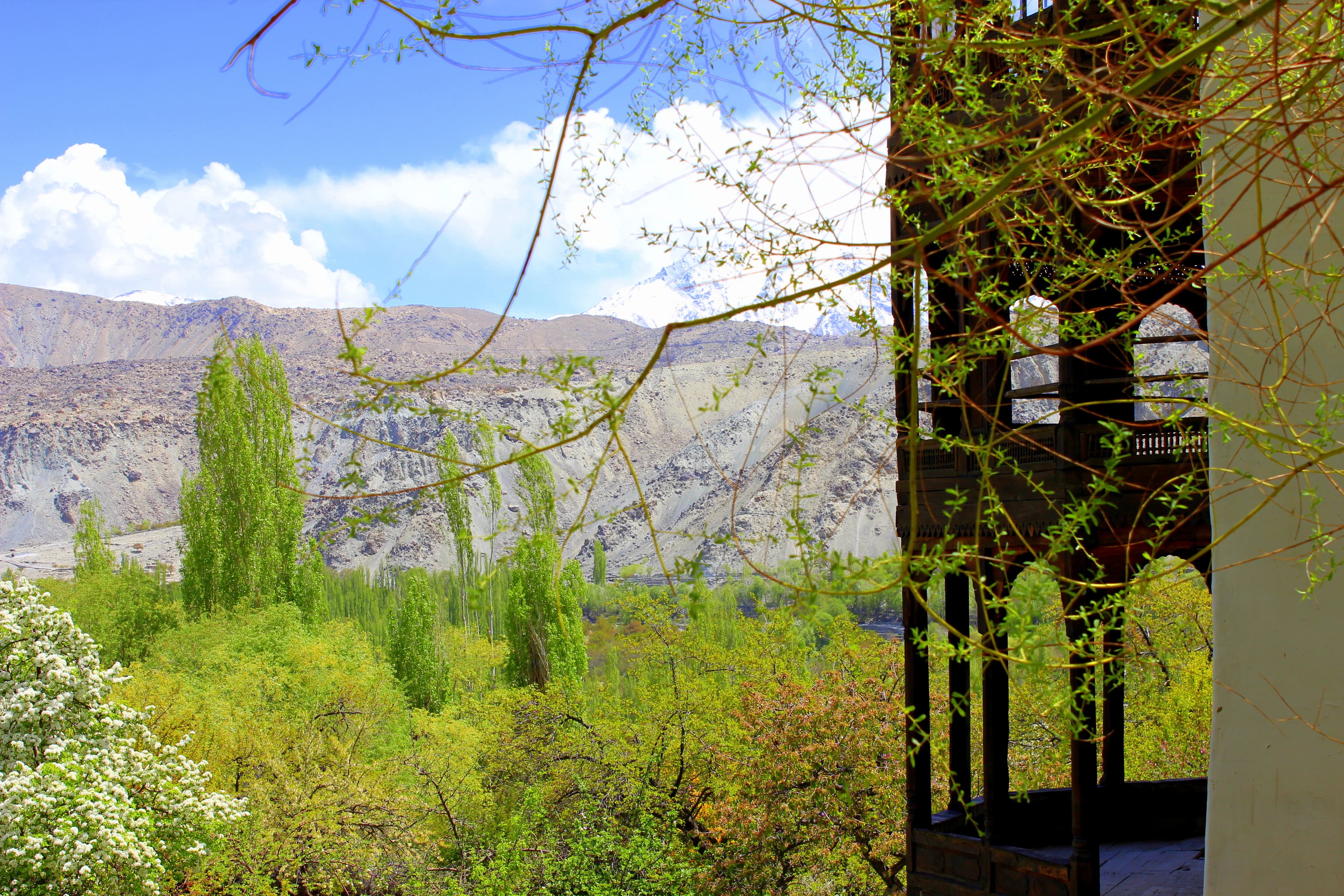
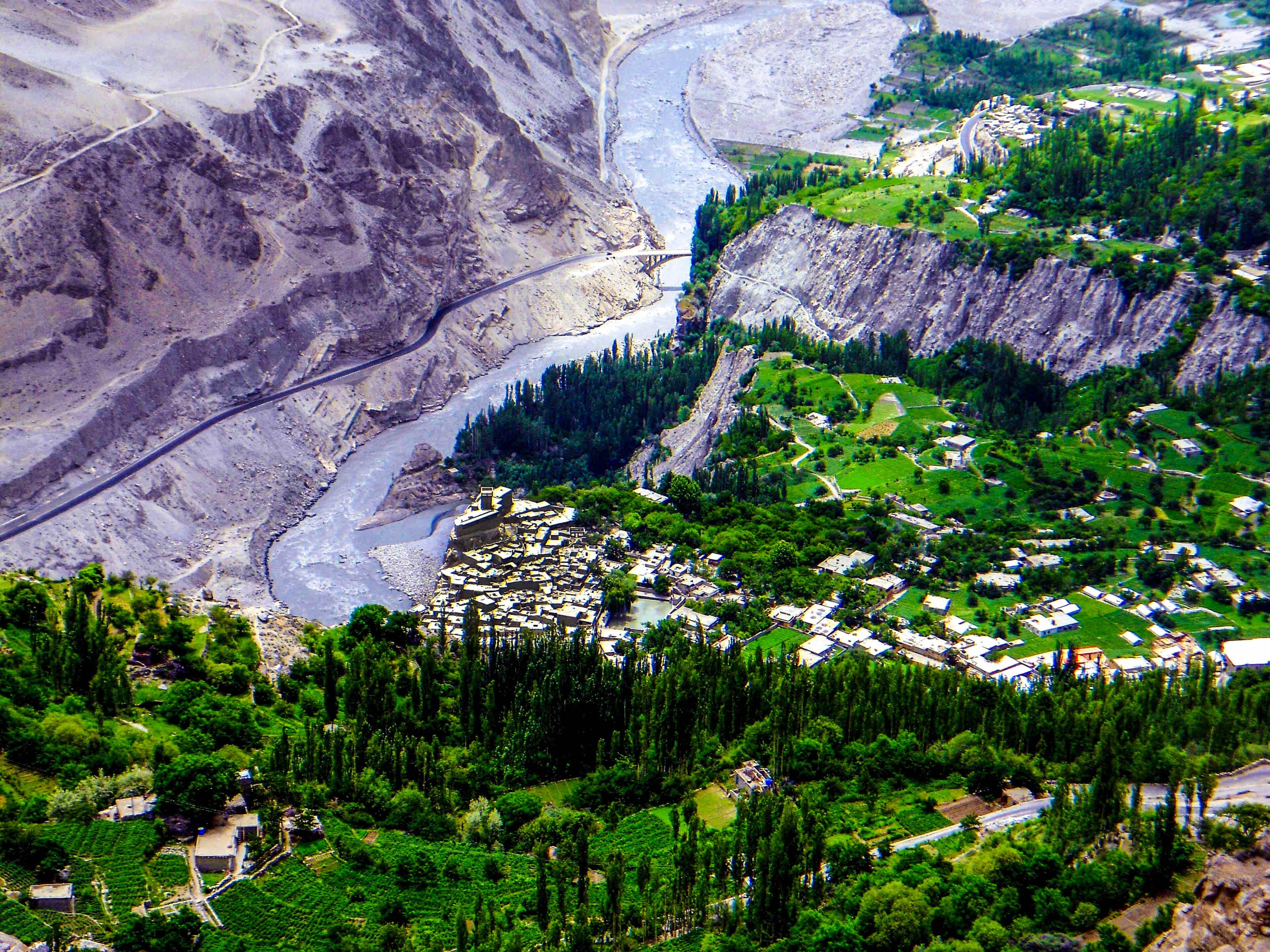
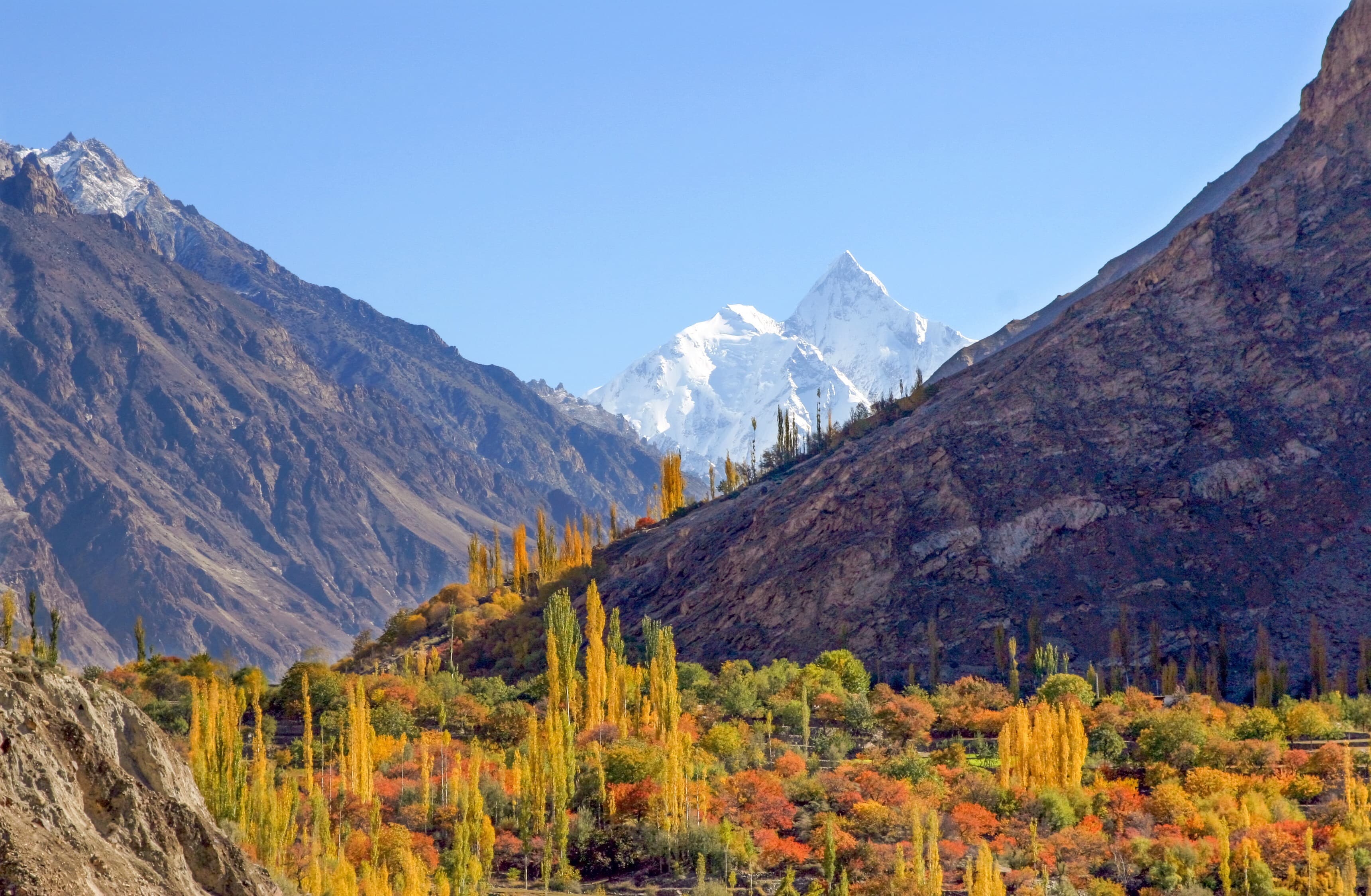
Central Hunza has the densest colour in the valley, because this is where the orchards are. Karimabad sits at about 2,450 metres on a steep fan of terraces, each one edged with poplars and planted with apricot, cherry, apple, mulberry and walnut, the same trees that carry the spring blossom. Poplars turn a clean yellow, apricot leaves go orange and then deep red, and walnut and mulberry fill in the browns and golds. The view down from the roof of Baltit Fort takes in the whole pattern.
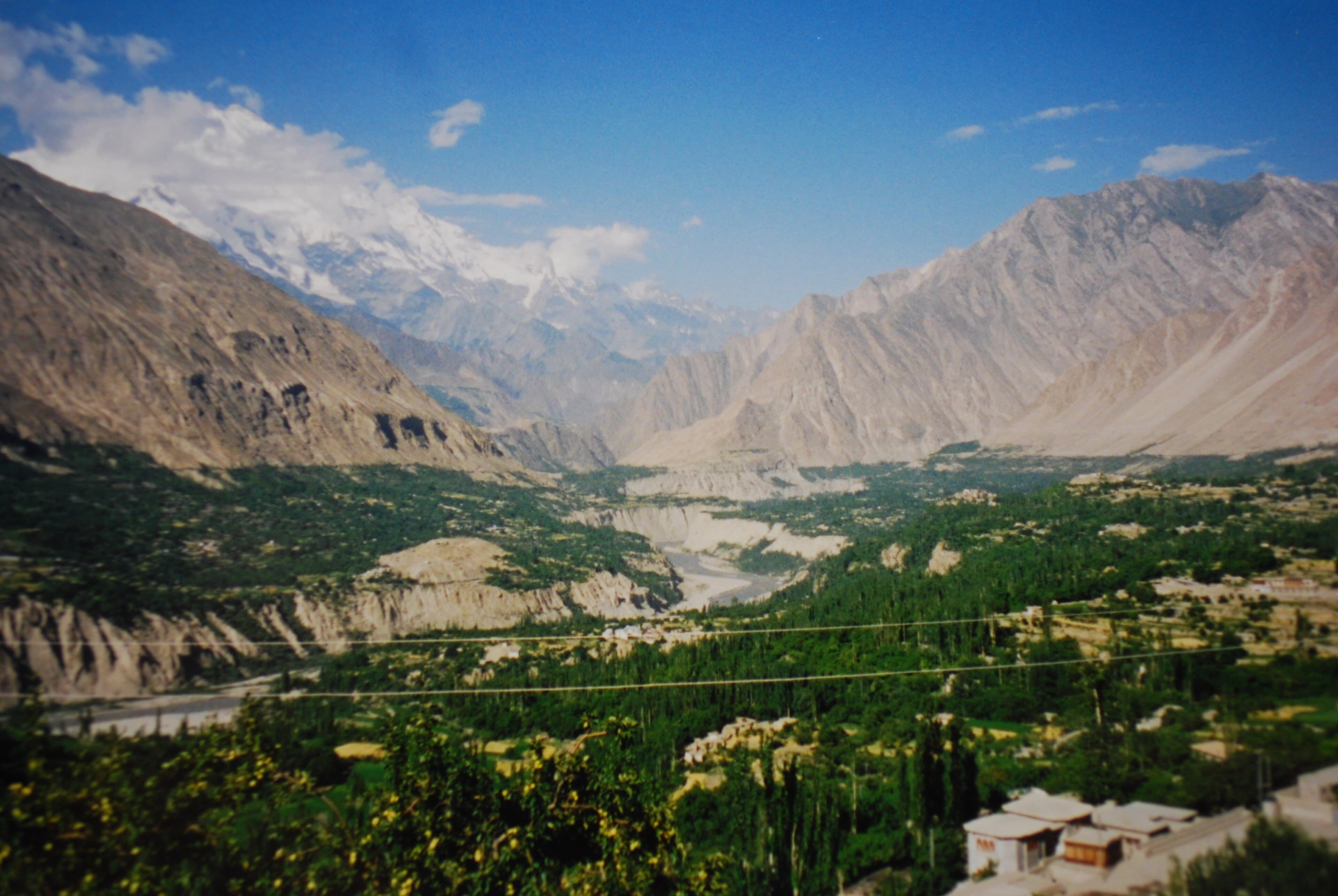
KarimabadThe old royal capital and the heart of every Hunza itinerary
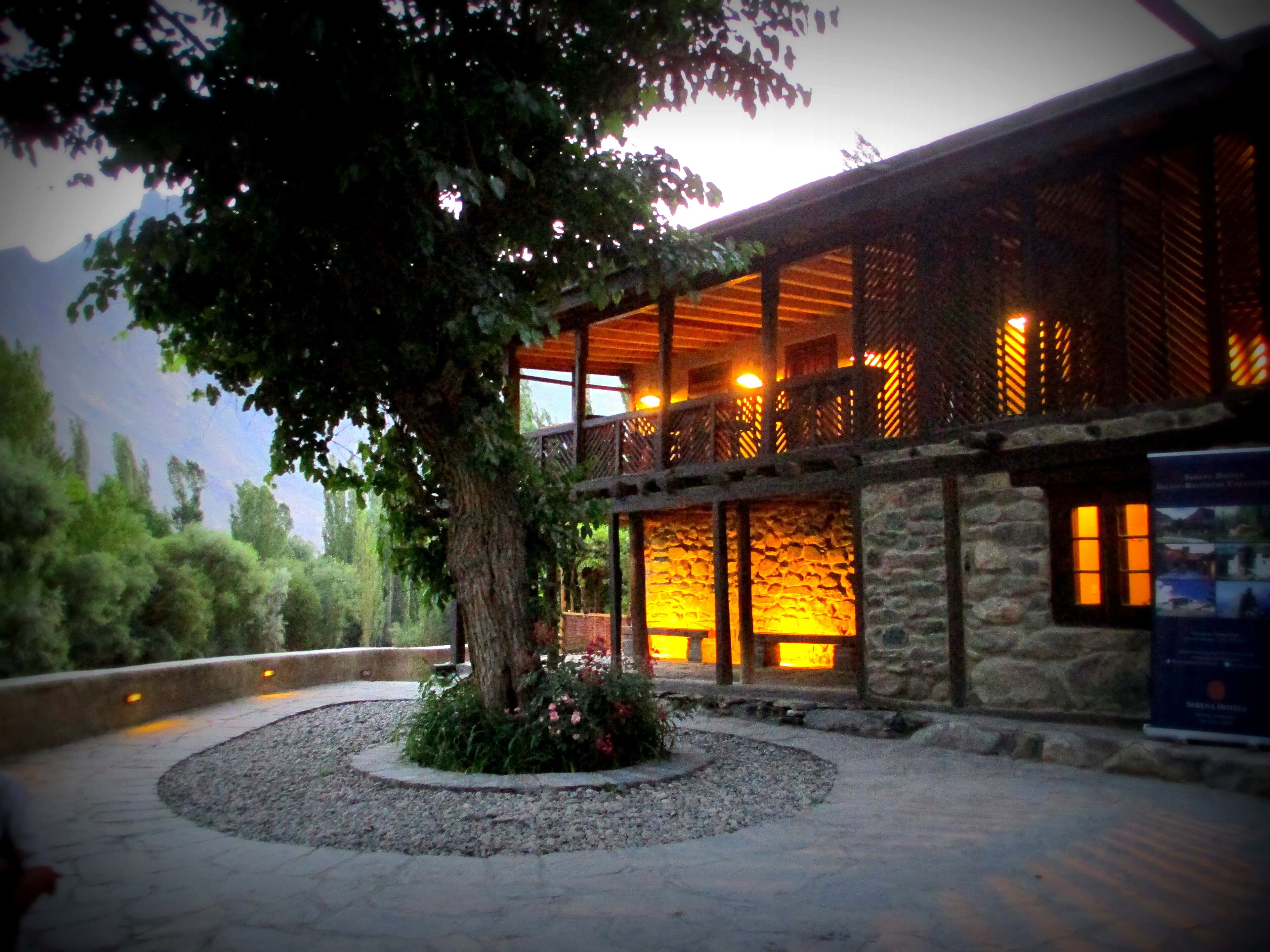
Photo: katorisi · CC BY-SA 3.0Altit, three kilometres away, is the place to walk under the trees instead of looking down on them. The orchard garden below the fort is planted with apricot trees, the lanes of the restored old village are narrow and quiet, and the fort's watchtower stands on a cliff above the Hunza River with Nagar's terraces across the water. Allow half a day and go in the morning, before the day-trip groups arrive.
Ganish, ten minutes below Karimabad beside the Karakoram Highway, is the oldest settlement in Hunza and the least visited of the three. Its carved wooden mosques and watchtowers stand around a communal pool, and in late October the trees around the village are in full colour. Then there is Duikar, the ridge village at about 2,850 metres that most visitors know as Eagle's Nest. It is a 30-minute drive up from Karimabad via Altit and gives the classic panorama: the whole of central Hunza and Nagar in colour, with Rakaposhi (7,788 m), Diran, Golden Peak, Ultar and Lady Finger around the horizon.
Nagar and Hopper in autumn: the other side of the river
Nagar is the quieter half of the same autumn, and it has the better view of Hunza. The district covers the south bank of the Hunza River, so from its terraces you look back across the water at Karimabad, Baltit Fort and the Ultar massif, with far fewer visitors around you than on the Karimabad side.
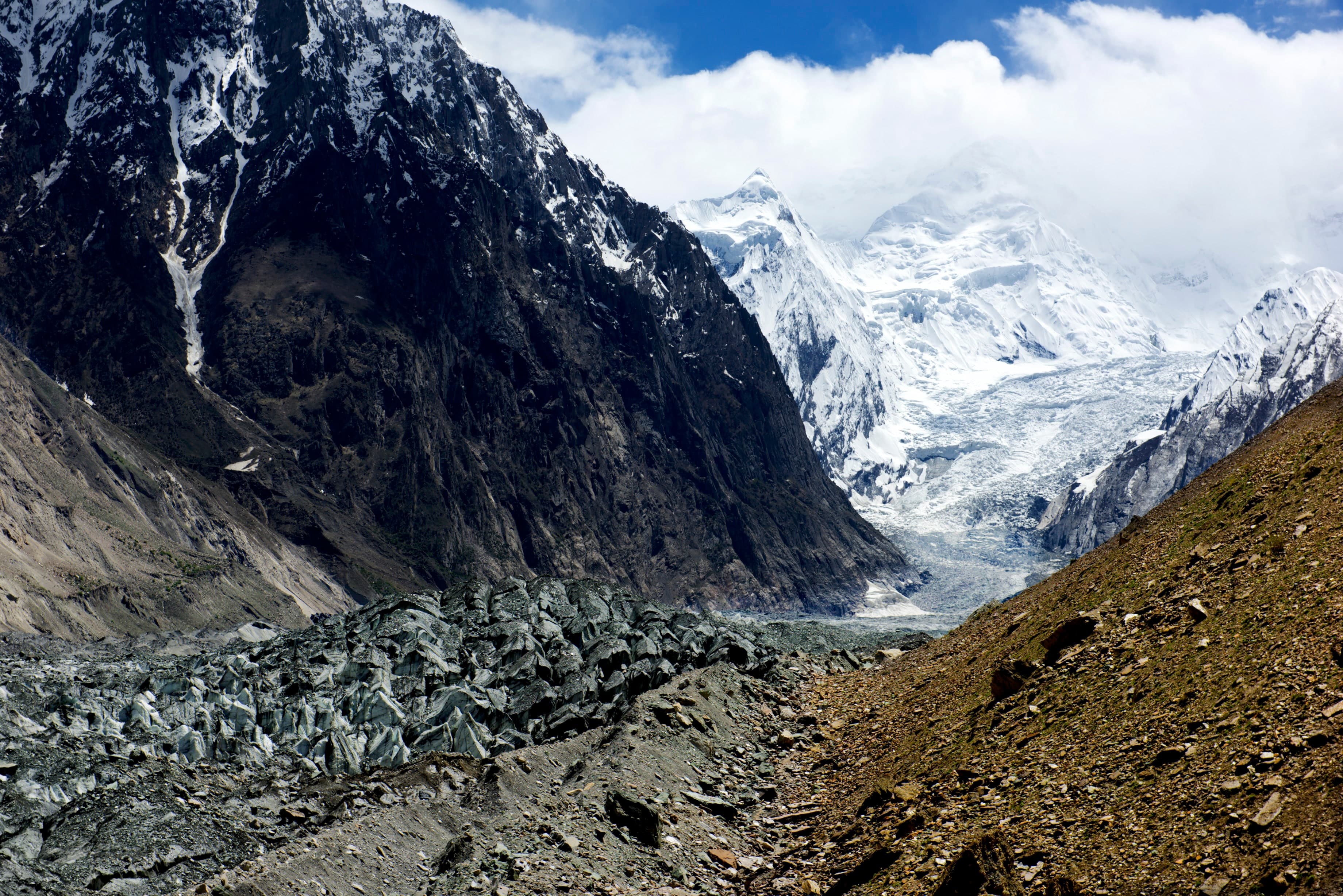
Hopper GlacierA churning river of ice at the end of a half-day drive from Karimabad
Photo: Najeebmahmud · CC BY-SA 4.0The road to Hopper Glacier is the easy way in. From Karimabad it is a drive of 1 to 1.5 hours: down to the highway, across the river near Ganish, and up through Nagar Khas and a chain of villages whose fields are lined with poplars. The road ends at a viewpoint over the dark, crevassed ice of the glacier, also called Bualtar, at about 2,700 metres. In autumn the contrast is the point: yellow trees and cut fields running right up to the edge of the moraine.
Lower down the valley, Minapin and Ghulmet sit directly under Rakaposhi, and the highway viewpoint at Ghulmet is the closest roadside look at the mountain's north face. Minapin is the trailhead for Rakaposhi Base Camp, a trek that normally stays walkable into October, although nights at the camp are well below freezing by then and early snow can end the season. If you want Nagar without the hike, a half day to Hopper and a tea stop under Rakaposhi on the drive back to Gilgit covers it.
Upper Hunza in autumn: Gulmit, Passu and Gojal
Upper Hunza, known as Gojal, usually turns about a week ahead of Karimabad, so mid-October is the time to be here. The landscape is different too. The valley is wider and barer, the villages are strung out along the Karakoram Highway, and the colour comes as separate bands of poplar and apricot against grey rock and glacier snouts.
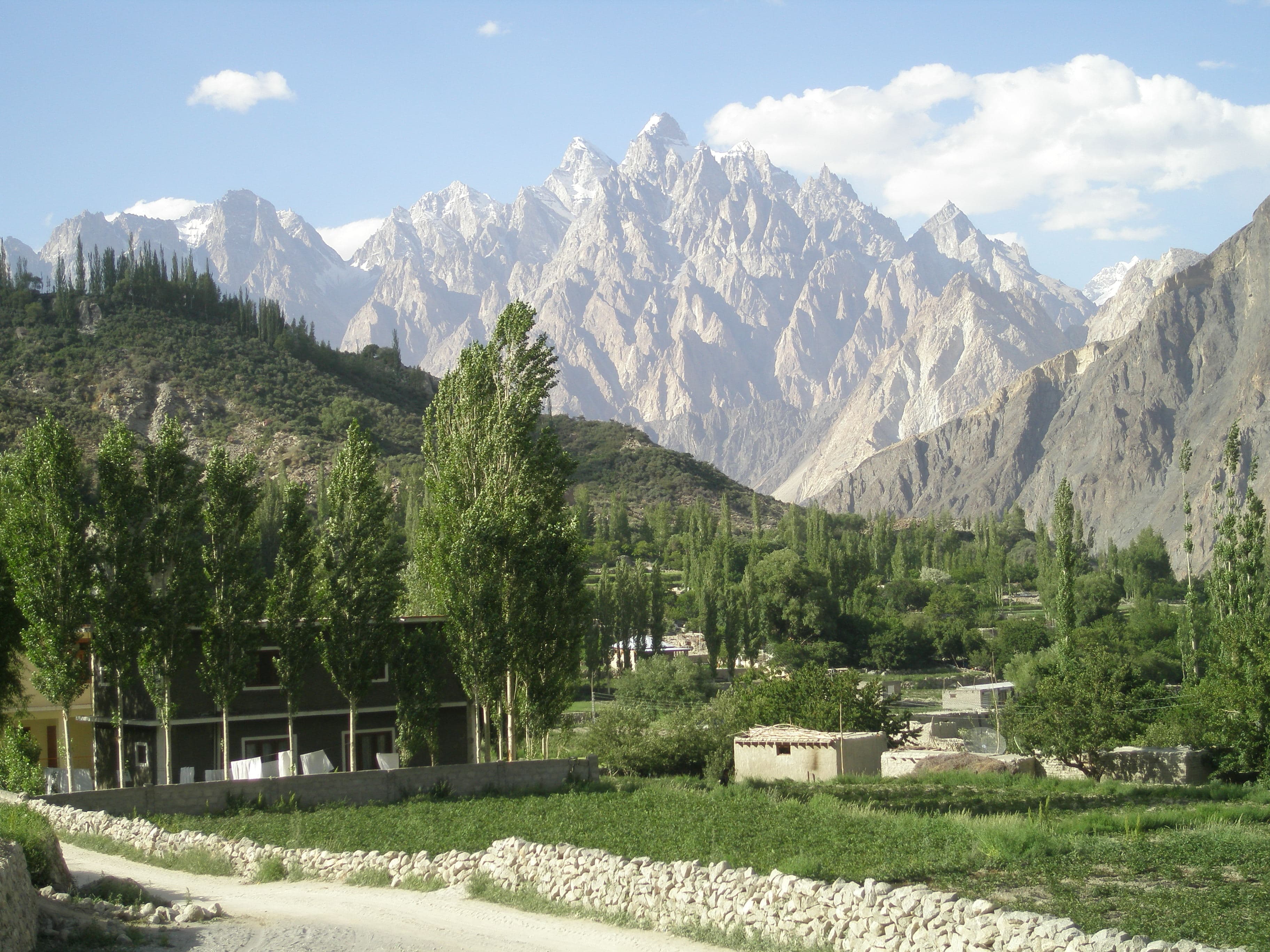
GulmitUpper Hunza's old capital, where Wakhi culture meets the Cones
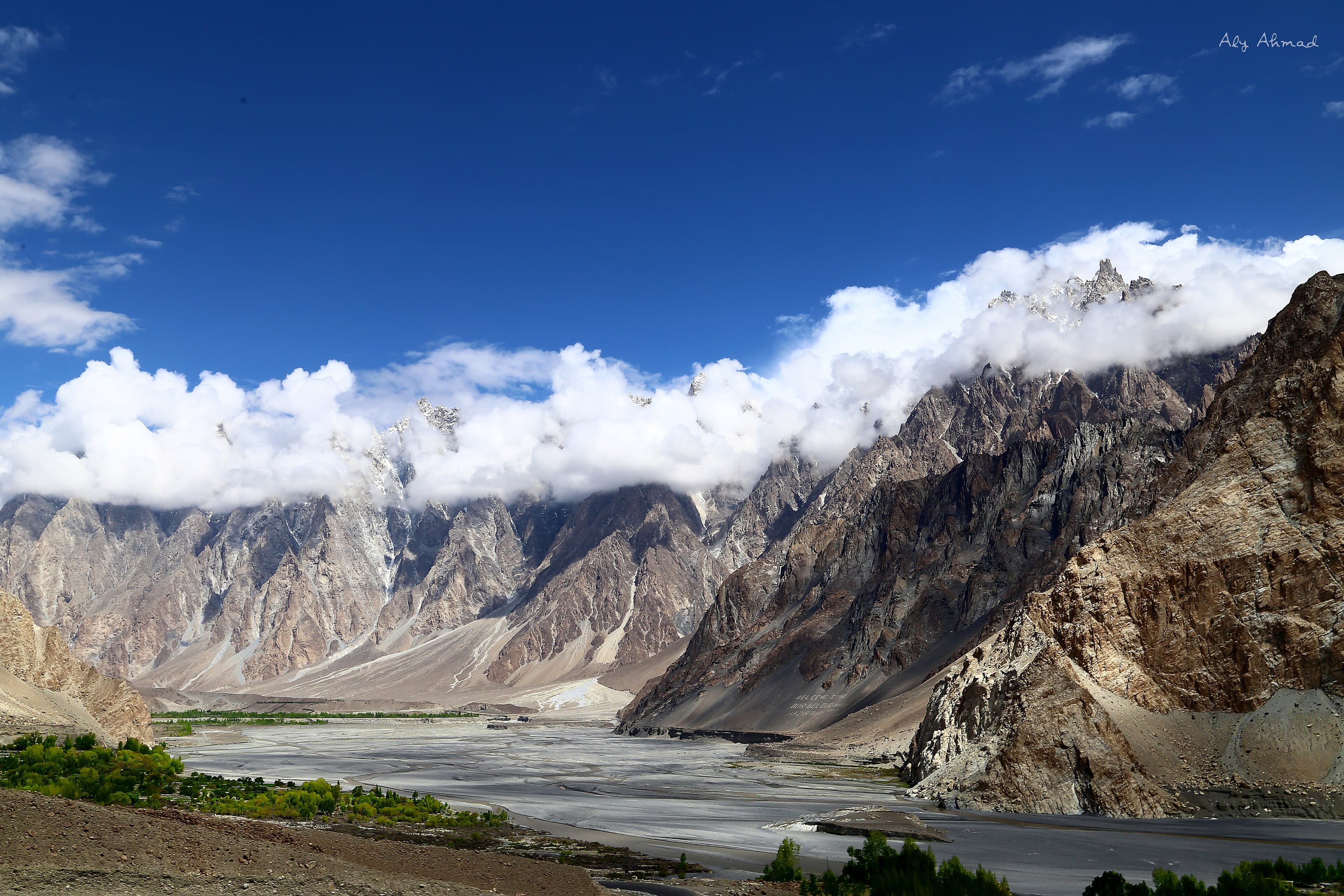
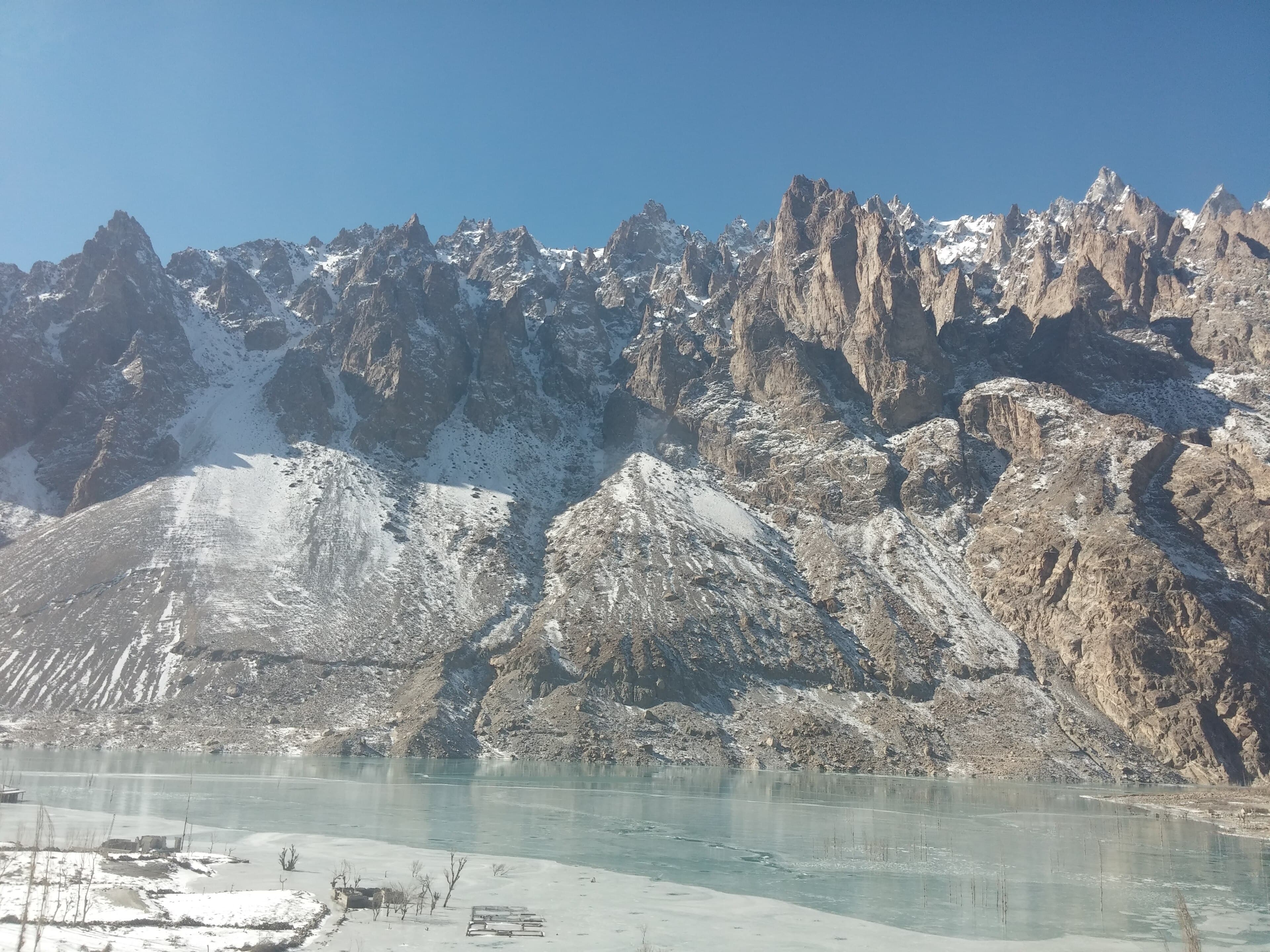
Photo: Baqhusbti · CC BY-SA 3.0Gulmit, about an hour north of Karimabad beyond the Attabad Lake tunnels, has an old village core, a polo ground and orchards that run down towards the river. Twenty minutes further on, Passu sets its poplars in front of the Passu Cones, the serrated ridge the Wakhi call Tupopdan (6,106 m). This is the most photographed autumn scene in Gojal, and our page on Passu Cones viewpoints lists where to stand.
Between the two, Hussaini has its suspension bridge, and Borith Lake sits on a shelf above the highway, a resting place for migrating waterfowl in autumn. North of Passu the trees thin out. Sost and the Khunjerab Pass at 4,693 metres are about altitude, wildlife and the early arrival of winter, not leaves. The people of Gojal are Wakhi, with their own language and food, and our guide to Wakhi life in Gojal is worth reading before you stay in a family guesthouse here.
Harvest season in Hunza: what village life looks like in October
October is the month Hunza gets ready for winter, and that work is as much a part of the season as the colour. The apricots were picked and dried back in July and August, so what you see now is the late harvest: apples and walnuts coming off the trees, potatoes being lifted in Gojal, maize and fodder drying on flat roofs, and firewood being stacked.
Walnuts are knocked down with long poles and gathered from the lanes. Fallen leaves are swept up and carried home as winter feed for the animals, which is why a lane that was ankle-deep in gold on Monday can be bare by Wednesday. Herds come back down from the high summer pastures, and families who have been split between village and pasture since early summer are together again.
For visitors this means two things. First, the food is at its best: fresh walnuts, this year's dried apricots and apricot kernel oil, apples everywhere, and hot dishes such as daudo soup and chapshuro that suit cold evenings. Second, people are busy and outdoors, which makes conversation easy, but roofs and courtyards are homes and workplaces. Ask before you photograph anyone, and buy your dried fruit and walnuts from households or small village shops when you can. Our guide to Hunza culture and villages explains local etiquette in more detail.
Autumn photography in Hunza: the best spots and light
The best autumn photography in Hunza happens in the first and last 90 minutes of daylight, and there is not much daylight to waste. In the last week of October the sun rises at about 6:20 am and sets at about 5:10 pm, and because the valley walls are so high, most villages get direct sun later and lose it earlier than those times suggest.
Sunrise belongs to Duikar. Stay the night on the ridge so you are in position before first light, when the snow on Rakaposhi and Diran catches the sun while the terraces below are still in blue shade. By mid-morning the light has dropped into the valley. That is the time to work the lanes of Altit and Karimabad with a longer lens: backlit poplar rows, apricot leaves against the dark timber of the forts, and the stepped fields seen from the roof of Baltit.
Afternoon is for the Nagar side or the drive north. In Gojal, photograph the Passu Cones from the highway and the village fields in the hour before sunset, when side light picks out every rib of the ridge. For sunset in central Hunza, the Duikar ridge works again, with the last light on Golden Peak, or stay low in Ganish for warm light on the old watchtowers.
Two practical notes. A polarising filter helps with the deep blue autumn sky, and batteries drain quickly in the cold, so keep a spare in an inside pocket. If you would like the timing and access handled for you, our Autumn Colours Photography Tour is built around these same locations.
Hunza weather in October and November: how cold does it get?
Hunza in October is mild in the sun and cold in the shade, with frost at night by the end of the month. In Karimabad, expect afternoons of roughly 14 to 20°C in the first half of October, falling to roughly 8 to 14°C by early November, and nights that slide from a few degrees above freezing to a few degrees below.
Those figures are estimates, because no official station publishes long-term monthly averages for Karimabad. The nearest solid data comes from the Pakistan Meteorological Department station at Gilgit, which sits at about 1,500 metres and records an average October high of 25.6°C and low of 6.3°C, dropping to 18.4°C and 0.4°C in November. Karimabad is nearly 1,000 metres higher, so it runs several degrees cooler by day and by night. Duikar and Gojal are colder again, and at Khunjerab it can stay below freezing at midday.
Autumn is also the driest and clearest part of the year. Gilgit averages about 6 mm of rain in October and about 2 mm in November. You can expect long runs of blue sky, broken now and then by a western weather system that brings cloud for a day or two and fresh snow to the peaks and higher villages.
Pack for a swing of 15 to 20 degrees between midday and midnight: a down jacket, hat and gloves for dawn at Duikar, a fleece and sun protection for midday, and something warm to sleep in, because many guesthouse rooms have only a small heater and power cuts are common. Our packing list for the Pakistan mountains has the full kit.
What is open in Hunza in autumn, what closes, and what it costs
Almost everything in Hunza stays open through October, and the main closures are on the roads leading to it. Both forts, the bazaars, the Attabad Lake boats and nearly all hotels in Karimabad, Aliabad and Gulmit operate as normal through the month. In November some smaller seasonal guesthouses, particularly at Duikar and in Gojal, shut for the winter, so confirm bookings directly if you are travelling after the first week.
The Khunjerab road is the one to watch. Since December 2024 the border has officially been open all year, ending the old 1 April to 30 November season, as Dawn reported when the arrangement was formally inaugurated in April 2025. In practice a day trip to the pass in late October or November depends on snow and wind on the day, and the road can be closed at short notice after a snowfall. Go early, carry your passport, and have a second plan such as Hopper or a longer day in Passu.
On the way in, the Babusar Pass shortcut from Naran normally shuts for the season at some point between mid-October and late November. In 2023 it closed after snowfall on 14 October, according to Dawn, which notes that the stretch between Diamer and Mansehra takes about twice as long on the Karakoram Highway. Plan the Karakoram Highway road trip as two days each way from Islamabad, or fly to Gilgit and accept that flights are cancelled when the weather is poor.
On cost and crowds, autumn sits between summer and winter. Domestic holiday traffic has gone, but the last two weeks of October are a short peak of their own for photographers and tour groups, and the hotels with the best views in Karimabad and Duikar do sell out. Book those four to six weeks ahead. Outside that fortnight rooms are easy to find and rates are often lower than in July and August. We do not quote hotel prices here because they change every season. Hunza is still largely a cash economy, so read our note on ATMs, cash and cards in Hunza before you leave Gilgit.
A 6-day Hunza autumn itinerary
Six days from Gilgit is enough to see central Hunza, Nagar and Gojal in colour without rushing, and it works best between about 18 and 30 October. Add two days at each end if you are driving from Islamabad.
Day 1: Gilgit to Karimabad (about 2.5 hours), with a stop at the Rakaposhi viewpoint in Ghulmet and an afternoon walk through Ganish. Day 2: Baltit Fort in the morning, the water-channel walk to Altit with its fort and orchard garden in the afternoon, then up to Duikar for sunset and the night. Day 3: sunrise at Duikar, then back down for a slow day in the lanes and bazaar of Karimabad.
Day 4: cross the river to Nagar and drive to Hopper Glacier, returning by mid-afternoon. Day 5: north through the Attabad tunnels to Gulmit, Hussaini and Passu, staying the night in Gojal for evening and morning light on the Cones. Day 6: Borith Lake or, if the road is clear and you are comfortable with altitude, a run up towards Khunjerab, then back to Karimabad or straight down to Gilgit, which is about 4 hours from Passu.
With a seventh day, give it to Gojal, not to more driving. For a fuller route see the 7-day Hunza itinerary, and the Hunza Explorer tour follows a similar shape with a guide and driver. If you want to add Baltistan, read Skardu in autumn and our comparison of Hunza or Skardu in autumn, or see how Hunza ranks against the rest of the region in the best autumn places in Gilgit-Baltistan. If your dates slip into late November, the trip becomes a different one, and Hunza in winter covers what changes.
Questions, answered
When is the best time to see autumn colours in Hunza?
The last week of October is the safest single week for central Hunza, including Karimabad, Altit and Duikar. The full window is about 15 October to 5 November, with upper Hunza (Gulmit and Passu) peaking roughly a week earlier. Dates can shift by up to a week depending on the year.
Is October a good time to visit Hunza?
Yes. October brings the autumn colour, the clearest skies of the year, very little rain and far fewer domestic tourists than summer. The trade-offs are cold nights, short days and the chance that high roads such as Babusar Pass and Khunjerab are affected by early snow.
How cold is Hunza in October?
In Karimabad, expect sunny afternoons of roughly 14 to 20°C early in the month and 8 to 14°C by early November, with nights near or just below freezing by late October. Gojal and the Duikar ridge are colder. Bring a down jacket, hat and gloves for early mornings.
Is Khunjerab Pass open in October and November?
Usually, yes. The Pakistan-China border at Khunjerab has officially operated year-round since December 2024, where it previously closed from 1 December to 31 March. At 4,693 metres, however, the road can close at short notice after snowfall, so treat a late autumn visit as weather-dependent.
How many days do you need in Hunza in autumn?
Plan five to seven days in the valley itself. That gives you central Hunza, a night at Duikar for sunrise, a day in Nagar and Hopper, and a night in Gojal for Passu. Add two days each way if you are driving from Islamabad on the Karakoram Highway.