Best time to visit Skardu for autumn colours
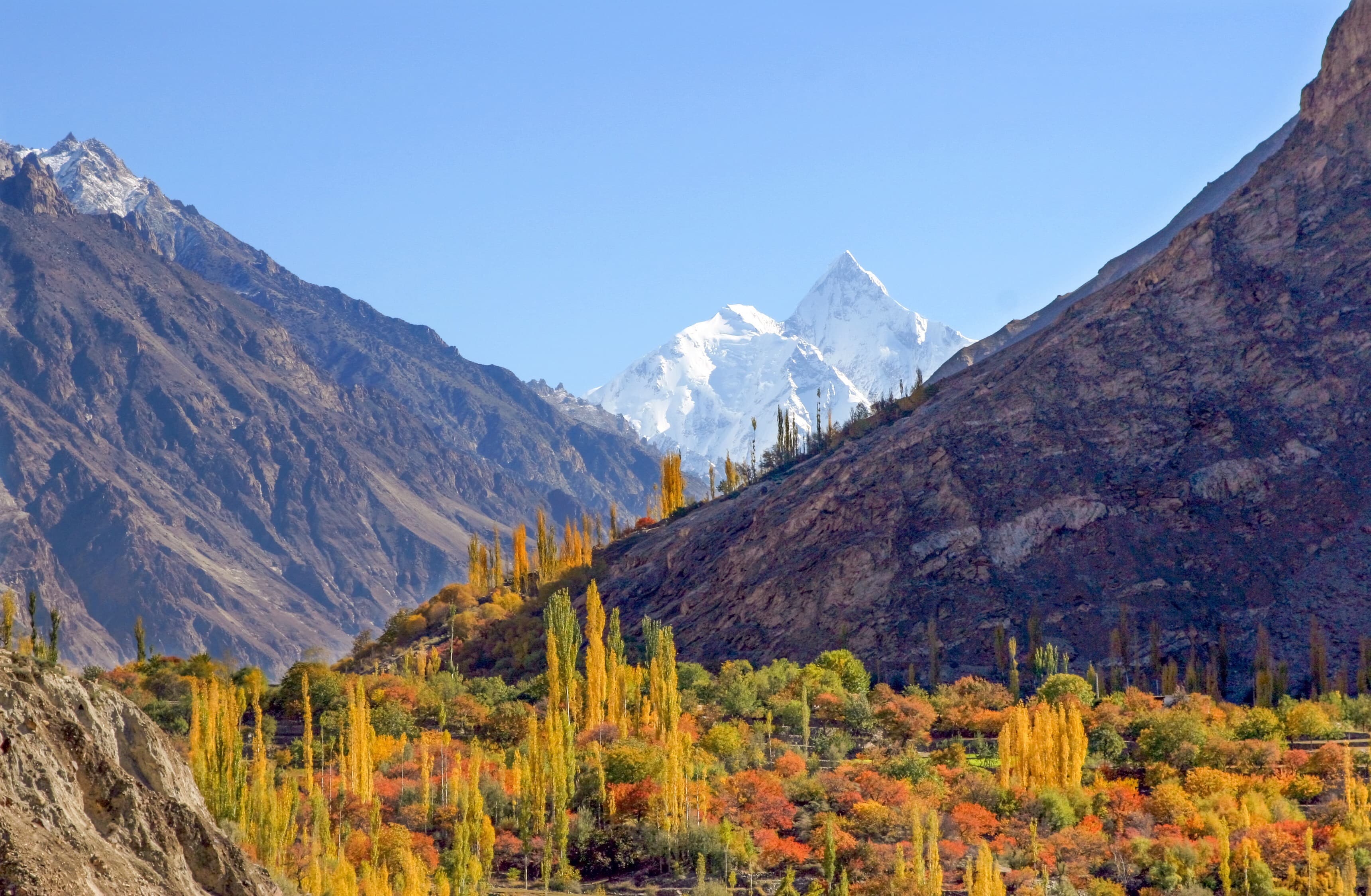
The best time to visit Skardu for autumn colours is from about 20 October to 8 November, when the poplars, apricots and willows of the Skardu basin, Shigar and Khaplu are at their strongest. Baltistan's autumn tends to run a few days later than Hunza's, and it happens in a much bigger space: wide braided rivers, sand dunes and bare rock, with the colour gathered into oases around each village.
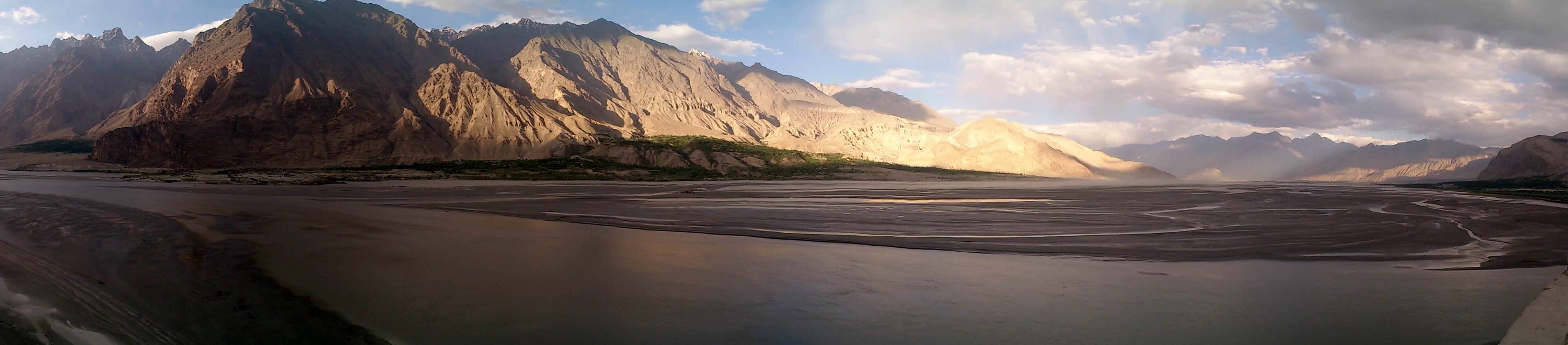
SkarduThe basecamp town for the greatest mountains on earth
Photo: Sabawun · CC BY-SA 4.0A typical year runs like this. Late September to early October: the grass on the Deosai plateau turns straw-gold and the high pastures empty. First half of October: colour starts in the higher villages, including Khaplu at about 2,600 metres and the upper side valleys. From about 20 October: Shigar, Skardu town, Kachura and Chunda reach their peak. First week of November: the last good colour, usually in the lowest and most sheltered orchards, before the leaves come down.
As everywhere in these mountains, the dates move by up to a week in either direction from year to year, and wind matters as much as temperature. If your dates are fixed, the last week of October is the safest choice. If you are combining regions, do Hunza first and Skardu second, which follows the colour. Our overview of autumn in Gilgit-Baltistan explains the regional pattern, and Hunza in autumn covers the other half of that trip.
Shigar Valley in autumn
Shigar is the easiest autumn day out from Skardu and, for many visitors, the best. The valley begins 45 minutes from town: you cross the Indus, drive over the Sarfaranga cold desert and drop into a long strip of orchards and poplars along the Shigar River, which is gold from end to end by late October.
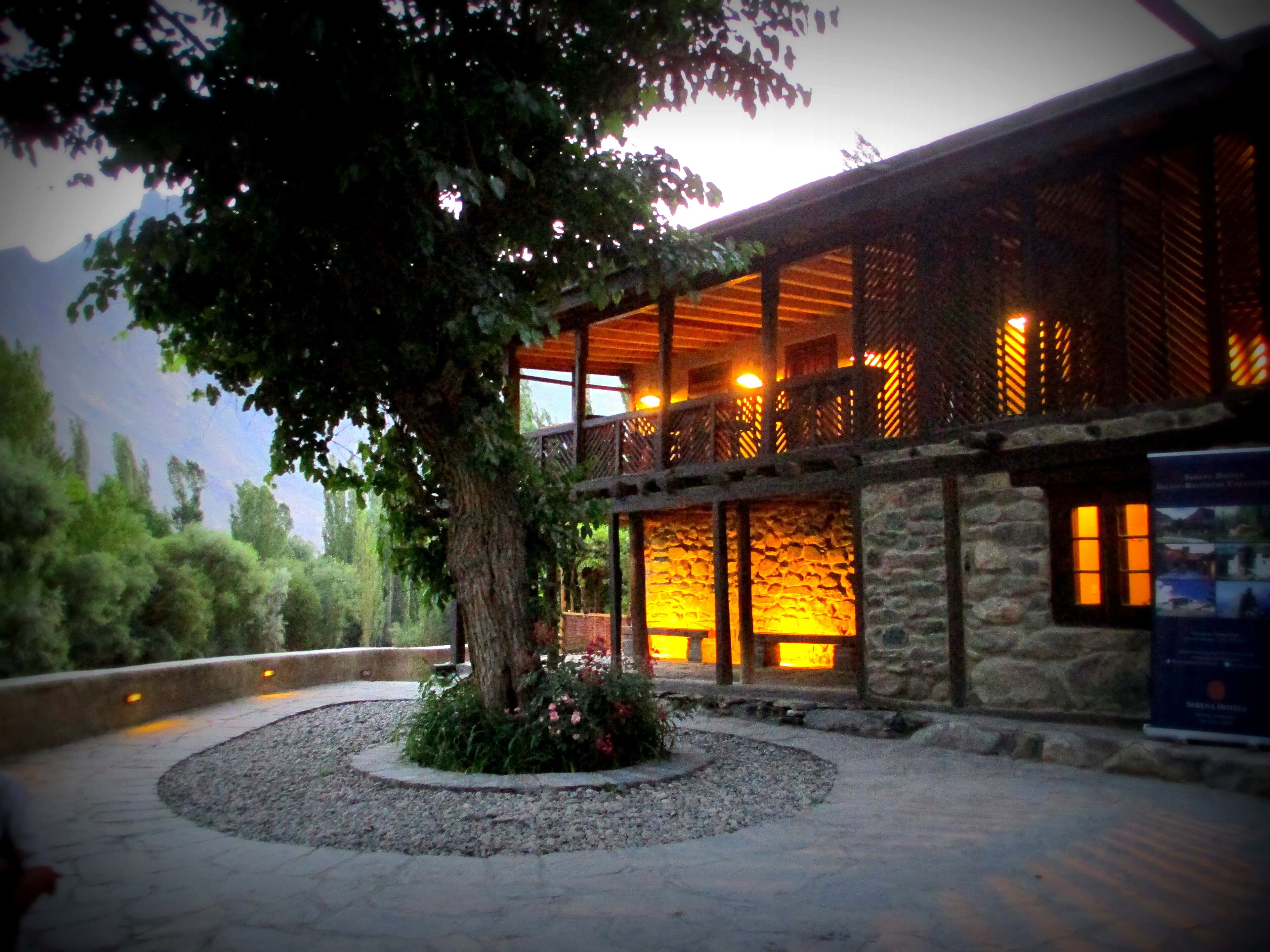
Shigar ValleySleep in a raja's fort on the road to K2
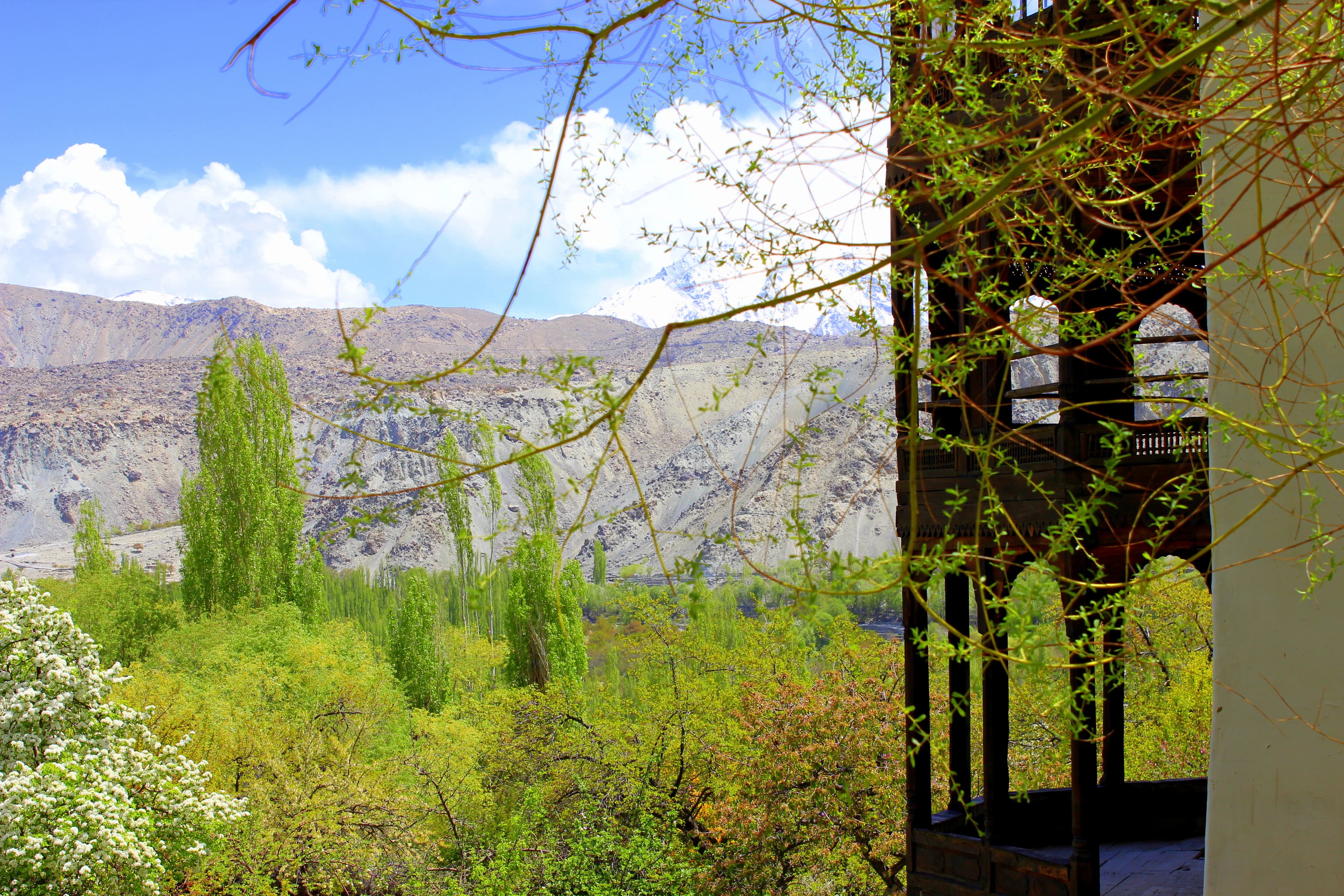
Photo: Saqibmahay1 · CC BY-SA 3.0The centre of Shigar Valley is its fort, Fong Khar, the 'palace on the rock'. It is about 400 years old, was restored by the Aga Khan Trust for Culture and now operates as a heritage hotel and museum, with a walled garden of fruit trees beside a stream. A few minutes' walk away is the Amburiq Mosque, a small timber mosque that is among the oldest in Baltistan. Between them run village lanes, water channels and big walnut trees.
Shigar is also the road to K2. Jeeps for the Baltoro leave from here for Askole, and by late October the expedition season is over, so the valley is noticeably quiet. Give it a full day, or stay the night so you can walk the orchards in early light. On the way back, stop at the Sarfaranga dunes for sunset.
Khaplu in autumn
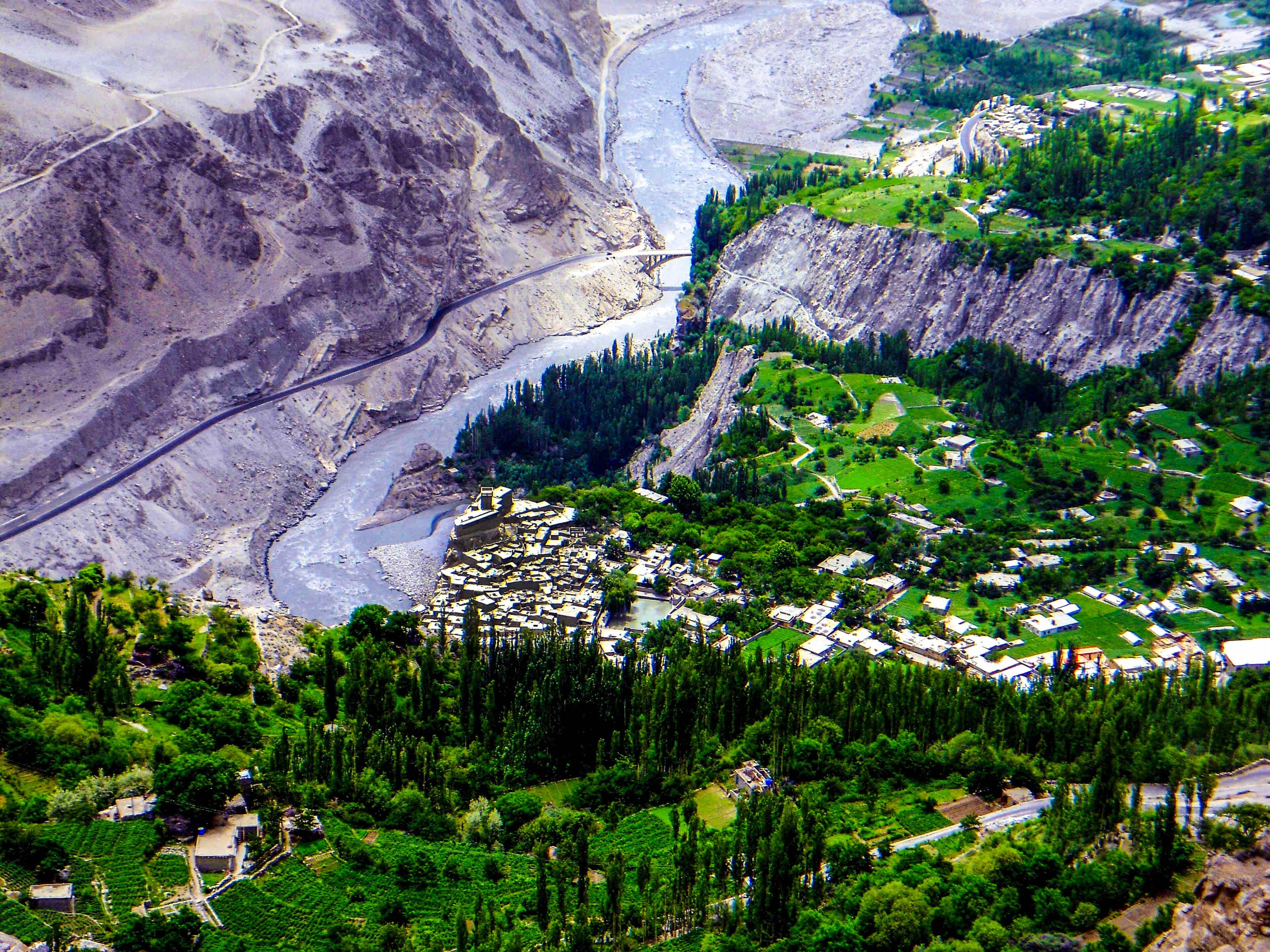
Khaplu is the autumn destination in Baltistan that most rewards an overnight stay. Khaplu lies about 103 km east of Skardu, a drive of 2.5 to 3 hours up the Indus and then the Shyok River, and the town climbs a huge fan of terraced fields at about 2,600 metres.
At the top of the old town stands Khaplu Palace (Yabgo Khar), built in 1840 as the seat of the local rajas and now restored as a heritage hotel. Below it, the Chaqchan Mosque, about 700 years old, is one of the most important timber mosques in the region. In late October the terraces around them are lined with yellow poplars, and the apricot trees have turned orange and red. From the upper lanes you look across the Shyok to a wall of granite peaks.
The drive is part of the day. The road follows the river past small oases, each one a block of colour against grey scree, and passes the point where the Shyok joins the Indus. With an extra day you can continue towards Hushe Valley for a view of Masherbrum, though it is properly cold up there by late October, or detour to Manthokha Waterfall on the way back. Read up on Balti culture first and the mosques and palace will mean more.
Autumn around Skardu: Upper Kachura, Chunda, Basho and Satpara
You do not have to leave the Skardu basin to find autumn colour, and four short trips cover it. The closest is Upper Kachura Lake, 30 minutes west of town and a short walk down through orchards to the shore. The lake sits at about 2,500 metres in a bowl of fruit trees and willows, and on a still morning the colour doubles in the water. Lower Kachura, home of the Shangrila Resort, is ten minutes away.
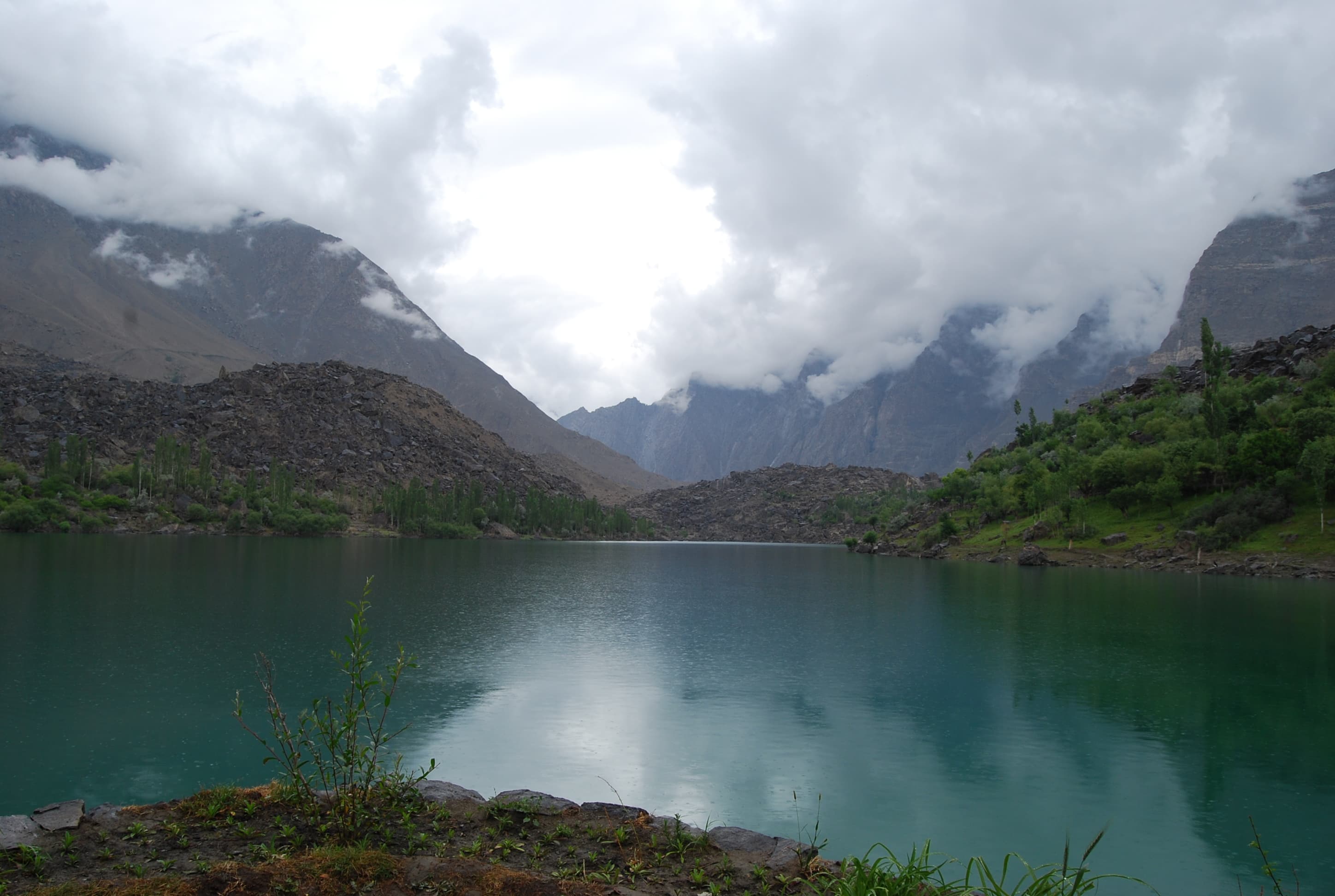
Upper Kachura LakeThe wilder, deeper, bluer of Skardu's twin lakes
Photo: Drnajeebansari at English Wikipedia · CC BY-SA 3.0Chunda Valley is better known for its April blossom, but the same orchards and poplars turn in October, and its terraces at about 2,400 metres look straight across the Indus and the Skardu bowl. It is 45 minutes to an hour from town. Satpara Lake, 9 km south on the Deosai road, has less foliage and more open water and rock. Go for the clear autumn light, and combine it with the Manthal Buddha Rock on the way.
Basho Valley is the outlier. Its meadows sit at about 3,000 metres among pine forest, reached by a 4x4 track of 1.5 to 2 hours from Skardu. Autumn arrives earlier there than in town, and snow closes the upper track from late autumn, so ask a local driver about conditions before you commit a day to it.
In Skardu itself, make the short, steep climb to Kharpocho Fort above the bazaar in the late afternoon. From the walls you see the whole basin: the Indus running low and clear in its autumn channels, the poplars of the town below, and the dunes beyond.
Skardu's cold deserts in autumn: Katpana and Sarfaranga
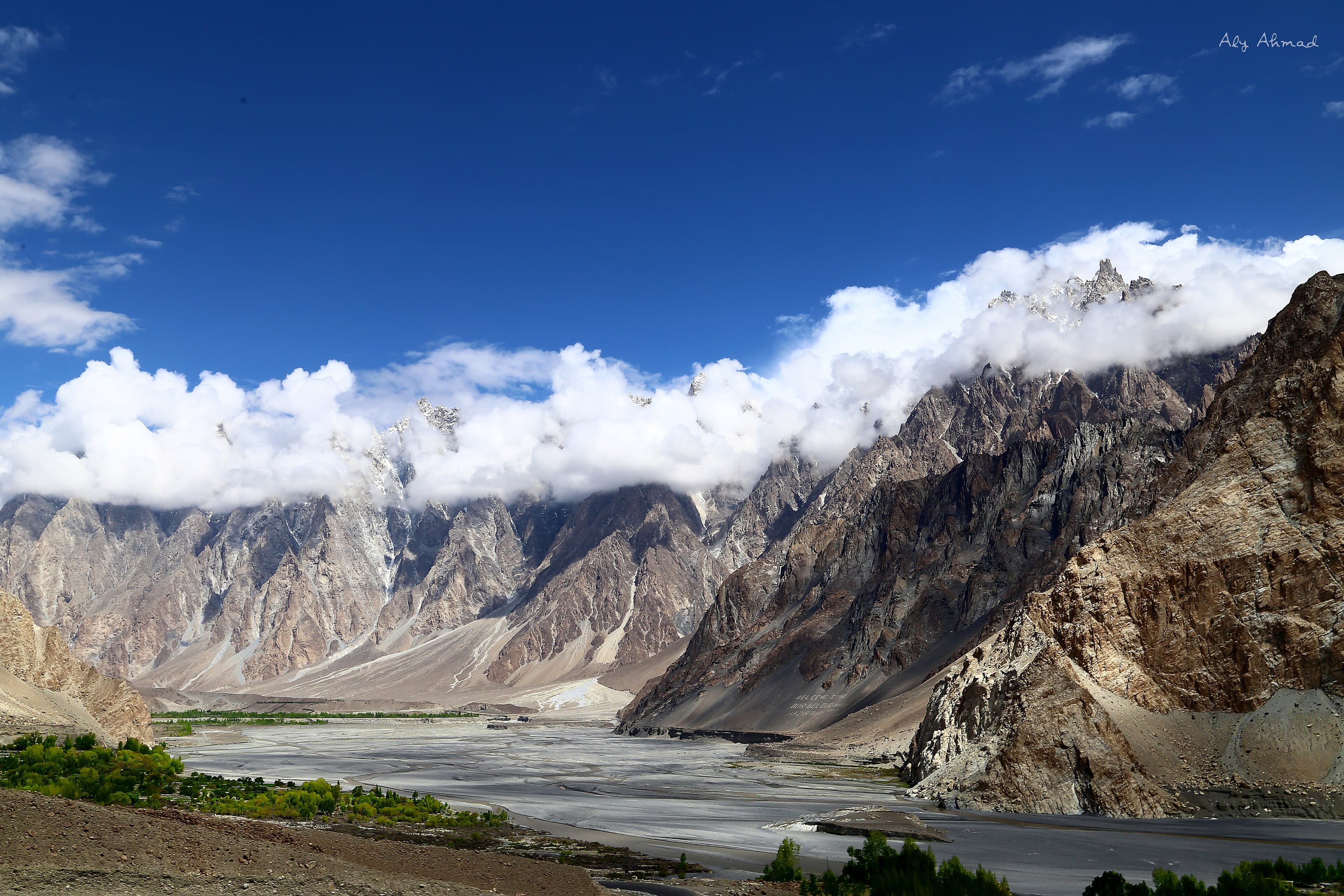
Skardu's cold deserts are at their most comfortable in autumn: cool enough to walk the dunes at midday, and clear enough for long views. Katpana Desert lies beside the airport road at about 2,226 metres, 15 to 20 minutes from the bazaar. Sarfaranga, on the way to Shigar, is wider and emptier.
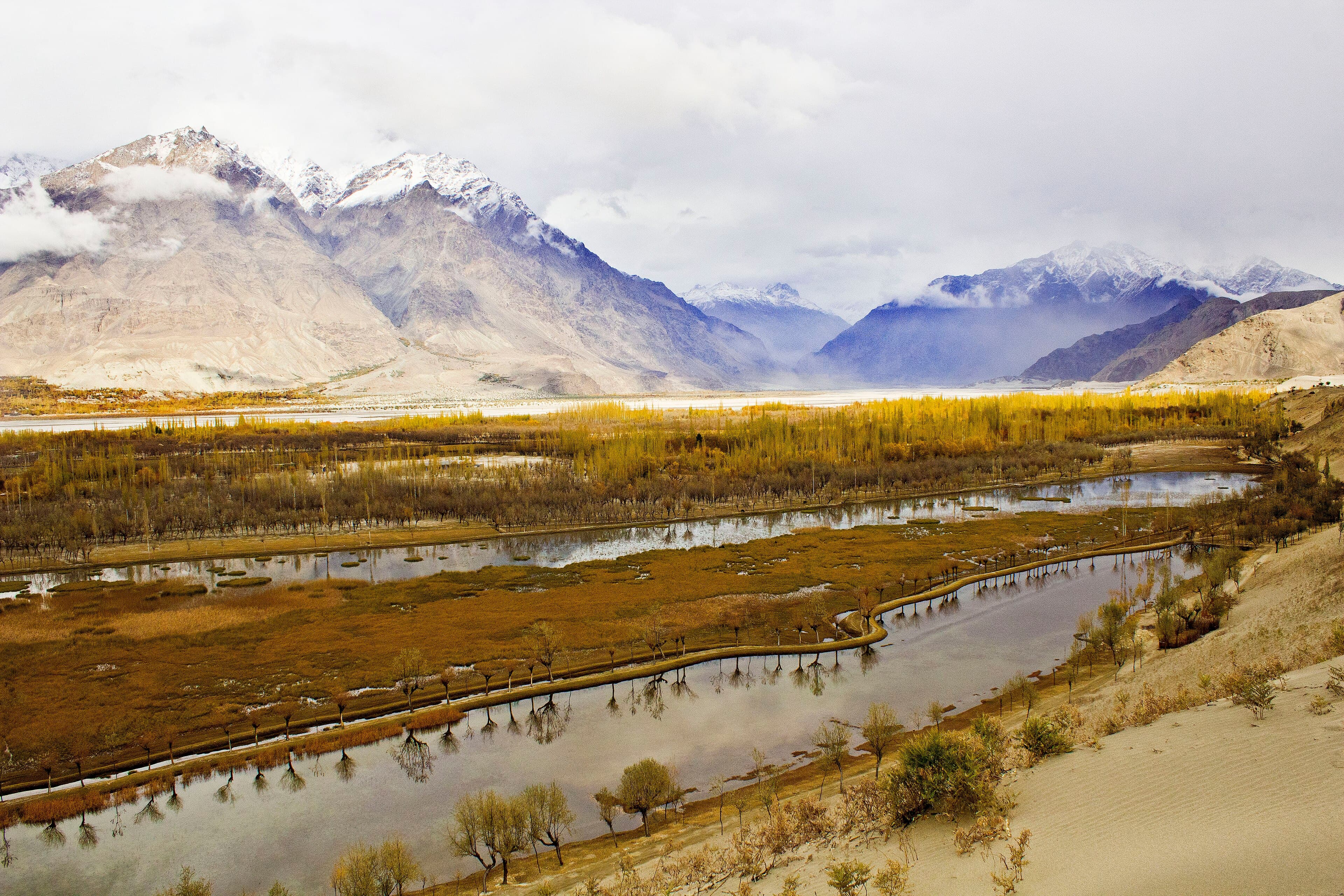
Katpana DesertWhere winter snow settles on sand dunes
Photo: Muhammad Rizwan Shaikh · CC BY-SA 4.0What makes them an autumn subject is the edge, where sand meets irrigated land. Rows of yellow poplars stand directly behind grey dunes, with snow peaks above both, and in the last hour of daylight the low sun rakes across the ripples. Katpana is also famous for snow on sand, but that belongs to the months from December to February, and Skardu in winter covers it. By November nights at the dunes are below freezing, so sunset visits are more comfortable than sunrise ones.
Is Deosai open in autumn?
Deosai is usually still reachable in September and sometimes into October, but in autumn it should be treated as a bonus, not a plan. The plateau averages 4,114 metres, nearly 1,900 metres above Skardu, and the first heavy snowfall closes the jeep road until the following summer.
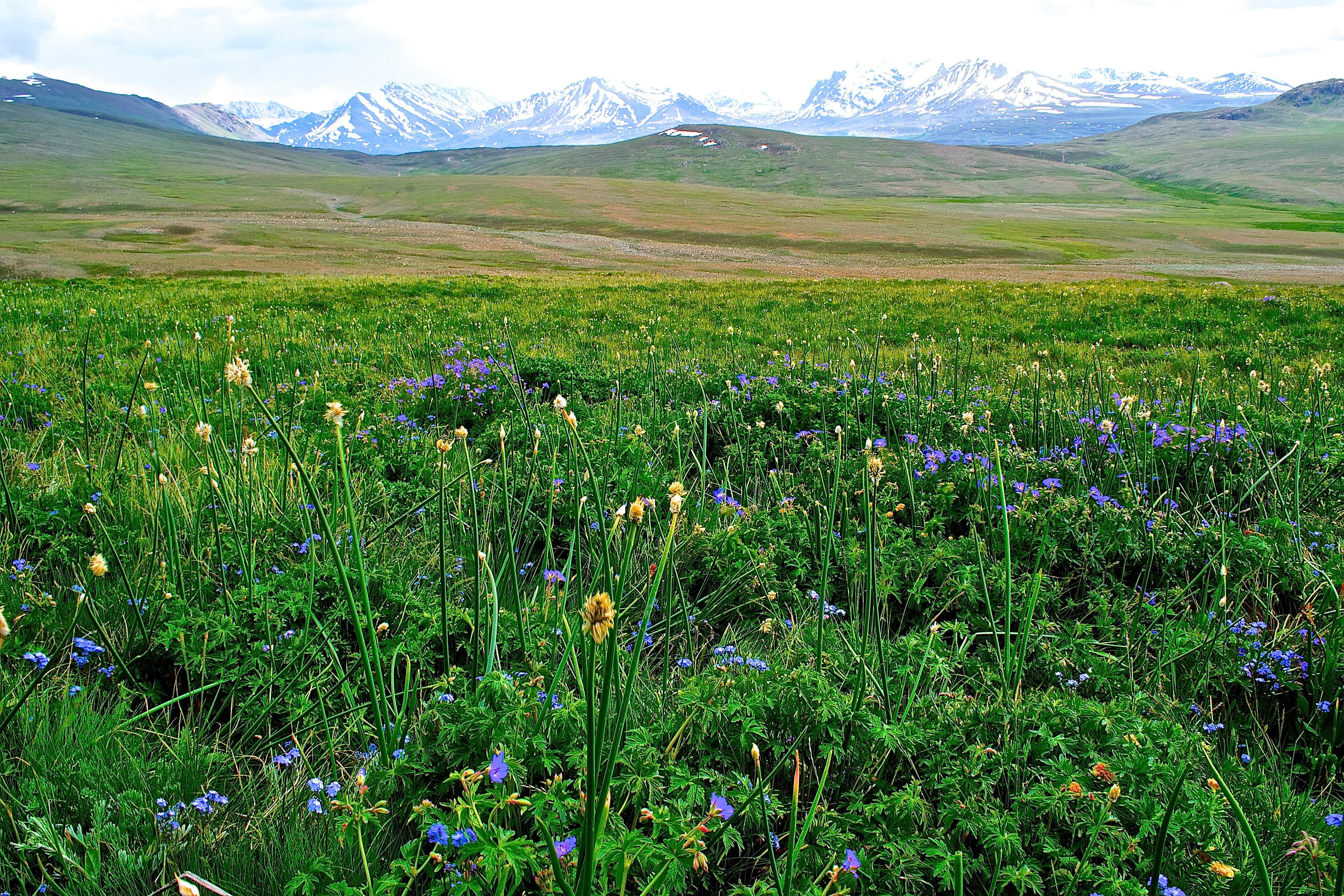
Deosai National ParkThe Land of Giants: a rolling world above 4,000 metres
Photo: Akhtar Hussain Samoo · CC BY-SA 3.0When that happens varies from year to year. In October 2018, snow that began on the 16th trapped ten people on the plateau, tourists and wildlife staff among them, until they were rescued by army helicopter. Dawn describes the Skardu to Deosai road as normally shut by snow for about five months from November. Our advice: plan on Deosai National Park until the end of September, check with a Skardu jeep driver for anything in October, and assume it is closed from November until around June.
If you do get up there in late September, you will find tawny grass, empty campsites, hard frost at night and very few other visitors. The Himalayan brown bears that the park was created to protect in 1993 are preparing for hibernation at this time of year. Go with a driver who knows the track, start early, carry warm layers and food, and be off the plateau well before dark. The one-way crossing to Astore is not a sensible autumn plan unless local advice on the day is clear.
How cold is Skardu in October and November?
Skardu in October is cool and dry: the long-term averages are a daily high of 20.4°C and a low of 4.3°C. In November the average high drops to 13.2°C and the average low to minus 1.9°C. These are Pakistan Meteorological Department figures for the Skardu station at about 2,230 metres, and they describe the town, not the higher valleys.
In practice that means warm sun on your back at midday in mid-October, a sharp chill the moment you step into shade, and frost on the ground on many mornings by the end of the month. The record low is minus 4.2°C for October and minus 9.5°C for November. Khaplu, about 370 metres higher, is a few degrees colder, and Deosai is in a different category altogether.
Rain is rare. Skardu averages about 7 mm in October and under 6 mm in November, so most days are clear. Dress in layers, bring a proper down jacket for evenings and early starts, and expect simple heating in most hotels. The packing list for the Pakistan mountains applies as written. Add lip balm and moisturiser, because the air is very dry.
Are Skardu flights reliable in autumn?
Skardu flights run through autumn and October's dry weather helps, but they are never guaranteed, so always hold a buffer day. The flight from Islamabad takes about 50 minutes and passes close to Nanga Parbat. It operates only when the weather along the route and at Skardu allows, and when it does not, the flight is usually cancelled outright, not delayed by an hour.
Two things work in your favour. October and November are among the driest months of the year in Skardu, and more than one airline now flies the route (schedule listings in 2026 showed PIA, Airblue and AirSial), so a cancelled seat is easier to rebook than it once was. Frequencies change with the season, though, so check current timetables when you book. Morning departures are the norm.
If a flight is cancelled, the fallback is the road. Islamabad to Skardu is 14 to 18 hours by the Karakoram Highway and the Jaglot to Skardu road, normally split over two days, and Gilgit to Skardu is 5 to 6 hours. The Babusar Pass shortcut normally closes for the season at some point between mid-October and late November, so allow for the longer highway route. Our guide to Islamabad to Skardu flights and roads goes through every option, and the rule is the same as ever: never book an international connection for the day you are due to fly out of Skardu.
A 6-day Skardu autumn itinerary
Six days is a comfortable length for Skardu in autumn, including one spare day for flight trouble. This plan assumes you arrive between about 22 and 28 October.
Day 1: fly in from Islamabad and rest, since you have climbed to about 2,230 metres in under an hour, then go to the Katpana dunes for sunset. Day 2: Shigar Valley, with the fort, the Amburiq Mosque and the orchards, and Sarfaranga on the way back. Day 3: drive to Khaplu, stopping along the Shyok, and spend the afternoon in the old town. Day 4: early light on the Khaplu terraces, the palace and the Chaqchan Mosque, then back to Skardu.
Day 5: Upper Kachura Lake in the morning, Chunda Valley or Satpara Lake in the afternoon, and Kharpocho Fort for sunset. Day 6: fly out, or use this as the buffer and start the drive if the flight is cancelled. With more time, add a night in Shigar or a jeep day to Basho, or continue by road to Hunza, a full day's drive of roughly 8 hours from Skardu to Karimabad.
Autumn is a quiet season in Baltistan. There is no equivalent of Hunza's late-October rush, hotels have space, and rates are generally lower than in the summer trekking season, although the two heritage hotels in Shigar and Khaplu have few rooms and are worth reserving early. Some smaller guesthouses close in November. Our Skardu and Baltistan Discovery tour covers this circuit with a driver and guide, and the Autumn Colours Photography Tour combines it with Hunza. If you are still choosing between the two regions, see Hunza or Skardu in autumn and our ranked list of the best autumn places in Gilgit-Baltistan.
Questions, answered
Is October a good time to visit Skardu?
Yes. October is dry and clear in Skardu, with an average high of about 20°C, and Shigar, Khaplu and the Skardu basin turn gold in the second half of the month. The main limits are cold nights and Deosai, which can close with the first heavy snow.
How cold is Skardu in October?
Skardu's long-term October averages are a high of 20.4°C and a low of 4.3°C, with a record low of minus 4.2°C. November is colder, averaging 13.2°C by day and minus 1.9°C at night. Khaplu and the higher side valleys are a few degrees colder than the town.
Is Deosai open in October?
Sometimes. The Deosai jeep road stays open until the first heavy snowfall, which can come at any point from mid-October, and it is reliably closed from November until around June. Plan Deosai for September at the latest and treat an October visit as dependent on conditions.
Do flights to Skardu operate in autumn?
Yes, flights between Islamabad and Skardu operate through autumn, and the dry weather of October and November helps. They are still cancelled whenever conditions on the route or at Skardu are poor, so keep at least one buffer day before any international connection.
How many days do you need in Skardu in autumn?
Five to six days works well: one for arrival and the dunes, one for Shigar, two for Khaplu with an overnight stay, one for Kachura, Chunda or Satpara, and one spare in case of a cancelled flight.