A wave of blossom that climbs the mountains
Spring in Gilgit-Baltistan is not a date — it's a moving front. Sometime in late March the first apricot trees ignite in the warm, low orchards around Skardu, Shigar and Khaplu, a froth of white and palest pink against bare brown rock and snow-plastered peaks. Over the following four to five weeks that wave of colour climbs north and upward, reaching central Hunza in early to mid-April and finishing in the high villages of upper Gojal toward the end of the month.
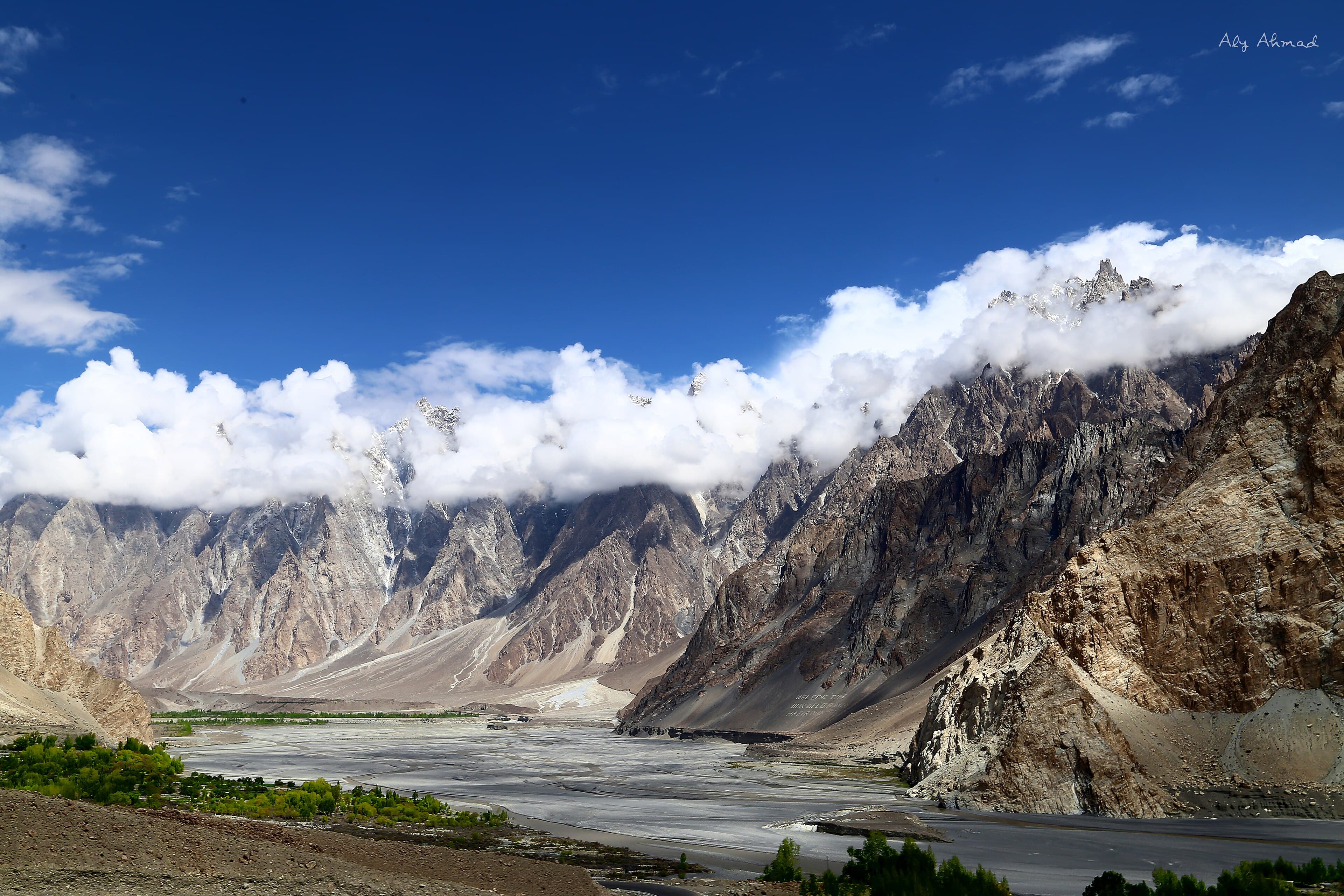
The effect is unlike anywhere else in Asia, because the contrast is so extreme. These are not blossom trees in a city park; they are centuries-old orchards terraced into a vertical desert, with 7,000-metre giants like Rakaposhi and Ultar Sar still wearing full winter snow directly behind them. Pink petals, grey scree, white summits, indigo sky — four bands of colour stacked in a single frame.
Because the bloom moves with altitude, a well-planned trip can follow it. Start in Baltistan in the last week of March, drive the Karakoram Highway north as April opens, and you can stand under flowering trees for two weeks straight while the same villages behind you fade to green.
Week-by-week blossom timeline
Late March (roughly weeks one and two): the season opens in Baltistan. Skardu's surrounding villages, the orchard lanes of Khaplu and the walled gardens of Shigar Valley bloom first, with apricot leading, followed quickly by almond, cherry and apple. Navroz on 21 March makes a natural opening marker — the festival and the first flowers often arrive within days of each other.
Early April (week three): the wave reaches lower and central Hunza. Karimabad, Altit and Ganish light up across their terraces, and this is the window most photographers aim for — central Hunza in full bloom with maximum snow still on the peaks. Nagar, across the river, blooms on a similar schedule with Rakaposhi as its backdrop.
Mid-April (week four): central Hunza peaks and begins to scatter, while the bloom climbs to higher villages — Duikar above Karimabad holds its flowers a little longer than the valley floor. Late April (weeks five and six): the finale moves into upper Gojal, where Gulmit and the villages near the Passu Cones flower last, sometimes holding colour toward the end of the month.
Treat these weeks as a reliable rhythm rather than a contract. A warm winter can pull everything a week earlier; a cold, late spring can push it back. Local operators track the bloom village by village each year, so ask before you lock flights — and if you can, build two or three flexible days into the plan.
The best blossom villages and viewpoints
In central Hunza, the terraces below Baltit Fort in Karimabad and the lanes around Altit Fort are the classic stages: blossom in the foreground, a 700-year-old fort above, Ultar Sar behind. The old Silk Road village of Ganish, with its carved wooden mosques and watchtowers, frames flowering trees against some of the valley's oldest architecture.
For the wide view, nothing beats Duikar — the Eagle's Nest viewpoint above Karimabad — at dawn. From up there the entire valley floor becomes a quilt of pink and white orchard squares, and as the sun clears the ridge it lights Rakaposhi, Diran and Golden Peak one by one. Cross the river to the Nagar side and the perspective flips: blossom-framed views with Rakaposhi's full 7,788-metre north face filling the sky.
Baltistan's blossom deserves equal billing and gets a fraction of the visitors. Chunda Valley near Skardu is locally famous for the density of its bloom, Shigar's orchards flower around a 17th-century fort-palace, and Khaplu's amphitheatre of terraced fields under the Karakoram is arguably the most beautiful blossom setting in the region — with almost nobody else in the frame.
Navroz: the festival that opens spring
Spring here begins with a celebration. Navroz, the Persian new year on 21 March, is marked across Gilgit-Baltistan — with particular warmth in the Ismaili communities of Hunza and Ghizer and among the Shia and Noorbakhshi communities of Baltistan. Houses are cleaned, sprouted-wheat dishes are prepared, families visit one another, and in many villages there are sports, music and communal meals.
For a traveller, Navroz is a window into how closely life here still tracks the agricultural year. The festival marks the moment villages turn from winter survival to the new growing season — water channels are repaired, fields are readied, and the first blossom often opens within days, as if on cue.
If your dates allow, being in Hunza or Skardu around 21 March means you catch the festive opening of the season and position yourself perfectly for the Baltistan bloom that follows. Ask your guesthouse hosts what's happening locally; visitors who show genuine interest are very often simply invited along.
Photographing the blossom: light, lenses and drone rules
Light makes or breaks blossom photography here. Mornings are the prize: valley air is stillest before noon, peaks are most often cloud-free at dawn, and low sidelight makes petals glow while the snow behind stays crisp. Afternoons bring wind that shakes the branches and haze that flattens the mountains — use them for village lanes and portraits instead.
Two lenses do most of the work. A telephoto (70–200 mm or longer) compresses flowering trees against the peaks — this is how the iconic blossom-and-Rakaposhi frames are made — while a wide angle works inside the orchards, shooting up through the canopy or along irrigation channels lined with flowers. Petals stay on the trees for only seven to ten days per village, so shoot a location the day you find it good; the wind will not wait for you.
Drones need genuine caution in Pakistan. Flying requires official permission, rules are enforced unevenly, and equipment can be questioned or confiscated — especially near checkpoints, bridges, airports and anything military. If aerial footage matters to you, arrange permissions through your tour operator well in advance, always ask locally before launching, and never fly over villages without consent.
Spring weather and what's open after winter
Spring weather is bright but two-faced. Valley daytimes are pleasant — typically mild enough for a light jacket in Skardu and Karimabad by April — while nights still drop near or below freezing, and a passing front can dust the village edges with late snow. Pack proper layers; this is blossom season, not summer.
The Karakoram Highway is open year-round, so the whole Gilgit–Hunza–Gojal corridor is accessible, and Skardu is reachable by its all-weather road and by (weather-dependent) flights. The high country, however, is still asleep: Deosai remains under snow, the Babusar Pass shortcut stays closed until roughly late June, and the Khunjerab Pass reopens to crossings on the Chinese side only in spring — though you can usually drive to the Pakistani side of the pass itself, dressed for serious cold.
Tourist infrastructure wakes up with the flowers. Most Hunza hotels and restaurants reopen through late March and April after the winter lull, boats return to Attabad Lake, and you get a sweet spot of open services without the packed roads of midsummer. Fort museums at Baltit and Altit operate through the season.
Spring versus autumn: which colour season is for you
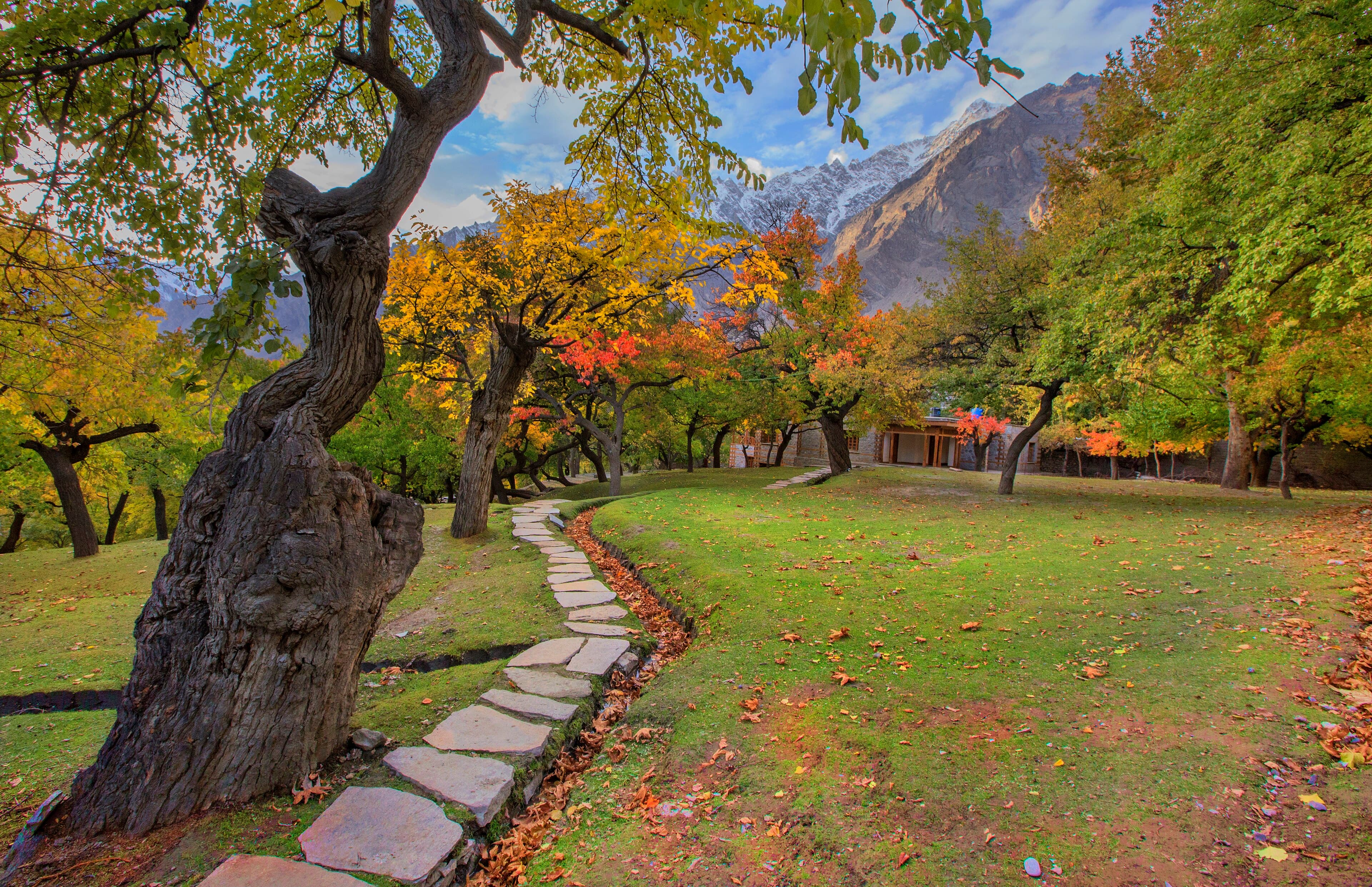
Travellers often weigh blossom season against the famous golden autumn, and they are genuinely different trips. Spring is delicate and brief — soft pinks and whites, flowers that last days rather than weeks in any one village, maximum snow on the peaks, and a feeling of the valleys waking up. Autumn is bolder and longer — molten gold poplars and crimson orchards through mid-October to mid-November, crystalline visibility and harvest abundance.
Spring asks more flexibility of you, because bloom dates shift year to year and a week's error can matter; autumn colour is more forgiving and easier to time. On the other hand, spring offers Navroz, dramatic snow-line contrast and quieter roads than October, which has become the photographers' high season.
The honest answer many regulars give: come for both, in different years. If this is your one trip and flowers are the dream, target the first two weeks of April in Hunza and keep your plan loose. Our autumn guide covers the other half of the argument.
Pairing blossom with culture: a season made for slow travel
Blossom rewards exactly the kind of travel Hunza does best — slow days on foot. The flowering orchards lace directly through the historic cores of Karimabad, Altit and Ganish, so a morning of photography flows naturally into Baltit Fort's museum rooms, the restored Altit settlement with its garden café run by local women, and Ganish's carved mosques.
In Baltistan, pair Chunda and Shigar's bloom with Shigar Fort — the restored raja's palace that now operates as a heritage hotel — and Khaplu's grand palace and old mosque. Because spring sits outside trekking season, guides have time, hosts have attention, and you will drink more tea in more kitchens than in any August.
A practical pairing for a 10–12 day trip: fly or drive to Skardu in late March for Baltistan's bloom and forts, road-trip to Hunza as April opens for the central-valley peak, and finish in Gojal as the last villages flower beneath the Passu Cones. You'll have followed an entire season from first petal to last.
Questions, answered
When is cherry blossom season in Hunza?
Central Hunza — Karimabad, Altit and Ganish — typically blooms in early to mid-April, with apricot, cherry, almond and apple flowering in quick succession. Higher villages like Duikar and upper Gojal follow into late April. Exact dates shift a week or so with each winter, so confirm with local operators before booking.
Where does blossom season start in Gilgit-Baltistan?
In Baltistan. The orchards around Skardu, Khaplu and Shigar — Chunda Valley is a local favourite — flower first, usually from late March, because they sit warmer and lower than Hunza. The bloom then moves north and upward, reaching Hunza in April.
How long does the blossom last in each village?
Roughly seven to ten days per village from first flowers to petal fall, less if strong wind or rain arrives. The full regional season runs about five to six weeks because different altitudes bloom at different times — which is why following the wave from Skardu up to Gojal works so well.
Is spring a good time to visit Gilgit-Baltistan?
Excellent — if your goals match the season. Valleys, forts, the Karakoram Highway and Skardu are all open, hotels have reopened and crowds are light. But high country like Deosai and the Babusar Pass is still under snow, so spring is for blossom, culture and valley scenery rather than trekking.
Can I fly a drone during blossom season in Hunza?
Only with proper permission. Pakistan requires official approval for drone flying, and equipment can be questioned or confiscated, particularly near checkpoints, airports and military sites. Arrange permits through your tour operator in advance and always ask locally before launching.