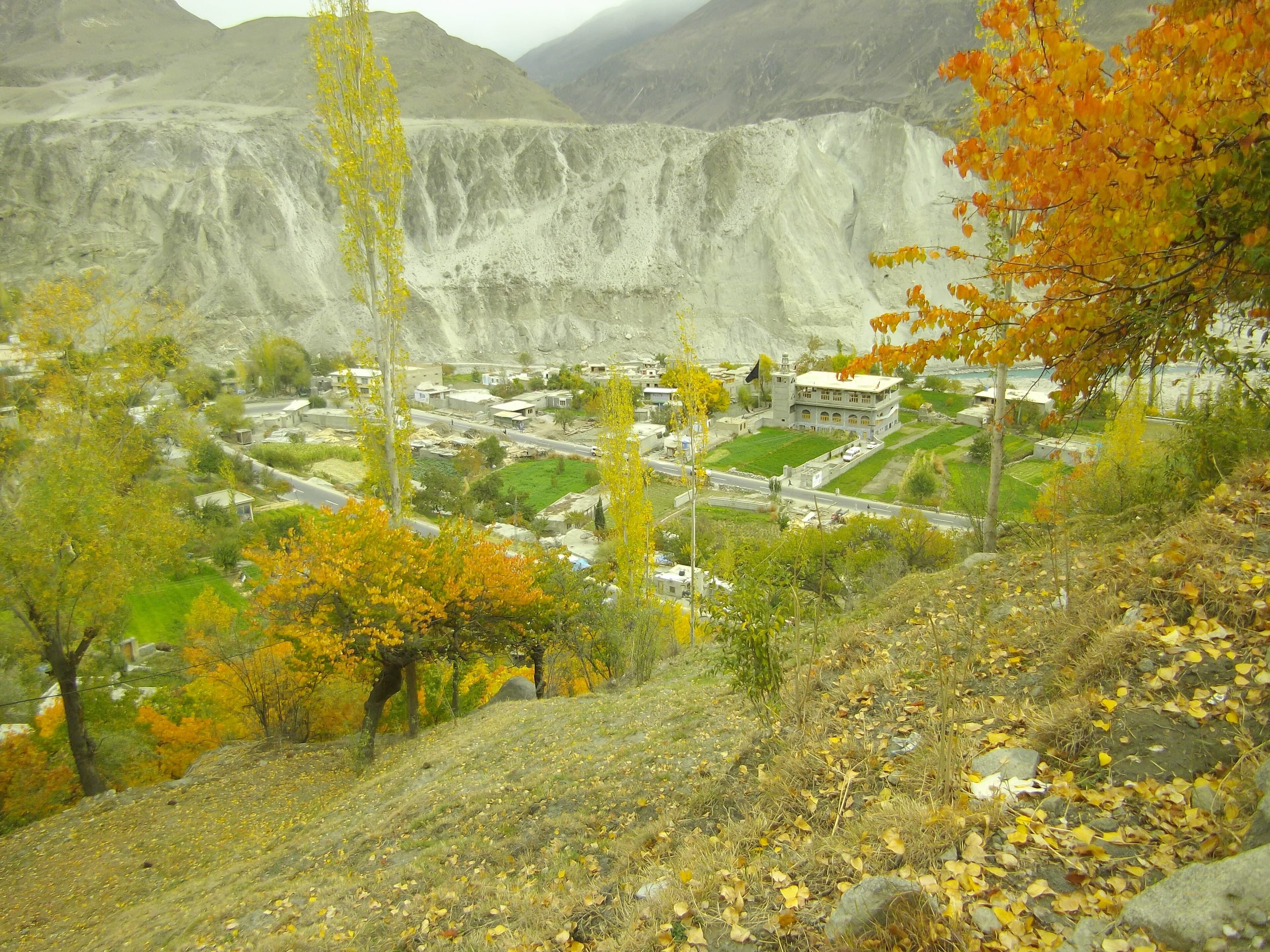
The Burusho and a language unlike any other
The heart of the Hunza Valley — Karimabad, Altit, Ganish, Aliabad and the villages between them — is home to the Burusho people, farmers and traders who have terraced these slopes for well over a thousand years. Their language, Burushaski, is one of linguistics' great puzzles: a language isolate, related to no other known tongue on Earth, not to the Indo-European languages around it nor to anything in Central Asia or Tibet.
Linguists travel from around the world to study Burushaski, and locals are proudly aware of how unusual their mother tongue is. Ask your guide to teach you a phrase or two — a simple greeting in Burushaski opens doors and faces light up when a visitor tries.
Most people in central Hunza are comfortably multilingual, switching between Burushaski at home, Urdu for national life and English with visitors. In Gojal to the north the language changes to Wakhi, and in Nagar across the river Burushaski continues in a distinct dialect — a reminder that every side valley here carries its own identity.
Karimabad: the old capital under Baltit Fort
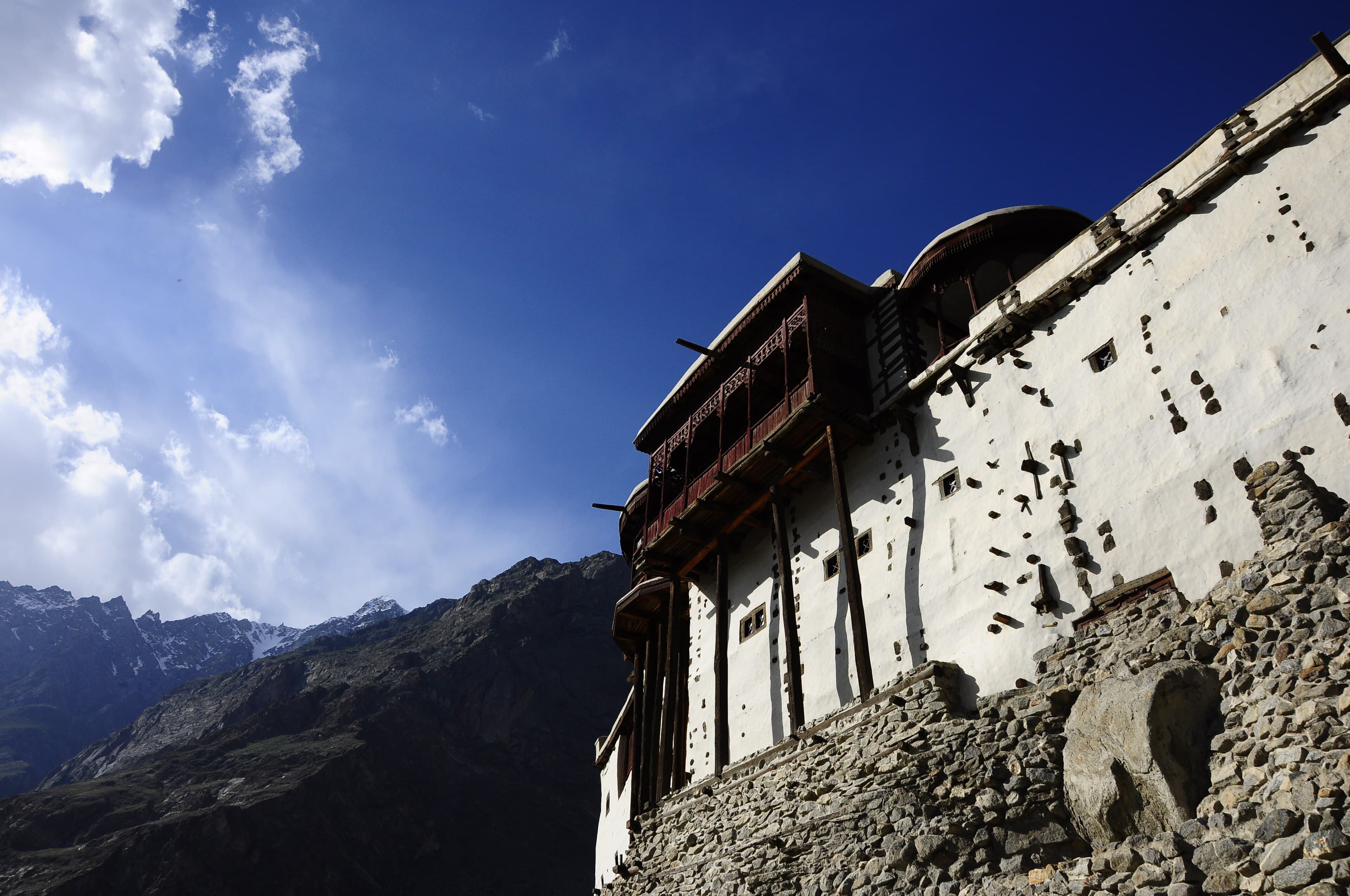
Karimabad — historically called Baltit — was the seat of the Mirs of Hunza, and the whole village still arranges itself beneath their home, Baltit Fort, which crowns the slope like the prow of a ship. The fort's oldest sections are around 700 years old; after a meticulous restoration by the Aga Khan Trust for Culture it reopened in 1996 as a museum and remains the cultural centrepiece of the valley.
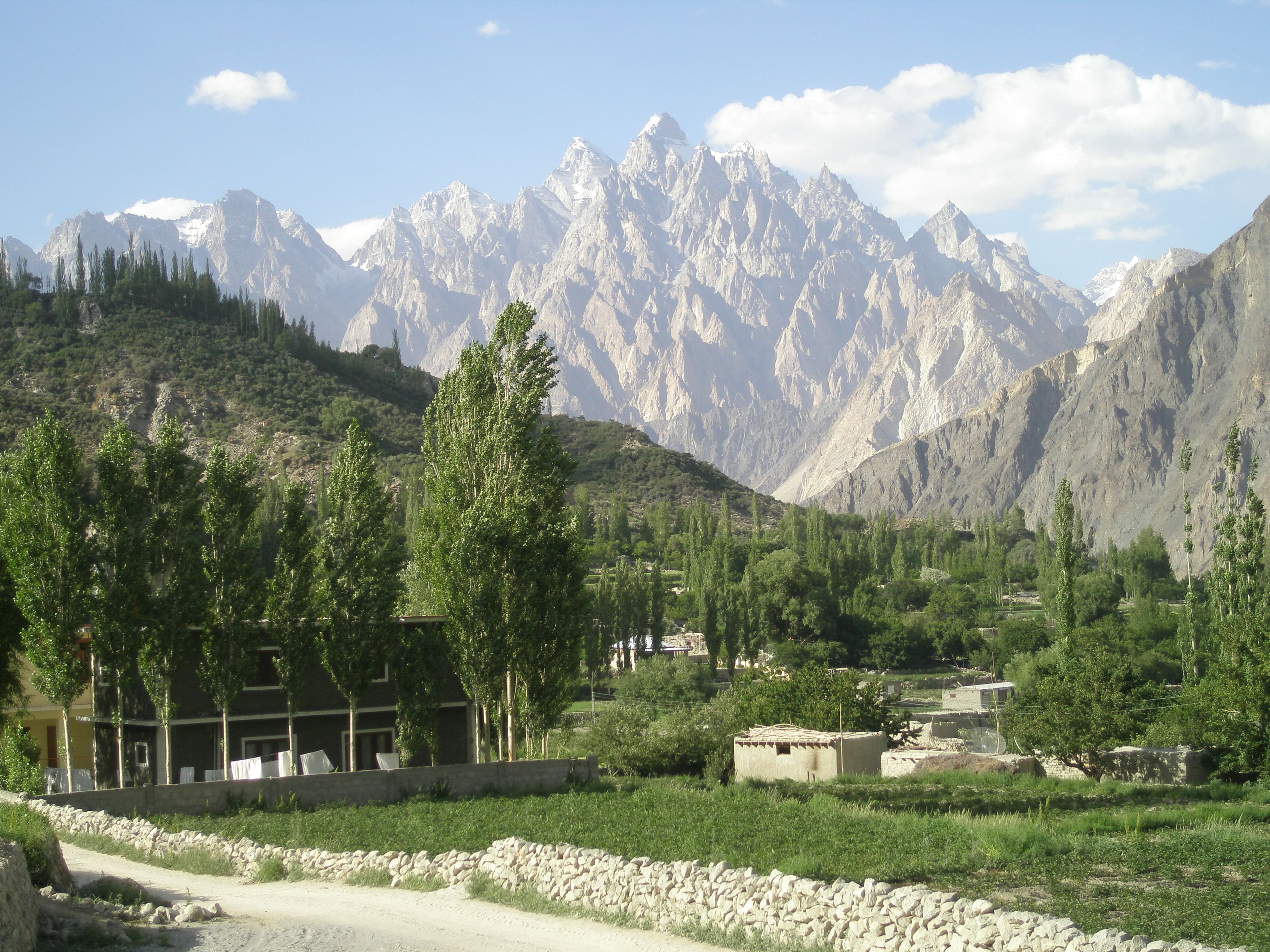
The village below is a pleasure to walk: a steep bazaar lane of gemstone dealers, carpet shops, cafés and woodcarvers, with Rakaposhi, Diran and Golden Peak filling the horizon across the valley. Water channels — the kuhls that bring glacier melt to every terrace — gurgle beside the lanes, and in April the whole hillside turns white and pink with apricot and cherry blossom.
Karimabad is also where you'll feel modern Hunza's confidence most clearly. Women run shops and cafés on the main bazaar, students head to colleges down-country and abroad, and conversation moves easily from orchard yields to international politics over a pot of tea.
Altit and Ganish: villages a millennium deep
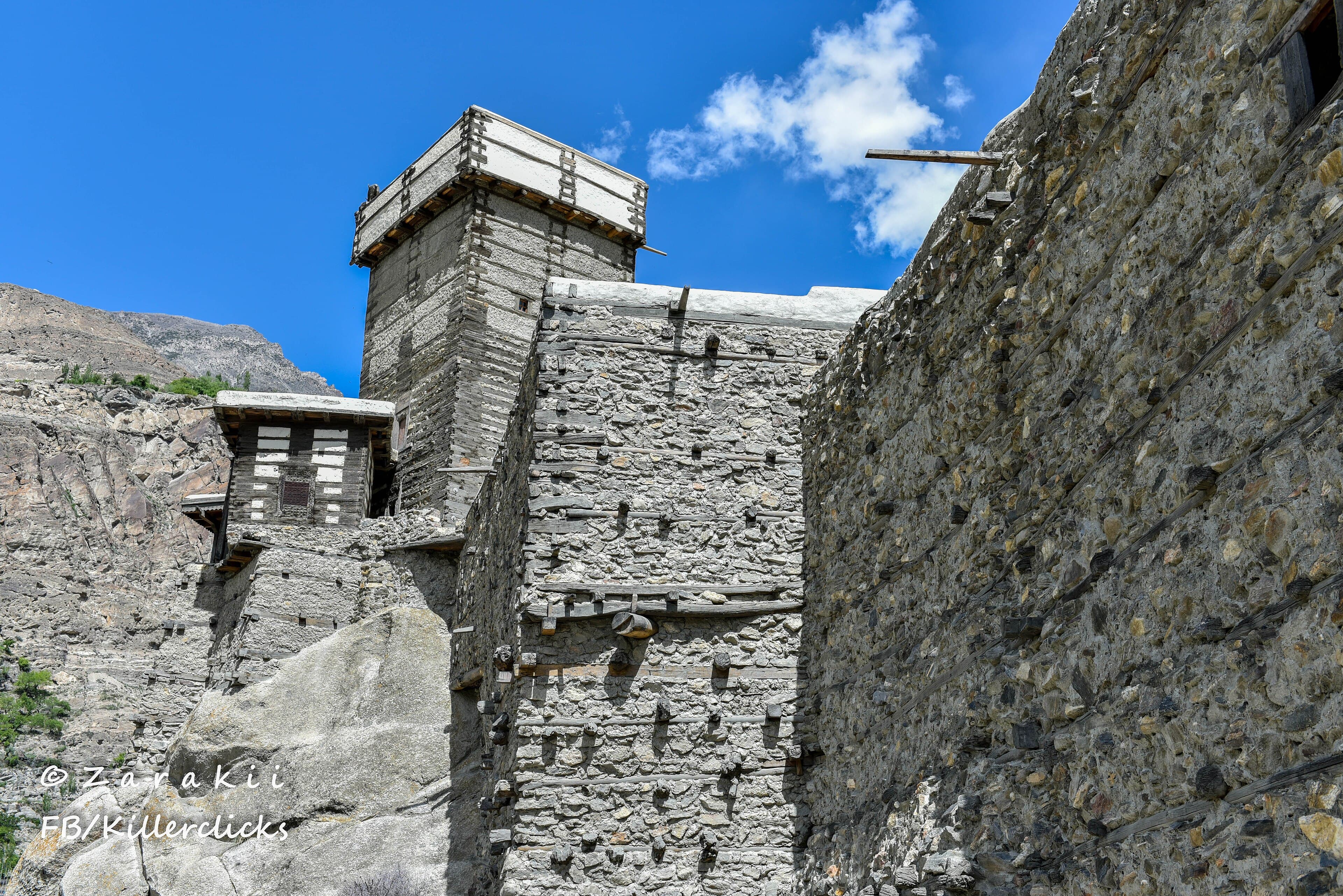
Three kilometres below Karimabad, Altit is the older royal seat. Altit Fort, perched on a sheer rock shoulder above the Hunza River, is usually counted at more than a thousand years old — older than Baltit — and the maze-like fort village at its base, restored along with the fort by the Aga Khan Trust for Culture, still houses families in homes their ancestors built. The Khabasi bakery-café inside the old village, run by local women, is one of the most charming lunch stops in the valley.
Ganish, down on the riverbank where the Karakoram Highway crosses the Hunza River, is widely regarded as the oldest settlement in the valley — a fortified caravan village on the old Silk Road branch routes that linked the subcontinent with Kashgar. Its watchtowers, carved wooden mosques and ceremonial pond cluster around a central courtyard, and the community-led restoration of the old quarter has earned UNESCO Asia-Pacific heritage awards.
Walking Ganish's narrow lanes you can read the village's history of vigilance: thick shared walls, a single defensible gate and towers where lookouts once watched for raiding parties. Today the only thing watching you is likely to be a row of apricots drying on a rooftop.
Aliabad, Duikar and the working valley
Aliabad is central Hunza's workaday hub — the bazaar town where locals actually shop, with hardware stores, vegetable stalls, banks and bus stands strung along the Karakoram Highway. It's less photogenic than Karimabad but more revealing: spend an hour in its bazaar and you'll see the everyday economy of the valley in motion.
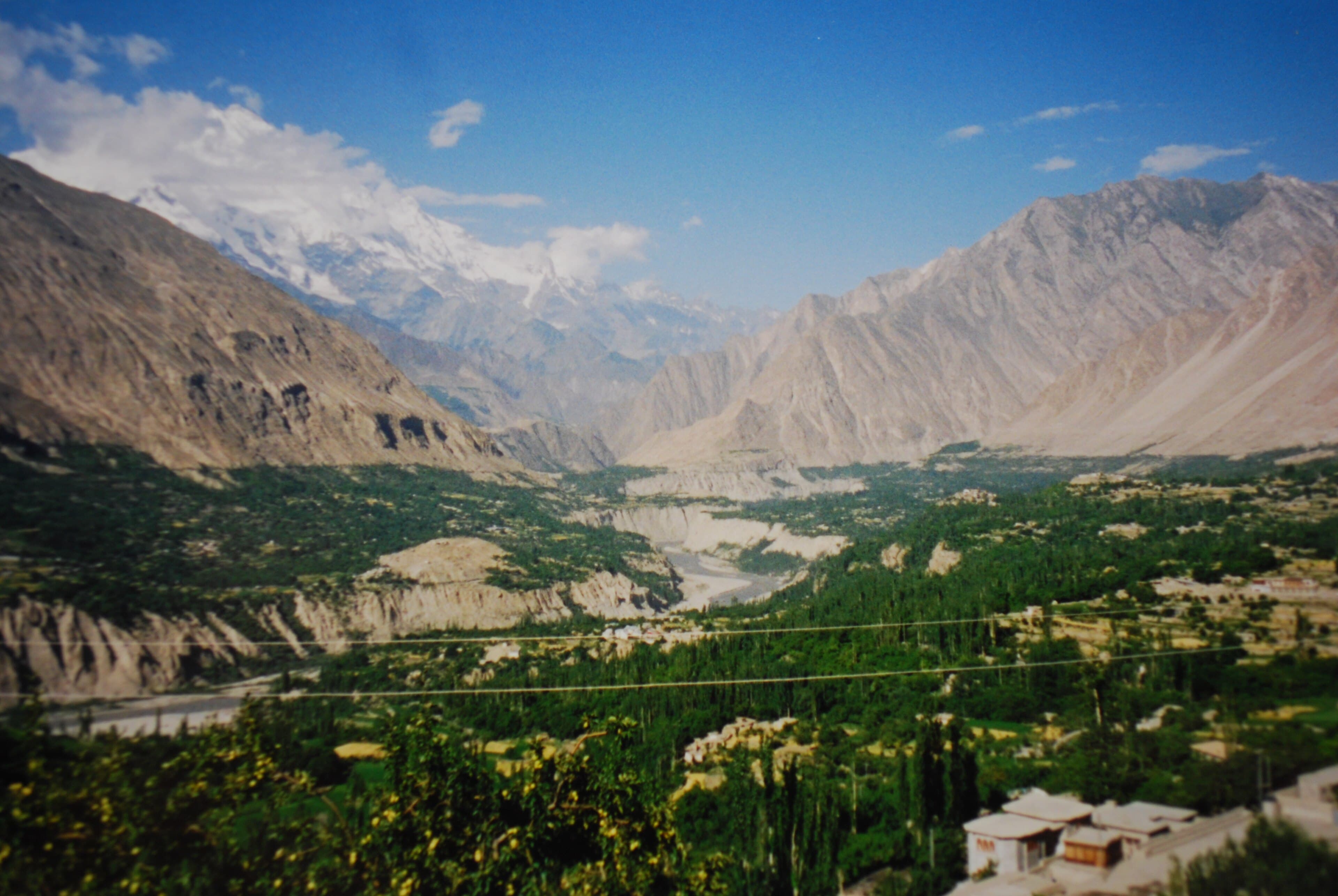
High above Karimabad, Duikar is the valley's balcony. The hamlet sits among some of the highest cultivated fields in Hunza, and its Eagle's Nest viewpoint serves the sunrise panorama — Rakaposhi to Ladyfinger Peak in one sweep — that has become Hunza's signature image. Families here still cut hay by hand on slopes that fall away a kilometre to the river.
Nearby Hassanabad, at the mouth of the glacier valley below Shispare, shows the other side of mountain life: its bridge on the Karakoram Highway was destroyed by a glacial outburst flood in 2022 and swiftly rebuilt. Villages here live with glaciers as neighbours — generous with water, occasionally dangerous — and the community systems for managing both are centuries old.
Ismaili faith and the quiet revolution of the AKDN
Most people in central Hunza and Gojal are Ismaili Muslims — followers of the Aga Khan — and the tradition shapes the valley's atmosphere in ways visitors notice quickly. Ismaili practice here is devotional but undemonstrative: prayer happens in jamatkhanas rather than large mosques, music and poetry are woven into religious life, and education for daughters is treated as a duty equal to that for sons. Older layers survive alongside it: the valley's bitan shamans and their fairy lore have a guide of their own.
The Aga Khan Development Network has been the region's quiet engine for decades. Diamond Jubilee schools began spreading through these valleys in the mid-twentieth century, the Aga Khan Rural Support Programme transformed farming and village organisation from the 1980s, and AKDN health centres, water schemes and heritage projects — including the restorations of Baltit and Altit forts — continue today.
For travellers the practical effect is a region that feels organised, schooled and outward-looking to a degree that surprises first-time visitors. It's also why Hunza's religious culture feels so easygoing: faith here is expressed through service, education and hospitality rather than strict public codes.
The most literate valley in Pakistan
Hunza's literacy rate is routinely cited among the highest in Pakistan, with figures for the younger generation approaching universal — a startling statistic for remote mountain villages, and the fruit of a century of community investment in schools. It is entirely normal to meet a shopkeeper's daughter studying medicine in Karachi or a trekking guide with a master's degree.
Education shapes how Hunza receives its guests. English is widely spoken, conversations go deep quickly, and the hospitality you'll experience is confident rather than deferential — locals host you as equals who happen to know these mountains better than you do.
This is also a valley of guides, climbers and entrepreneurs. Many of Pakistan's high-altitude mountaineers, women's sports pioneers and tourism innovators come from Hunza and neighbouring Gojal, and village conversations have a way of revealing astonishing CVs hidden behind modest manners.
The longevity legend, handled honestly
You may have heard that Hunza people routinely live past 100, that the valley inspired Shangri-La in James Hilton's Lost Horizon, or that its water holds the secret of eternal youth. Treat the specifics with a smile: the famous longevity claims grew from early twentieth-century travellers' tales, and ages were never verifiable in a valley that kept no birth records. Researchers have found no documented evidence of extraordinary lifespans.
What is true is less magical and more interesting. The traditional Hunza diet — apricots and their kernel oil, whole grains, walnuts, mulberries, vegetables and very little processed food — combined with a life of walking steep terrain at altitude, genuinely supports healthy ageing, and you will meet remarkably vigorous elders working their orchards.
Honesty also requires the other half of the story: old Hunza knew real spring hunger before the Karakoram Highway and modern agriculture arrived, and the romantic image of effortless abundance was always a myth. Locals tell both versions — enjoy the legend, but respect the harder history beneath it.
Apricot season and the food of Hunza
The apricot is Hunza's true currency. Tens of varieties grow here, and in July and August the harvest takes over village life — fruit spread to dry on rooftops and flat stones, kernels cracked for oil, and every family's year measured in sacks of dried apricots. Walnut, mulberry and cherry harvests follow their own rhythms, and in October the orchards turn the valley gold and crimson.
Seek out the traditional dishes. Chapshuro — a flat, meat-and-onion-filled bread sometimes called Hunza pizza — is the iconic snack; harissa (locally garma) is a slow-cooked wheat-and-meat porridge for cold days; diram fitti is a naturally sweet bread made from sprouted wheat, served drowning in apricot kernel oil. Apricot soup and dowdo noodle soup warm the winter, and everything ends with tumuru tea, brewed from wild thyme gathered on the high slopes.
Several women-run restaurants and home kitchens in Karimabad, Altit and Duikar now serve full traditional menus, and many guesthouses will cook local dishes on request. Asking for Hunza food rather than the default chicken karahi is the single best culinary decision you'll make in the valley.
Dress, crafts and etiquette for visitors
Traditional dress survives in daily use. Women wear brilliantly embroidered pillbox caps under their shawls — each cap hours of needlework — while men's woollen Hunza caps, with their distinctive rolled brim, are worn from village fields to formal occasions. Local crafts to look for include hand-embroidery, woollen shawls and rugs, carved walnut wood, gemstones from regional mines and apricot kernel oil pressed the old way.
Etiquette is relaxed but worth knowing. Greet with Salaam or a hand on the heart, accept tea when offered (refusing twice politely is acceptable; refusing brusquely is not), and dress modestly — covered shoulders and knees serve both sexes well, though women do not need a headscarf except inside mosques and shrines.
Photography deserves particular care: always ask before photographing people, and be especially considerate with women, even in easygoing Hunza. The good news is that asking usually turns a stolen snapshot into an invitation — into a courtyard, a conversation and very probably another cup of tea.
Questions, answered
What language do people speak in Hunza?
Central Hunza speaks Burushaski, a language isolate unrelated to any other known language. Upper Hunza (Gojal) speaks Wakhi, and Shina is spoken further south. Urdu is universal as Pakistan's lingua franca, and English is widely spoken thanks to Hunza's exceptional schools.
Are the people of Hunza friendly to tourists?
Famously so. Hunza combines near-universal literacy, a long Silk Road tradition of hosting travellers and an Ismaili culture that prizes hospitality and education. Solo travellers and families consistently rank it among the most welcoming places they have ever visited.
Do people in Hunza really live to 100?
The longevity legend is charming but unverified — early travellers' claims were never backed by birth records, and researchers found no documented evidence of extraordinary lifespans. The real story is a genuinely healthy traditional diet of apricots, whole grains and walnuts, plus an active mountain life that keeps elders impressively fit.
What food is Hunza famous for?
Apricots above all — fresh, dried, as soup and as kernel oil — plus chapshuro (a meat-filled flatbread), garma/harissa wheat porridge, diram fitti sprouted-wheat bread and tumuru wild-thyme tea. Women-run restaurants in Karimabad and Altit serve full traditional menus.
What should I wear when visiting Hunza villages?
Modest, practical clothing: covered shoulders and knees for everyone. Women do not need to cover their hair in daily life in Hunza — only inside mosques and shrines. Always ask before photographing people, particularly women.