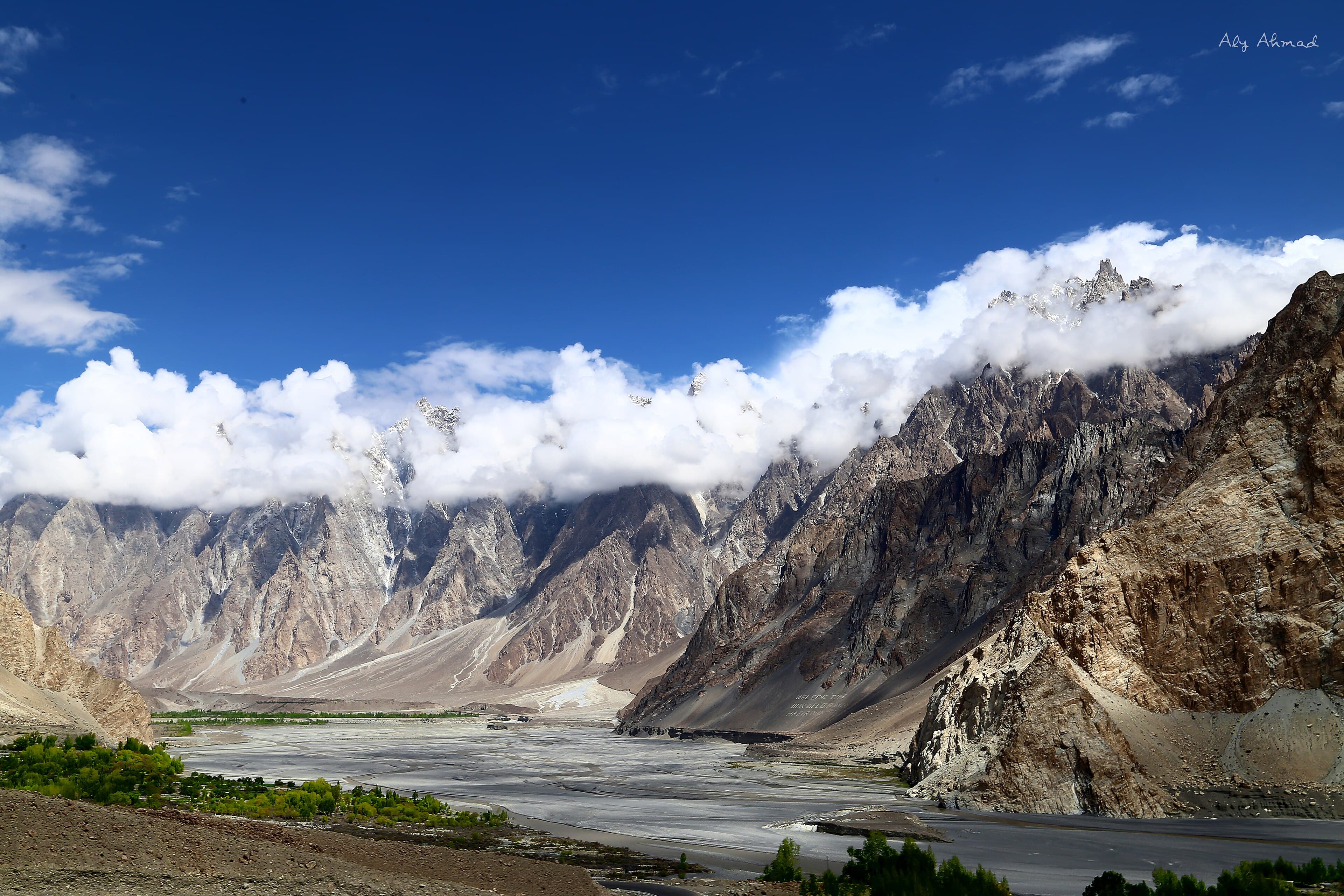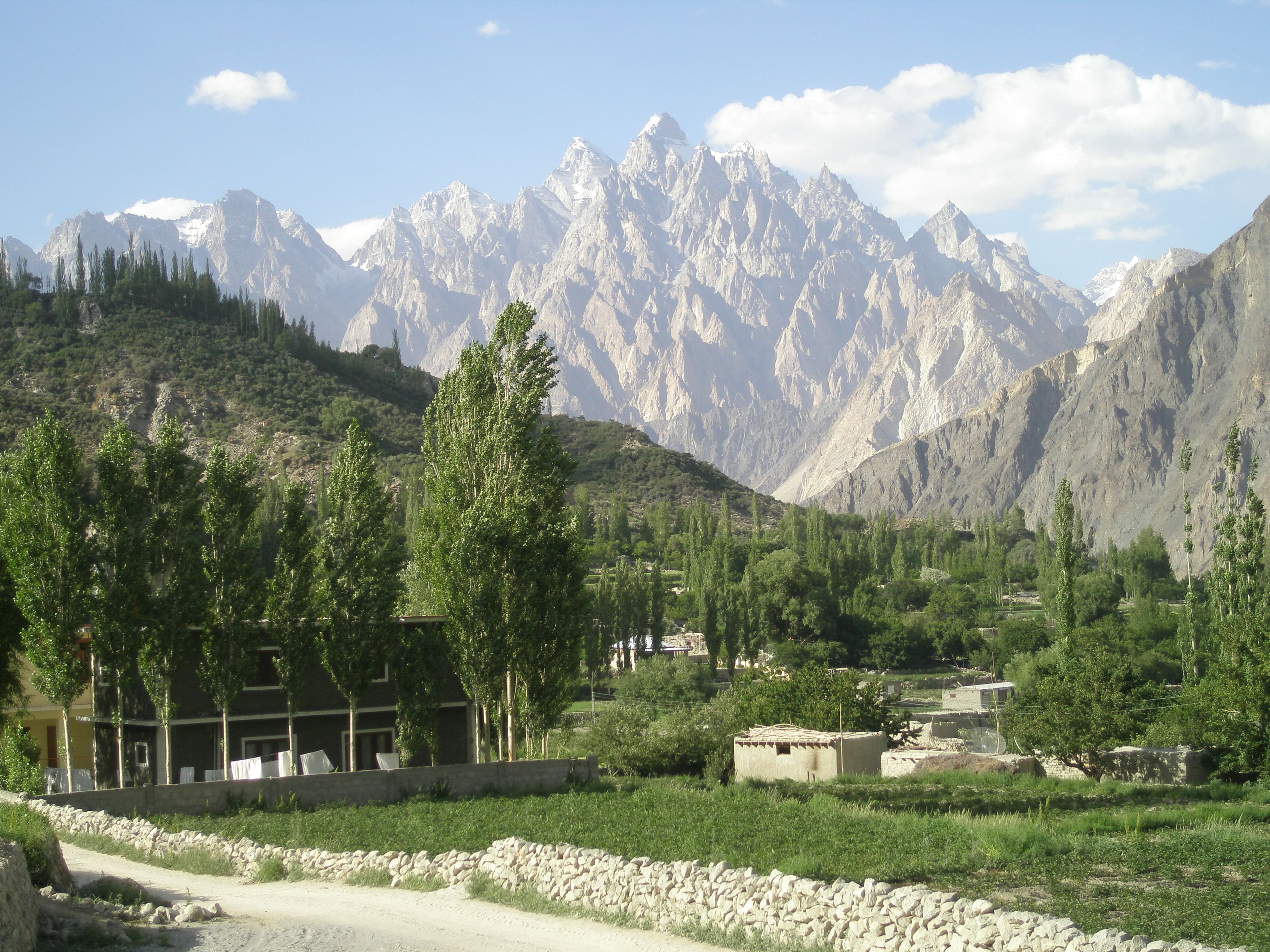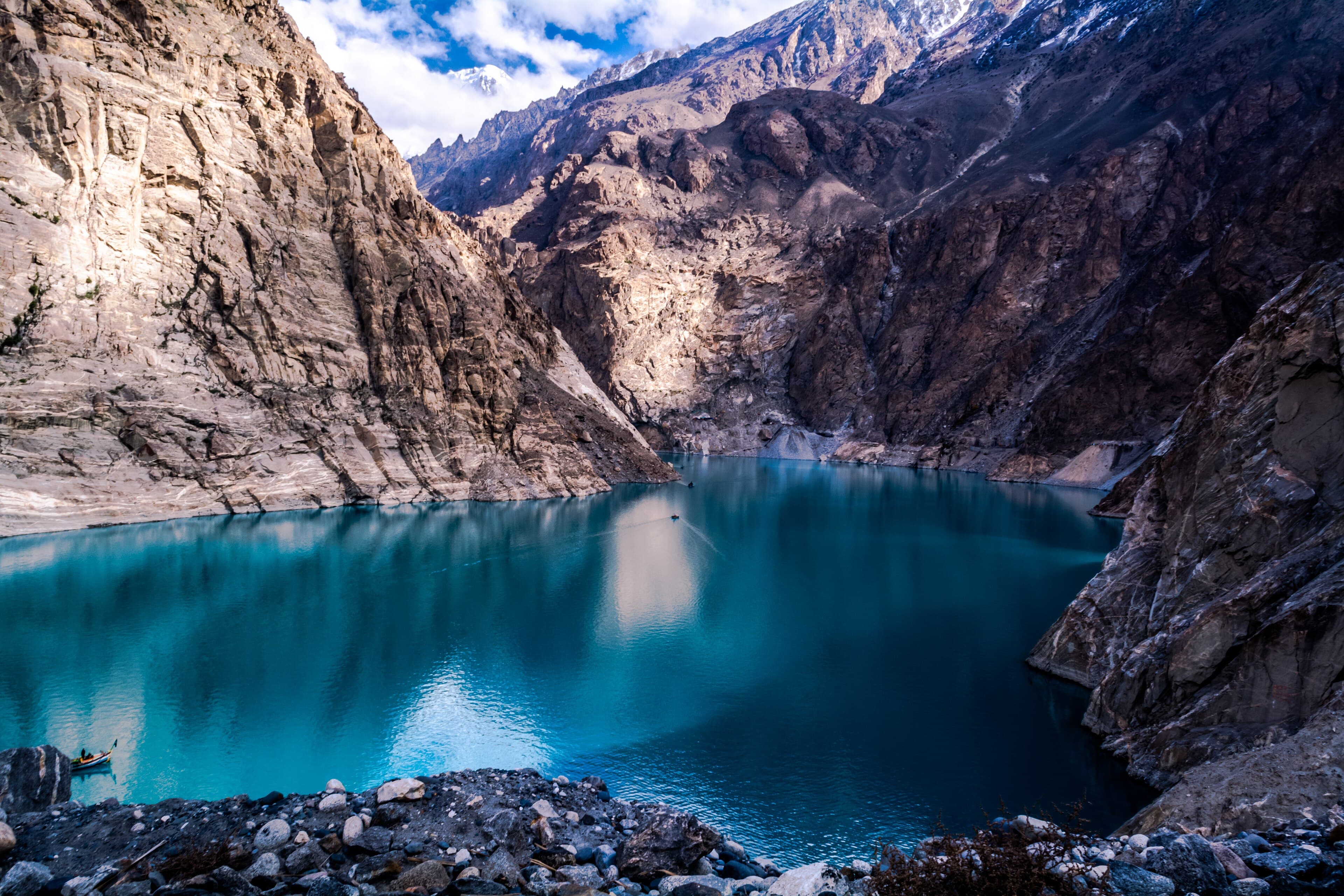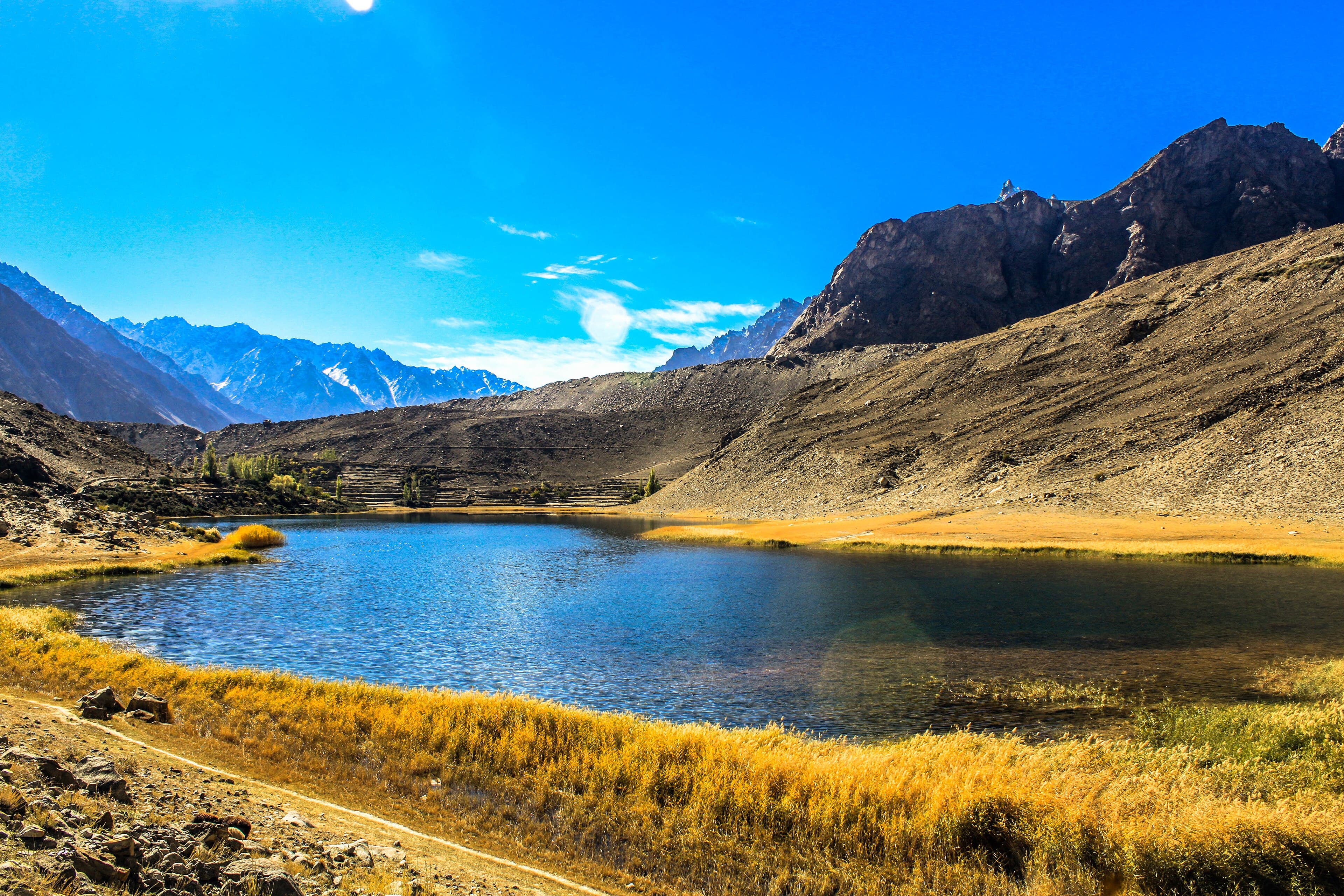
While Attabad draws the crowds, Borith stays quiet. This small saline lake sits in a stony bowl at about 2,600 m on the shelf above Hussaini village, ringed by bare slopes that hide it from the Karakoram Highway entirely. The water shifts between green, slate and steel-blue with the sky, and apart from a couple of low-key guesthouses on the shore, there is very little here but wind, light and birdsong — which is exactly the point.
Birds are Borith's quiet claim to fame. The lake is a recognised stopover on a migratory route between the Indian subcontinent and Central Asia: in spring (roughly March–June) and again in autumn, ducks and other waterfowl rest on the water mid-journey, and early mornings reward anyone with binoculars. Because the lake is saline and spring-fed rather than glacial, it's also one of the few calm, reflective water surfaces in this vertical landscape.
Borith doubles as a trailhead. The well-trodden path climbing the moraine behind the lake reaches the Passu Glacier viewpoint in roughly 45–60 minutes — a front-on look at the white, crevassed tongue of the glacier with Tupopdan's spires above. It's one of the best effort-to-reward short hikes in Hunza, and you can extend toward the harder Patundas route with a guide.
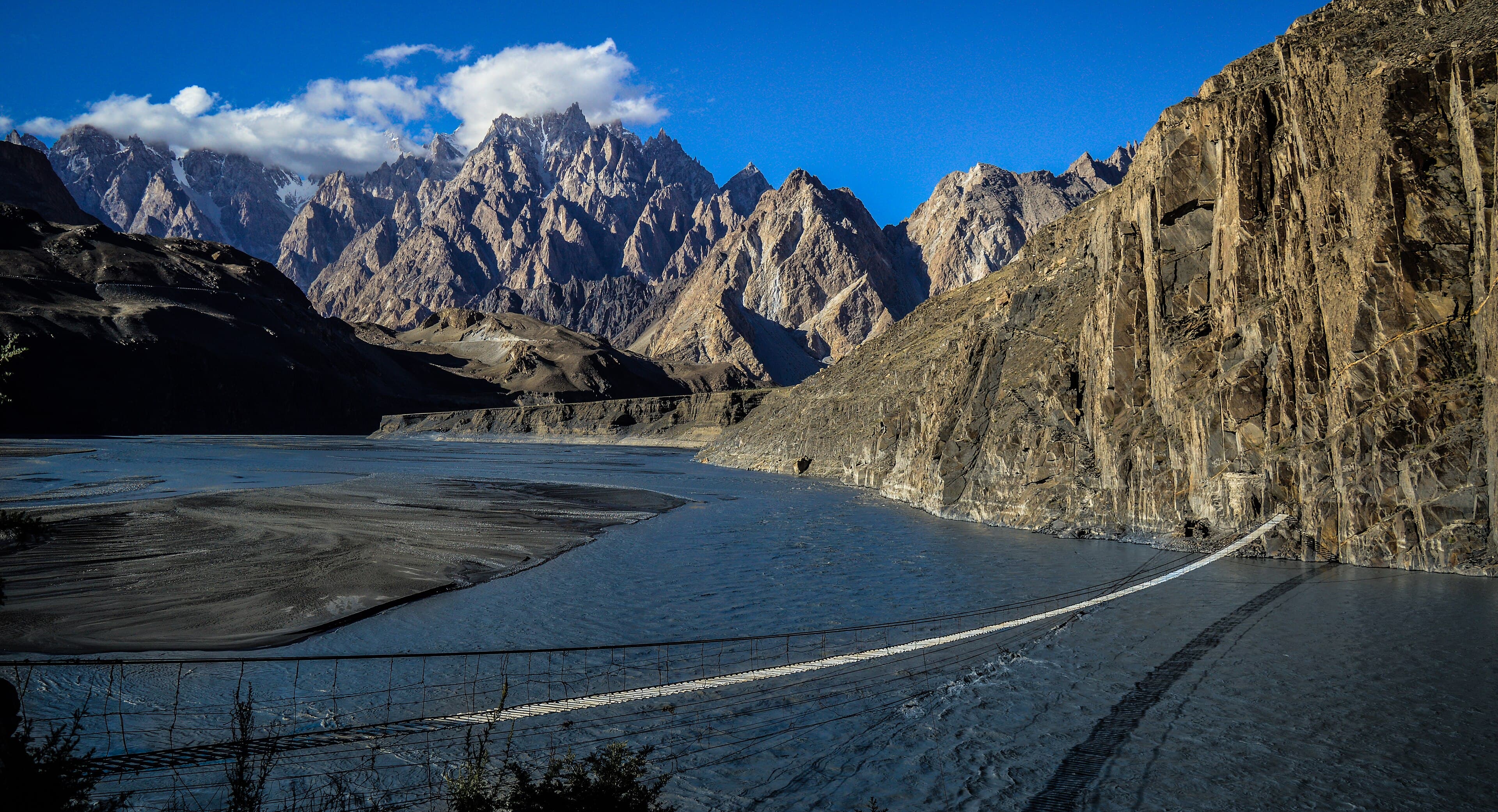
Ten minutes below the lake is the Hussaini Suspension Bridge, with Gulmit and Passu each about 15–20 minutes away — so Borith slots neatly into any upper-Hunza day. Better still, stay a night: sunset stillness and a star-filled sky over the bowl are things the day-trippers never see.