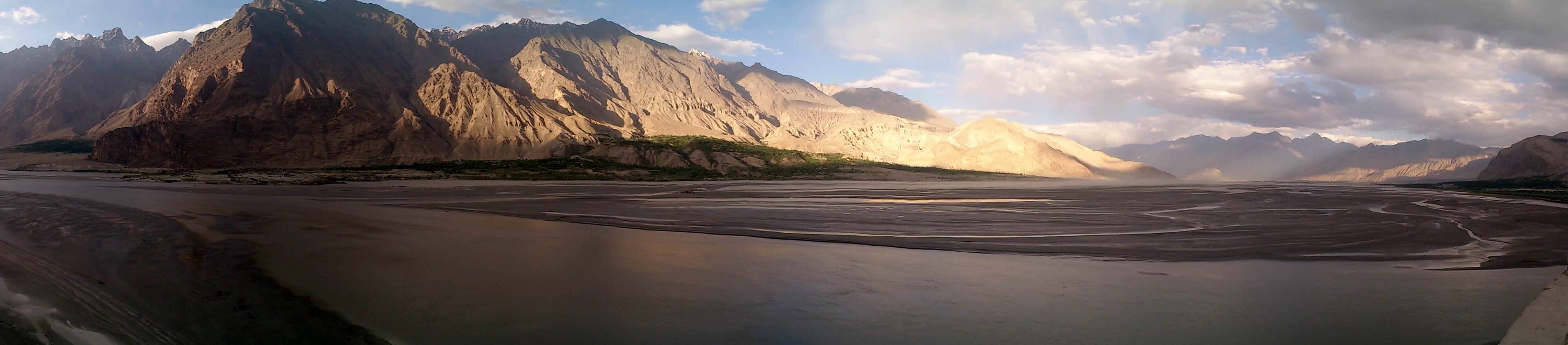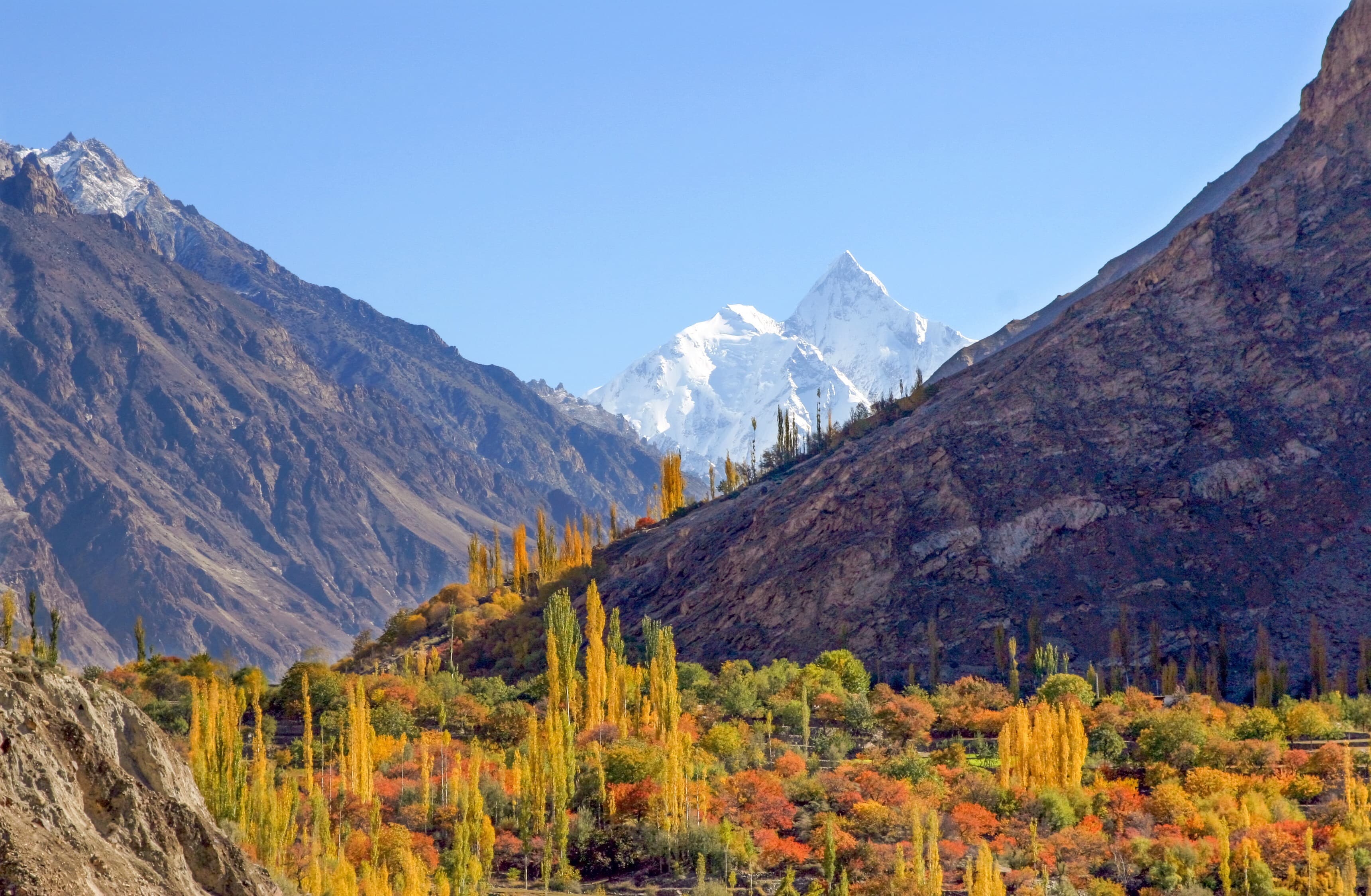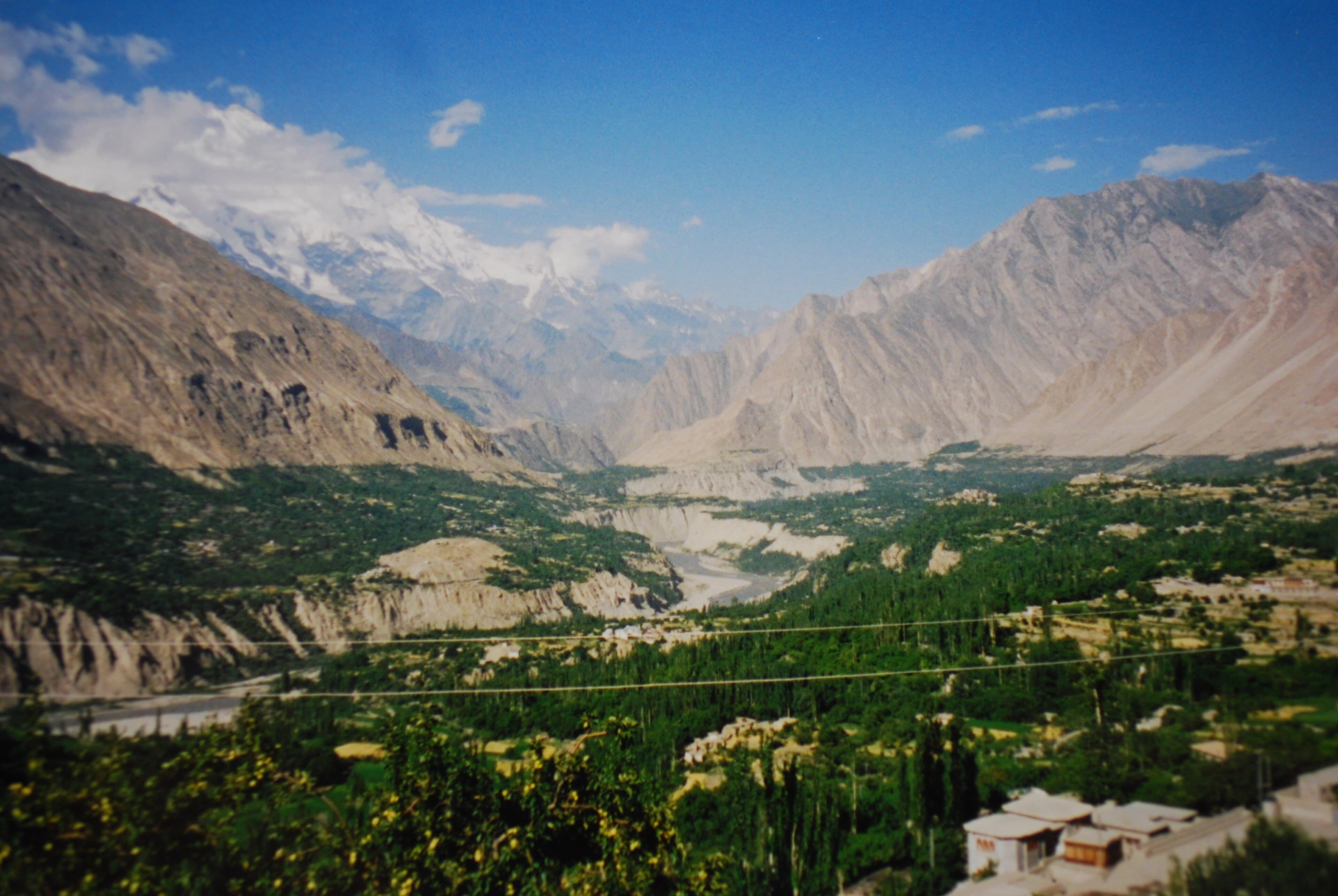
Is Hunza open in winter?
Yes. Hunza stays open all winter: the Karakoram Highway is kept open year-round as far as the valley, people live here through the cold, and a core of guesthouses, cafes and shops in Karimabad, Aliabad and Gulmit keeps trading from December to February. What changes is the scale. Many hotels close, the boats come off Attabad Lake, the high side valleys become serious undertakings, and the day is built around a wood stove, not a viewpoint terrace.
This guide is the Hunza-specific companion to our region-wide winter in Gilgit-Baltistan overview. It covers what the overview cannot: temperatures by village, how the road and the flight behave, what the lakes and the Khunjerab Pass really do in the cold, and where you will sleep. If you only need the short version, Is Hunza open in winter? answers it in a paragraph.
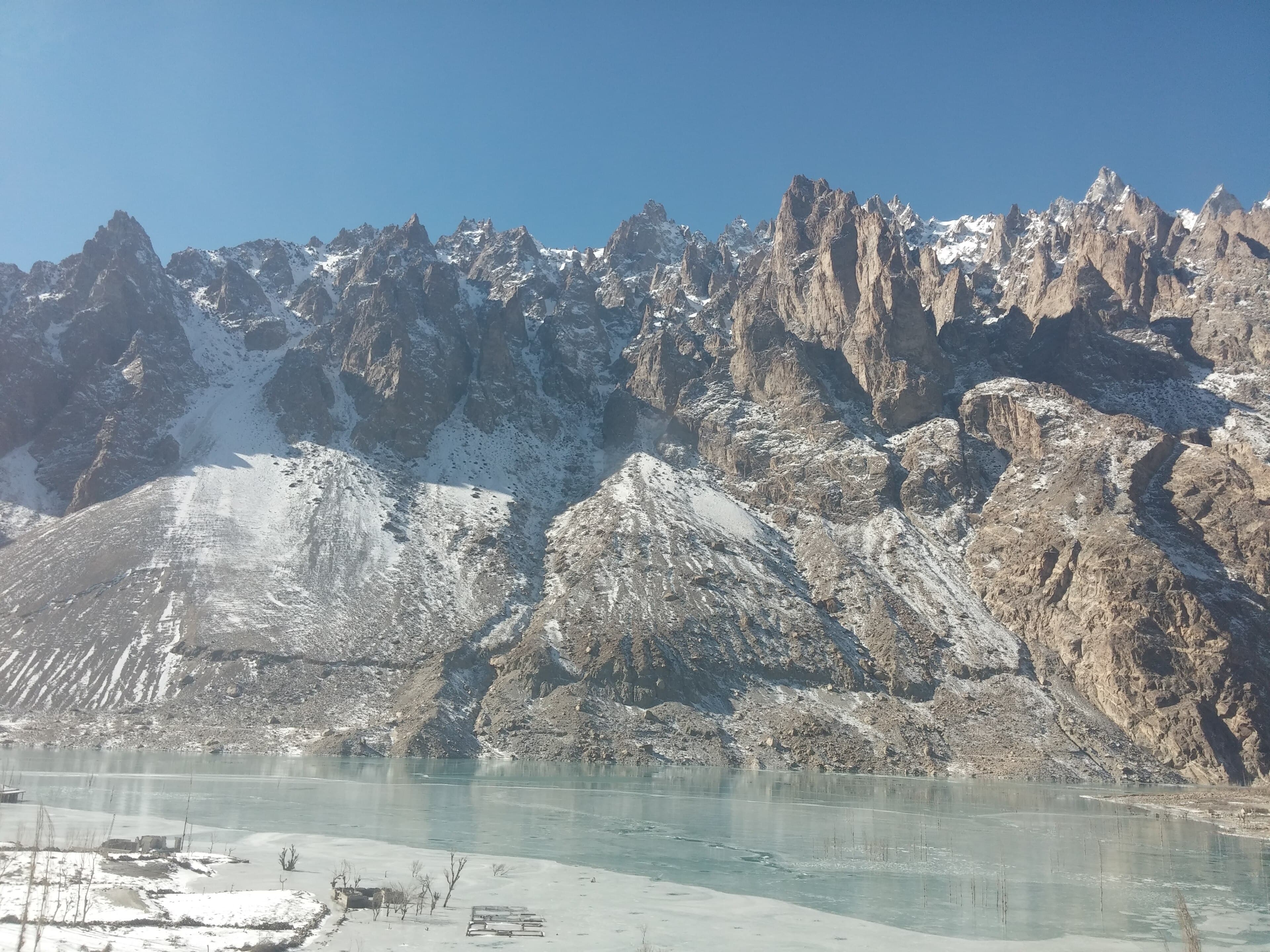
Open in winter: Karimabad and its bazaar, Baltit Fort and Altit Fort (shorter hours, so confirm on the day), the old settlement of Ganish, the highway north through Gulmit and Passu to Sost, and the roadside views of the Passu Cones. Closed or impractical: boating and jet-skis at Attabad, treks such as Rakaposhi Base Camp and Patundas, the Babusar Pass route from Islamabad, and, after any heavy snowfall, the upper road to Khunjerab. The side roads into Shimshal and Chapursan can be cut for days after snow, so treat those valleys as expeditions, not day trips.
How cold is Hunza in December, January and February?
Central Hunza in midwinter sits a few degrees either side of freezing by day and well below it at night. Long-term modelled averages for Aliabad (2,206 m), published by Climate-Data.org and reproduced in Wikipedia's climate table for Aliabad, give the shape of the season. Karimabad's upper lanes sit roughly 300 m higher than Aliabad's bazaar and usually run a degree or two colder.
December: average highs near 4 °C and lows near -5 °C. The first lasting snow usually arrives this month, though recent winters have been drier than normal. January: the coldest month, with average highs of 1 to 2 °C and lows around -7 °C. February: highs climb back to about 4 °C with lows near -5 °C, and the sun returns to north-facing lanes. The shoulder weeks are milder. November averages 11 °C by day and sits at freezing by night, and by mid-March afternoons reach 10 °C.
Averages hide the cold snaps. During the January 2026 cold wave, Dawn reported night readings of -16 °C across Hunza, Nagar and Ghizer and -14 °C in Gojal. Upper Hunza (Gojal) is consistently the colder half of the valley: Gulmit and Passu lie at roughly 2,400 to 2,500 m and Sost at about 2,800 m, the sun leaves the valley floor early, and wind off the glaciers adds to it. Plan on -10 to -15 °C nights there in January, and colder still on the road to Khunjerab.
Daylight matters as much as temperature. In late December the sun clears the ridges late and is gone from much of Karimabad by mid-afternoon, which leaves roughly six useful hours outdoors. Plan one main outing a day and be back at the stove before dusk.
Is the Karakoram Highway open in winter?
Yes, the Karakoram Highway is open in winter from Islamabad to Hunza, but it is slower, icier and occasionally shut for a day or two. The summer shortcut over the Babusar Pass is closed for the season, so every vehicle follows the Indus gorge through Besham and Chilas. In good conditions that is two days of driving: 10 to 12 hours to Chilas, then 5 to 6 hours on to Karimabad. Our Karakoram Highway road trip guide describes the stages.
Closures come from two directions. Rain in the lower gorge brings rockfall and landslides between Besham and Chilas, and snow in the north closes stretches until machinery clears them. In late January 2026, for example, snowfall of up to six inches blocked the highway and several link roads, and they reopened on the evening of 28 January, about two days later. Shaded bends hold black ice well into the morning. Travel in daylight only, use a local driver who knows where the ice sits, and ask for a vehicle with good tyres and chains on board.
The Islamabad to Gilgit flight is the fast way in, and in winter it is the least reliable link in the whole trip. It is flown by small aircraft and needs clear visibility through the mountains, so cloud over the route cancels it, sometimes for several days in a row. Never plan a winter trip that only works if the flight operates. Book it if you like, keep a car on standby, and decide in advance that a cancelled morning flight means leaving by road the same day. From Gilgit airport it is about 100 km and two and a half hours to Karimabad.
On the return, leave at least two clear days between Hunza and any international departure. A buffer you do not use becomes a day in Islamabad. A buffer you did not build can cost you the flight home.
Do Attabad Lake and Borith Lake freeze in winter?
Yes, in a cold winter both lakes freeze, at least in part. Attabad Lake, at about 2,550 m, ices over from its upper end and shaded bays during January, and in hard winters the sheet has spread across much of the surface. In January 2023 the regional winter sports festival was held on the frozen lake, with ice hockey and skating. In milder winters the ice stays at the margins. Does Attabad Lake freeze in winter? goes through the record.
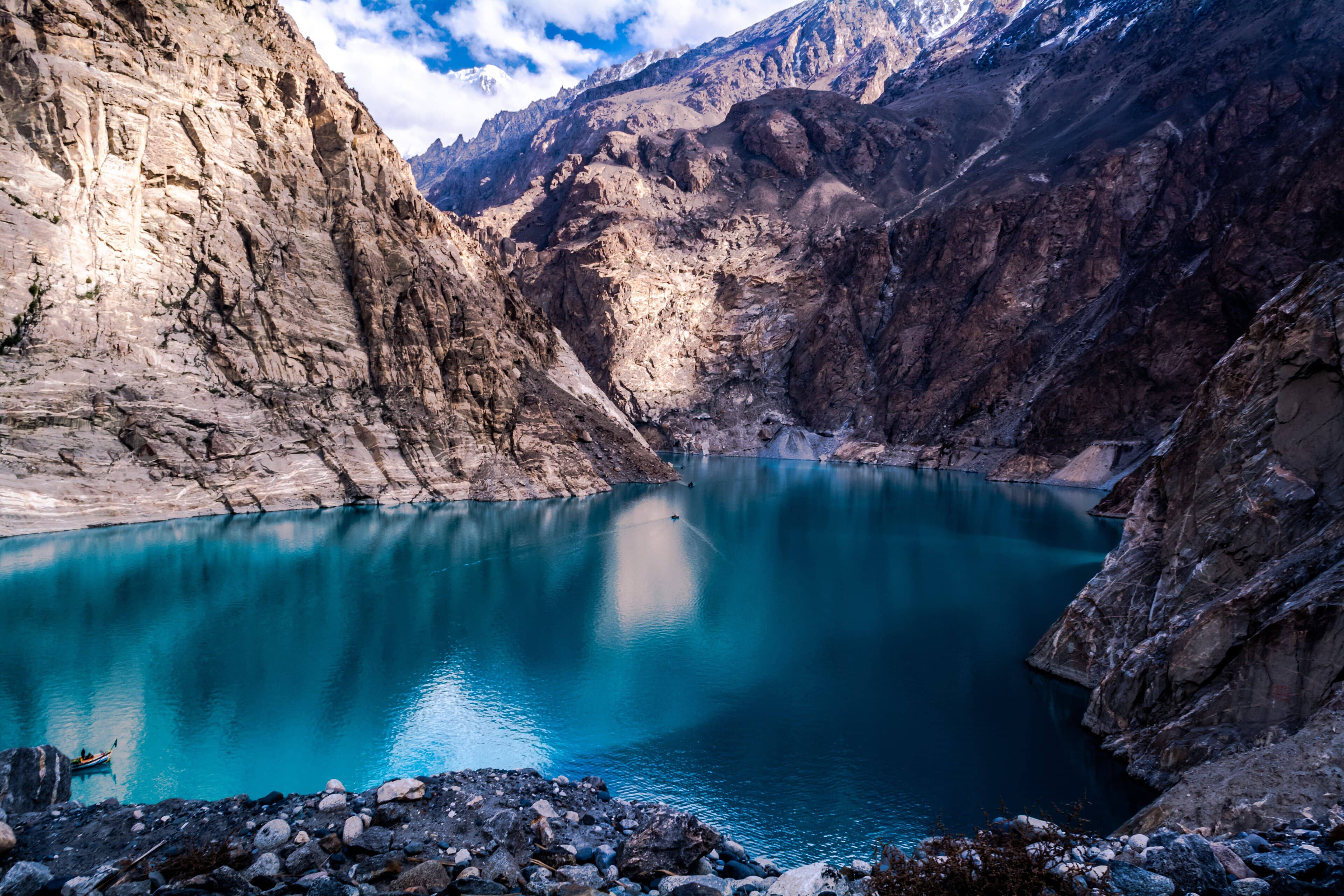
Attabad LakeA disaster that became one of Pakistan's most beautiful places
Photo: Bilal Javed Awan · CC BY-SA 3.0Tourist boating stops in the depths of winter either way. Do not walk on Attabad's ice on your own judgement: the lake is very deep, the ice is uneven, and the district administration has banned walking on it in past winters after cracks opened in the surface. The view from the shore, and from the highway as it leaves the tunnels, is the winter experience here.
Borith Lake, a small saline lake at about 2,600 m above Hussaini, is quieter still. It freezes partly or fully depending on the year, the jeep track up from the highway can be icy, and the lakeside guesthouses may be shut, so go as a short daytime detour and pair it with the Hussaini Suspension Bridge below. Expect brown slopes with a dusting of snow more often than deep drifts. Hunza is a dry valley, and Reuters reported in February 2026 that winter precipitation here has fallen by about 30% since the late 2010s.
Is Khunjerab Pass open in winter?
Officially yes, since December 2024, but in practice only on days when the road is clear. For decades the 4,693 m Khunjerab Pass operated from 1 April to 30 November and shut for the winter. Pakistan and China then agreed to keep the border open all year, and Dawn reported that year-round trade and travel began in December 2024, with a formal inauguration in April 2025. Many guidebooks and websites still give the old dates.
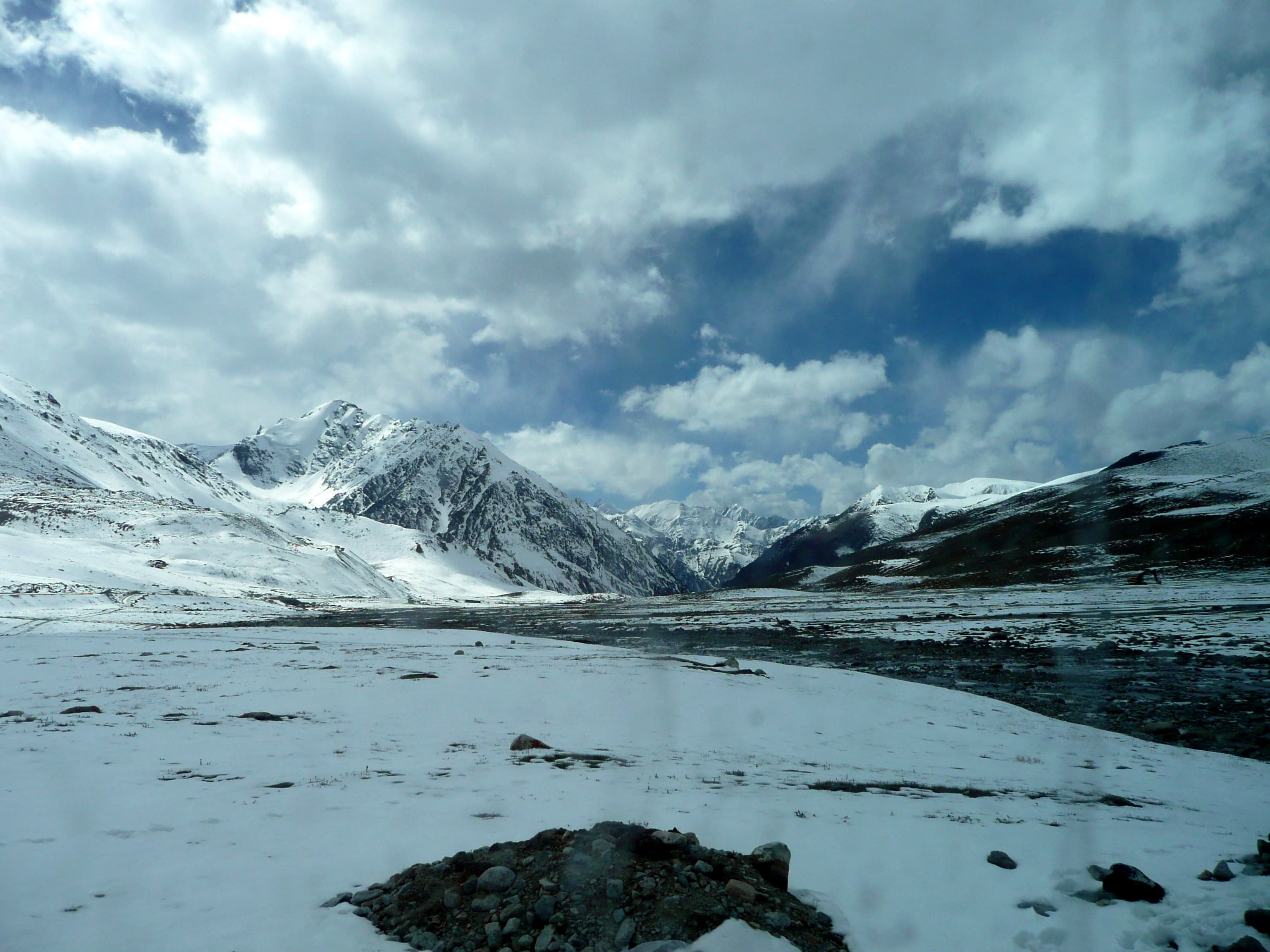
Khunjerab PassDrive to 4,693 m and stand at the China border gate
Photo: Martin Jung · CC BY-SA 3.0What has not changed is the weather. Snow and avalanches still close the long climb above Sost without warning: in March 2026 avalanches near the top blocked the highway and suspended cross-border traffic until the road was cleared. Temperatures at the pass in January are far below anything in the valley, the wind is severe, and there is very little shelter and no fuel or medical help above Sost. Staff at the checkposts above Sost decide each day whether tourist vehicles may go up.
If you want to try, treat it as a bonus, not a fixture. Go only with a local driver in a suitable vehicle, start from Passu or Sost instead of Karimabad to shorten the day, carry your passport, and turn around the moment the driver or the checkpost says so. One account of what this drive is like is retold in A Winter Drive to the China Border.
Where to stay in Hunza in winter: the heating reality
Stay where there is a stove and a family in residence. Central heating is rare in Hunza, and in winter the real choice is between rooms that are heated and rooms that are not. A good winter guesthouse or homestay gives you a bukhari (wood stove) in the room or a shared heated sitting room, thick quilts, and hot water by the bucket if the pipes have frozen. Some larger hotels keep a wing open with electric or gas heaters. Many simply close until March.
Electricity is the weak point. Much of the valley's power comes from small hydropower stations whose water channels ice up in midwinter, and in January 2026 residents across Gilgit-Baltistan were reporting outages of more than 20 hours a day. Assume an electric heater or electric blanket will work for part of the night at best, unless the property confirms it runs a generator. Ask before booking: how is the room heated, during which hours, and what is the backup.
One safety rule is not negotiable. Unvented gas (LPG) heaters in closed rooms have killed people in Gilgit-Baltistan in recent winters, including a visitor in January 2026. If your room has a gas heater, use it to warm the room while you are awake, keep a window slightly open, and turn it off at the cylinder before you sleep. A hot-water bottle and a second quilt are the safe way to stay warm overnight.
Base yourself in Karimabad or Aliabad for the widest choice of open rooms and food, and add one or two nights in Gulmit or Passu if you want the upper valley at dawn. For a sense of how a winter homestay day actually runs, read Winter morning in Hunza.
What to do in Hunza in winter
Winter Hunza is for walking, looking and sitting with people, in that order. The classic half day is the lane up through Karimabad bazaar to Baltit Fort, then down to Altit Fort and its old village, with the Rakaposhi and Ultar skyline clear of summer haze. Lanes are icy in the mornings, so carry traction for your boots. On another day, drive the 45 minutes to Attabad and continue to Gulmit, Hussaini and Passu, which need no hiking to be spectacular.
Winter has its own calendar, though dates shift and you should confirm them locally. On or around 21 December, villages in parts of Hunza, Nagar and Gilgit mark the winter solstice with Thumushaling, a bonfire festival that local legend ties to the overthrow of a tyrant king. In January, the youth organisation SCARF runs the Karakoram Winterlude, an ice hockey and winter sports festival that opened in Altit in mid-January 2025 with 12 teams, and that had to move to Sost in 2026 because the Altit rink would not freeze properly. In the shoulder weeks, the Wakhi villages of lower Gojal hold Tagham, the first-ploughing festival, usually in early March.
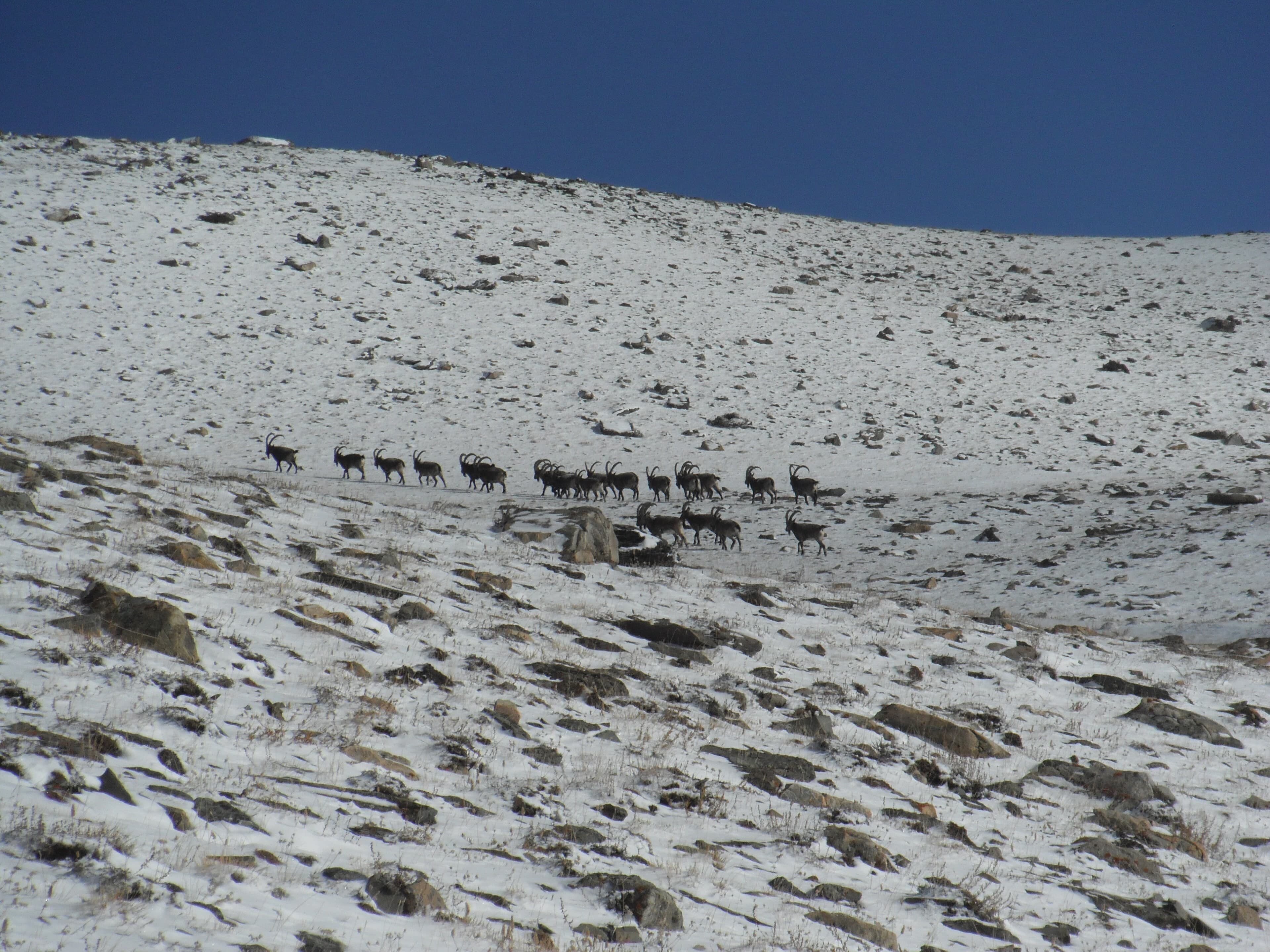
Winter is also the only real season for big wildlife. Snow pushes Himalayan ibex down to the slopes above the highway in Gojal, and the snow leopards that hunt them follow. Ibex are regularly seen from the road north of Passu and inside Khunjerab National Park with nothing more than binoculars and a patient driver. Seeing the cat takes days of scanning with local spotters and some luck: our snow leopard answer page explains how sightings happen, and the nine-day Snow Leopard Winter Expedition is built around it.
What to pack for Hunza in winter, and staying safe
Pack for sitting still indoors at 5 °C, not just for walking outdoors at -5 °C. That means heavyweight thermal base layers you can sleep in, a fleece or wool mid-layer, a proper down jacket, a windproof shell, insulated boots with room for thick socks, a hat, a neck gaiter and two pairs of gloves. Add slip-on traction cleats for icy lanes, sunglasses and sunscreen for snow glare, and lip balm and moisturiser for very dry air.
Then pack for the power cuts: a headlamp, two power banks kept inside your jacket, a hot-water bottle, and a sleeping bag liner or light sleeping bag to add to guesthouse bedding. Bring any prescription medicine for the whole trip plus the buffer days, and enough cash for the whole stay. The full kit list is in our packing list for Pakistan's mountains.
Be realistic about medical care. Hunza's small hospitals and health centres handle routine problems, but serious illness or injury means a road transfer to Gilgit or onward to Islamabad, and in winter that road can be shut. Travel insurance that covers evacuation, a conservative attitude to ice and altitude, and a driver who refuses to travel after dark are worth more than any item of gear.
Who Hunza in winter suits, and a sample 6-day plan
Winter suits photographers, repeat visitors, wildlife watchers and anyone who would trade sights for silence. It does not suit a first visit with a fixed flight home, travellers with heart or lung conditions that cold aggravates, or families with very young children. If you want empty valleys without the hard edge, late October and November give you cold nights, open roads and the last of the colour: see Hunza in autumn. And if you are weighing the two winter bases, Hunza is the easier and more reliable of the pair, as our Skardu in winter guide explains.
A workable six-day plan: Day 1, fly Islamabad to Gilgit if the flight operates, or start the two-day drive via Chilas. Day 2, reach Karimabad, walk the bazaar and get warm. Day 3, Baltit Fort, Altit Fort and Ganish, with sunset from Eagle's Nest at Duikar if the road up is clear of ice. Day 4, Attabad Lake, Gulmit, Hussaini and Passu, overnight in Gulmit or Passu. Day 5, ibex scanning toward Sost and, only if the checkposts allow, a run up toward Khunjerab, then back to Karimabad. Day 6, drive to Gilgit for the flight, or begin the road journey south.
Then add two days to whatever you have planned. If the flight cancels in both directions, this itinerary takes nine or ten days door to door, and you should be able to absorb that without stress. Winter here rewards slack.
Questions, answered
Is Hunza worth visiting in winter?
Yes, if you want empty villages, clear mountain views and wood-stove hospitality more than a full list of sights. Forts, village walks and the highway to Passu all work from December to February. Boating, trekking and reliable access to Khunjerab do not, so first-time visitors usually get more from spring or autumn.
How cold is Hunza in January?
January is the coldest month. Central Hunza averages about 1 to 2 °C by day and -7 °C at night, and cold waves push nights to around -15 °C, as happened in January 2026. Upper Hunza (Gulmit, Passu, Sost) is several degrees colder, and rooms are heated only where the stove is.
Does it snow in Hunza in December?
Usually, but less than people expect. Hunza is a dry valley, so snowfalls are light and intermittent, with the first lasting snow typically in December and the most in January and February. Recent winters have been drier than normal, and some years the valley floor stays largely brown while the peaks are white.
Is the Karakoram Highway open in winter?
Yes. The Karakoram Highway stays open year-round to Hunza, with short closures after snowfall or landslides that typically last hours to a couple of days. The Babusar Pass shortcut is closed all winter, so the drive from Islamabad takes two days via Besham and Chilas. Travel in daylight with a local driver.
Can you go to Khunjerab Pass in winter?
Sometimes. The border has officially operated year-round since December 2024, replacing the old 1 April to 30 November season, but snow and avalanches still close the road above Sost without notice. Checkpost staff decide daily whether tourist vehicles can go up, so treat a winter visit as a weather-dependent bonus.