The golden month
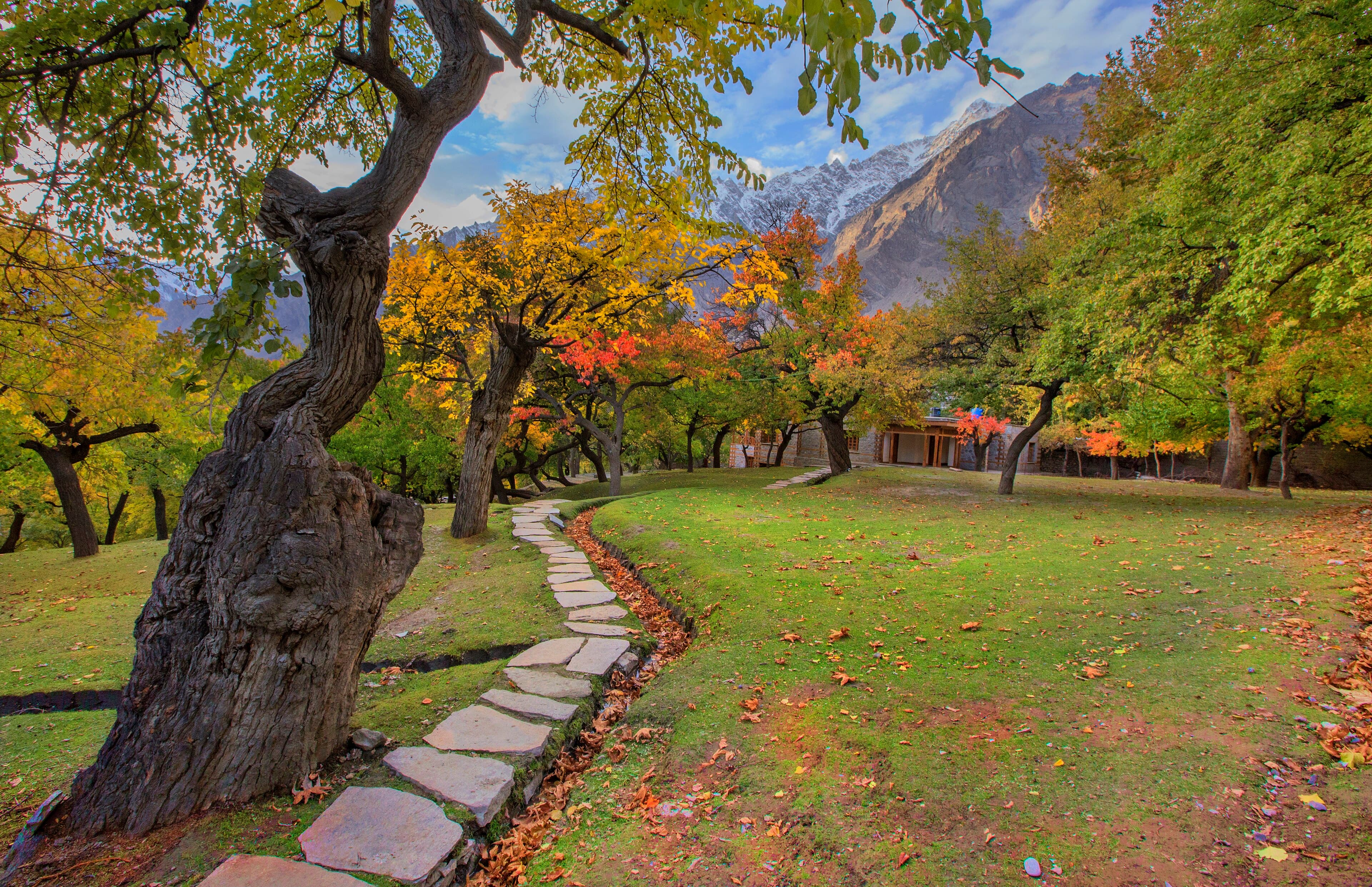
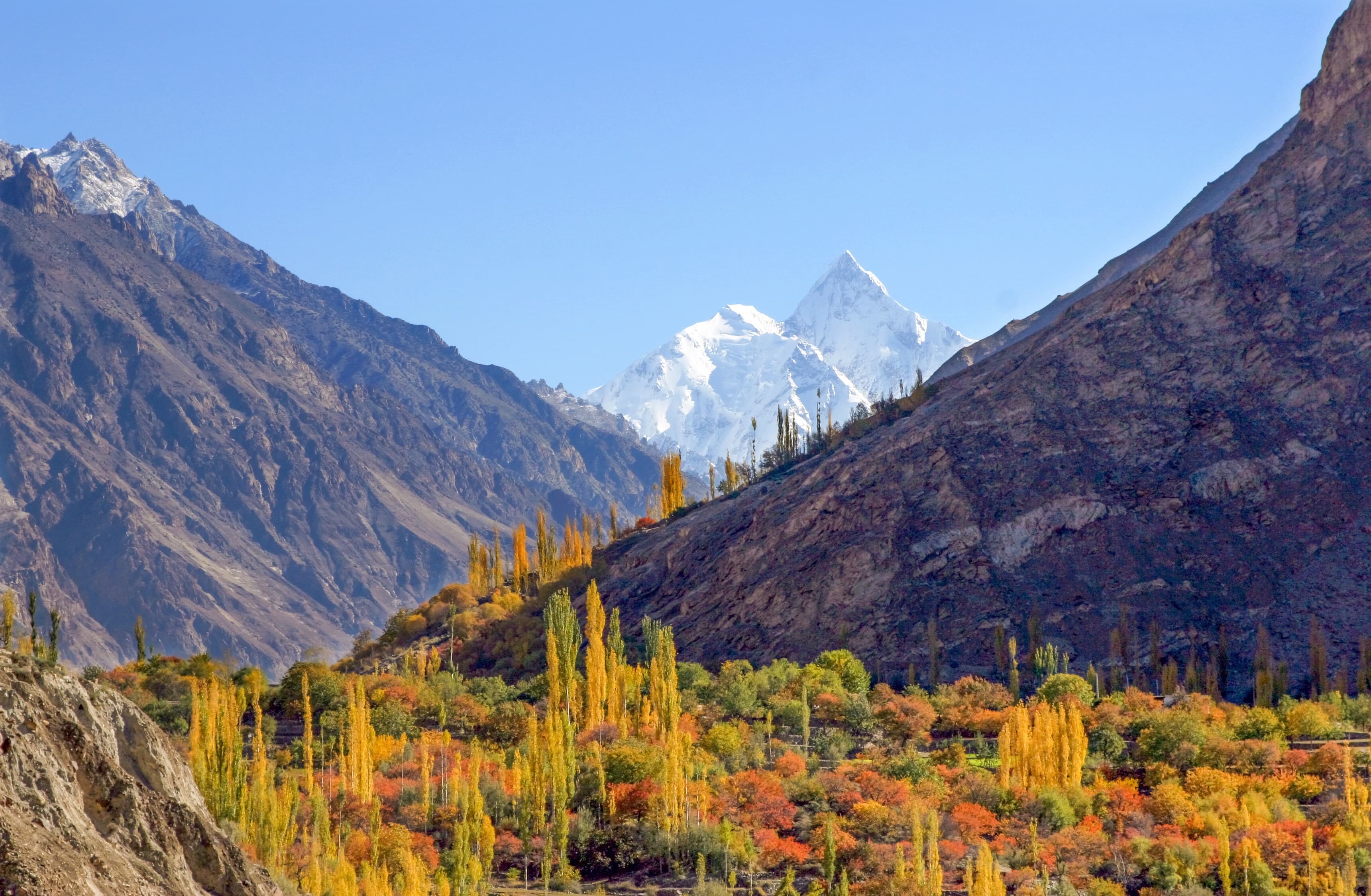
Sometime in mid-October, a switch flips in the valleys of Gilgit-Baltistan. The tall poplars that line every field boundary and irrigation channel turn a luminous, almost electric gold; the apricot and cherry orchards deepen to crimson, copper and amber; and for roughly four weeks — mid-October to mid-November, working down the altitudes — the region stages one of Asia's great colour shows.
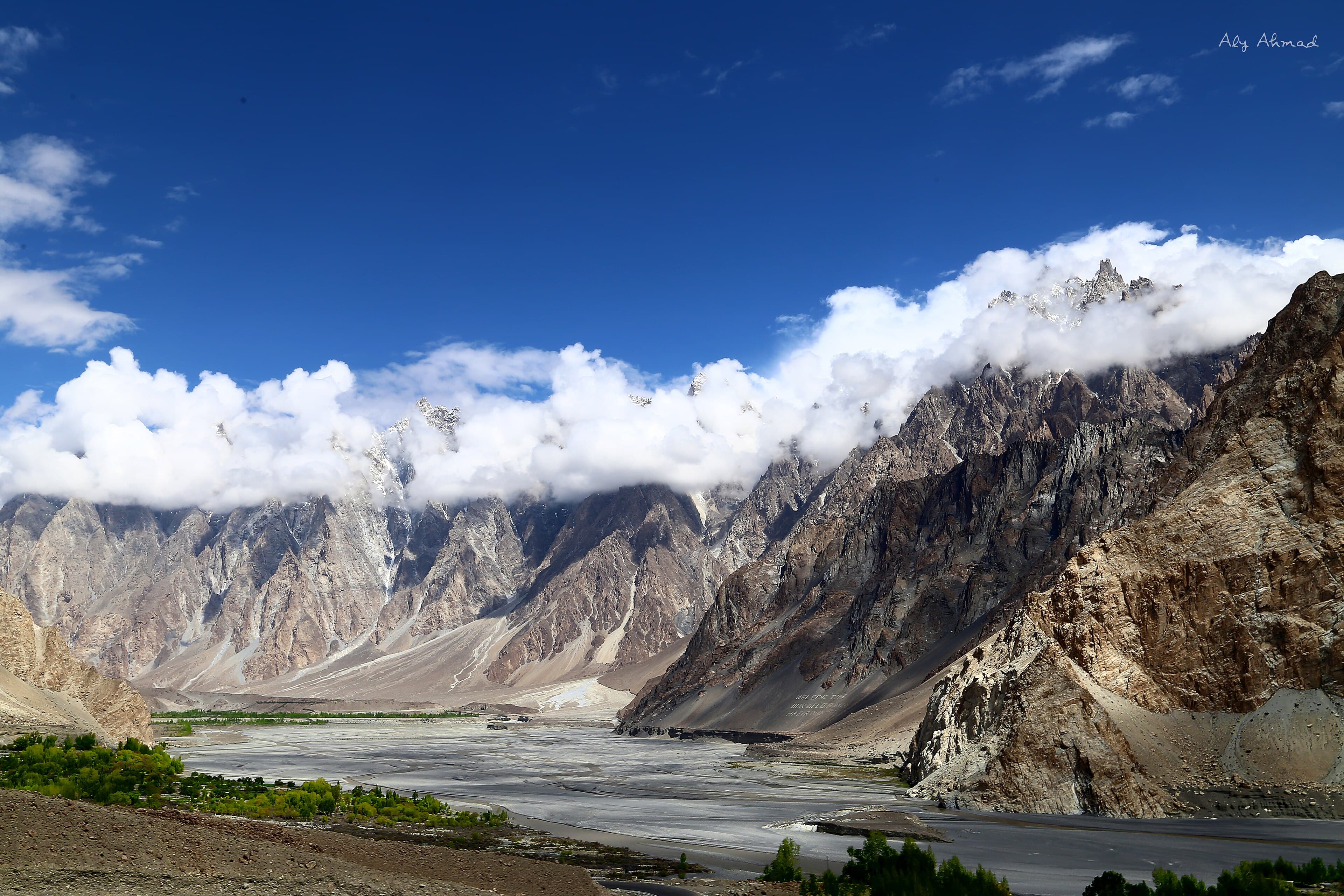
What makes it extraordinary is the setting. These are not rolling forested hills but vertical desert valleys, so the colour comes in deliberate, human-planted lines: golden avenues tracing water channels across grey scree, flaming orchard squares stacked up terraced hillsides, all of it beneath peaks that have just received their first fresh snow. The palette — gold, rust, grey, white, blue — looks designed.
Autumn is also the season the region's photographers quietly call the best. The summer haze is gone, the air is washed and cold, and visibility stretches to the horizon. If you have ever seen an image of Hunza that made you stop scrolling, the odds are good it was taken in the last week of October.
Where autumn is best: Hunza's terraces
Central Hunza is the heart of the season. From the Eagle's Nest viewpoint at Duikar, the dawn view over the valley becomes a tapestry of gold and crimson terraces with Rakaposhi, Diran and Golden Peak freshly white behind — the single most celebrated autumn panorama in Pakistan. Come up the evening before and stay the night; the first light is the show.
Down at valley level, the gardens around Altit Fort are an autumn essential: ancient orchard trees in full colour around the 1,100-year-old fort, with quiet lanes where half the pleasure is simply walking under the canopy. Karimabad's terraces below Baltit Fort, and the old village of Ganish by the river, layer colour against carved timber and stone.
Cross to the Nagar side of the river for the counter-shot: golden poplar avenues with Rakaposhi's vast north face directly above them, and the road toward Hopper Glacier passing through villages that see far fewer visitors than Karimabad. Upper Gojal turns slightly earlier than central Hunza — Gulmit and the Passu area can peak in mid-to-late October while the main valley is still building.
Baltistan and Ghizer: the quieter golds
Baltistan does autumn with a grander canvas and thinner crowds. Khaplu's huge amphitheatre of terraced fields turns gold around its restored palace, Shigar Valley's orchards burn around the fort, and the lanes of both feel close to empty on an October weekday. Skardu's setting — the Indus sweeping past sand dunes at Katpana and Sarfaranga — adds the strange beauty of cold desert against autumn colour.
In Ghizer, to the west, Phander Lake becomes one of the region's great mirrors: still, deep-blue water doubling golden poplars and russet hillsides. The whole road from Gilgit through Gupis to Phander runs beside rivers and lakes lined with turning trees, and it remains one of the least-travelled beautiful drives in the country.
The practical takeaway: don't treat autumn as a Hunza-only event. A two-week loop — Hunza first in late October, then Skardu, Shigar and Khaplu as the colour works downhill in early November, or the reverse — follows the season the way spring travellers follow the blossom.
Harvest season: apricots on the rooftops, walnuts in the lanes
Autumn is also when the agricultural year is gathered in, and the villages are at their most photogenicly busy. Flat rooftops across Hunza and Baltistan fill with drying racks of apricots, tomatoes and mulberries — orange and red grids viewed from every terrace above — while families spread the harvest in courtyards below.
October is walnut time. You'll hear it before you see it: long poles knocking nuts from the giant old trees, children gathering them from the lanes, and sacks of fresh walnuts appearing in every bazaar. Apples and grapes round out the late harvest, and the dried apricots, kernels and walnut-mulberry sweets you'll be offered with tea are this year's, weeks old at most.
Be a respectful guest of the season: ask before photographing rooftops and courtyards (they are workplaces and homes), buy your dried fruit directly from village households where you can, and accept that any walk through an October village will be interrupted by hospitality.
The photographer's season: crystal light on Rakaposhi and Ultar
Autumn light in the Karakoram is the sharpest of the year. Cold, dry air strips away the haze of summer, and the big walls — Rakaposhi at 7,788 metres above Nagar, Ultar Sar above Karimabad — stand etched against deep-blue sky with their first winter snow. Sunrise and sunset alpenglow on fresh snow is an almost daily event rather than a lucky catch.
Work the contrast that defines the season: telephoto frames compressing golden poplar lines against white peaks, backlit leaves in the late afternoon when the low sun turns whole avenues translucent, and dawn from elevation — Duikar above Hunza, the fort terraces in Shigar and Khaplu — when valley smoke from morning stoves drifts in level blue layers under the colour.
Days are short and usable light is precious, so plan tighter than in summer: sunrise location, midday village lanes (the colour forgives high sun better than bare summer rock does), sunset viewpoint. Nights drop below freezing by November; carry spare batteries warm in an inside pocket.
Crowds, prices and what closes
Autumn's quiet is part of its luxury. The domestic summer wave is long gone, late October's international photography groups concentrate in a few Hunza hotspots and vanish by dark, and through November the valleys empty week by week. Hotels that were full in August have rooms — and increasingly, shoulder-season rates; this is the best value the region offers all year.
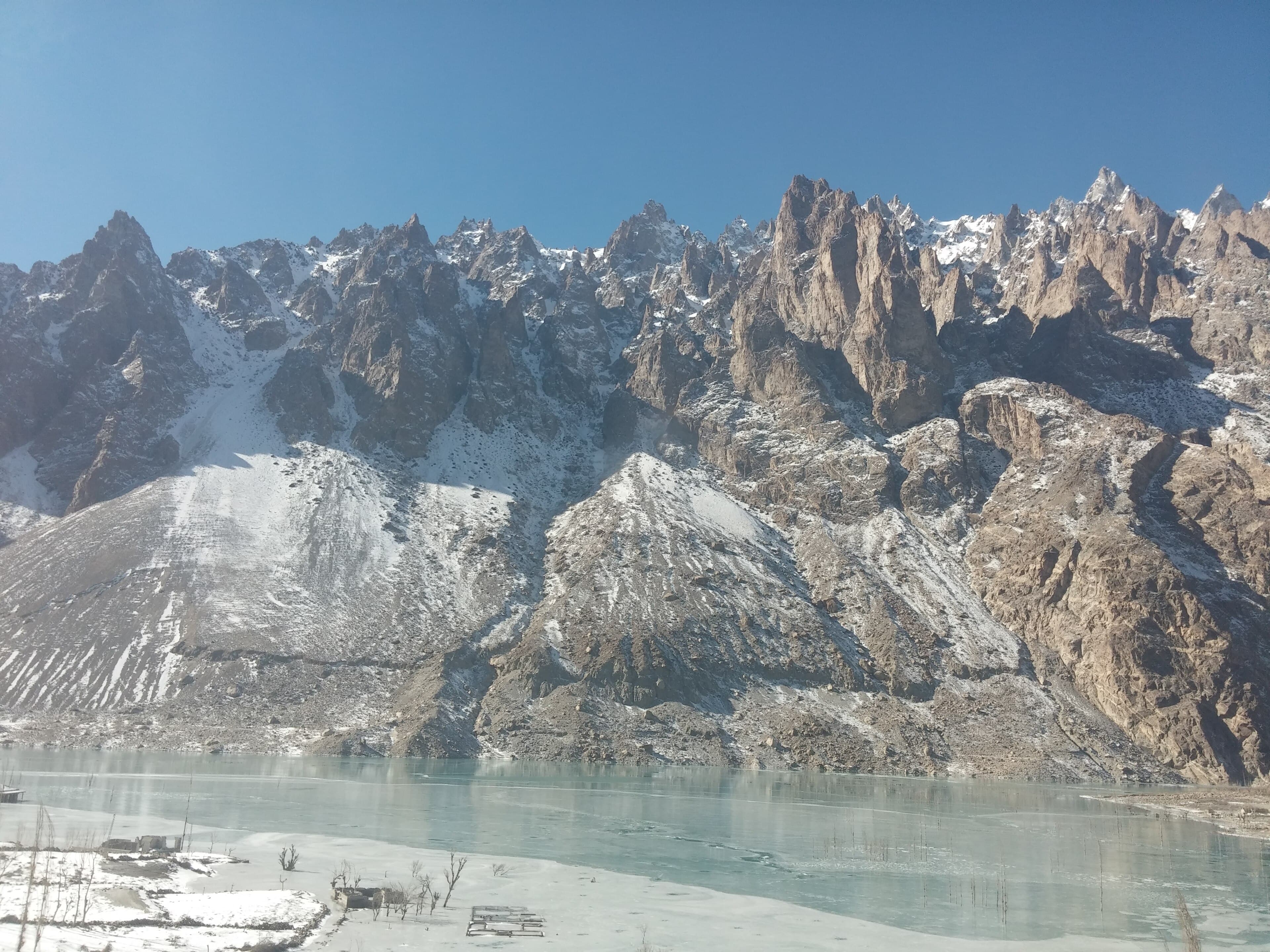
The trade-off is altitude shutting down above you. Deosai closes as snow takes the plateau, typically by November; Babusar Pass closes for the winter in the same period, putting Islamabad–Gilgit traffic back on the Karakoram Highway full-time; and while the road to Khunjerab usually remains drivable into the autumn, the 4,693-metre pass is bitterly cold and increasingly snow-prone.
The core circuit, though, stays fully open: the KKH, all of Hunza and Gojal, Skardu by road and (weather-permitting) by air, the forts, the lakes. Attabad boats keep running, fort museums stay open, and most hotels operate well into November before some close for winter. Autumn asks you to give up only the high country — and pays you back in colour.
Food, festivity and how to build the trip
Autumn's table is the year's richest: fresh walnuts and apples, this-season dried apricots, buckwheat and wheat dishes from the new grain, apricot oil pressed for winter, and the warming Hunza staples — daudo noodle soup, harissa, thick chapshuro meat pies — that begin to make deep sense as evenings turn cold. Harvest-time hospitality is unhurried; the fieldwork is done.
There is no single great autumn festival on the calendar the way Navroz opens spring, but villages mark the season's end with communal threshing, weddings (this is peak wedding season, with music and drumming echoing across valleys) and small local harvest customs. If you hear the drums, you may well be invited.
For dates, aim for the third week of October in central Hunza, with early November for Baltistan, and build in dawn sessions at Duikar and Khaplu. If you'd rather have the timing, viewpoints and rooftop access handled for you, our autumn-colours-photography tour runs exactly this route at exactly this time — it is, frankly, the easiest trip we sell.
Questions, answered
When is autumn colour at its peak in Hunza?
The last week of October is the classic peak for central Hunza — Karimabad, Altit and the Duikar viewpoint — with upper Gojal turning slightly earlier and Baltistan holding colour into early November. The full regional season runs roughly mid-October to mid-November.
Where is the best place to see autumn colours in Gilgit-Baltistan?
The dawn panorama from Eagle's Nest at Duikar over Hunza's golden terraces is the signature view, with Altit's orchard gardens and the Nagar side beneath Rakaposhi close behind. For quieter gold, Khaplu and Shigar in Baltistan and Phander Lake in Ghizer are superb and far less visited.
Is autumn a good time to visit Skardu?
Yes — Skardu, Shigar and Khaplu turn gold in late October and early November under crystal-clear skies, with thin crowds and lower hotel rates. The catch is that Deosai National Park closes as snow arrives, typically by November, so autumn in Baltistan is about valleys, forts and orchards rather than the plateau.
What closes in Gilgit-Baltistan in autumn?
The high country: Deosai is snowed in by around November, Babusar Pass closes for winter in the same period, and the Khunjerab Pass area turns bitterly cold and snow-prone. The Karakoram Highway, Hunza, Skardu, the forts and Attabad boating all stay open through the season.
Is autumn or spring better for photography in Hunza?
Autumn is bolder and easier to time: roughly four weeks of gold and crimson under the year's clearest light, against peaks with fresh snow. Spring's blossom is softer, briefer and shifts dates year to year. Many photographers do autumn first — it is the more forgiving and arguably more dramatic season.