The best places for autumn colours in Gilgit-Baltistan at a glance
The best places to see autumn colours in Gilgit-Baltistan are, in our order: central Hunza, Khaplu and Shigar in Baltistan, Gojal in upper Hunza, Phander and the Ghizer valley, Nagar and Hopper, the Skardu basin, and Fairy Meadows with Astore for the early season. All seven are reached by road, and only Fairy Meadows needs more than a short walk.
We ranked them on four things: how much colour there is, what stands behind it, how easy it is to reach in late October, and how well it combines with the others. Any list like this is partly taste. If you dislike crowds, move Khaplu and Phander to the top. If you only have five days, stay with number one.
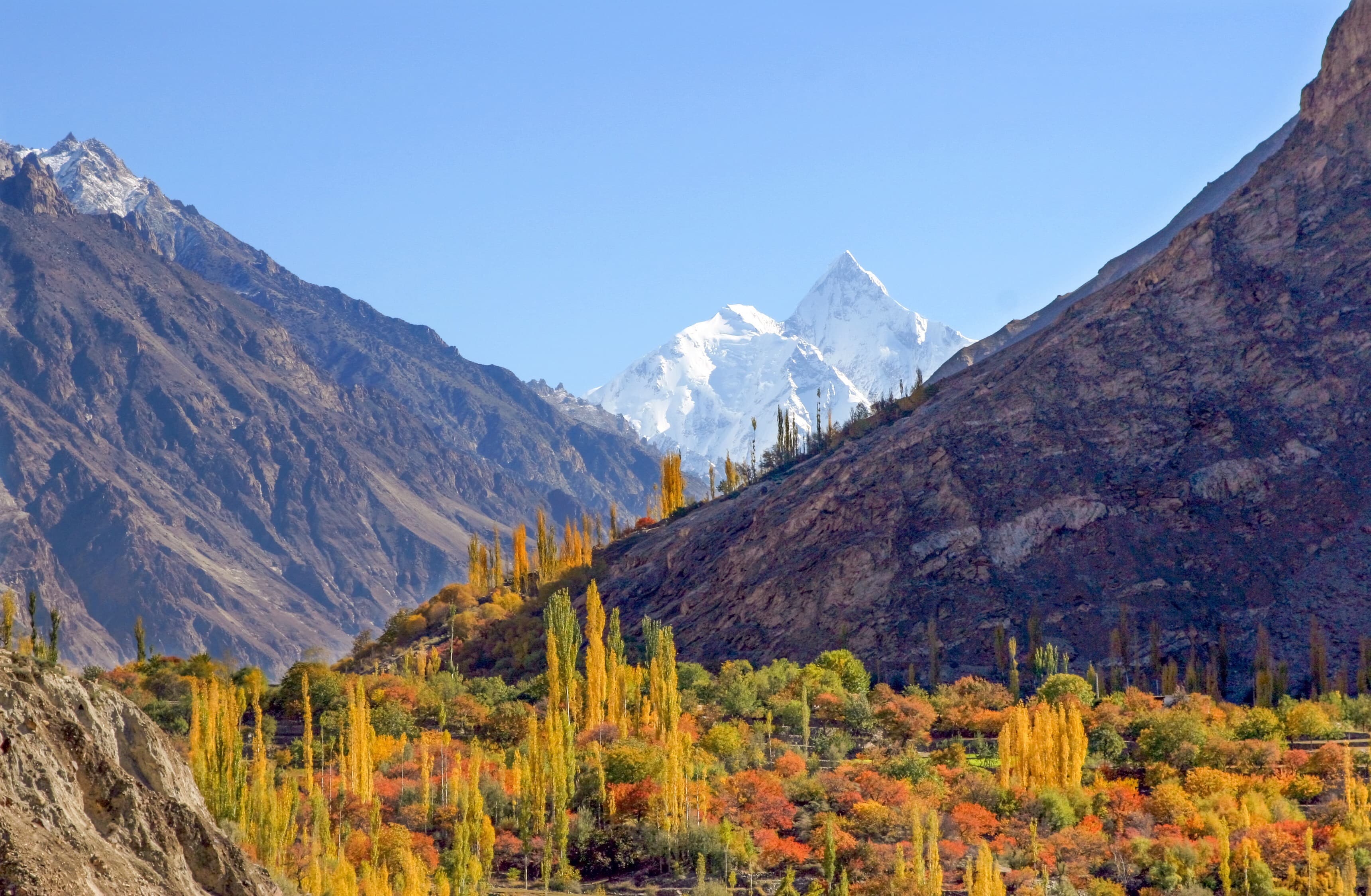
It helps to know what you are looking at. These valleys are mountain desert, and almost every tree in them was planted along an irrigation channel. Autumn here is not a forest changing colour. It is lines of yellow poplar along field edges and blocks of orange and red apricot, cherry and apple in the orchards, set against bare rock and new snow. That is why the villages, not the wild places, are where you go.
Timing decides more than rank. Colour starts in the highest valleys in late September and finishes in the lowest in mid-November, so the right place depends on your dates. As a rule of thumb: late September to mid-October for Fairy Meadows, Astore and Phander; mid-October for Gojal; the last ten days of October for central Hunza, Nagar and Khaplu; late October to early November for Shigar and Skardu. The regional overview, autumn in Gilgit-Baltistan, describes the season as a whole. This page is about choosing.
1. Central Hunza: Karimabad, Altit and Duikar
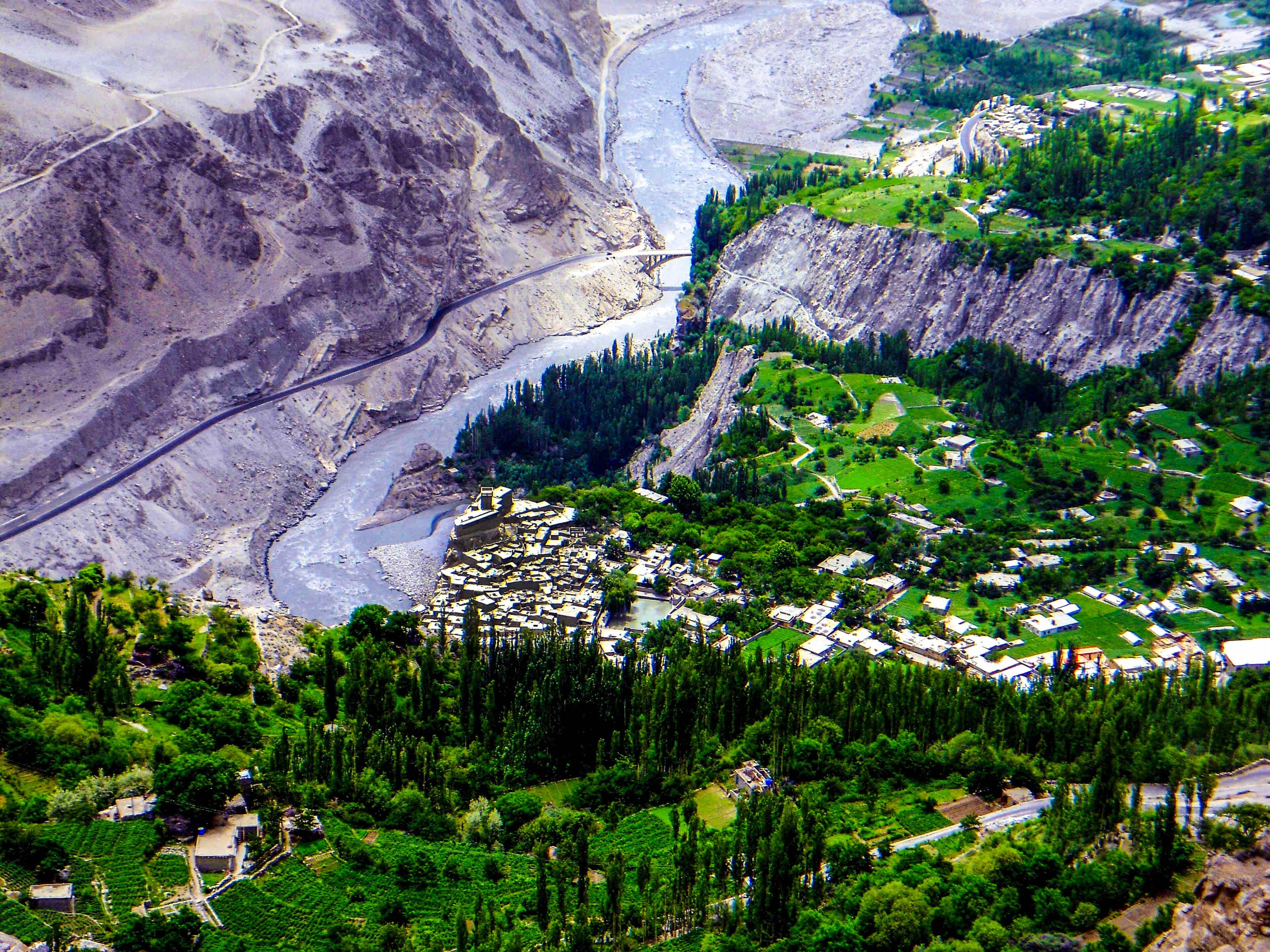
Central Hunza is the best single place for autumn colour in Gilgit-Baltistan, because nowhere else packs as many orchards under as many big peaks into so small an area. It usually peaks from about 20 October to 5 November.
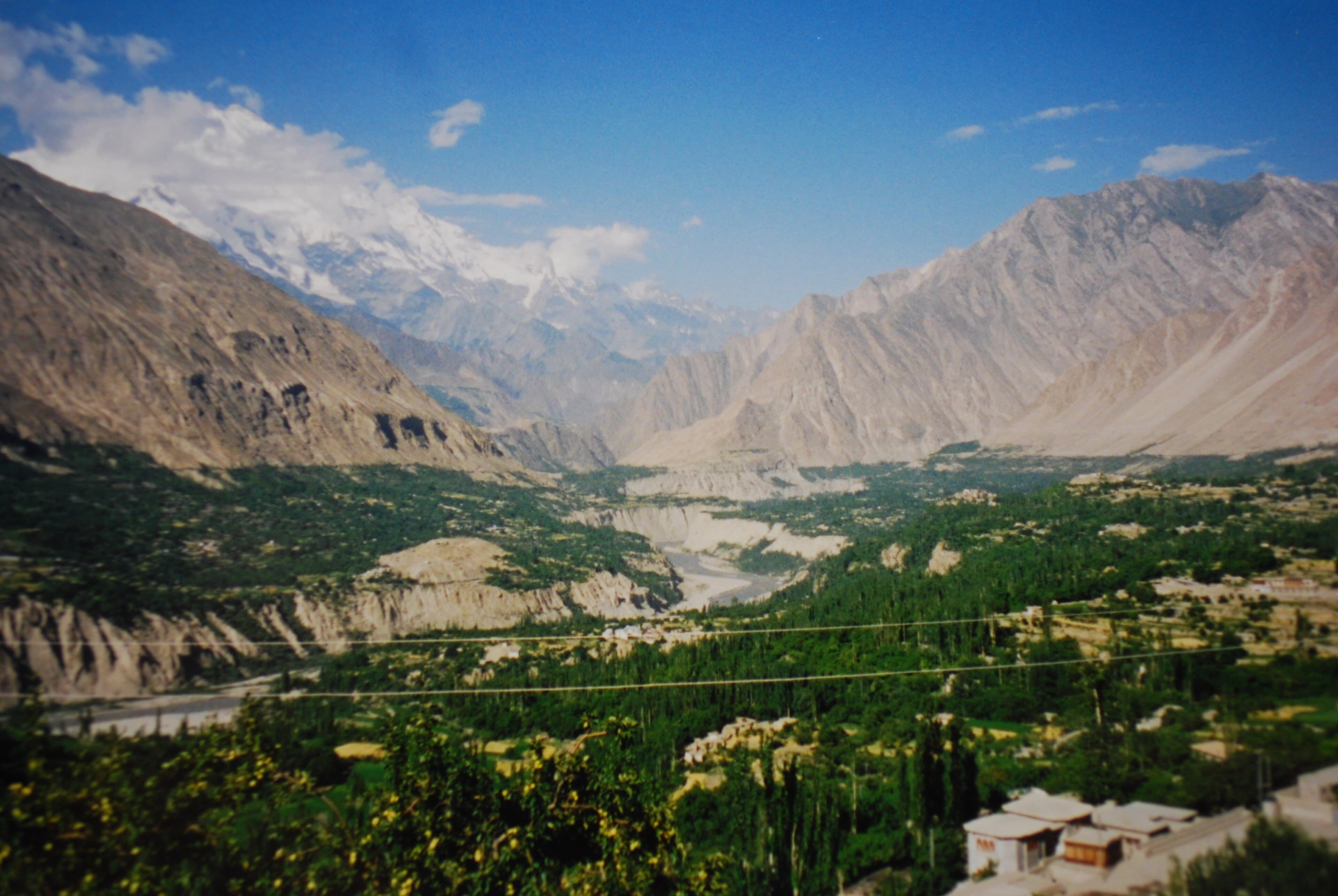
KarimabadThe old royal capital and the heart of every Hunza itinerary
Photo: katorisi · CC BY-SA 3.0Why go: Karimabad, the orchard garden at Altit Fort, the old village of Ganish and the ridge viewpoint at Duikar all lie within 30 minutes of each other, and Rakaposhi (7,788 m) and Ultar stand directly above. It also has the widest choice of hotels and the simplest access, 2.5 hours by road from Gilgit. The cost is company. This is the one place in the region that is busy in late October.
What to know: the signature view is dawn from Duikar, at about 2,850 metres, so plan one night on the ridge. Hotels there and in Karimabad with a clear view of the valley are the first to fill, and booking four to six weeks ahead for the last fortnight of October is sensible.
How to pair it: with Nagar across the river and Gojal to the north, both of them day trips or easy overnights. Our dedicated guide to Hunza in autumn has the week-by-week timing and a six-day plan, and when is autumn in Hunza gives the dates on one page.
2. Khaplu and Shigar, Baltistan
Khaplu and Shigar are the best places for autumn colour in Baltistan, and the best in the whole region if quiet matters to you. Both normally peak in the last ten days of October and hold some colour into the first week of November.
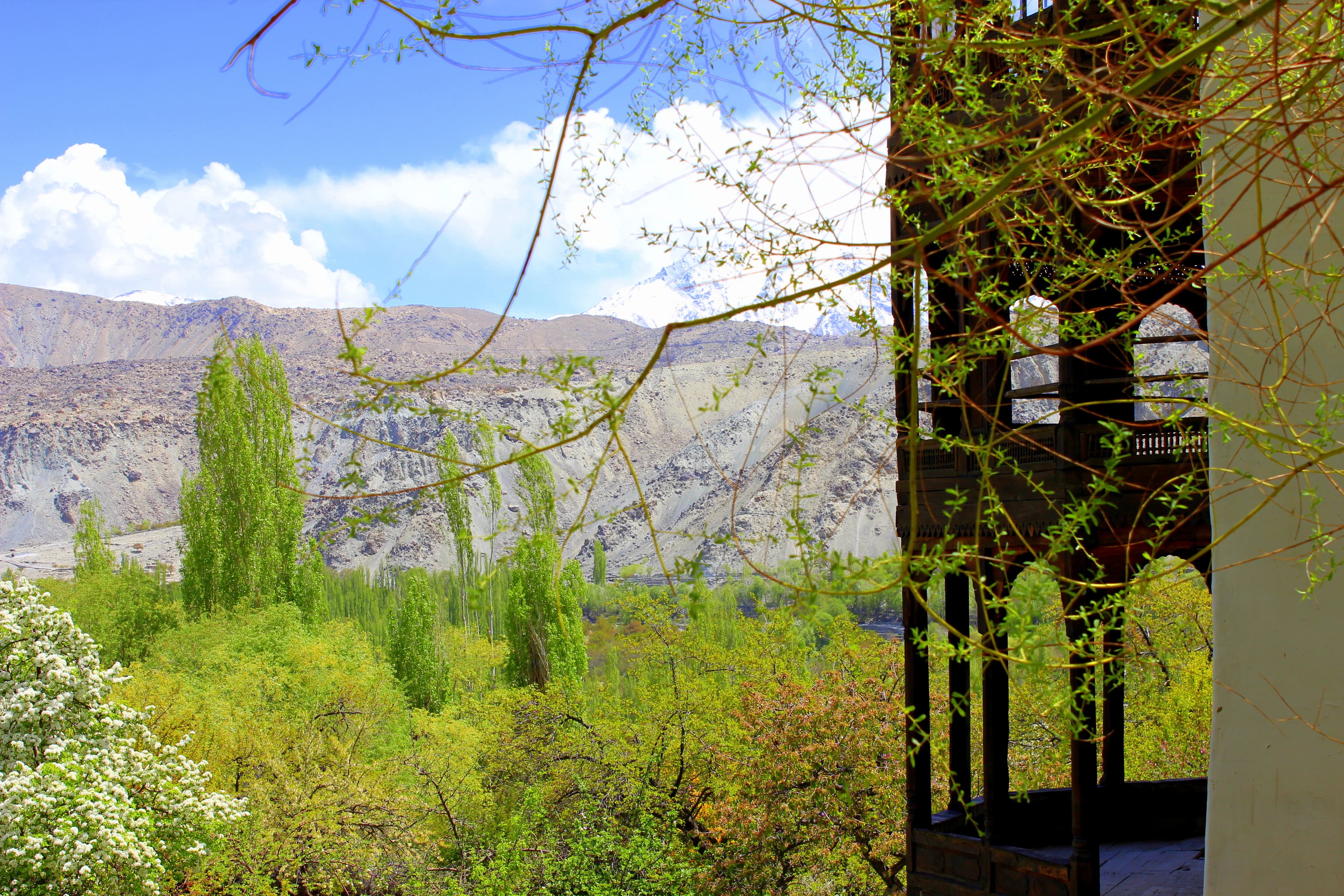
Khaplu ValleyA royal palace and a 700-year-old mosque at the end of the road east
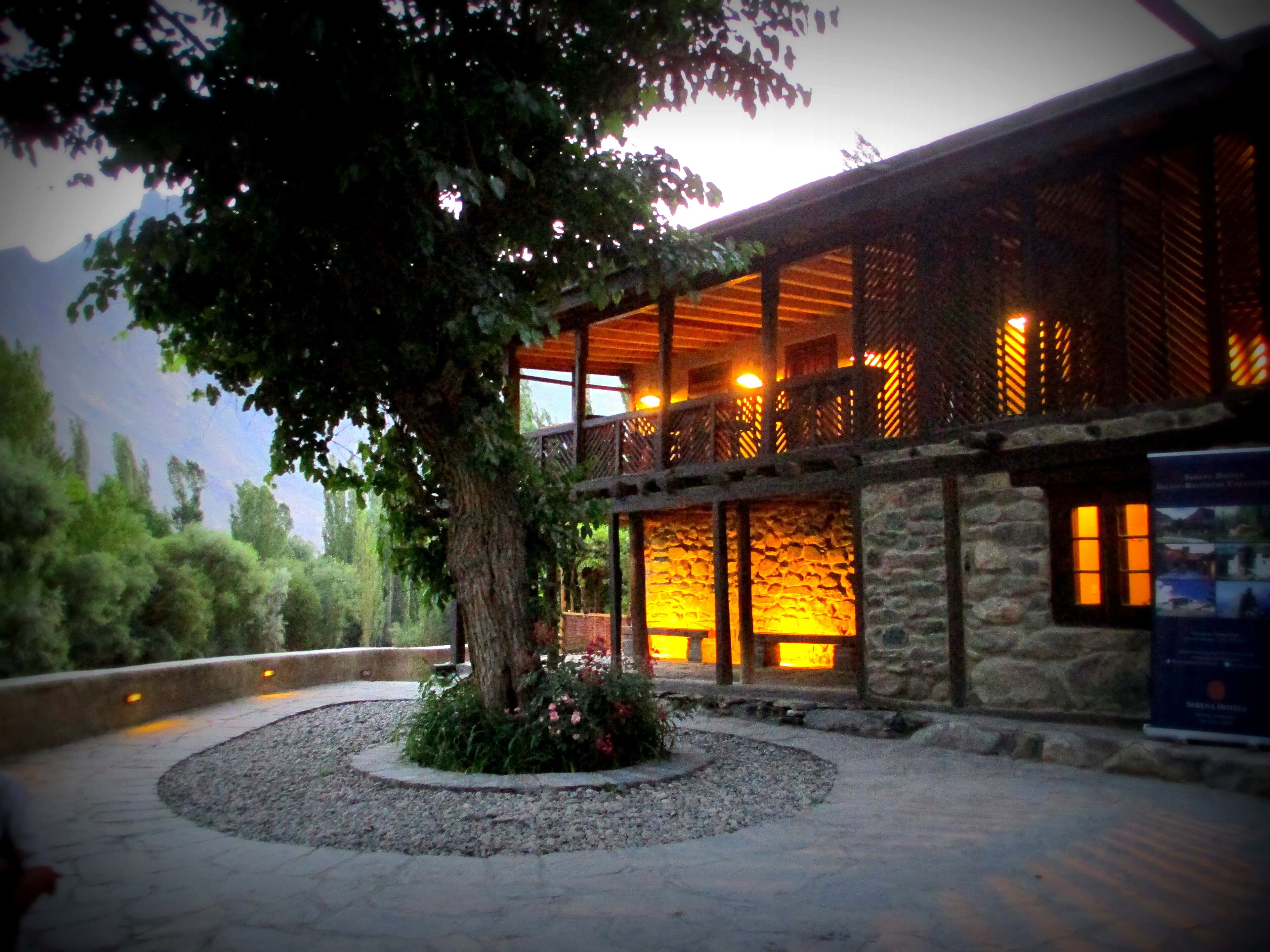
Photo: Sana Nemat · CC BY-SA 3.0Why go: each is a historic town set in orchards, with a restored royal residence at its centre. Khaplu has its 1840 palace and the Chaqchan Mosque above a great fan of terraces on the Shyok River. Shigar has the 400-year-old Fong Khar fort and long avenues of poplars 45 minutes from Skardu. Both see far fewer visitors than Hunza.
What to know: Khaplu sits at about 2,600 metres, roughly 370 metres higher than Skardu, so it is colder and often turns a few days sooner. The heritage hotels in the fort and the palace have a limited number of rooms. Skardu itself is reached by a weather-dependent flight or a long drive, which is the main reason this pair ranks second and not first.
How to pair them: base yourself in Skardu, give Shigar a day and Khaplu two with a night in the town, 2.5 to 3 hours from Skardu. Skardu in autumn covers the route, the weather and the flights.
3. Gojal: Gulmit and Passu
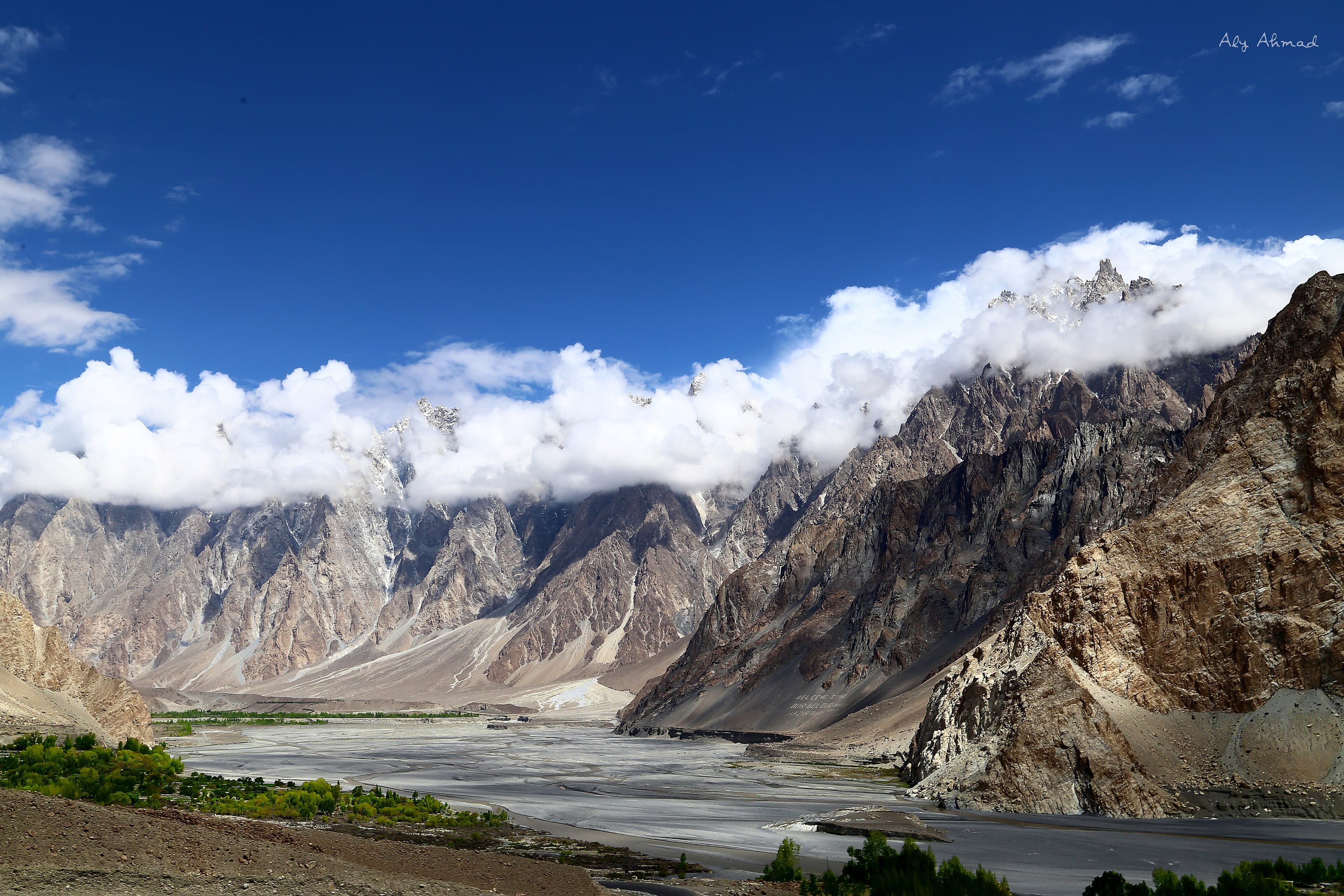
Gojal, the upper part of Hunza, is the best place for autumn colour set against bare rock and ice, and it peaks earlier than the rest of Hunza, usually between about 10 and 25 October.
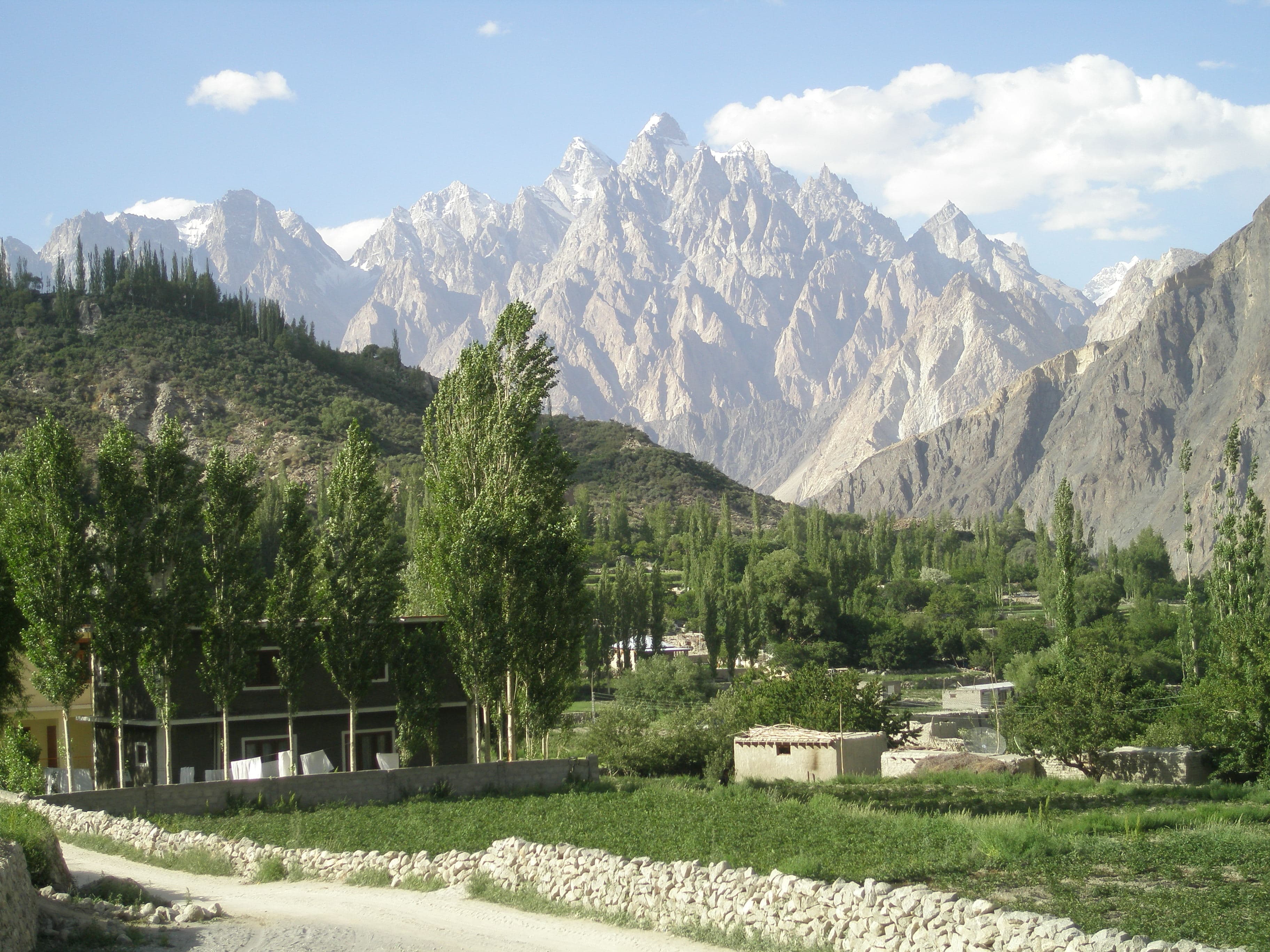
GulmitUpper Hunza's old capital, where Wakhi culture meets the Cones
Photo: Baqhusbti · CC BY-SA 3.0Why go: the poplars of Passu stand in front of the Passu Cones, a 6,106-metre ridge of rock spires, with the Passu and Batura glaciers close by. Gulmit has an old Wakhi village and orchards, and Attabad Lake lies on the way. There is less foliage here than in Karimabad but more drama per tree.
What to know: the Hussaini Suspension Bridge and Borith Lake are both between Gulmit and Passu, so one night in Gojal covers all four. Guesthouses here are mostly small and family-run, evenings are colder than in Karimabad, and some close for the winter during November.
How to pair it: Gojal is an hour north of Karimabad, so it fits any Hunza trip. If you arrive in the middle of October, start here and move down to Karimabad afterwards. If you arrive at the end of the month, expect the Gojal poplars to be thinning and treat it as a landscape day.
4. Phander and the Ghizer valley
Phander is the best place for autumn reflections in Gilgit-Baltistan and the least crowded entry on this list. Colour comes to the Ghizer valley in October, and Phander, which lies further up the valley than Gupis, turns first.
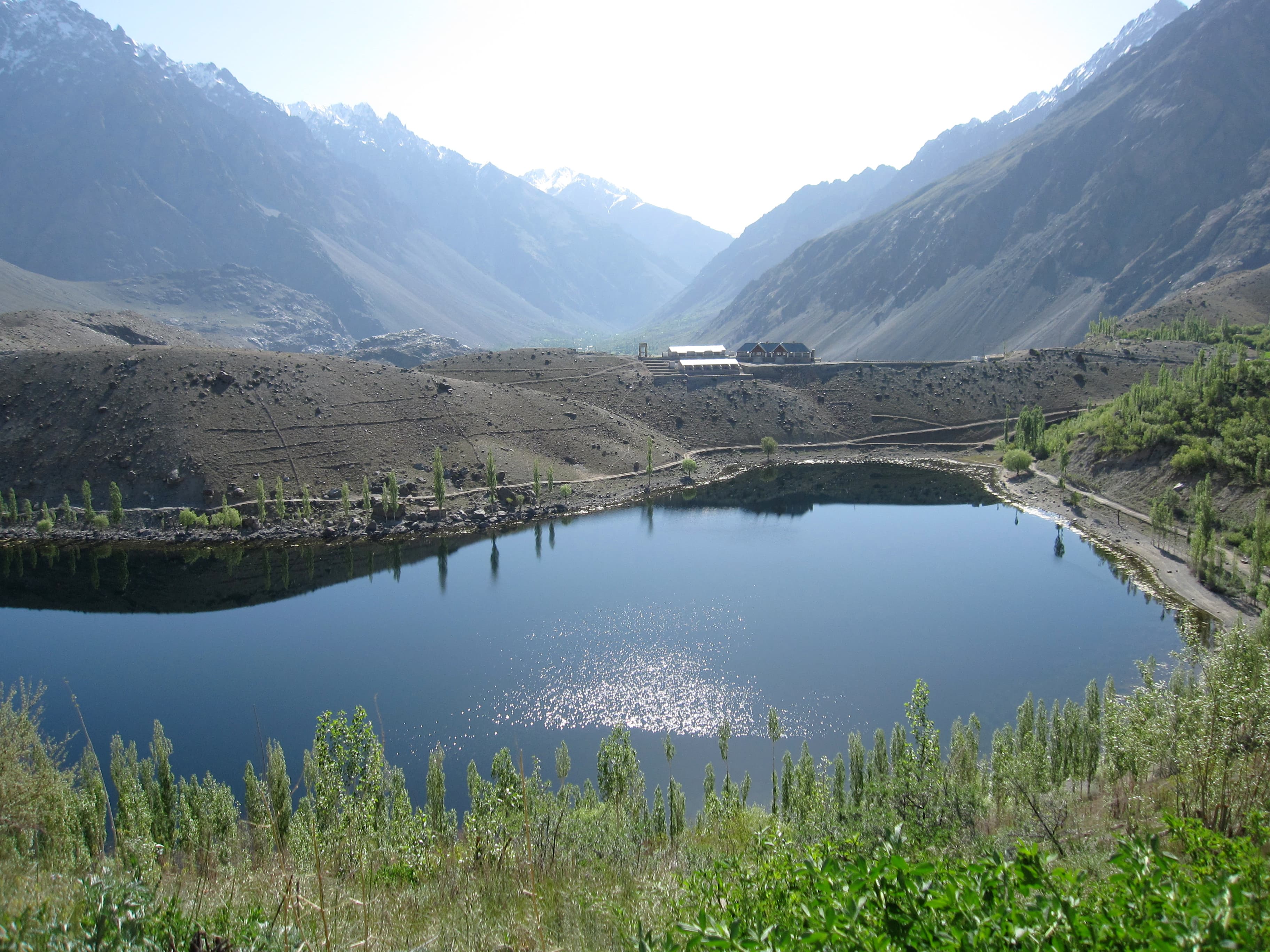
Phander LakeA deep-blue lake in the greenest valley of the north
Photo: Xplosive99 · CC BY-SA 3.0Why go: Phander Lake is a still, blue lake ringed by poplars and willows, with the Ghizer River winding through flat meadows below it. The drive is half the reason. The Gilgit to Chitral road follows the river all the way, passing Gupis at about 2.5 hours from Gilgit and Khalti Lake just beyond, and reaches Phander in 4 to 5 hours. You will see very few other visitors.
How to pair it: Phander needs at least one night and suits a three-day loop from Gilgit, before or after Hunza. Accommodation is simple and nights are cold by mid-October, so go in the first half of the month if you can. Beyond Phander the road climbs to Shandur Pass at about 3,700 metres, which snow closes for the winter. Our Ghizer and Shandur Adventure tour covers the same road in summer, and the Ghizer culture guide explains who lives along it.
5. Nagar and Hopper
Nagar is the best place to see Hunza's autumn without Hunza's visitors. It faces Karimabad across the river and peaks at much the same time, in the last ten days of October.
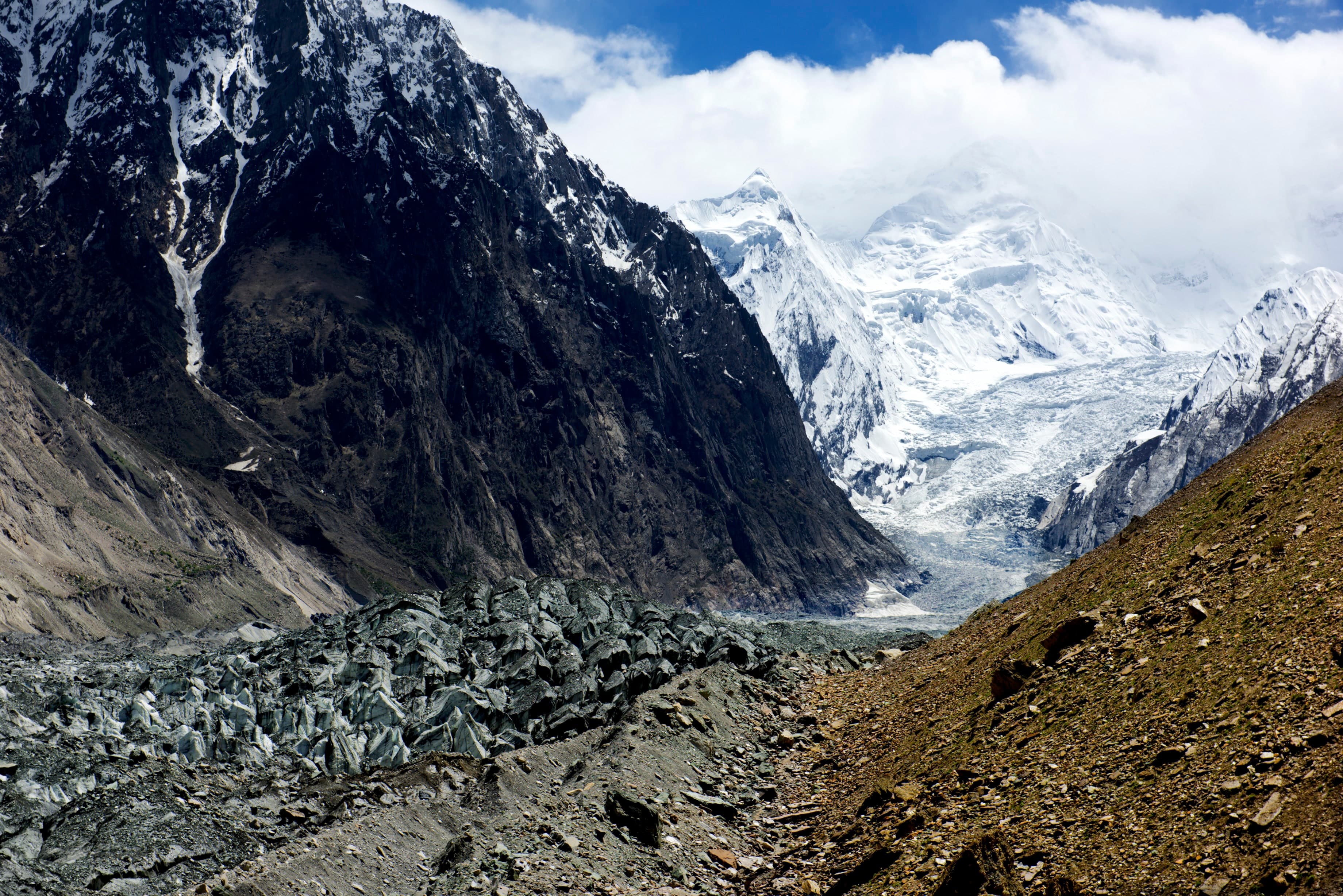
Hopper GlacierA churning river of ice at the end of a half-day drive from Karimabad
Photo: Najeebmahmud · CC BY-SA 4.0Why go: the road to Hopper Glacier climbs through a series of villages with poplar-lined fields and ends above the dark ice of the glacier at about 2,700 metres. Lower down, Minapin and Ghulmet sit right under Rakaposhi. From the Nagar terraces you also get the view back across the valley, with Karimabad, Baltit Fort and Ultar in a single frame.
What to know: there is far less accommodation in Nagar than in Hunza, and most visitors come for the day. The Hopper road is narrow and steep in places, so go with a local driver and allow time for stops in the villages on the way up.
How to pair it: Hopper is a half-day or full-day trip from Karimabad, 1 to 1.5 hours each way. Fit walkers can add a night at Minapin for the trail towards Rakaposhi Base Camp, provided early snow has not closed it.
6. The Skardu basin: Kachura, Chunda and the cold deserts
The Skardu basin is the best place to see autumn colour beside sand dunes, a rare combination anywhere. It peaks from about 20 October into the first week of November.
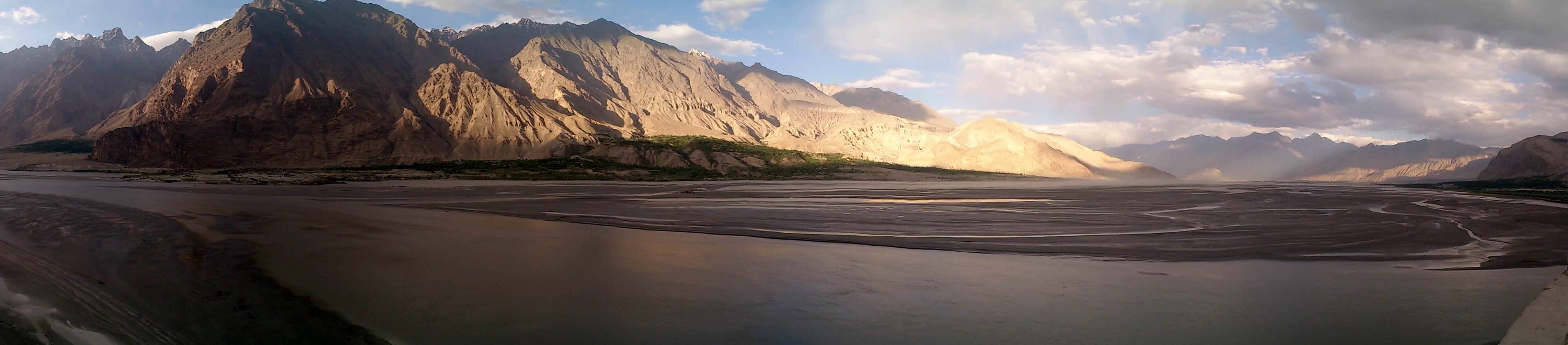
SkarduThe basecamp town for the greatest mountains on earth
Photo: Sabawun · CC BY-SA 4.0Why go: Upper Kachura Lake reflects its orchards 30 minutes from town, Chunda Valley looks down over the Indus from its terraces, and at Katpana Desert rows of poplars stand directly behind the dunes. October in Skardu is dry, with an average high of about 20°C according to the Pakistan Meteorological Department record.
What to know: Satpara Lake, 20 minutes south of town, and the walk up to Kharpocho Fort above the bazaar add two more viewpoints without a long drive. The dunes are best in the last hour before sunset, and by November it is below freezing there soon after dark.
How to pair it: these are half-day trips, best used on your arrival and departure days around the longer outings to Shigar and Khaplu. Deosai National Park lies above the town, but its road is normally shut by snow from late autumn, so do not build an October trip around it.
7. Fairy Meadows and Astore: the early autumn
Fairy Meadows and Astore are the best places for autumn colour if you are travelling early, from late September to about mid-October. They are higher than everything else on this list, so they turn first and close first.
Why go: Fairy Meadows sits at about 3,300 metres, facing the Raikot face of Nanga Parbat (8,126 m). In early autumn the meadow grass has turned gold, the air is at its clearest and the summer crowds have left. In Astore, the forest around Rama Lake and the villages of the Rupal Valley colour up in late September on the other side of the same mountain.
How to pair it: Fairy Meadows is reached by jeep from Raikot Bridge on the Karakoram Highway and then a 5 km hike, so it fits naturally at the start of a road trip north, before Hunza. The season there runs from May to October, and snow normally closes the jeep track from around November. Confirm that the track and the cottages are still operating before you go. Our Fairy Meadows and Nanga Parbat tour and the Karakoram Highway road trip guide show how it slots into a longer route.
Hunza or Skardu for autumn?
Choose Hunza if this is your first autumn trip to Gilgit-Baltistan, and choose Skardu if you have been before or want quiet above all. Hunza has denser colour, shorter distances between sights and road access that does not depend on a flight. Skardu has more space, fewer people, two restored palace towns and the cold deserts.
On timing they overlap. Central Hunza usually peaks between about 20 October and 5 November, and Shigar and the Skardu basin a few days behind that. On weather there is little between them: both are dry and sunny by day in late October, with nights around freezing. On logistics Hunza is simpler. It is 2.5 hours by road from Gilgit, while Skardu relies either on a weather-dependent flight or on a longer drive, as our guide to Islamabad to Skardu flights and roads explains.
With 10 to 12 days you do not have to choose. Start in Hunza around 20 October, drive to Skardu in a day (roughly 8 hours from Karimabad), and finish with Shigar and Khaplu in the first days of November. That is the shape of our Autumn Colours Photography Tour, and the answer page Hunza or Skardu in autumn sets out the comparison point by point.
Questions, answered
Where is the best place to see autumn in Pakistan?
Central Hunza, around Karimabad, Altit and the Duikar viewpoint, is the best known and most concentrated place for autumn colour in Pakistan. Khaplu and Shigar in Baltistan, Passu in upper Hunza and Phander in Ghizer are the strongest alternatives, each quieter than Hunza.
Which is better in autumn, Hunza or Skardu?
Hunza is better for a first visit, with denser colour and easier access. Skardu is better for space and quiet, with Shigar, Khaplu and the cold deserts. They peak within days of each other in late October, and 10 to 12 days is enough to see both.
When do autumn colours peak in Gilgit-Baltistan?
The regional season runs from late September to mid-November. High places such as Fairy Meadows and Phander turn first, Gojal follows in mid-October, and central Hunza, Nagar, Khaplu, Shigar and Skardu peak in late October and early November. The last week of October is the safest single week.
Is Fairy Meadows open in October?
Usually, yes, for at least part of the month. The Fairy Meadows season runs from May to October, and snow normally closes the jeep track from around November. Nights are well below freezing by October, and services wind down, so confirm before travelling.
Is Phander Lake worth visiting in autumn?
Yes, if you have at least two spare days from Gilgit. Phander is 4 to 5 hours' drive each way, and in October its poplars and willows reflect in a still, blue lake with very few visitors. Facilities are basic and nights are cold.