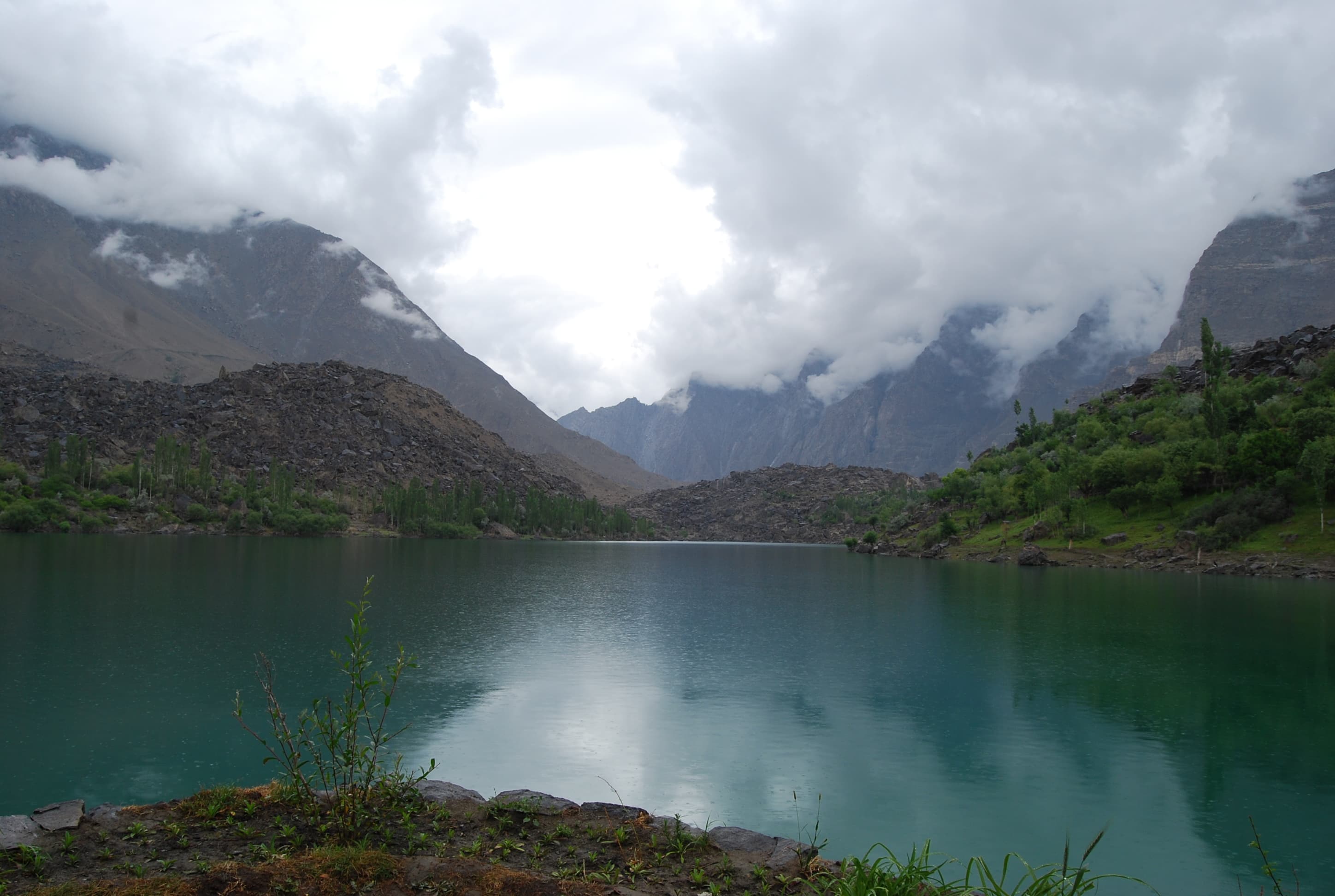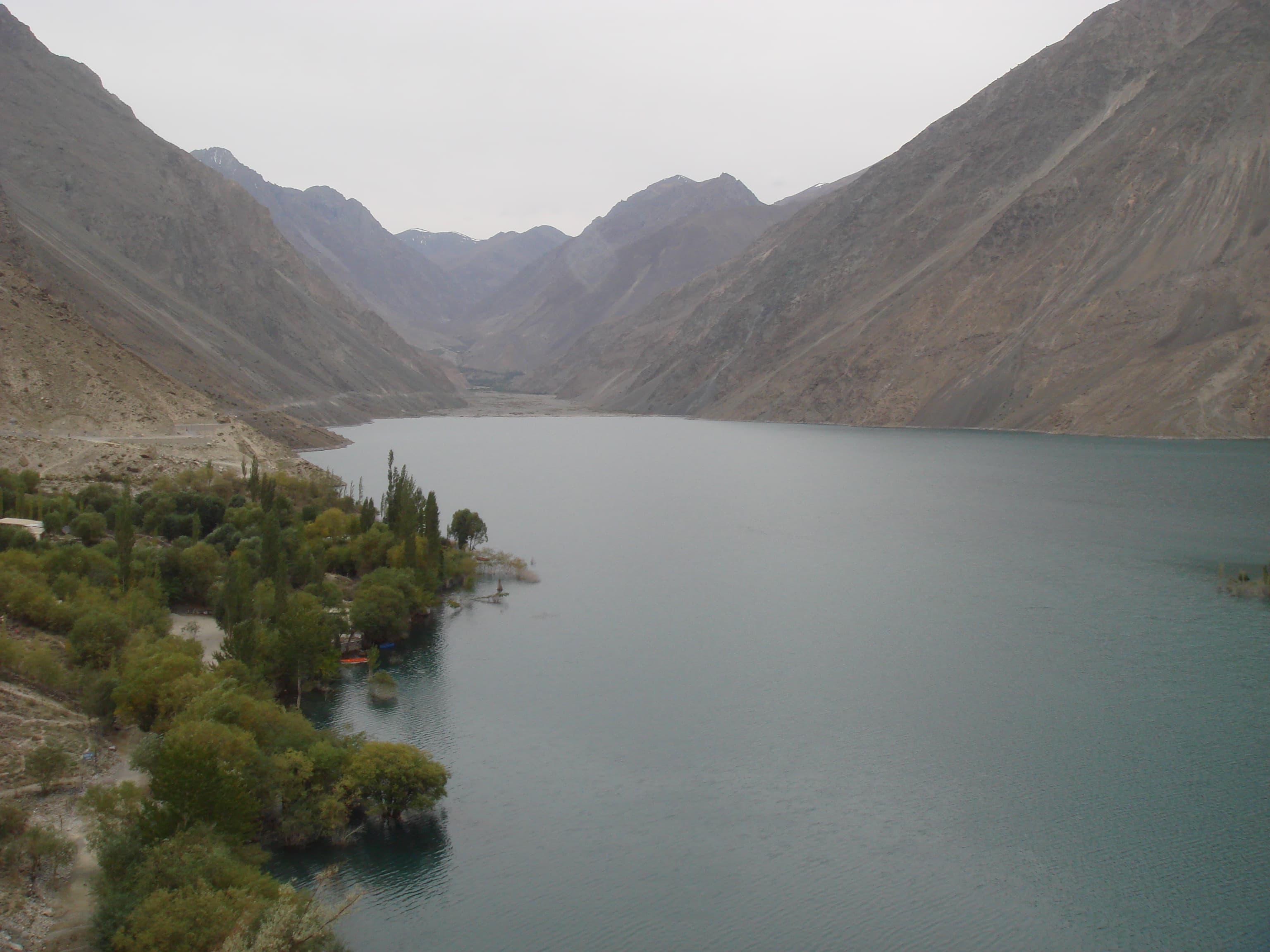
Satpara Lake is Skardu's closest escape: a deep-blue sheet of water folded into bare mountains barely 20 minutes' drive above town. Fed by Deosai's meltwater streams, it has supplied Skardu with water for centuries; the Satpara Dam, built across its outlet in the 2000s, raised the level and enlarged the lake, and today its stored water also generates power for the town below.
The colour is what stops people. Against slopes of dust-brown rock the lake reads almost navy, shifting to turquoise in the shallows around its small island. Wooden boats potter out from the shore in season, anglers try for trout, and a couple of simple lakeside restaurants serve tea with one of Baltistan's better lunchtime views.
Above the lake sits Sadpara village, a name written into mountaineering history. This is the home of Muhammad Ali Sadpara, the much-loved Pakistani climber who died on K2 in winter 2021, and of his son Sajid Sadpara, who has carried the family legacy onto the world's highest peaks. A memorial to Ali Sadpara stands by the Skardu road, and locals speak of him with unmistakable pride.
On the Skardu side of the lake road, don't miss the Manthal Buddha Rock: a huge granite boulder carved with an image of the Buddha and surrounding figures, dated to around the 8th century, when Baltistan lay on Buddhist trade and pilgrimage routes. It is one of the region's most important pieces of pre-Islamic heritage and takes only half an hour to visit.
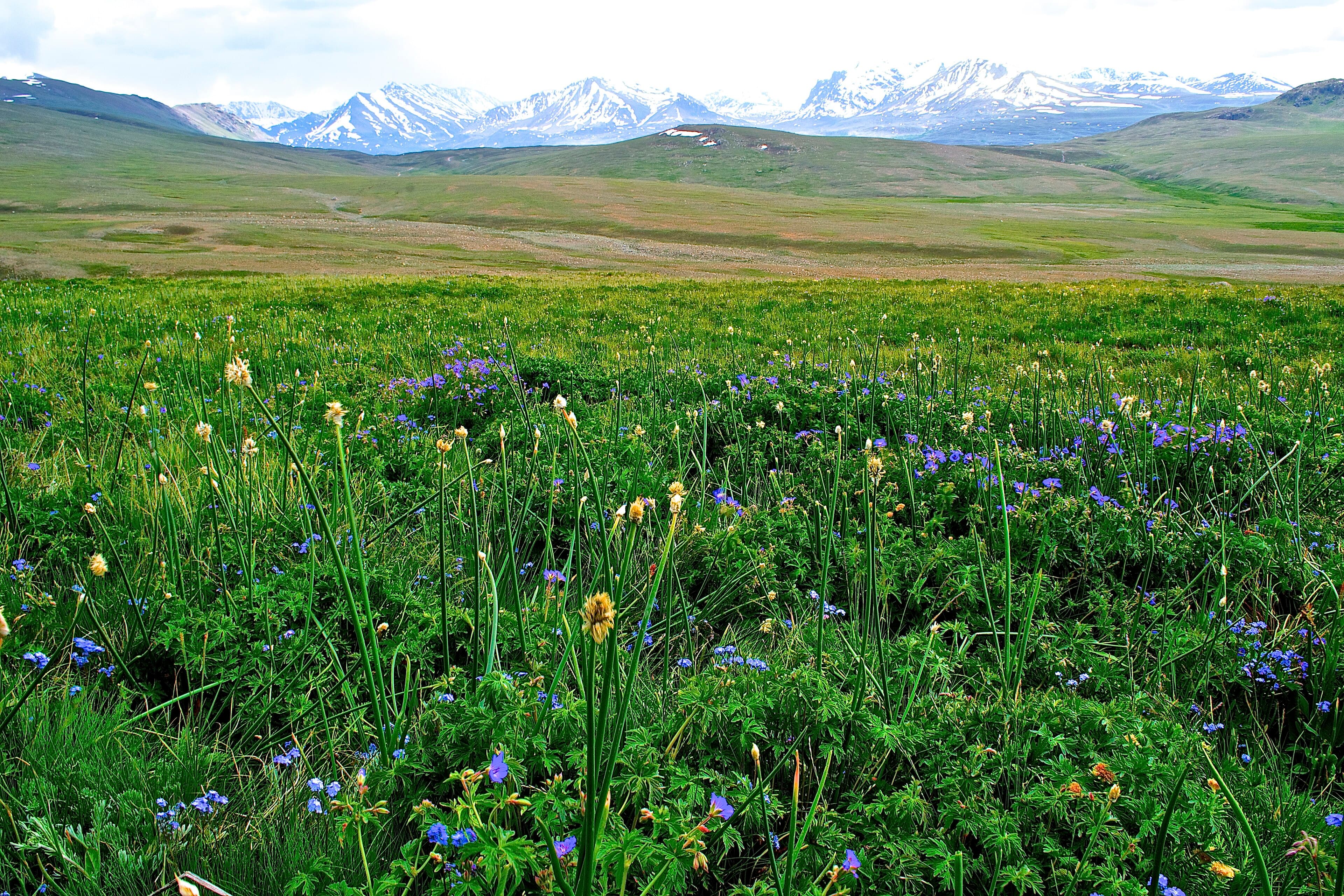
Most travelers meet Satpara twice, because the jeep road to Deosai National Park climbs directly past the lake. Stop for photographs on the way up to the plateau, then again for a late lunch on the way down — and combine the visit with Skardu's other nearby sights, from Kharpocho Fort to the Katpana Desert dunes.