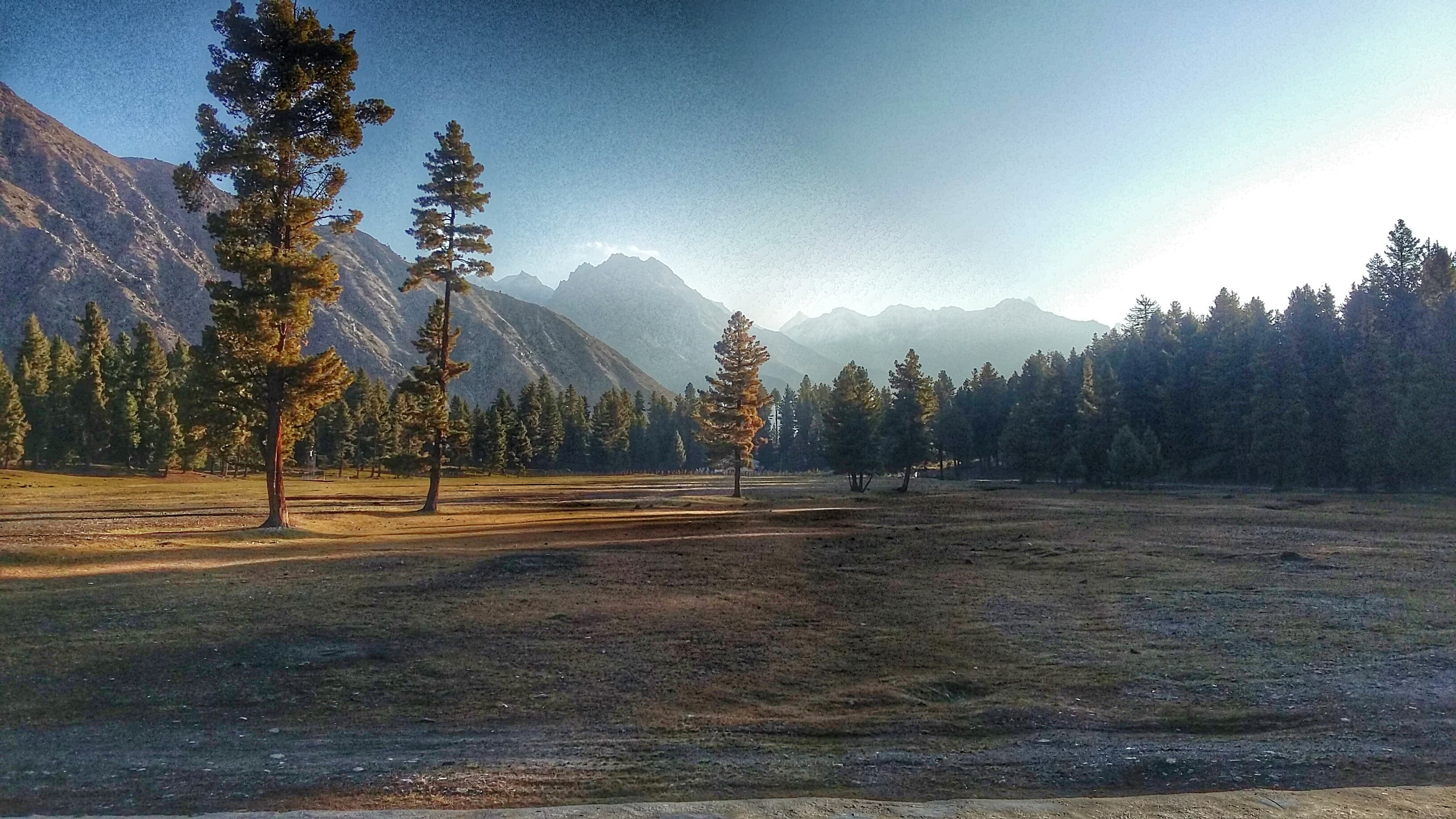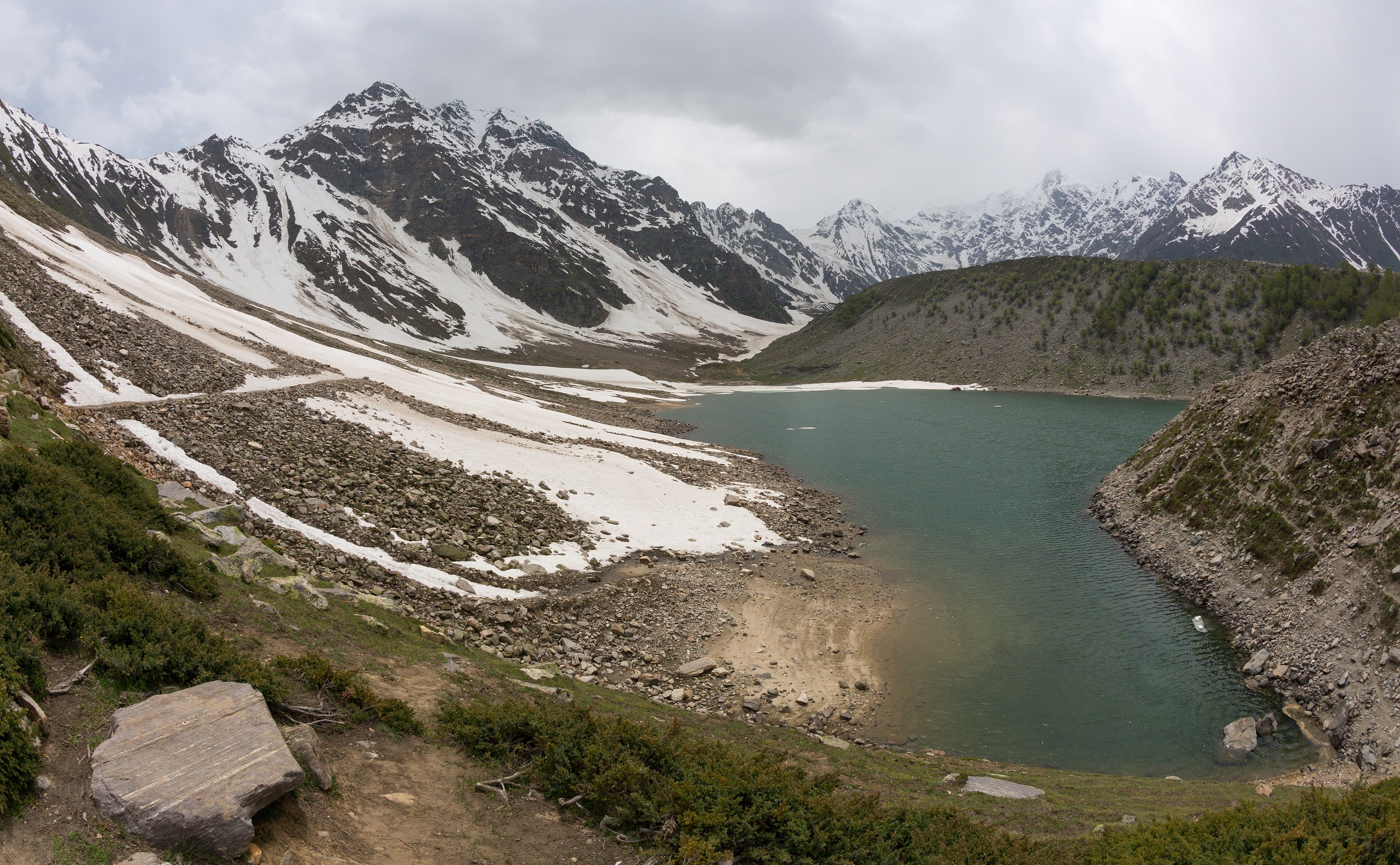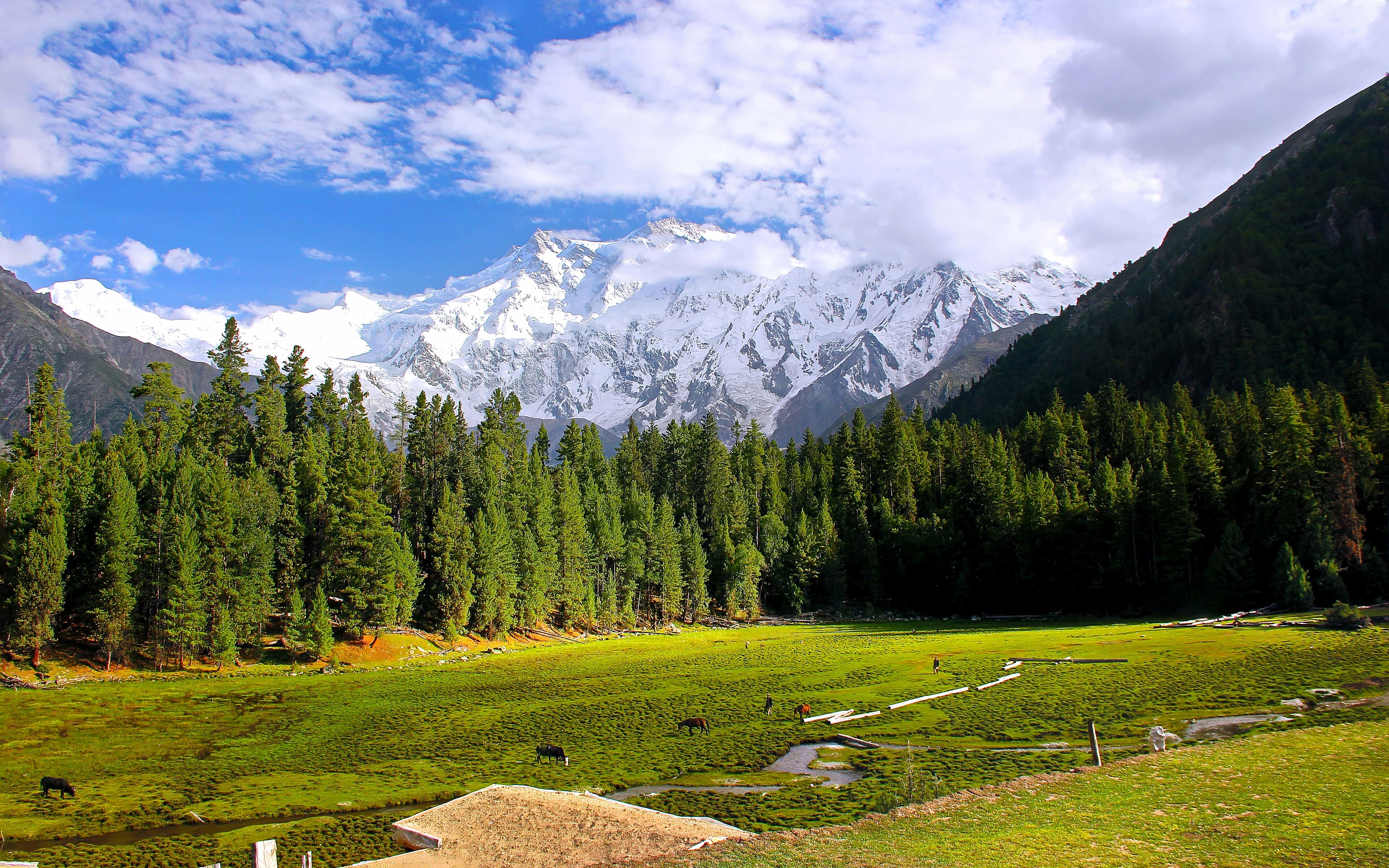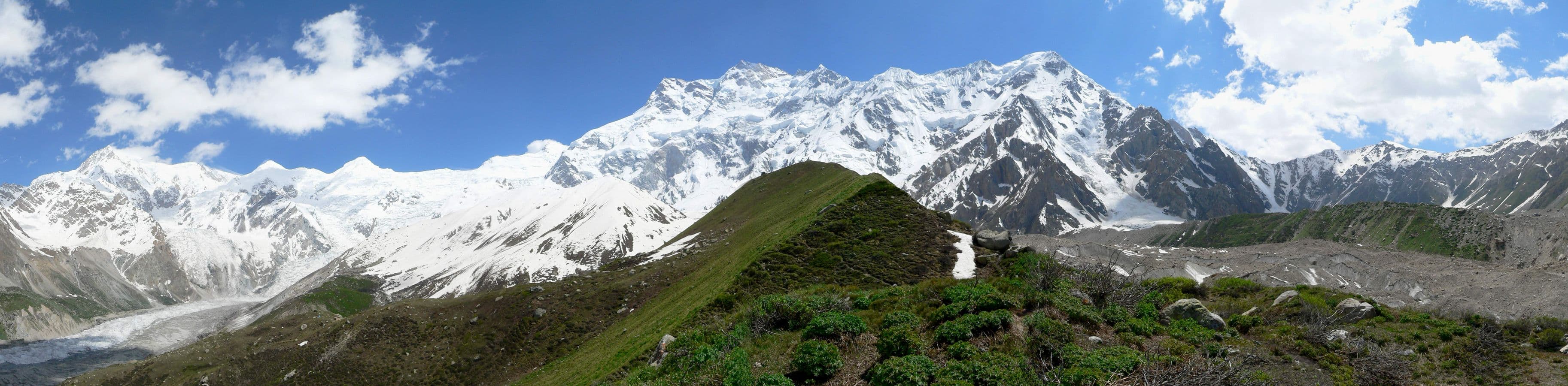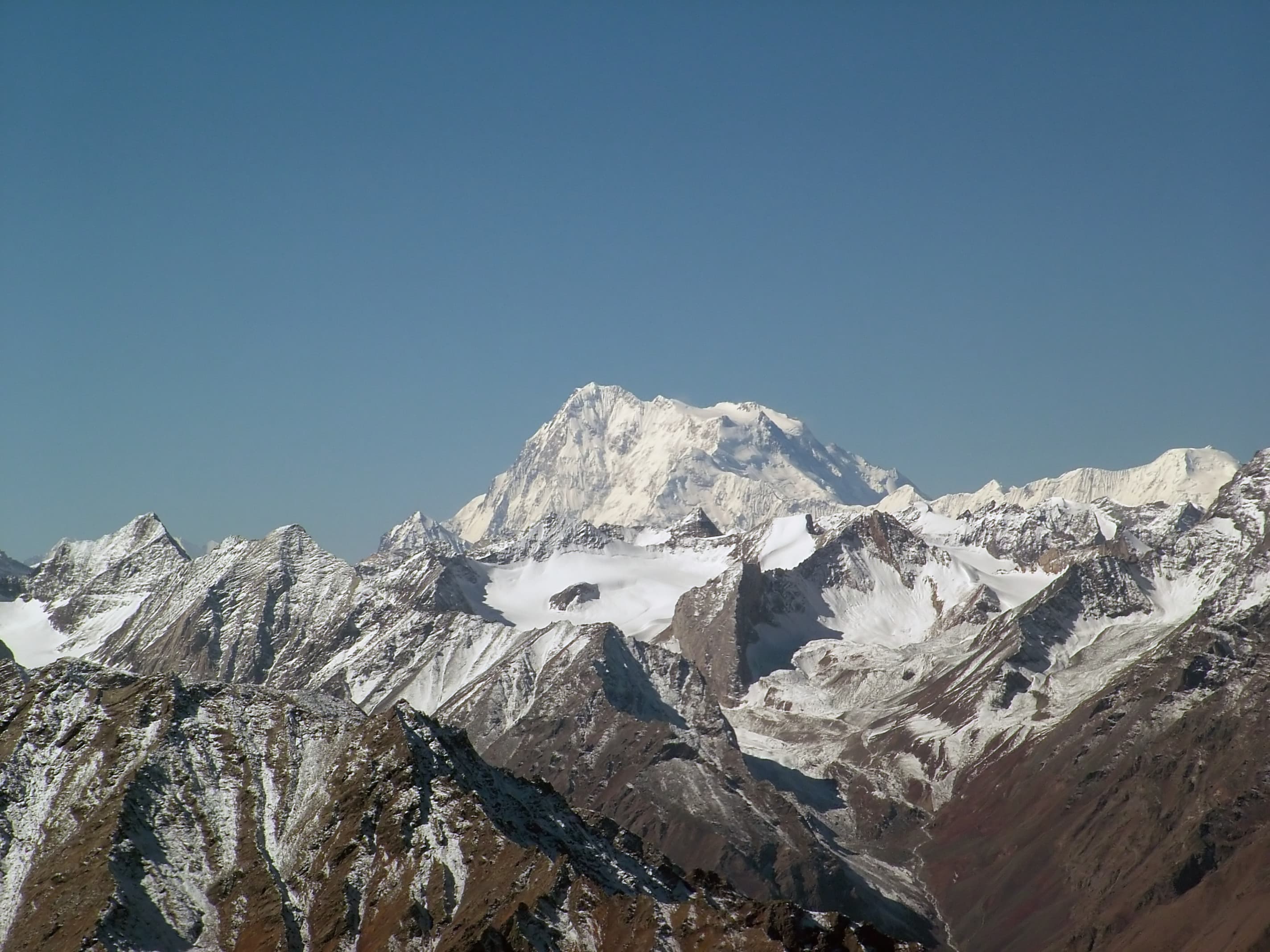
Nowhere else on the planet can you stand in a farmed village field and look up a single mountain wall 4,600 metres high. That is the Rupal Valley: the villages of Tarashing and Rupal sit directly beneath the south face of Nanga Parbat (8,126 m), the highest mountain face on earth — a rampart of ice and rock so vast that clouds form halfway up it while the summit stays in sunshine.
Mountaineering history hangs over the valley. The Rupal face defeated expeditions for decades before Reinhold and Günther Messner climbed it in 1970, and the German expeditions of the Herrligkoffer era left their name on the base camp that today makes a superb day hike. From Tarashing the walk to Herrligkoffer Base Camp crosses the Bazhin Glacier moraine and the meadows of Rupal village — a full but moderate day with the face looming larger every hour.
Unlike Fairy Meadows on the mountain's north side, the Rupal Valley remains genuinely quiet. Tarashing is a working village of stone houses, willow lanes and barley terraces, with a handful of simple guesthouses and campsites. Evenings here are about apricot-wood fires and watching alpenglow climb the face — there is no bazaar, no crowd, and barely a phone signal.
Rupal slots naturally into a wider Astore itinerary: it's about two hours by jeep from Astore village, and combines well with Rama Lake and the Deosai crossing to Skardu. Serious trekkers also know it as the start or end of the Mazeno Pass and Rupal–Shaigiri routes around the massif.