What you can expect to see
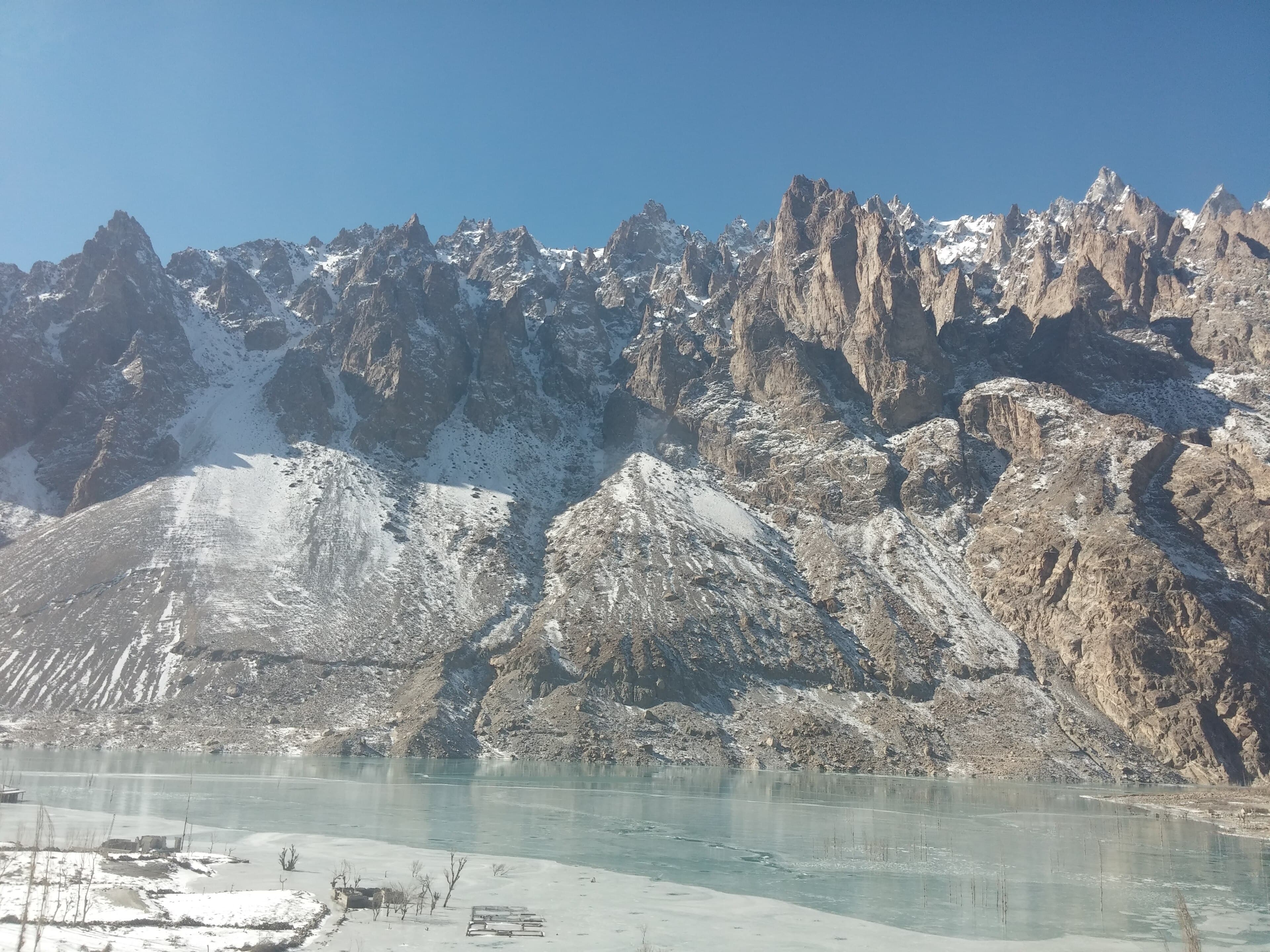
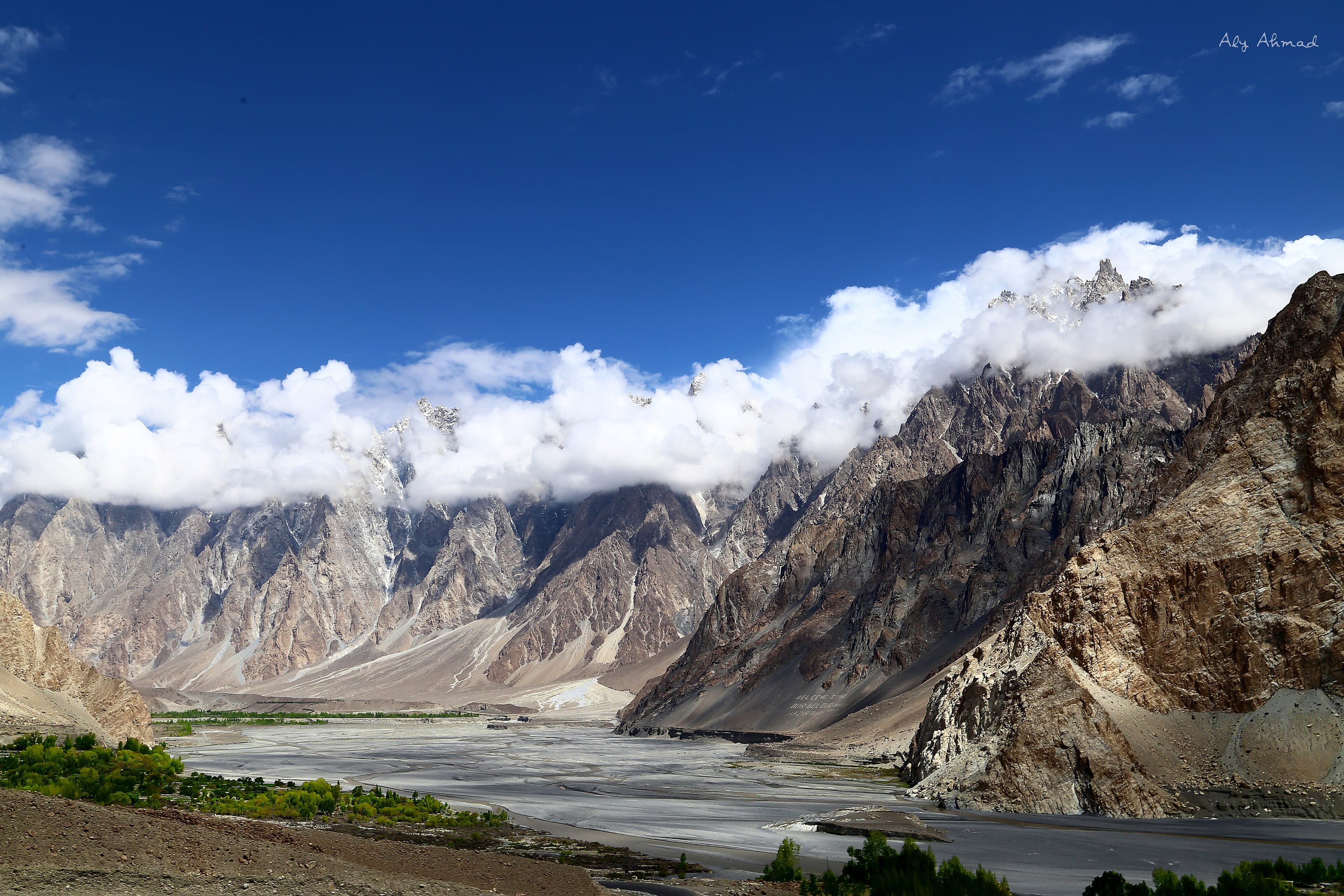
Gilgit-Baltistan lies where the Himalaya, the Karakoram and the Hindu Kush meet, and its animals are the animals of high, cold, open country. Wild goats and sheep live on the cliffs, a rare cat hunts them, a bear grazes one high plateau and marmots whistle from the grass.
It helps to be honest about the odds. Ibex and golden marmots are easy to see on an ordinary trip. Markhor are likely in winter with a local guide. The snow leopard and the brown bear take time, a guide who knows the ground and some luck. The Marco Polo sheep is one that most visitors never see.
A few animals are here but are almost never seen: the lynx, the urial, the musk deer and the woolly flying squirrel. They are in this guide because people ask about them. We take the animals one by one, with the place and the season for each.
Himalayan ibex on the Khunjerab Pass road
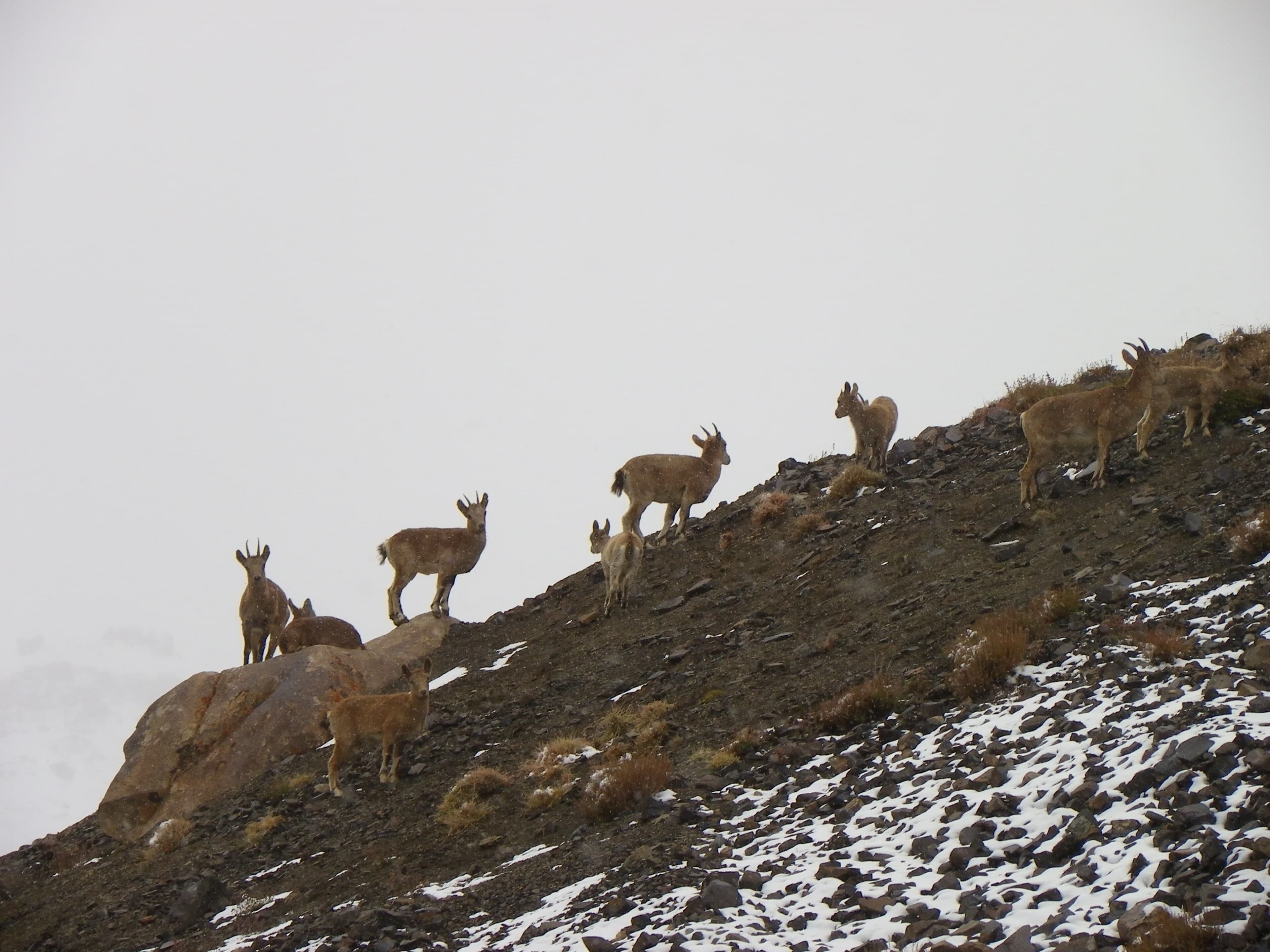
The ibex is the big animal you are most likely to meet. It is a heavy wild goat, and a grown male carries ridged horns about 115 centimetres long. The government's winter survey of 2024-25 counted 7,294 ibex in Gilgit-Baltistan, and 3,091 of them were in Hunza district.
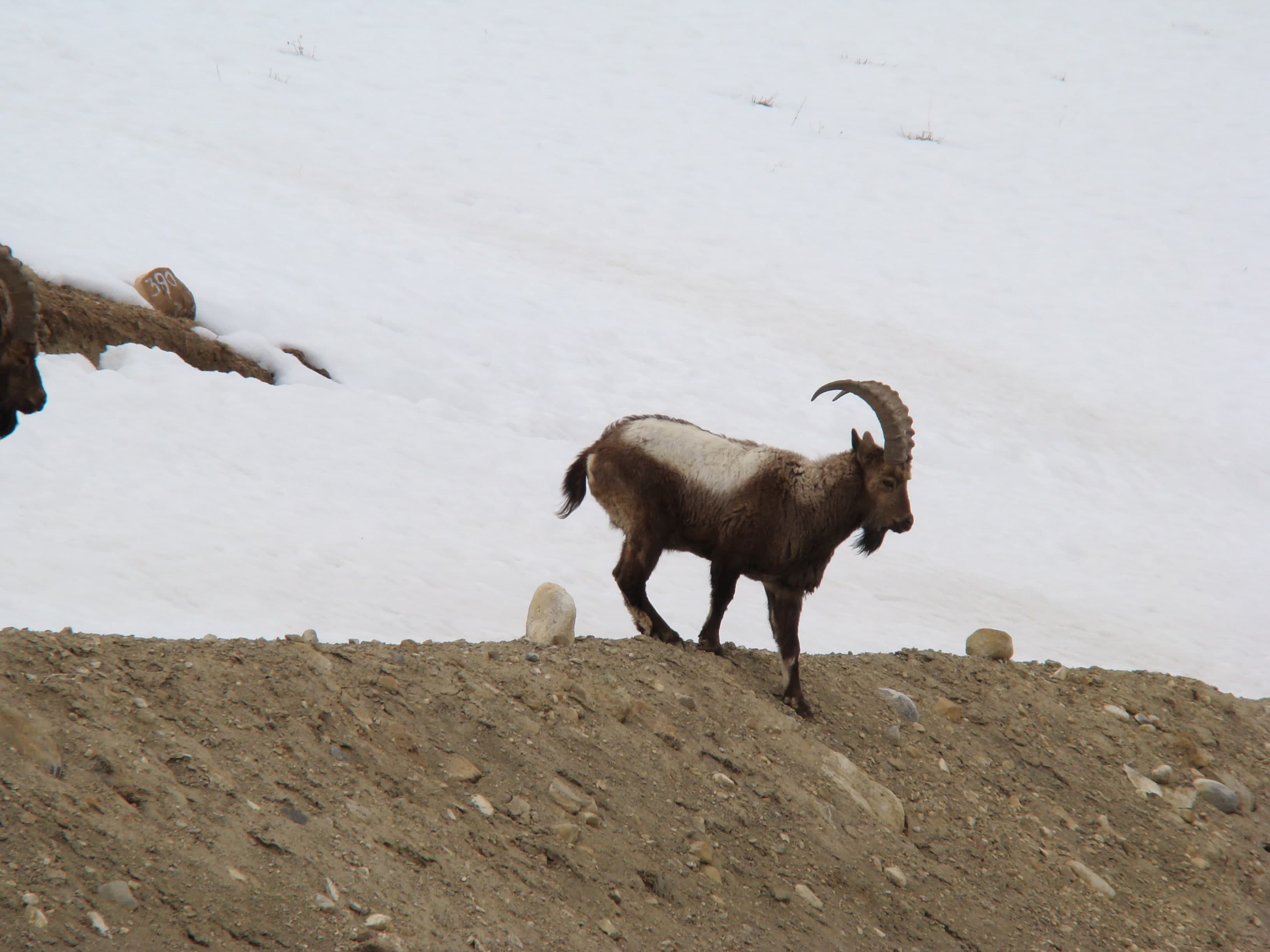
Himalayan ibexThe wild goat you are most likely to see
Photo: Ksuryawanshi · CC BY-SA 4.0Look for them on the crags beside the Karakoram Highway as it climbs through Khunjerab National Park to the Khunjerab Pass. In winter and early spring herds also feed on the low slopes around Khyber and Passu. Our page on the Himalayan ibex in Pakistan has the details.
Markhor, the national animal of Pakistan
The markhor is a wild goat with twisted horns, and it is the national animal of Pakistan. It keeps to dry cliffs at lower altitude than the ibex. Winter is the season to look, above all December and January, when the rut and the snow bring the herds down to slopes you can watch from the valley.
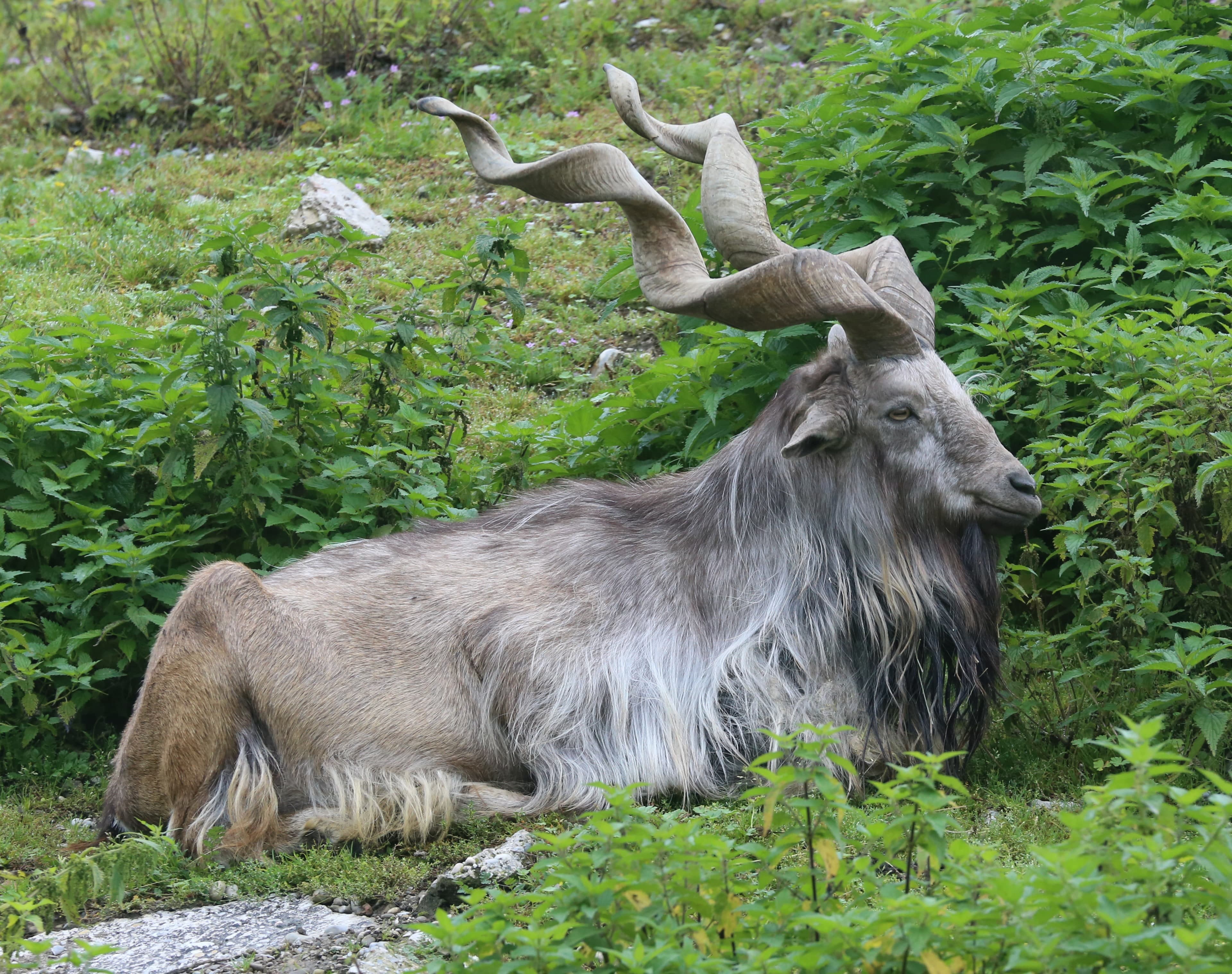
MarkhorThe national animal of Pakistan, and where to see it
Photo: Rufus46 · CC BY-SA 3.0Unregulated hunting once pushed the markhor towards the edge. Community protection turned that around, and in 2015 the species was moved from Endangered to Near Threatened on the IUCN Red List. The 2024-25 survey counted 1,693 in Gilgit-Baltistan, most of them in Astore, Diamer and Gilgit districts. The survey lists none in Hunza. Read where to see markhor for the places.
Snow leopard in upper Hunza
The snow leopard is the animal everybody asks about and nobody sees by accident. It is listed as Vulnerable on the IUCN Red List, with fewer than 10,000 mature animals left in the world. Pakistan's first nationwide count, published in 2026, estimated about 155. The best-known place to look is Khunjerab National Park and the side valleys of upper Hunza.
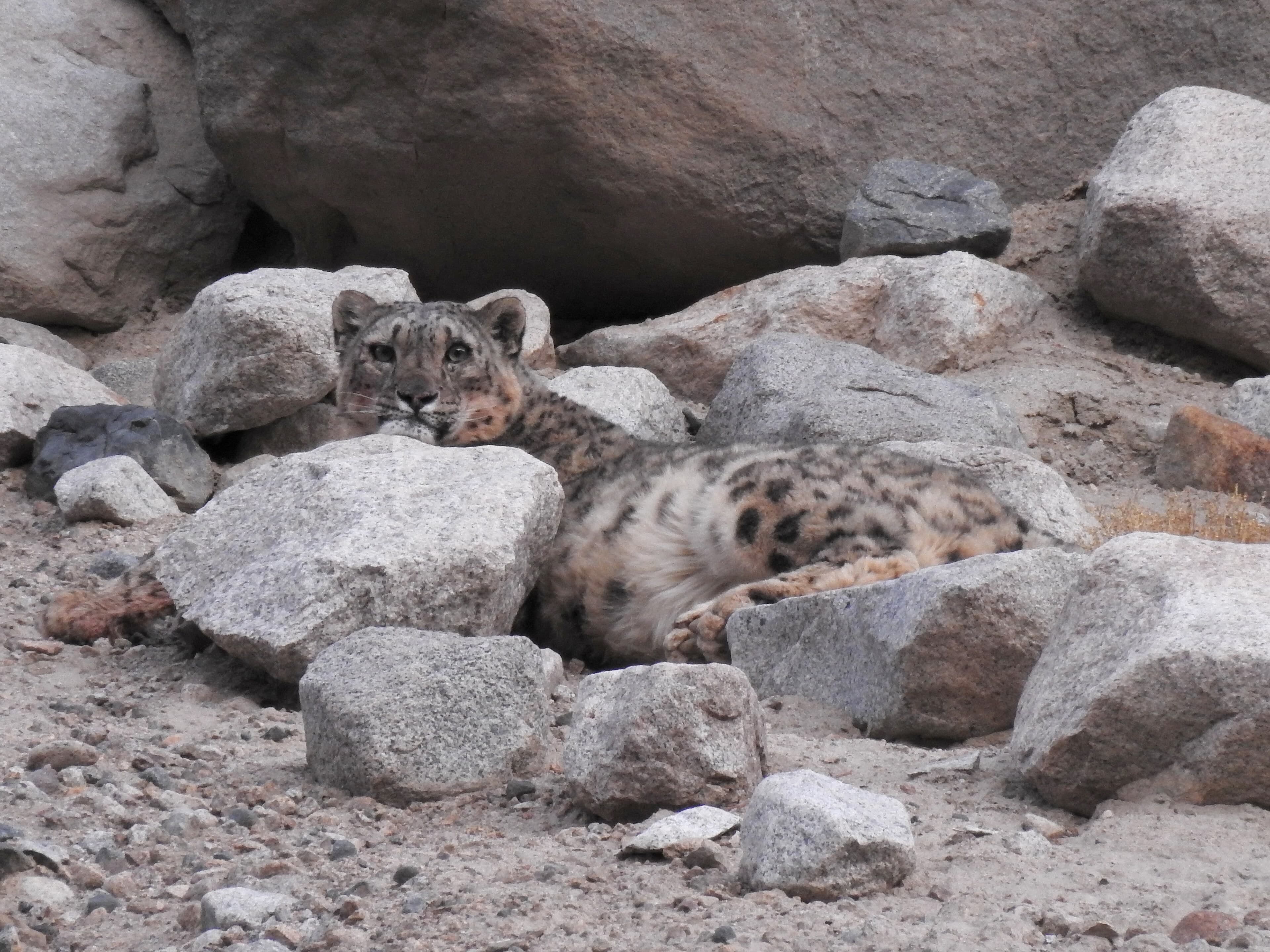
Snow leopardWhere it lives in Pakistan and how a winter search works
Photo: T. R. Shankar Raman · CC BY-SA 4.0The season is winter, from November to March. Ibex come down from the heights, the cats follow them, and local spotters watch the ridges at dawn and dusk. A sighting is never guaranteed. Our page on snow leopards in Pakistan explains how a search works, and the snow leopard winter expedition is the trip we run for it.
Himalayan brown bear in Deosai National Park
Deosai National Park, the high plateau south of Skardu, was created in 1993 to protect the Himalayan brown bear. Only 19 bears were counted that year, and recent surveys put the number between 60 and 80.
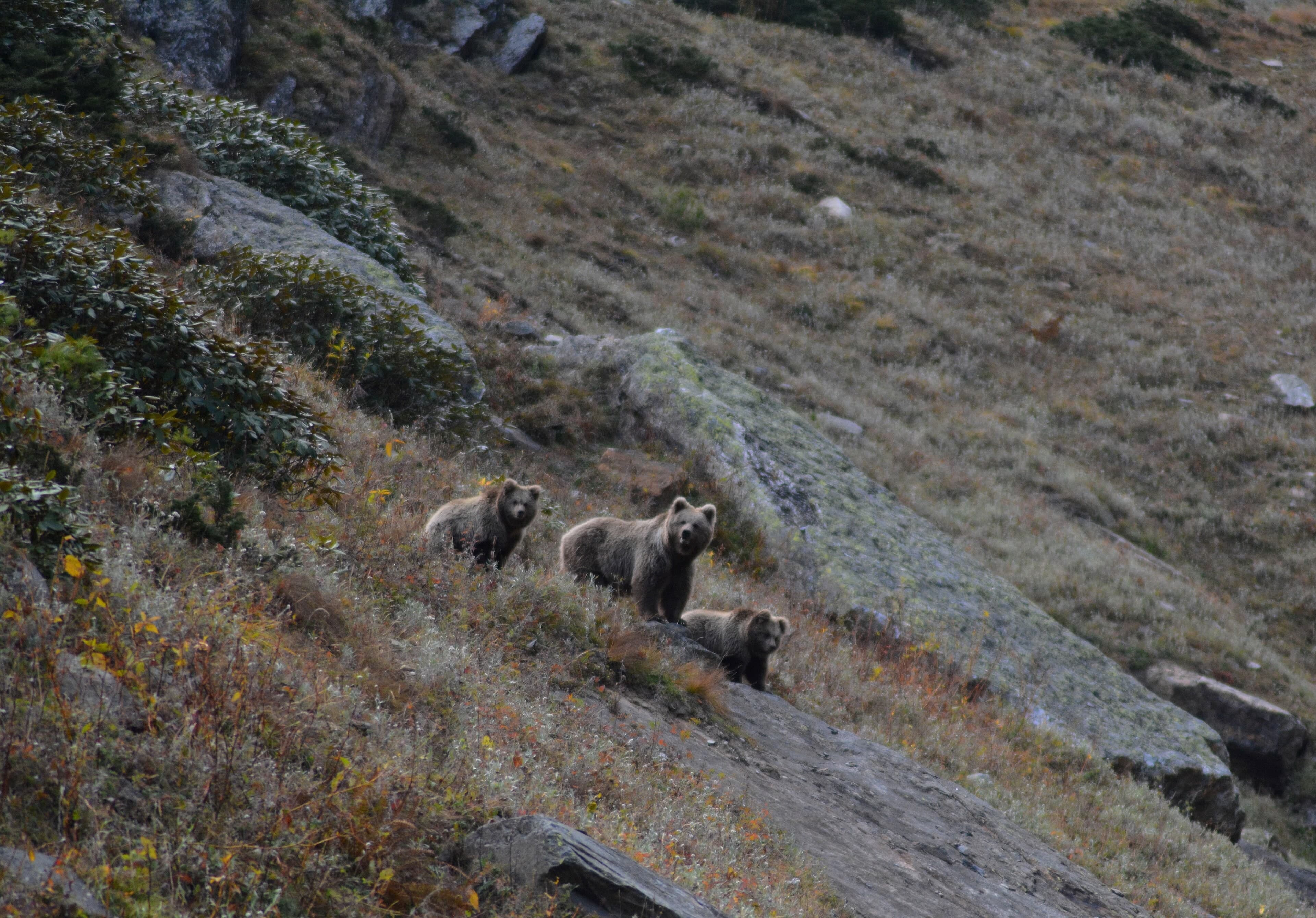
Himalayan brown bearThe bear of the Deosai plateau
Photo: Niazulkhan · CC BY 4.0The bears are in their dens from around October to April or May, and the plateau is open to vehicles only from roughly late June to September. July and August are the months to go. Scan the wet meadows near the streams at dawn and dusk, and stay well back. Our page on brown bears in Deosai covers where to look and how to do it safely.
Marco Polo sheep in Khunjerab
The Marco Polo sheep has the longest horns of any sheep, and Khunjerab National Park was set up in 1975 mainly to protect it. Today very few remain on the Pakistani side, and they visit only in summer. Treat a sighting as a great piece of luck. The full story is on our Marco Polo sheep page.
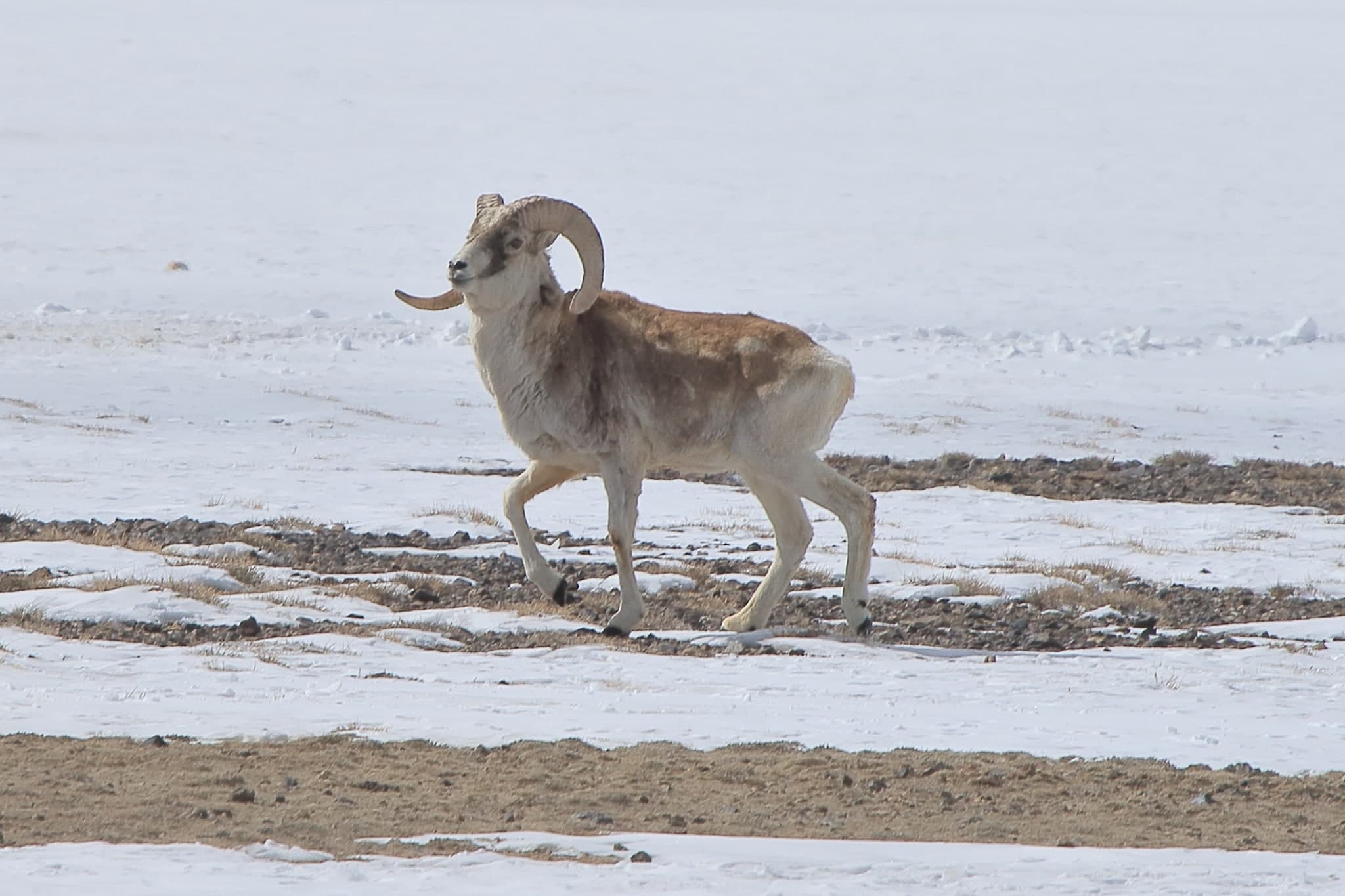
Marco Polo sheepThe long-horned sheep of the Khunjerab border
Photo: Fábio Olmos · CC BY 4.0Blue sheep in Shimshal
The blue sheep, also called the bharal, lives in Pakistan only in the far north of Hunza. The 2024-25 survey counted 1,785, and 1,692 of them were in the side valleys of Shimshal. It is not an animal of the Khunjerab road. Where the two share the same ground it is the favoured prey of the snow leopard. Our blue sheep page has the details.
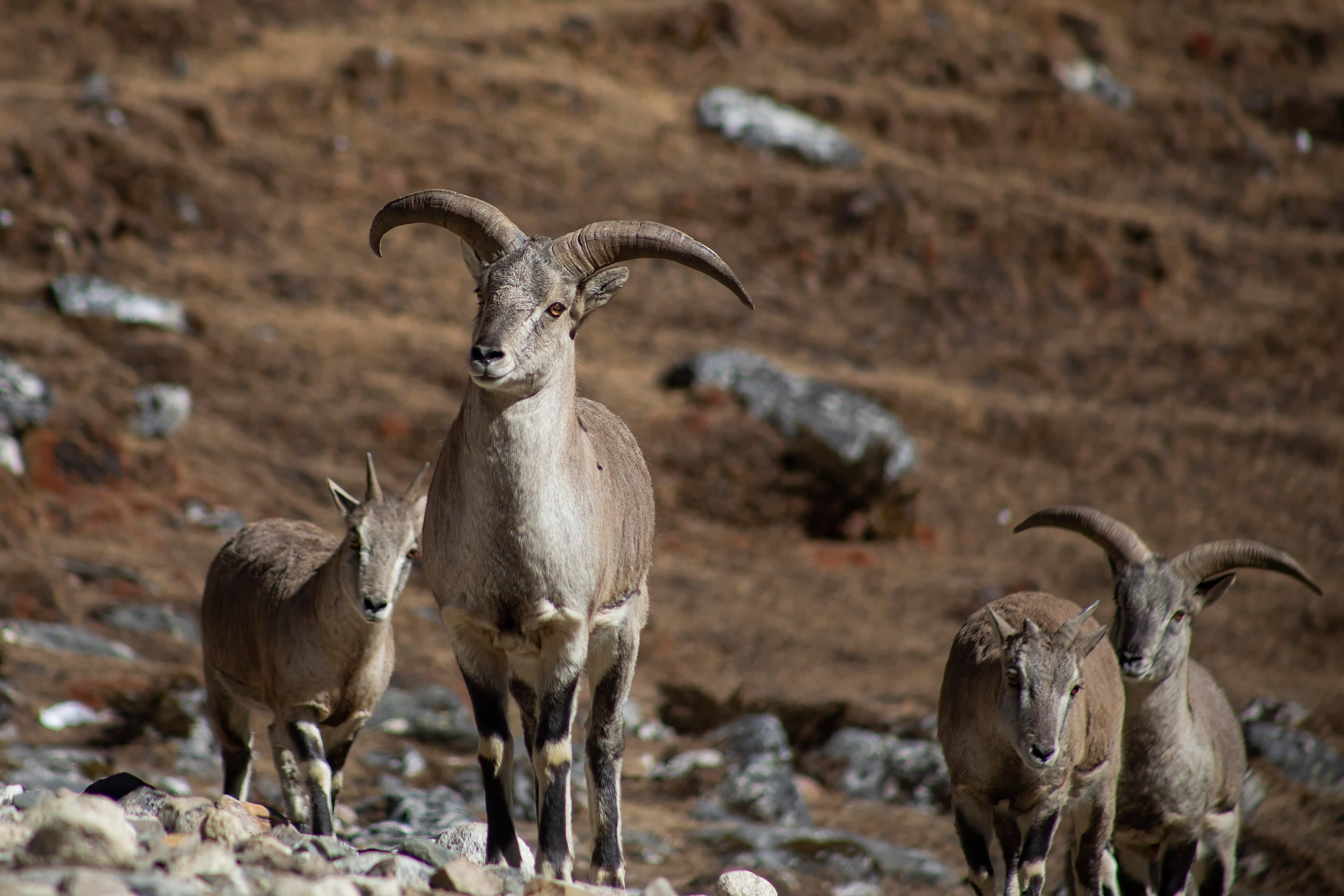
Blue sheepThe bharal of Shimshal, in the far north of Hunza
Photo: Sangyam adventurer · CC0The Himalayan lynx
The next three animals live here, but you should not expect to see them. The Himalayan lynx is a medium-sized cat with black tufts on its ears. Camera traps have photographed it in the Khanbari valley of Diamer, and herders in upper Hunza call it the rarest of the large carnivores.
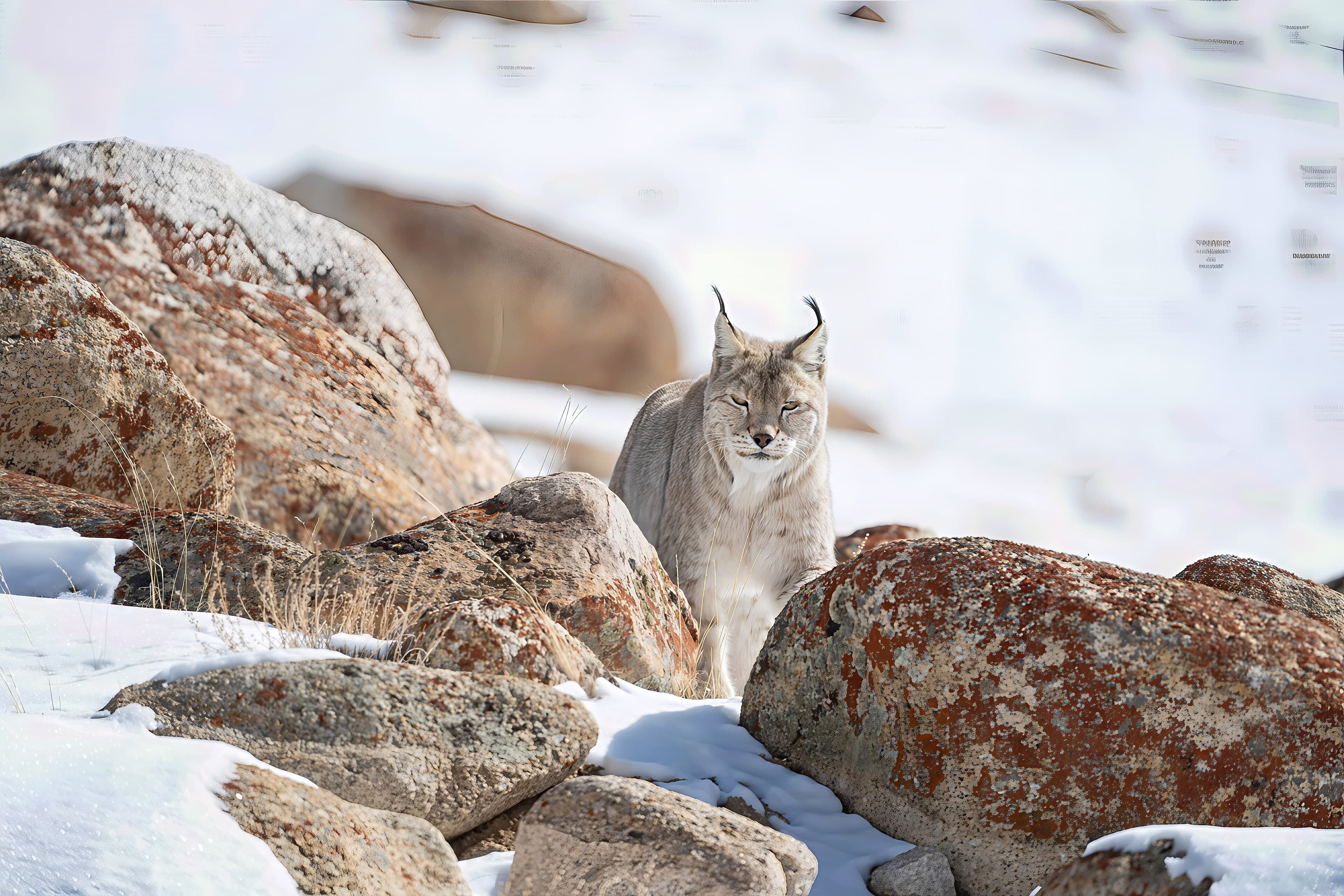
Himalayan lynxThe other wild cat of the high valleys
Photo: Yajuvendraupadhyaya · CC BY 4.0The Ladakh urial
The Ladakh urial, or shapu, is a reddish wild sheep that once lived along the big river valleys. The 2024-25 survey found 229, and 199 of them were at Bunji in Astore district.
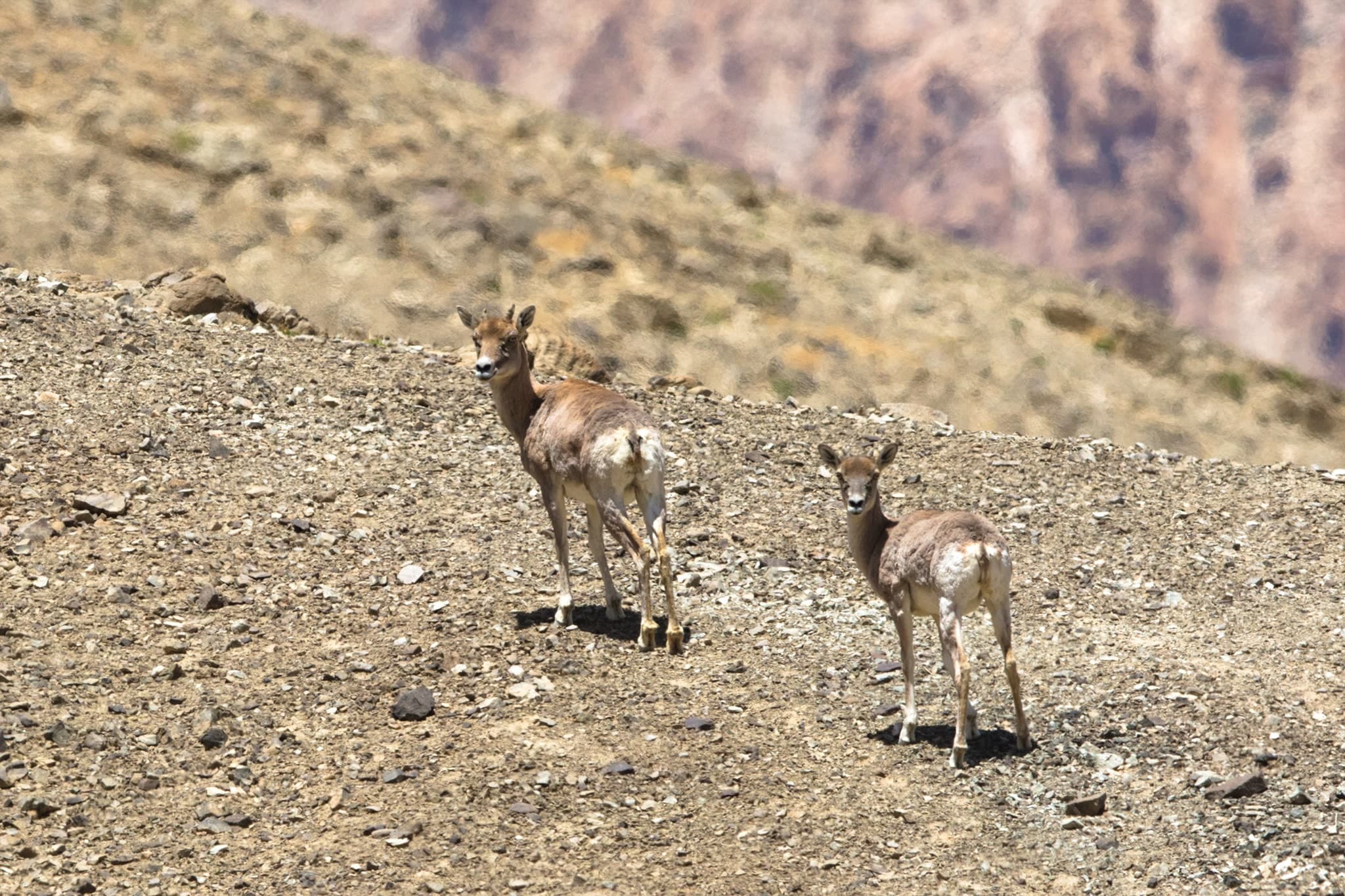
Ladakh urialThe rare wild sheep of the Indus valley
Photo: Aditya Laghate · CC BY-SA 3.0The musk deer
The musk deer is a small forest deer whose males carry tusk-like teeth in place of antlers. A study published in 2015 estimated 224 to 363 in Gilgit-Baltistan, and poaching for its musk is the main threat to it.
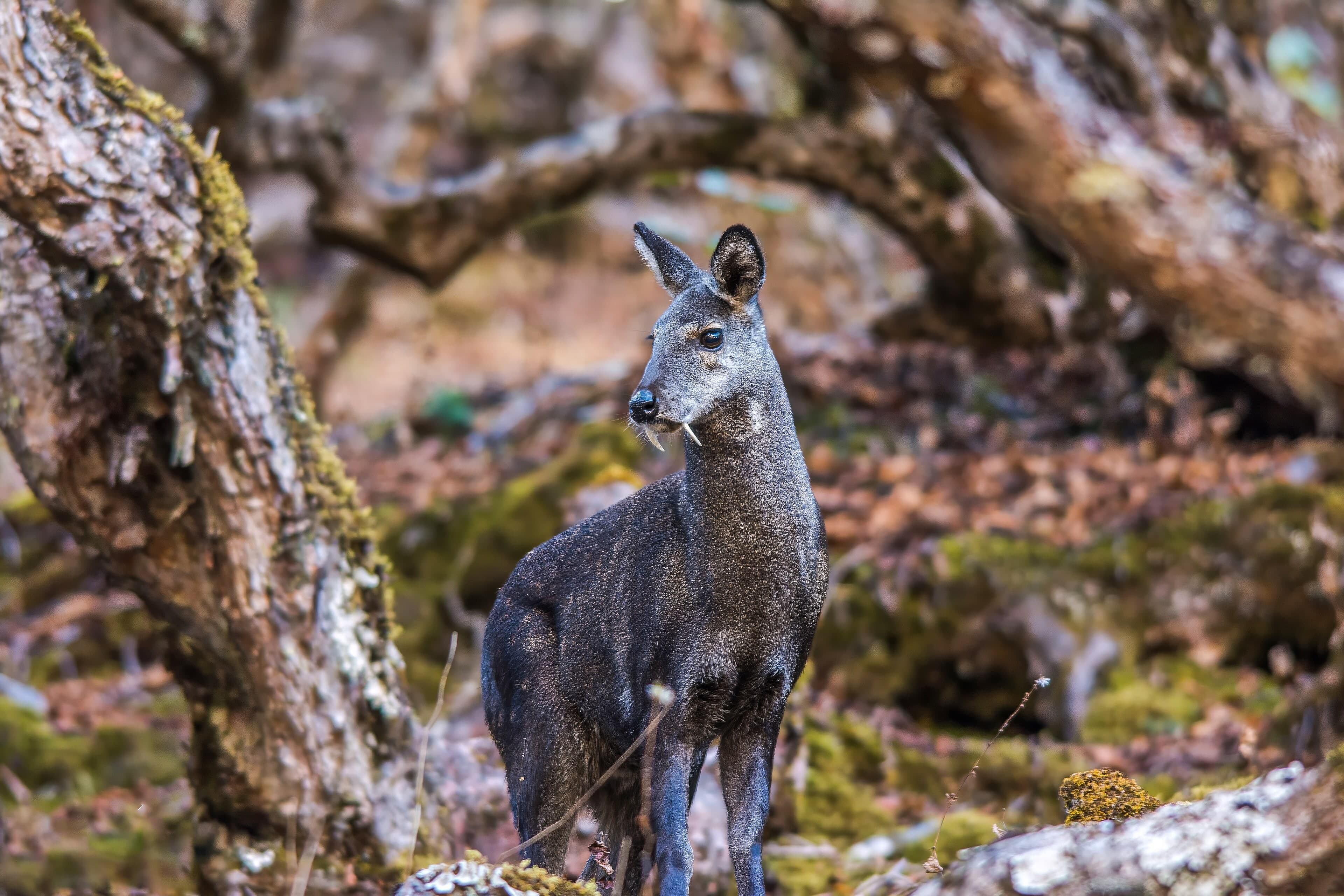
Musk deerThe small deer of the high forests
Photo: Gurung pratap · CC BY-SA 4.0The woolly flying squirrel
One animal of these mountains was thought to be extinct for 70 years. The woolly flying squirrel was known only from 11 skins collected in the late 1800s, until Peter Zahler of the Wildlife Conservation Society rediscovered it in 1994 in the Sai valley near Jaglot, the valley of Gasho Lake.
It is one of the largest gliding mammals in the world. The head and body measure 42 to 60 centimetres, the tail is nearly as long again, and the animal weighs 1.4 to 2.5 kilograms. It lives in high conifer forest among cliffs and caves, and it seems to eat mostly pine needles.
Its known range is centred on Diamer and Gilgit districts. One was filmed in 2004 in the Raikot valley, below Fairy Meadows, and in June 2014 a male was caught in the middle of Gilgit town and released in the Kargah valley. The IUCN lists the species as Endangered. It is not an animal a visitor can look for.
Wolves, black bears and the big birds
The wolf of these valleys is the grey wolf. In a survey of herders in Misgar and Chapursan, in upper Hunza, it was reported more often than any other large carnivore. Some official pages call it the Tibetan wolf, but a genome study published in 2023 found that the wolves of northern Pakistan belong mainly to the ordinary grey wolf lineage.
The second bear of the region is the Asiatic black bear, which the wildlife department reports from the forests of Diamer and Astore.
Look up as well. The golden eagle, with a wingspan of 1.8 to 2.3 metres, hunts along the ridges and takes young markhor. The bearded vulture, or lammergeier, is larger still, with wings that span up to 2.8 metres, and it lives mostly on bone. The Himalayan snowcock is a grey partridge of 2 to 3 kilograms that spends the summer between 4,000 and 5,000 metres. The chukar, a smaller partridge with a black band through the eye, is the national bird of Pakistan and lives on dry, rocky slopes.
Golden marmots, yaks and the birds of Borith Lake
The golden marmot, also known as the long-tailed marmot, is the animal children remember. It is a large rodent of the squirrel family that can weigh up to 9 kilograms. Marmots live in groups, stand upright at their burrows and give loud alarm calls when they spot danger. You will see them in summer on the Deosai plateau and near the top of the Khunjerab road. They hibernate from about September to April or May.
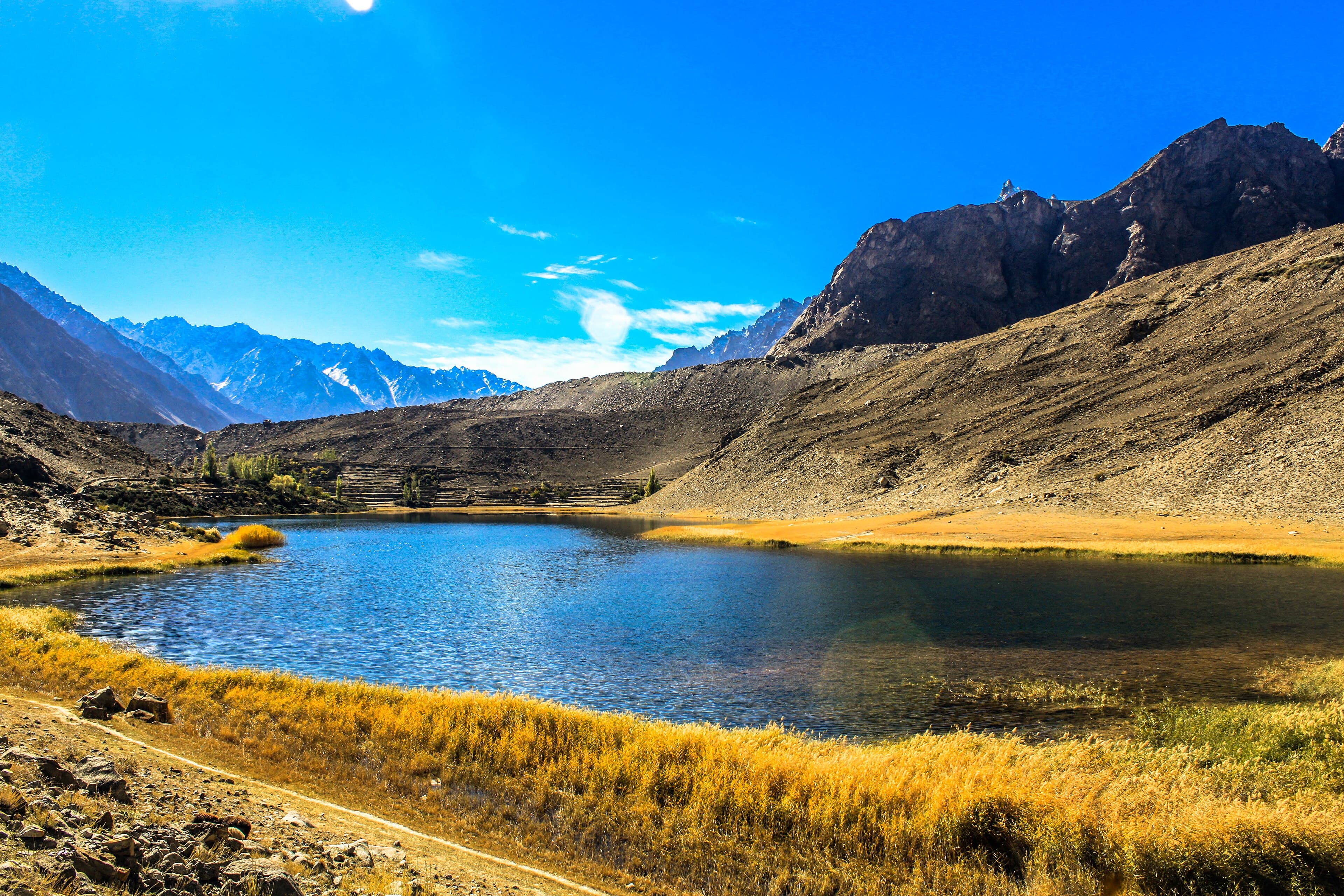
Borith LakeA hushed bowl of water between two glaciers, loved by birds and hikers
Photo: Muhammad Azeem · CC BY-SA 3.0The yaks grazing the high pastures are herders' animals, not wild ones. They make fine photographs all the same.
Birdwatchers have two good stops. Borith Lake in upper Hunza is a resting place for migrating ducks in spring and autumn, and Deosai is home to more than 120 species of birds.
The seven national parks
The wildlife department lists seven national parks in Gilgit-Baltistan. Khunjerab, in upper Hunza, was established in 1975 for the Marco Polo sheep. Deosai was protected in 1993 for the brown bear. The Central Karakoram National Park, which also dates from 1993, covers more than 10,000 square kilometres around K2 and is the largest of them.
Ghizer has two: Handrap-Shandur, declared in 1993 around the Shandur Pass, and Qurumber, declared in 2011. The newest are Himalaya National Park in Astore and Nanga Parbat National Park, both notified in January 2021, the first for the musk deer and the second for the Ladakh urial.
A wildlife calendar
Winter, from November to March, is the season for the mountain goats and the cat that hunts them. Ibex and markhor are low and easy to watch, and this is the only realistic time to look for a snow leopard. It is cold, but the road through upper Hunza stays open. Our winter guide explains what to expect.
Summer, above all July and August, is the season for Deosai: brown bears, marmots, wildflowers and birds. The Khunjerab road is at its easiest too, with ibex near the top in the early morning. Our summer guide shows how to fit the plateau into a trip. Spring and autumn are quieter for animals, though ducks pass through Borith Lake then.
How to watch without doing harm
Bring binoculars. They matter more than a camera, because most wildlife here is watched from a long way off. A long lens helps if photographs are the point of your trip.
Hire a local guide or spotter. Village game guards know where the herds are this week, and the money you pay them is one of the reasons the animals are protected. Keep your distance, stay quiet, never feed anything and never follow an animal that is moving away from you.
If wildlife is the main reason for your journey, look at our wildlife and photography trips. To understand how a few hunting permits pay for conservation in these valleys, read the trophy hunting and conservation guide.
Questions, answered
What animals live in Gilgit-Baltistan?
The best known are the snow leopard, Himalayan ibex, markhor, blue sheep, Marco Polo sheep, Himalayan brown bear and golden marmot. Rarer ones include the Himalayan lynx, the Ladakh urial, the musk deer and the woolly flying squirrel. Ibex and marmots are the easiest to see.
Where can I see a snow leopard in Pakistan?
In Khunjerab National Park and the side valleys of upper Hunza, in winter from November to March. Sightings are never guaranteed, and you need local spotters and several days.
What is the national animal of Pakistan?
The markhor, a wild goat with twisted horns. In Gilgit-Baltistan it is best seen in winter in the community conservation areas of Astore, Diamer and Gilgit districts.
When is the best time for wildlife in Gilgit-Baltistan?
It depends on the animal. Winter, from November to March, is best for ibex, markhor and snow leopard. July and August are best for brown bears and marmots in Deosai.
Are there bears in Gilgit-Baltistan?
Yes. The Himalayan brown bear lives in Deosai National Park near Skardu, where recent surveys count between 60 and 80 animals, and the time to look is July and August. The Asiatic black bear lives in the forests of Diamer and Astore.