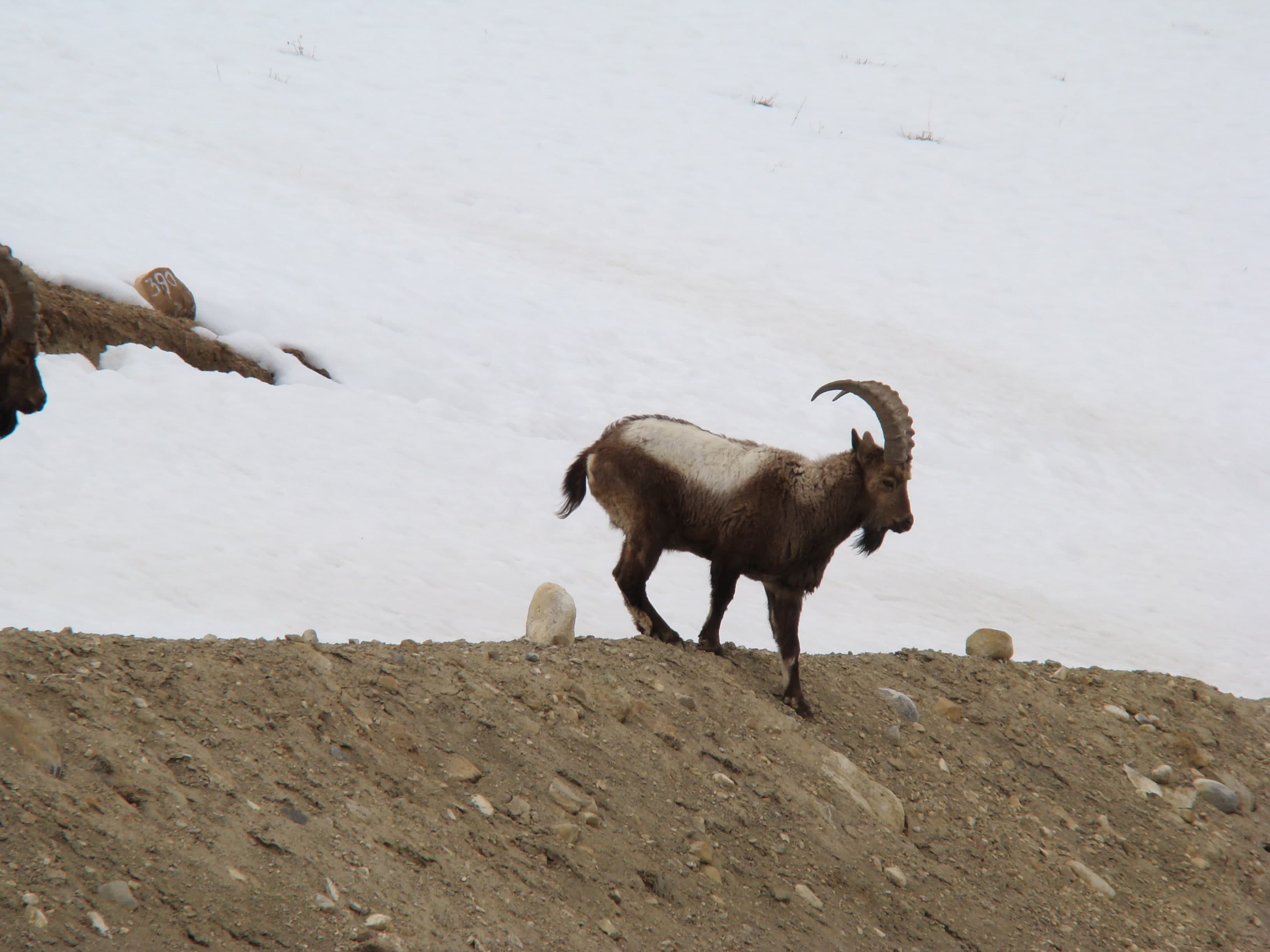
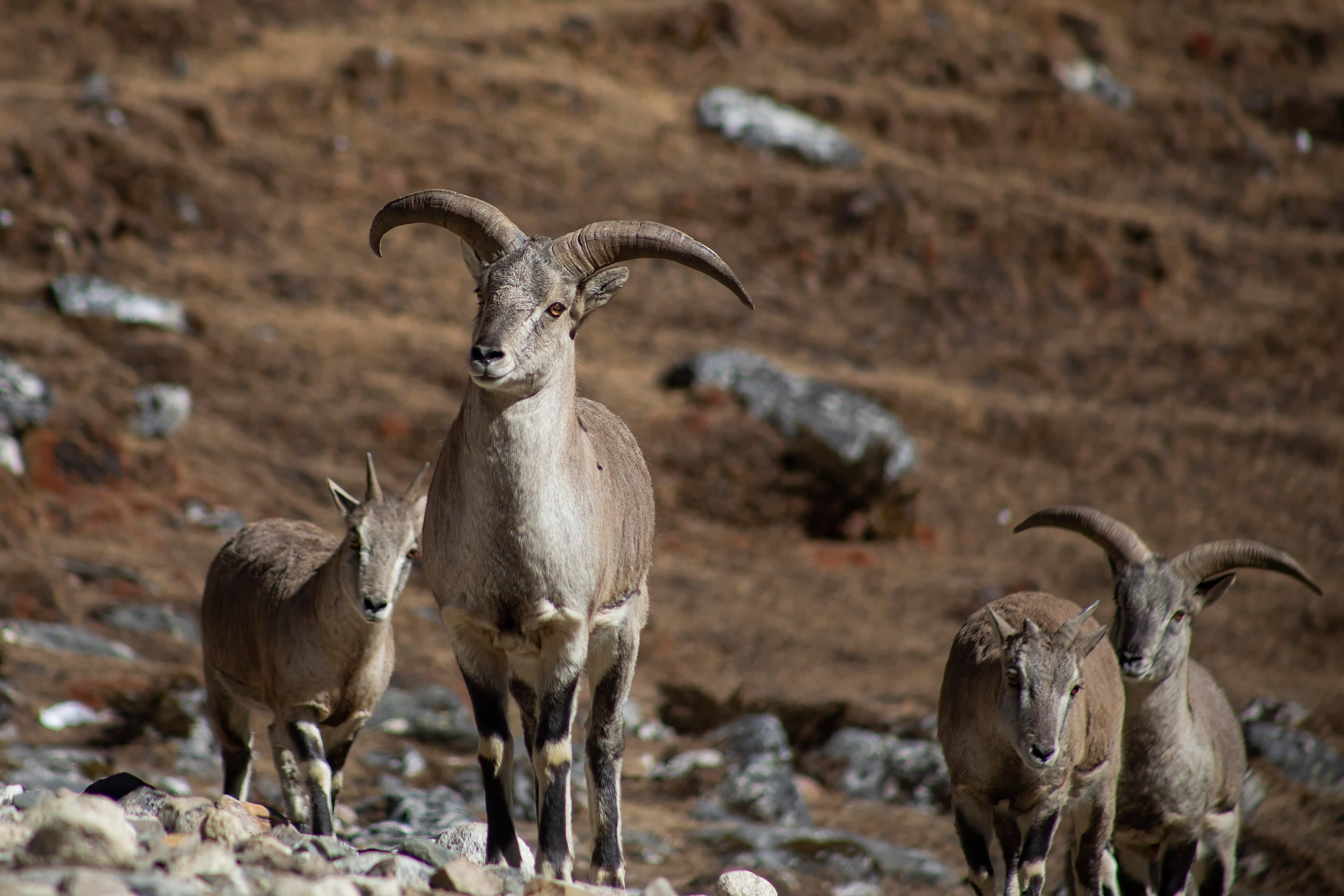
What a blue sheep looks like
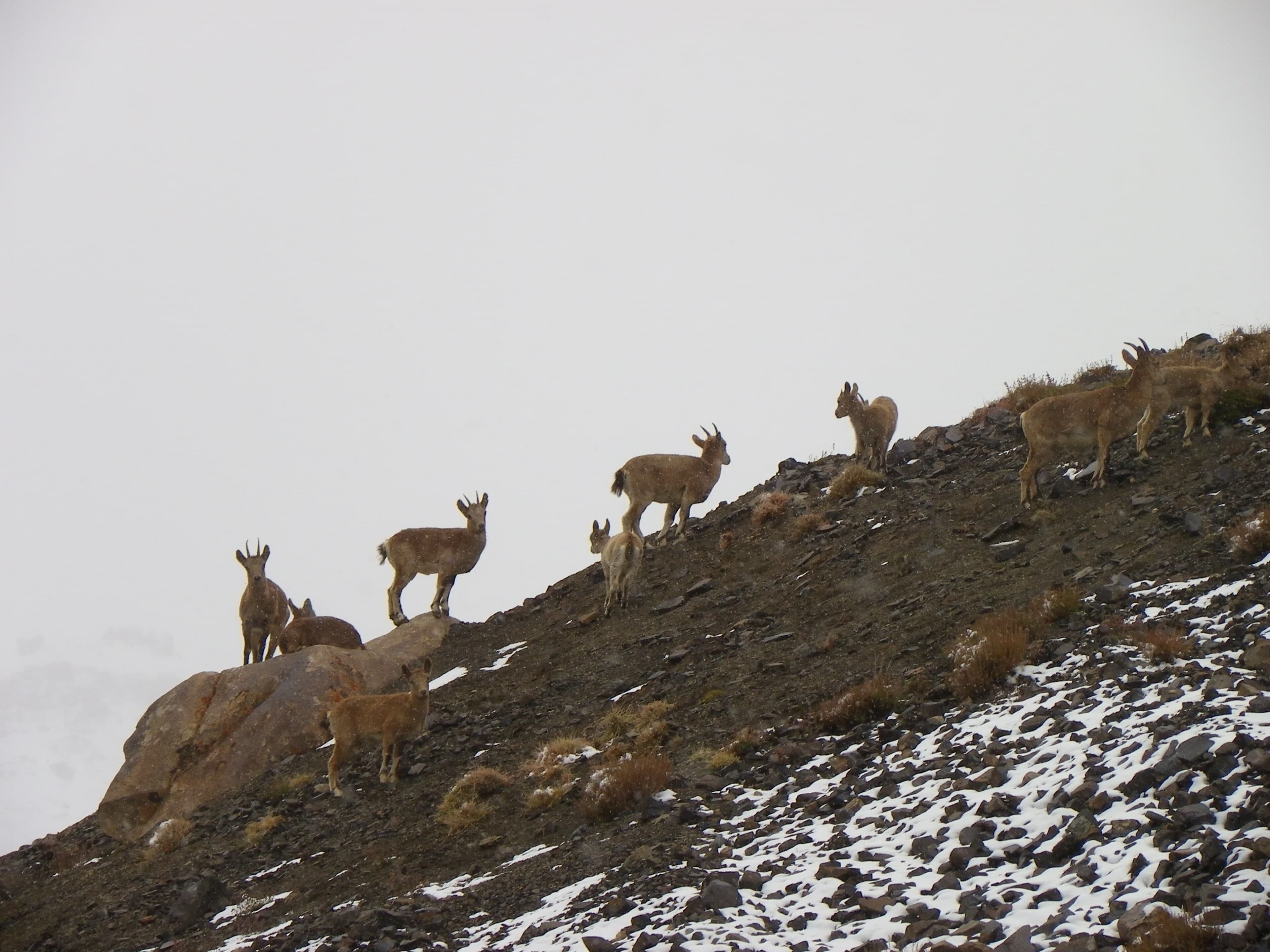
The blue sheep is badly named. It is not blue, and it is not quite a sheep. The coat is slate grey, sometimes with a bluish sheen, and the animal is closer to the goats than to the true sheep. Its other name is the bharal.
A grown animal stands 69 to 91 centimetres at the shoulder and weighs about 35 to 75 kilograms. Males reach 75 kilograms and females about 45. The belly and the backs of the legs are white, and the chest and the fronts of the legs are black.
The horns tell the sexes apart. A ram's horns sweep out sideways and then back, and can grow to about 80 centimetres. A ewe's horns are short and straight, no more than about 20 centimetres.
Where blue sheep live in Pakistan
The species lives across the high country of Bhutan, China, India, Myanmar, Nepal and Pakistan. In Pakistan its whole range is Gojal, the upper part of Hunza. The wildlife department's survey reports describe this as perhaps the westernmost population in the Karakoram.
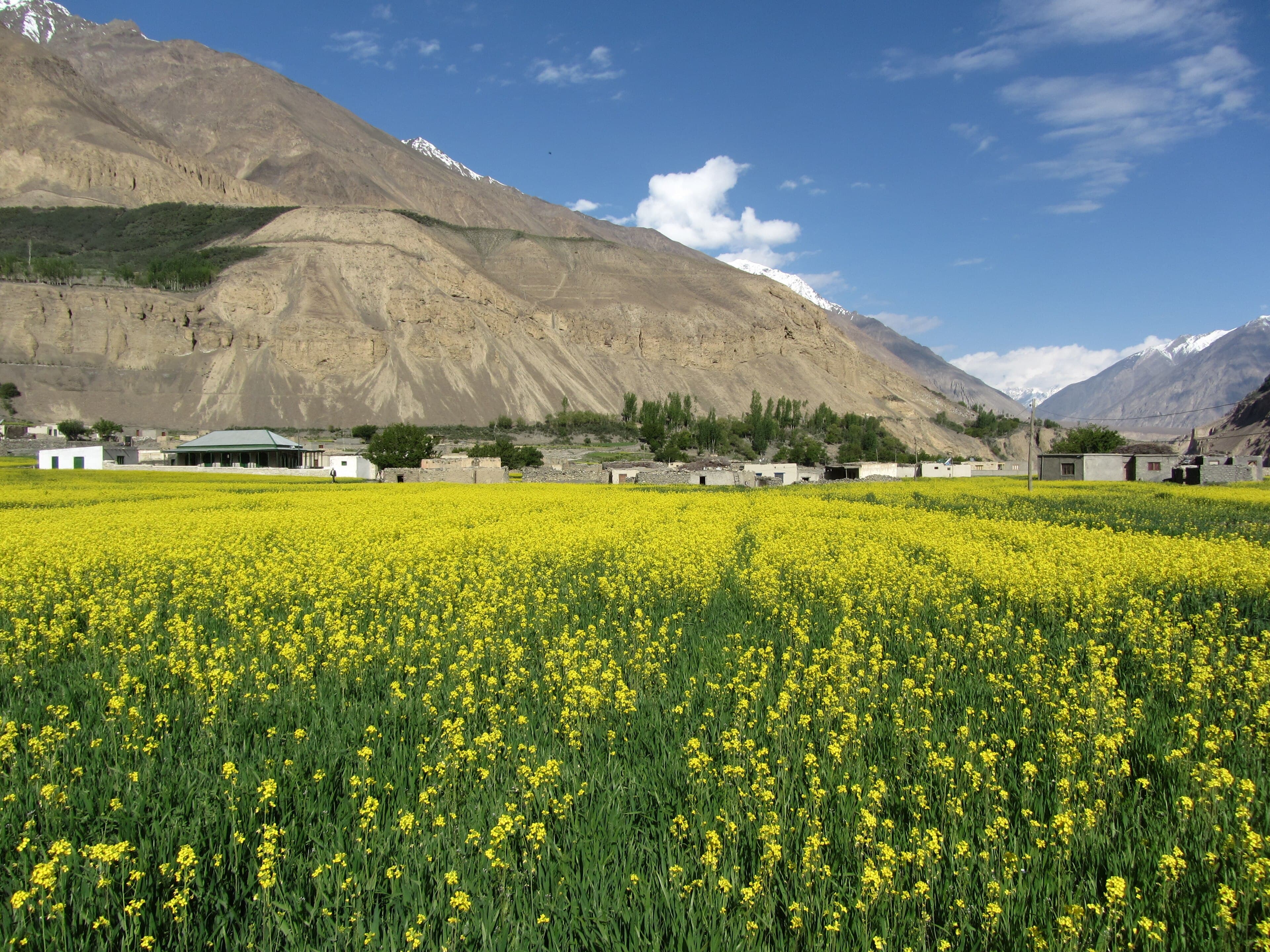
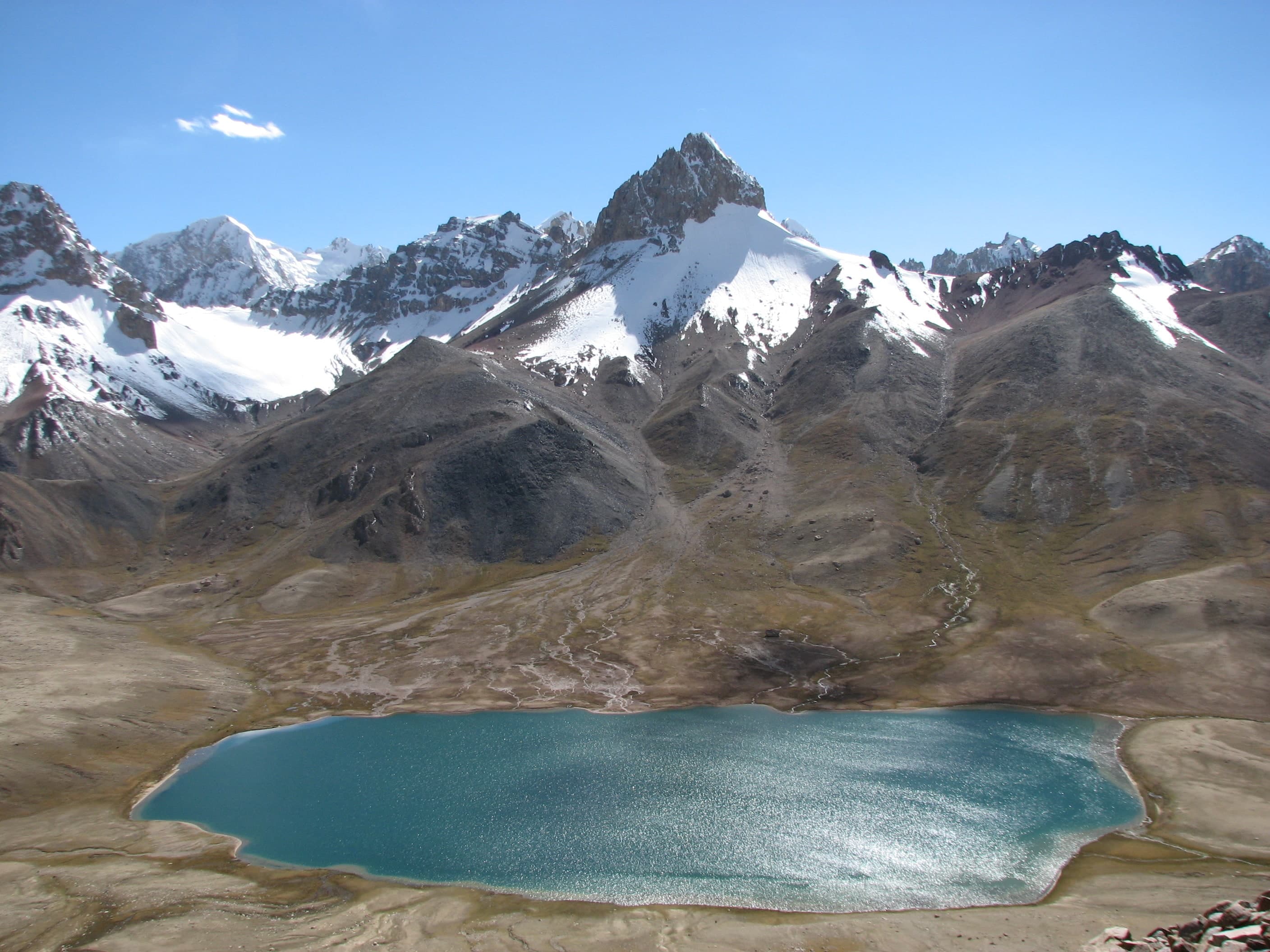
Shimshal ValleyThe valley of mountaineers at the end of Pakistan's wildest road
Photo: Shujaat Aly · CC BY-SA 3.0Every government count since 2020 has found the animals in only two places. The first is Shimshal, where the surveys name the Ganj Dur, Yazgill and Mai Dur watersheds. The second is the Sokhterabad valley, in the community hunting area of the Khunjerab villages, outside the national park.
It is often said that herds of blue sheep feed beside the road to the Khunjerab Pass. The surveys do not support that. A study of Khunjerab National Park in 2010 and 2011 found blue sheep only in the Shimshal and Barkhun valleys of the park, and none at the pass, where they had been seen in earlier years. The wild animals you see from the highway are ibex.
Nor does the blue sheep live in Baltistan today. The Central Karakoram National Park's winter survey of 2015 recorded none.
How many there are
The count has risen quickly. The department found 626 blue sheep in the winter of 2021-22, 1,322 in November 2023 and 1,785 in the winter of 2024-25. The last figure is an estimate with a range of 1,155 to 2,389. Counts in country like this depend on the weather and on how much ground the teams can cover, so read the changes from year to year with care.
Herds of 10 to 50 are usual, but they can be far larger. The biggest herd seen in the 2024-25 count held 327 animals.
Worldwide the species is not in danger, and the IUCN lists it as Least Concern. Pakistan's own red list classes it as Endangered, and the whole national population lives in one corner of one district.
When and where to look
The herds are counted during the rut, which runs from late November to mid-January. In the 2024-25 count they stood between 3,134 and 4,367 metres.
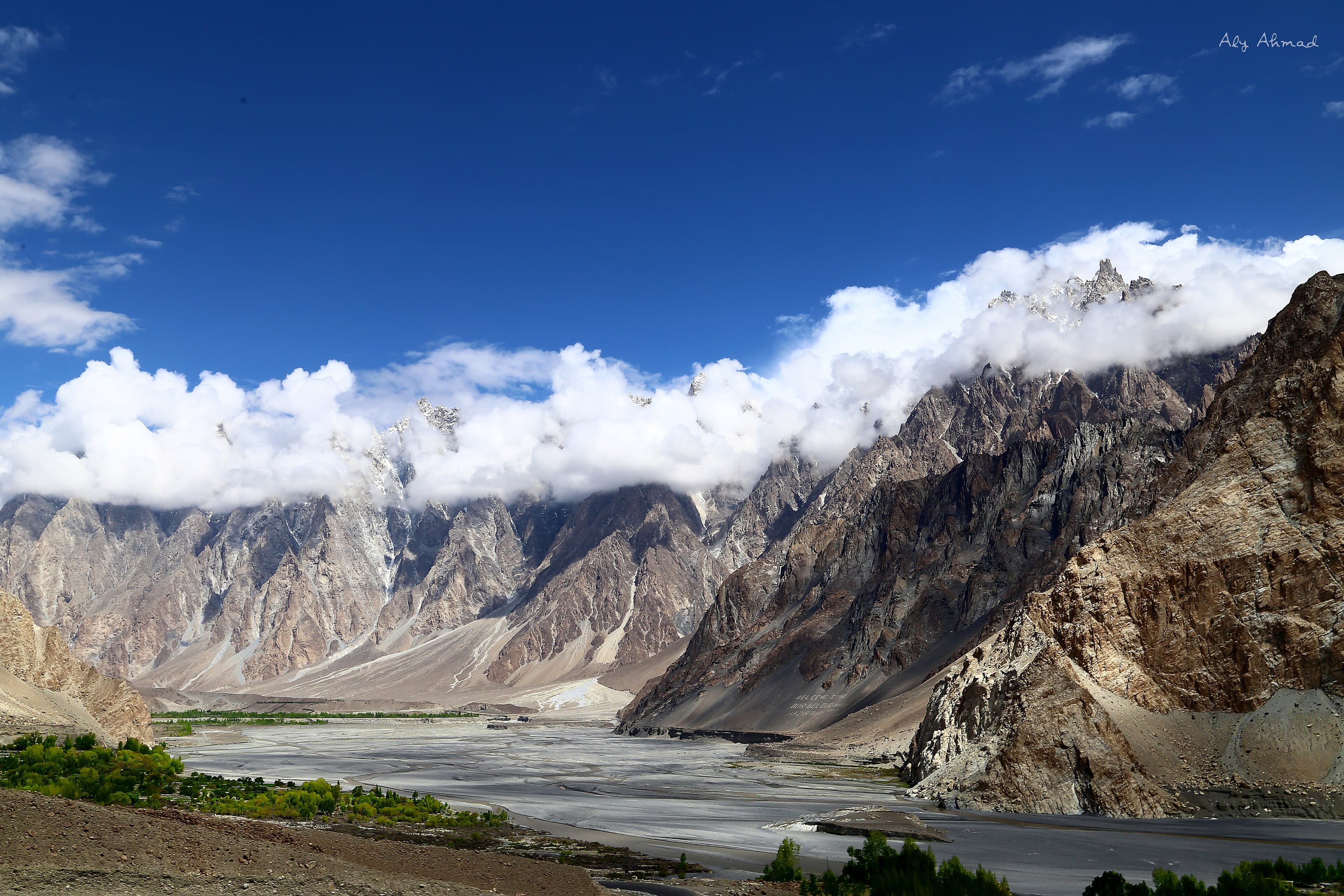
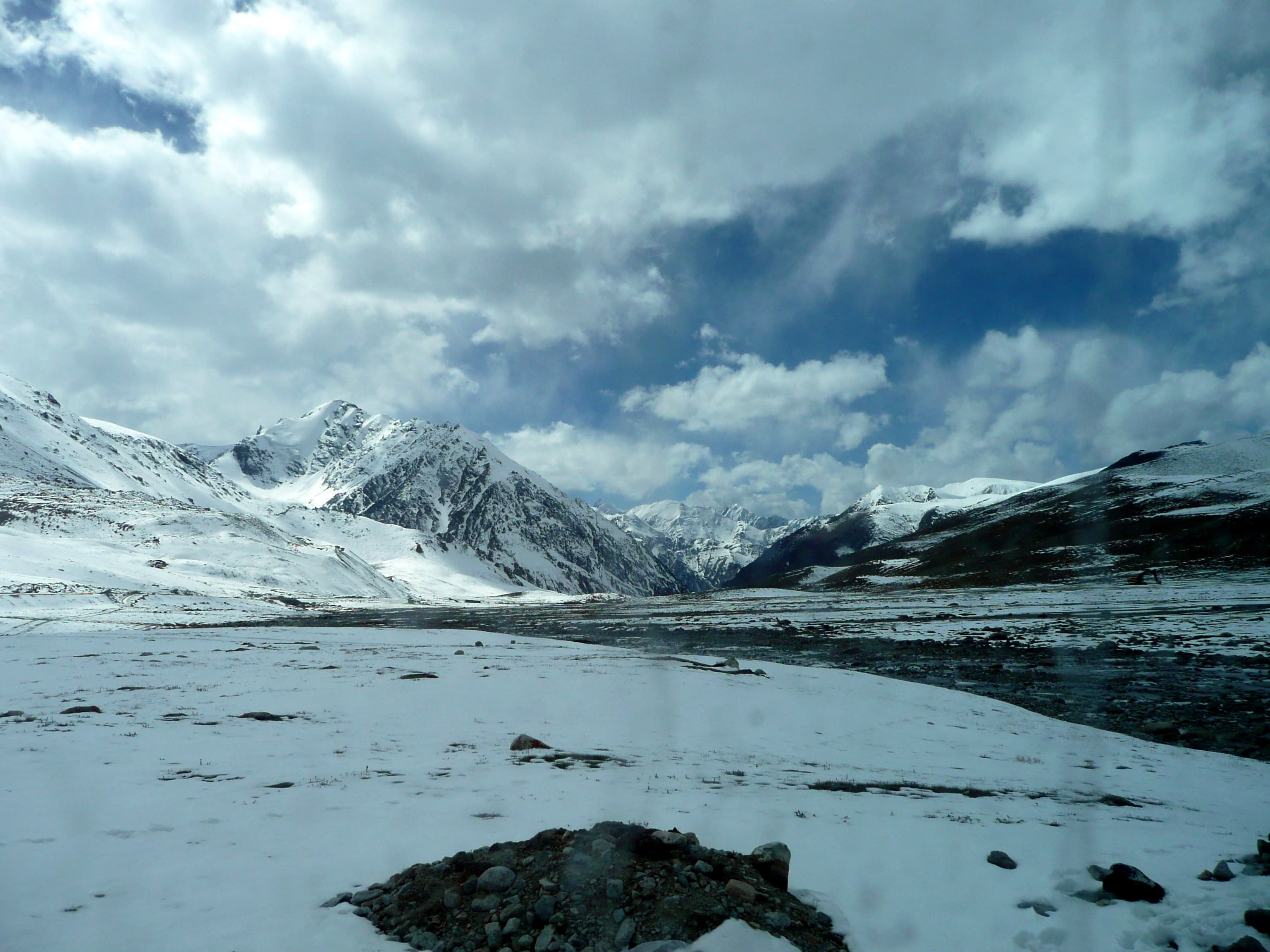
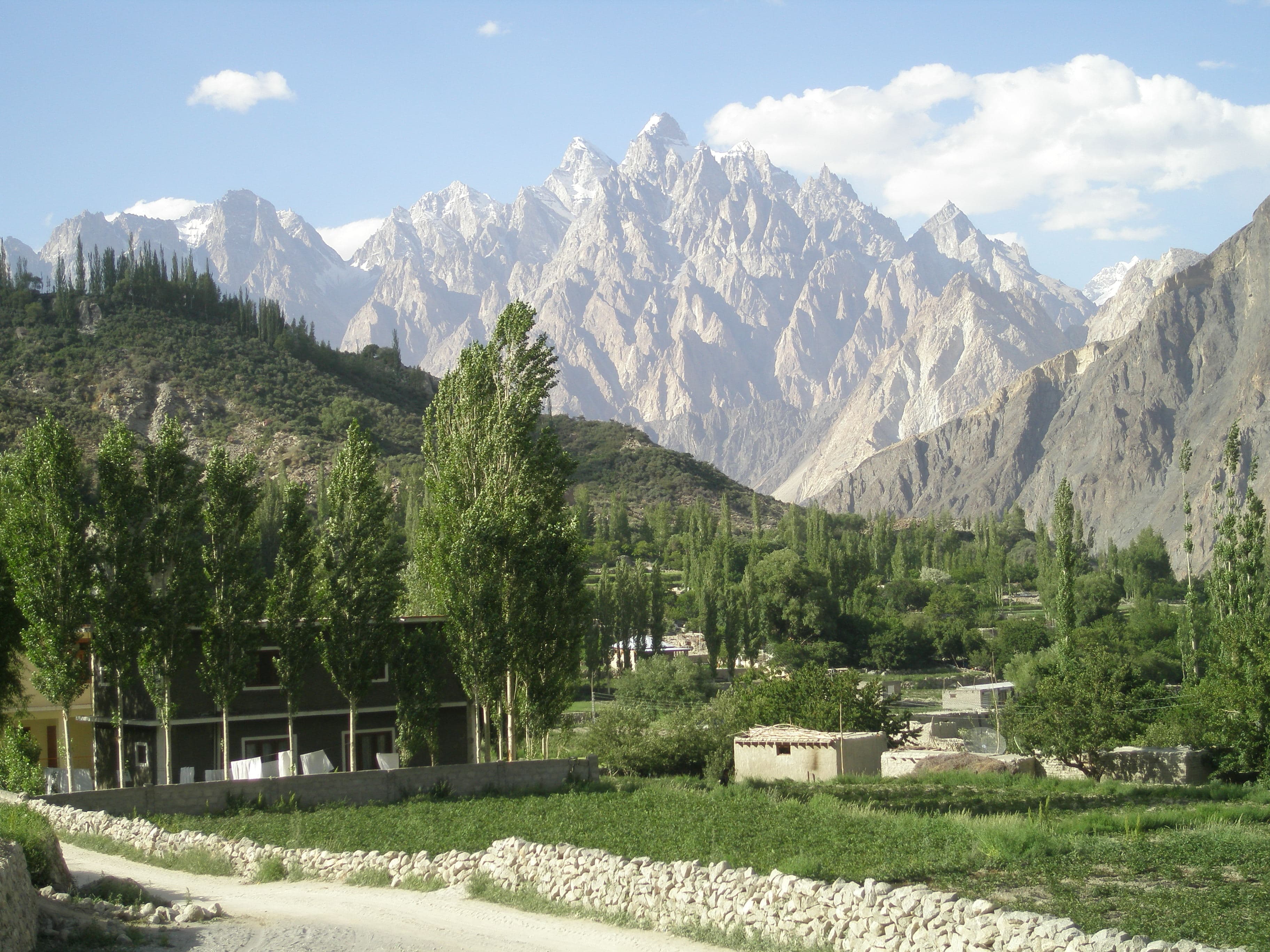
Passu ConesThe jagged cathedral skyline that defines the Karakoram Highway
Photo: Aly Ahmad1991 · CC BY-SA 4.0That makes the blue sheep a winter animal in a valley that is three hours by jeep from Passu. If you want to try, go with a guide from Shimshal village. Each community hunting area keeps its own game watchers, and they know where the herds are.
In summer the classic walk from the village is the Shimshal Pass trek, which climbs to the high pastures of the Shimshal Pamir. The surveys do not say whether the herds use that route, so we do not promise blue sheep on it.
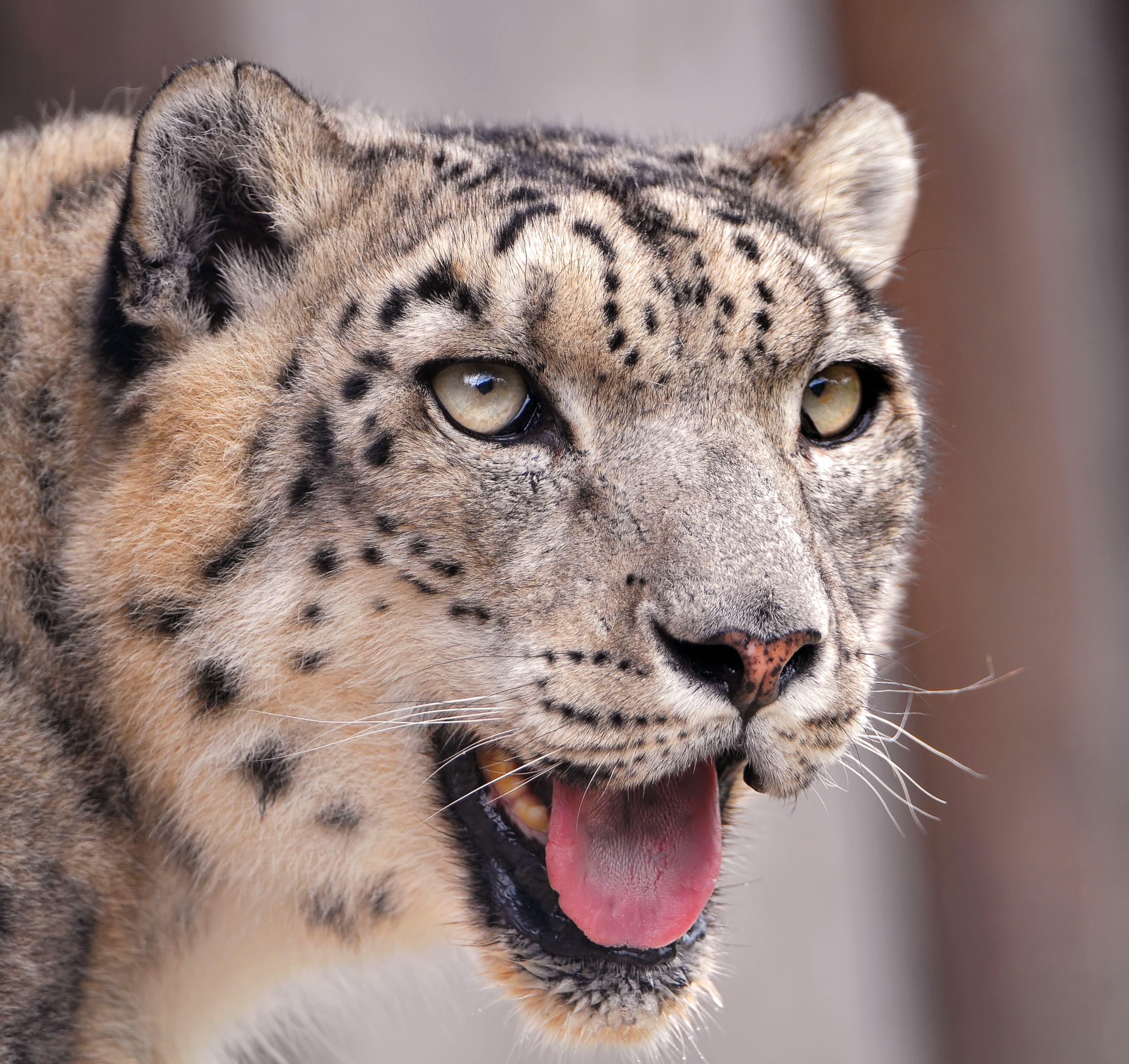
Where the two animals share the same ground, the blue sheep is the favoured prey of the snow leopard.
Blue sheep and trophy hunting
The blue sheep is one of the three animals in Gilgit-Baltistan's community trophy hunting programme. Fourteen permits were offered in each of the last two seasons, and 80 percent of each fee goes to the village. The department's rule of taking no more than 2 percent of the population would allow 36.
Our page on blue sheep hunting in Pakistan has the prices and the rules. Outside the programme the threats to the animal are poaching and competition with livestock for grazing. For the other animals of the region, see the wildlife of Gilgit-Baltistan guide.