The lake we keep going back to
Some places you visit once and tick off. Gasho Lake is not one of those. It sits in a bowl of mountain above the Sai valley near Jaglot, a full day's adventure from Gilgit city, and it has quietly become the lake we return to whenever we need the noise of town to stop. The water is a deep emerald green, the kind that makes you stop mid-step on the final climb and just look.
This is not a tour bus destination. There is no hotel, no jetty, no tea stall at the top. What there is: a long off-road ride with a river roaring below you, a hard honest hike, a lake full of trout, and a night by the fire under more stars than you knew existed. If that sounds like your kind of peace, read on. Everything below is from our own trips, not copied from a brochure.
Gilgit to Jaglot Sai: leaving the Karakoram Highway
The day starts in Gilgit city. You follow the Karakoram Highway south toward the Jaglot junction, where the road to Skardu peels off across the Indus. By car it is about 40 minutes. On a motorbike, riding at a relaxed pace and stopping for photos, count on an hour. Just before the junction the Jaglot Sai road climbs away from the highway, and this is where the adventure properly begins.
We prefer bikes for this trip, and we say that with feeling. The Sai road rises steadily above the Indus, the tarmac is narrow and twisting, and on two wheels you feel every change in the air as the valley opens. The metalled road runs for about 15 minutes by car, 20 to 25 minutes by bike, up into the Sai valley proper, past terraced fields, lines of poplar and small villages where children wave and old men watch from shaded verandas.
Where the tarmac ends: the ride into the mountains
At the last village the metalled road simply stops, and from here it is off-road all the way. The track climbs into the mountains with a ravine falling away on your right and the river threading between the walls far below. The view keeps changing. One moment you are squeezed into a narrow gorge with rock on both sides, the next the valley throws itself open into wide green fields and grazing pasture with peaks stacked behind them.
This section is the heart of the day and it is not quick. From the end of the village to the point where the hike begins takes three to four hours, and five is not unusual if the track is rough, if you stop for tea with shepherds, or if you keep pulling over for photos, which you will. Ride at your own pace, keep your eyes on the ravine side, and carry enough fuel and water for the full return.
The hike: two to three hours to emerald water
At the trailhead you lock the bikes, shoulder your packs and start climbing. The hike is two to three hours up a mountainside on a shepherd's path, steep in places, with the air thinning and the temperature dropping as you gain height. Take it slowly. Every rest stop earns you a wider view back down the valley you just rode through.
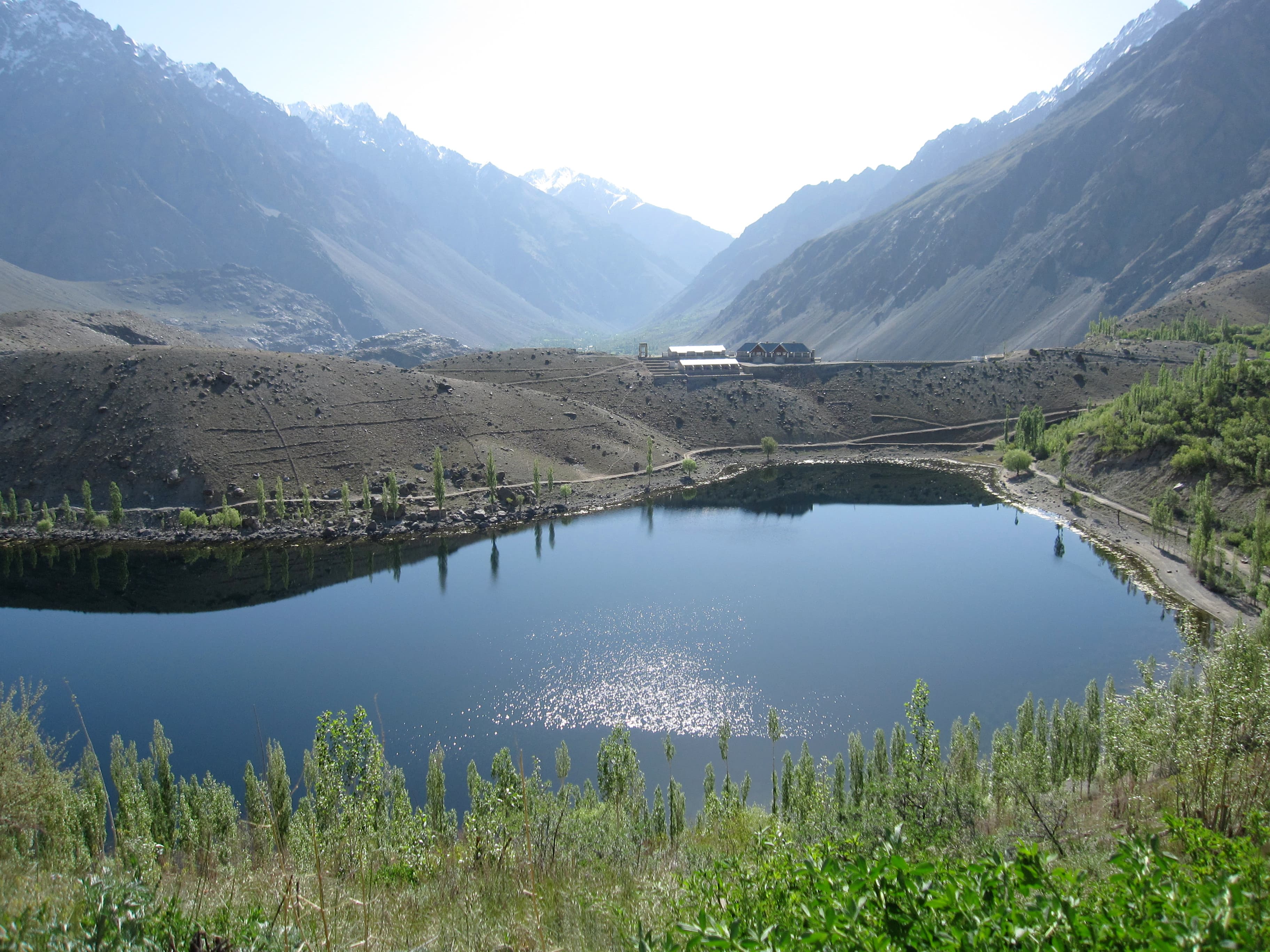
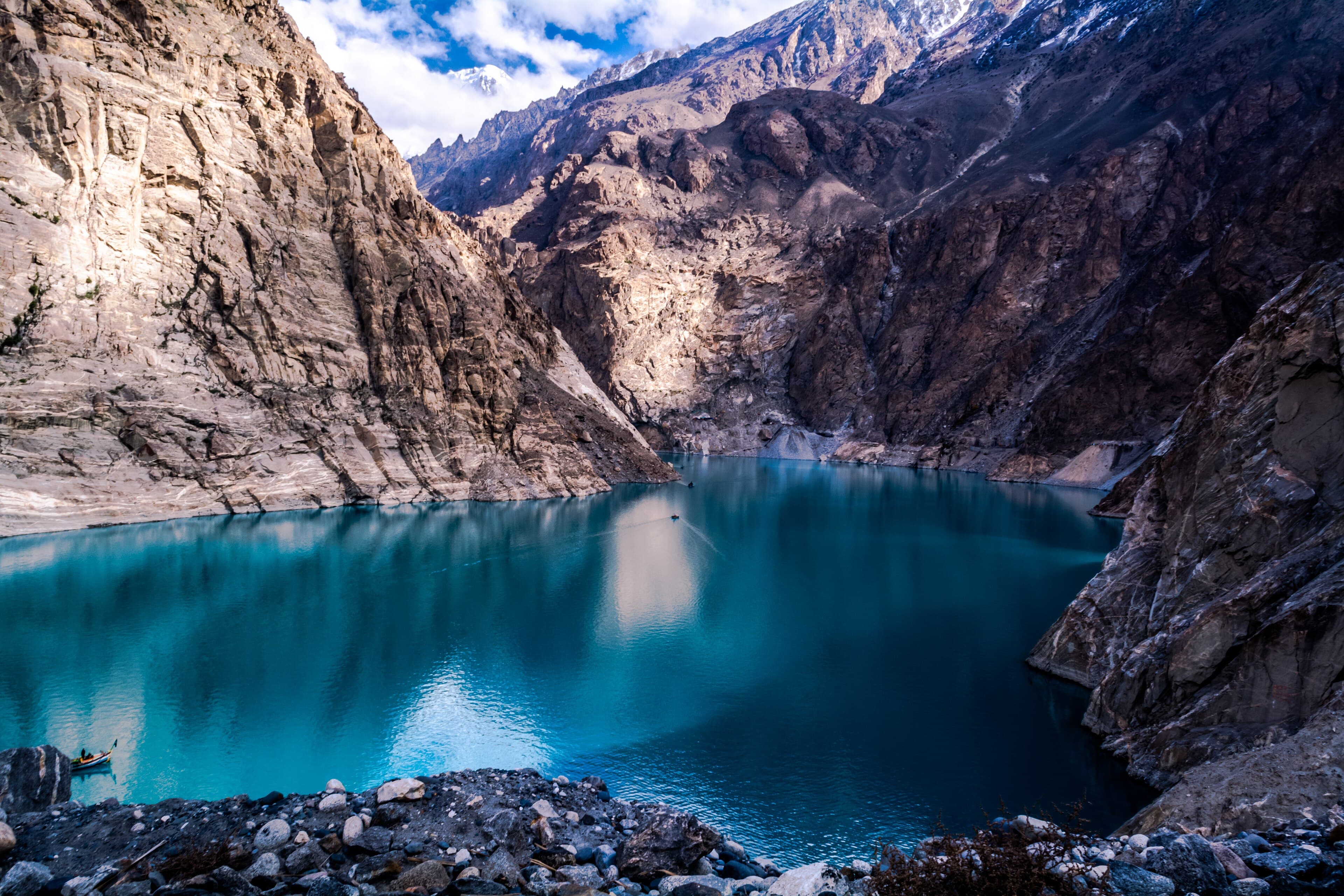
Then the ground levels, you crest the final rise, and Gasho Lake is simply there. Emerald green, dead still, ringed by rock and grass, with the mountain standing upside down in it. Most people go quiet at this moment. We have been many times and we still do.
Life at the lake: the loop, the trout and the fire
Set up camp near the shore, drop the heavy bags at the tent, and the lake becomes your playground. A trail circles the water and takes 50 to 80 minutes per side depending on how often you stop, and you can walk it light, with nothing but a water bottle and a camera. The far shore gives you the view back across the lake that ends up as everyone's favourite photograph.
Gasho Lake holds trout, and if you bring a rod you can fish from the bank in the calm of the evening or the first light of morning. There is a particular satisfaction in cooking a fish you caught yourself over a fire you built yourself, at a lake you reached under your own power.
The nights are cold, even in summer, and you will want a proper sleeping bag and warm layers. But the cold is what makes the fire so good. Wood, flames, tea, someone with a guitar or a phone speaker, singing and dancing badly and laughing about it, and above you a sky so thick with stars that the Milky Way looks painted on. That is the night at Gasho, and it is the reason the ride was worth it.
Markhor country and other trails
The mountains around the Sai valley are markhor country. The markhor is Pakistan's national animal, a giant wild goat with spiralling horns and an uncanny ability to stand on cliffs that look impossible. Sightings are never guaranteed, but sit quietly at dawn and scan the rock faces above the lake with binoculars, and you have a real chance of watching one pick its way across a ledge. Keep your distance, keep your voice down, and let it go about its business. Our guide to community conservation in Gilgit-Baltistan explains why these herds are recovering.
Gasho is also a base for longer walks. From the lake, ridgelines and side valleys lead higher into the mountains, and a second day of exploring with a local guide who knows the ground is well worth adding if you have the time and the legs.
Practical notes: when to go, what to carry, who this is for
Season: June through September is the window. Snow blocks the upper track and trail earlier and later in the year, and the lake sits high enough that nights stay cold all summer. Check the weather in Gilgit before you leave and do not ride the ravine track in rain.
Carry: a tent, a sleeping bag rated for cold nights, warm layers, a rain shell, a headlamp, a first aid kit, more water than you think, food for the full trip, a fishing rod if you want trout, and fuel for the bikes with margin to spare. There are no shops beyond the last village and no phone signal at the lake. Pack out everything you carry in. The lake is clean because the few people who reach it keep it that way.
Who this is for: people who are comfortable on a motorbike on rough track, or happy to be driven in a 4x4 to the trailhead, and fit enough for a two to three hour steep hike with a pack. It is not a family stroll. It is a proper little expedition, and that is exactly the point. If you would like us to arrange bikes or a 4x4, a local guide, camping gear and fishing tackle, tell us your dates and we will make it happen. Our quiet treks guide has more routes in this spirit.
From our own camera
What it actually looks like

Questions, answered
How do you get to Gasho Lake from Gilgit?
Drive or ride south on the Karakoram Highway to the Jaglot Sai turn near the Jaglot junction (about 40 minutes by car, an hour by bike), follow the metalled road up into the Sai valley for 15 to 25 minutes, then continue three to five hours off-road to the trailhead. From there it is a two to three hour hike up to the lake.
How difficult is the Gasho Lake trek?
The hike itself is short but steep, two to three hours on a shepherd's path with a pack, at altitude. The bigger effort is the day: a long rough off-road ride before you even start walking. Anyone reasonably fit can do it, but it is a full-on adventure rather than a gentle walk.
Can you fish at Gasho Lake?
Yes. Gasho Lake holds trout and you can fish from the bank with a rod, best in the early morning and evening. Bring your own tackle, as there is nowhere to buy or rent it beyond Gilgit, and we can arrange rods and the local fishing permit if you travel with us.
Can I do the Gasho Lake trip on a motorbike?
Bikes are our preferred way to do it. The ride from Gilgit is about an hour of tarmac, then a long off-road track with a ravine on one side, so you need to be confident on rough ground. If you would rather not ride, a 4x4 can take you to the trailhead instead.
When is the best time to visit Gasho Lake?
June to September. Earlier and later the track and the trail can be blocked by snow. Nights are cold at the lake all summer, so pack for near freezing temperatures even in July.