The valleys under snow
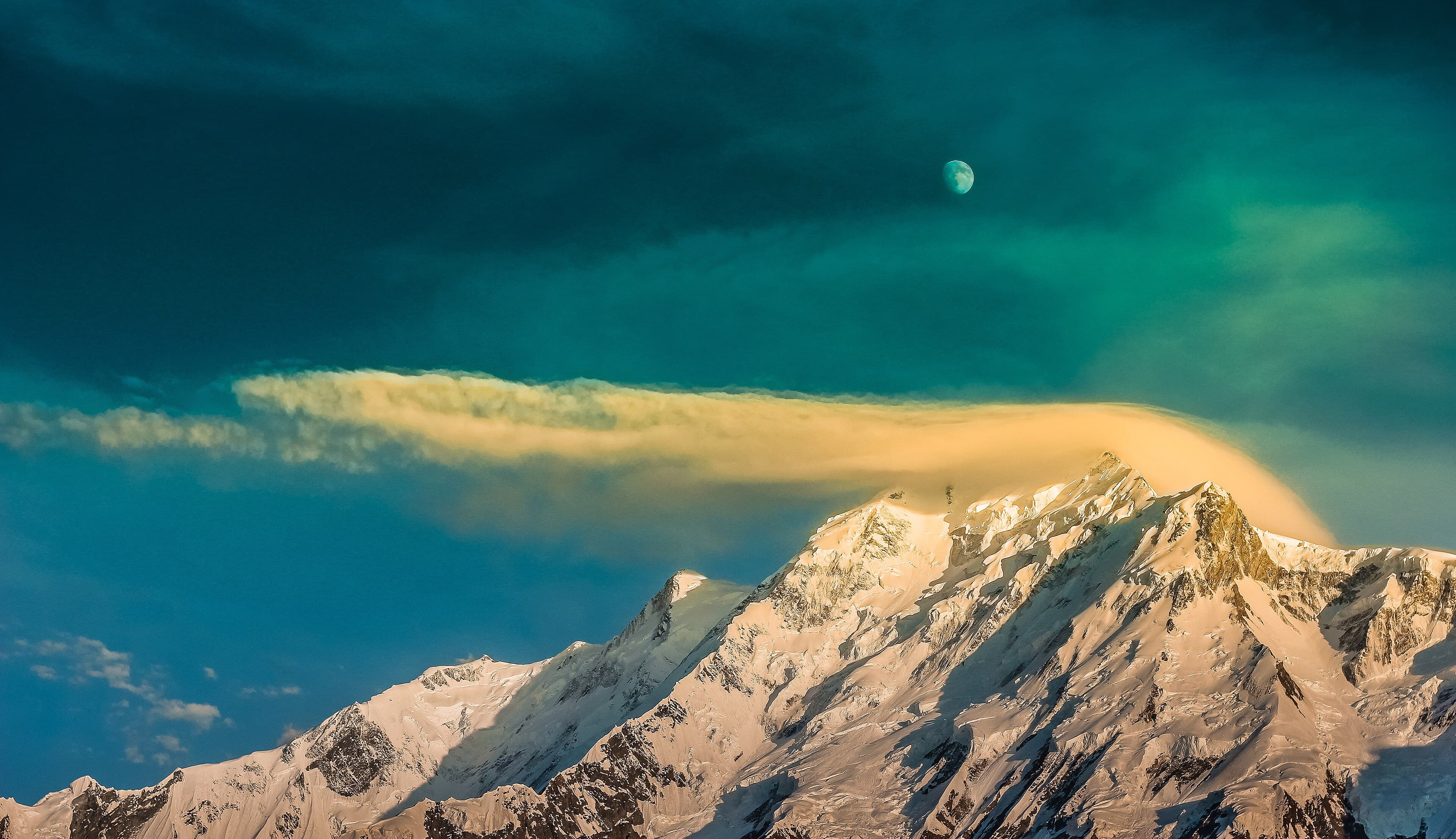
Between December and February, Gilgit-Baltistan becomes a different country. The terraces that were gold in November lie white and silent, woodsmoke stands in straight columns above stone villages, and the great peaks — Rakaposhi above Nagar, Ultar Sar above Karimabad — dazzle with a clarity that summer visitors never see. With the cold comes the region's rarest commodity: emptiness.
The famous places are still there, transformed. Baltit Fort rises from a white Karimabad like an illustration from a winter folk tale; the Passu Cones wear snow on every serration; the Karakoram Highway runs as a dark ribbon through a monochrome world. You can stand at viewpoints that hold a hundred people in August and hear nothing but a raven and the river.
Winter is the most honest season here, and this guide will be honest back: it is logistically harder, colder than most travellers have experienced, and some of the region simply shuts. For the right traveller — photographers, solitude-seekers, wildlife watchers — that trade is the bargain of a lifetime.
Frozen lakes: Attabad's ice and Khalti's skating season
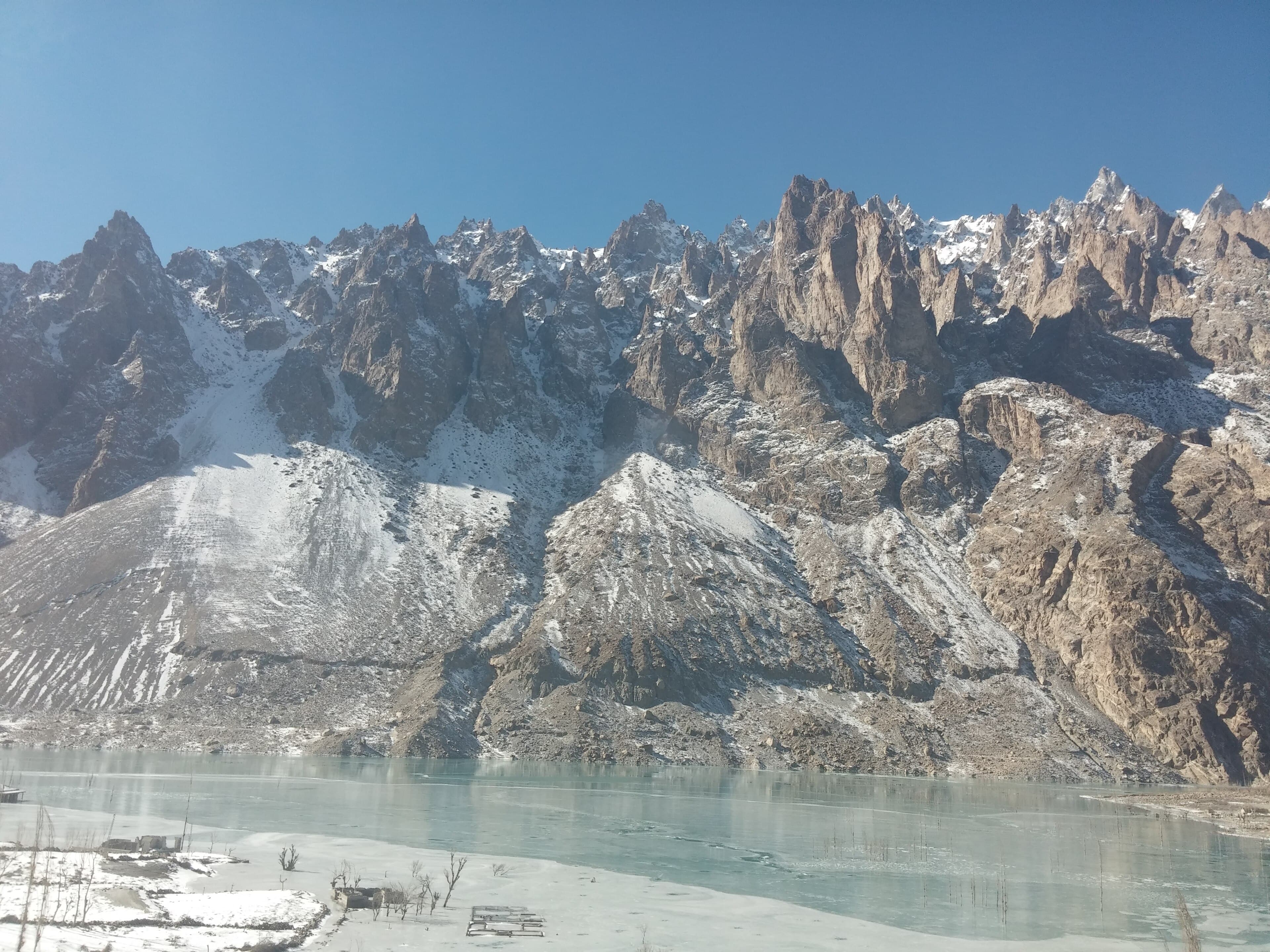
The lakes stage winter's most striking scenes. Attabad Lake, pure turquoise in summer, stills and partially freezes in deep winter, ice sheets creeping over the bays between ochre cliffs — boats stop in the depths of the season, and the famous basin becomes a place of silence and cracked glass textures rather than jet-skis.
The real ice stage is in Ghizer. Shallow Khalti Lake, near Gupis, freezes hard most winters, and in recent years it has become the centre of Gilgit-Baltistan's growing winter-sports scene — ice skating and ice hockey on the frozen lake, with local winter festivals drawing players and spectators from across the region. Watching a hockey match on a frozen mountain lake, ringed by snow peaks, is the kind of scene you expected from Canada, not Pakistan.
Treat all lake ice with mountain respect: go with locals who know where it bears weight, never walk on Attabad's partial ice, and save the skating for Khalti's organised gatherings. The frozen-lake season generally peaks from late December through February.
Naltar: skiing in the Karakoram
Pakistan has ski slopes, and they are in Gilgit-Baltistan. The Naltar Valley, a forested side valley about two to three hours' drive from Gilgit, holds the country's best-known ski area — lift-served slopes that began as a Pakistan Air Force training station and now host national ski championships and international-flavoured competitions most winters.
It is delightfully unlike the Alps: a handful of lifts, pine forest, deep reliable snow from roughly late December to March, local children who ski like they were born to it (several of Pakistan's Olympic and international skiers learned here), and lift-queue conversation instead of lift-queue crowds. Equipment can be rented locally, and beginners are welcome.
Even for non-skiers, Naltar in winter is worth the rough jeep ride in: frozen lakes further up the valley, snow-heavy pines and a glimpse of Pakistani winter-sports culture that almost no foreign visitors witness. Check conditions and the jeep road's status from Gilgit before committing — winter access depends on snowfall.
Snow-leopard season: tracking the ghost of the mountains
Winter is the season of the snow leopard. As snow buries the high pastures, ibex and other prey descend toward the valleys — and the leopards follow, bringing the world's most elusive big cat down to altitudes where patient observers genuinely have a chance. The prime months run from roughly December to February, in and around Khunjerab National Park in upper Gojal and the Hopper and Hispar area of Nagar.
Expeditions work with local spotters — often community wildlife rangers and former hunters whose eyes are the best optical equipment in the valley — scanning slopes at dawn and dusk for a shape that is mostly pattern and patience. Sightings are never promised; tracks, scrapes, ibex herds on impossible cliffs and the company of Himalayan wildlife are. When a cat does show, it tends to reorganise a traveller's sense of what a wildlife encounter can be.
Conservation is the quiet success behind this: community-based programs across Gilgit-Baltistan have turned snow leopards from livestock-raiders to be eliminated into an asset worth protecting, and responsible tracking tourism feeds that arithmetic directly. Our snow-leopard-winter-expedition tour runs on exactly this model, with local spotters employed and community fees built in.
Winter culture: wood stoves, Salgirah lights and the long-night calendar
Winter is when Gilgit-Baltistan's domestic culture is at its warmest, in every sense. Life contracts around the bukhari wood stove, and hospitality intensifies: long evenings of apricot-kernel snacks, walnut sweets, butter tea in Baltistan, soups like daudo, and conversation that no summer schedule allows. A homestay in January teaches you more about the region than a hotel week in July.
In December, the Ismaili villages of Hunza and Ghizer light up for Salgirah on 13 December, marking the birthday of the Aga Khan — strings of lights tracing villages and ridgelines up the dark valley walls, with celebrations in community halls. It is one of the most beautiful human sights of the mountain winter, and visitors who happen upon it remember it for life.
Older threads of the long-night calendar survive too: midwinter and solstice customs in villages, indoor music sessions, and in Baltistan the late-winter run-up to spring festivals. None of it is staged for visitors — which is precisely its value. Come with curiosity and accept invitations; winter hosts have time.
The practicalities, honestly
Getting there: the Islamabad–Skardu and Islamabad–Gilgit flights operate year-round but are weather-dependent in winter, with cancellations common enough that you must plan around them. The Babusar Pass is closed all winter, so road access is the Karakoram Highway the whole way — open year-round, but expect ice in shaded sections, occasional closures after snowfall, and journey times that stretch. Hire experienced local drivers; this is not the season for self-driving experiments.
On the ground: many hotels in Hunza and Skardu close for the season or run skeleton service, while guesthouses and homestays with wood stoves become the accommodation of choice — warmer, cheaper and better company. Some restaurants shut, fort museums keep reduced winter hours, and power cuts are more frequent, so rooms with stove heating beat rooms with electric promises.
What's closed is closed: Khunjerab is brutally cold and the border crossing shut for the season, Deosai is under metres of snow, all high trekking is off, and Attabad's boats stop in the depths of winter. Build your trip around what winter does offer — valleys, culture, wildlife, snow scenery — rather than fighting for what it doesn't, and keep two buffer days for flights and roads. For what that looks like in practice, two published deep-winter journeys are retold in A Winter Drive to the China Border.
Who winter suits — and who it doesn't
Winter is for photographers, who get the year's most dramatic light on snowbound forts and untouched panoramas with nobody else in frame. It is for solitude-seekers, who can have Karimabad's lanes, Duikar's dawn and whole guesthouses to themselves. And it is for wildlife watchers, for whom December–February is simply the season — there is no summer snow-leopard tracking.
It is not for first-time visitors who want the greatest-hits circuit: with Deosai, the high passes, boating and trekking all closed, a first trip in January would miss much of what makes the region famous. It is also not for travellers who need certainty — flight cancellations and road delays are features of the season, not exceptions — or for anyone unprepared for genuinely hard cold in minimally heated buildings.
A fair test: if the phrase 'we may wait two days in Skardu for the weather' sounds like part of the adventure, winter will reward you out of all proportion to its difficulties. If it sounds like a ruined holiday, come in October instead — the autumn guide is yours.
Packing for −10 to −20 °C nights
Daytime valley temperatures in winter often sit around or below freezing, but the numbers that matter are the nights: −10 °C is routine, and cold snaps in Skardu and upper Hunza can push toward −20 °C. Crucially, you will spend time inside buildings that are heated only where the stove is — so pack to be warm while sitting still indoors, not just while walking.
The system: heavyweight thermal base layers (tops and bottoms — you will sleep in them), a thick fleece or wool mid-layer, a serious down jacket, and a windproof shell for the Karakoram's valley winds. Insulated waterproof boots with room for thick socks, a warm hat, a buff, lined gloves with liner gloves beneath, and microspikes for icy village lanes earn their space daily.
The unglamorous winners: a four-season-rated sleeping bag or liner to boost guesthouse bedding, a hot-water bottle (any local shop sells one — fill it from the kitchen kettle at night), a headlamp for power cuts, lip balm and heavy moisturiser for the dry cold, sunglasses and sunscreen for blinding snow-glare days, and twice the power-bank capacity you think you need, kept warm — cold murders batteries.
Questions, answered
Can you visit Hunza in winter?
Yes — the Karakoram Highway stays open year-round, and Hunza under snow is spectacular and almost empty. Expect icy roads, many hotels closed (homestays with wood stoves are the better choice anyway), short museum hours and hard cold. The high passes, Deosai and trekking routes are all shut.
Where can you see snow leopards in Pakistan?
Gilgit-Baltistan in winter, when prey animals descend and the cats follow — primarily around Khunjerab National Park in upper Hunza and the Hopper area of Nagar, from roughly December to February. Tracking trips work with local community spotters; sightings are never guaranteed, but winter offers the realistic chance.
Is there skiing in Gilgit-Baltistan?
Yes — Naltar Valley, a few hours from Gilgit, has Pakistan's best-known lift-served ski slopes and hosts national championships most winters. The season runs roughly late December to March, equipment can be rented locally, and beginners are welcome. Access is by jeep road, dependent on snow conditions.
Do flights to Skardu and Gilgit operate in winter?
They're scheduled year-round but are weather-dependent, and winter cancellations are common. Keep at least two buffer days, and have a road backup: the Karakoram Highway stays open through winter, though icy sections and snowfall can slow or briefly close it. Babusar Pass is shut all winter.
How cold does Gilgit-Baltistan get in winter?
Valley days often hover around freezing, while nights routinely reach −10 °C and can approach −20 °C in Skardu and upper Hunza. Buildings are heated only around the wood stove, so pack heavyweight thermals, a serious down jacket, a sleeping-bag liner and microspikes for icy lanes.