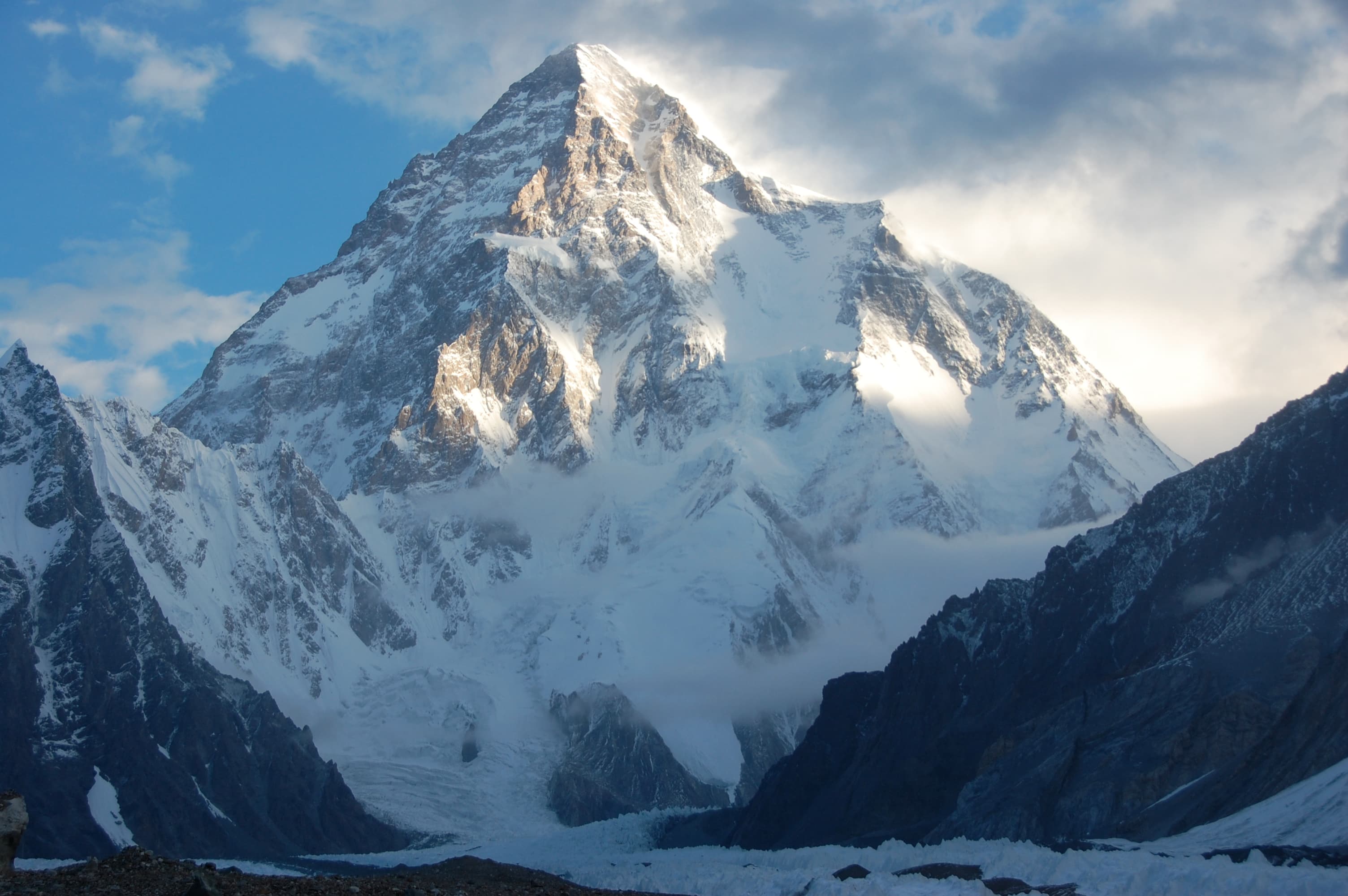
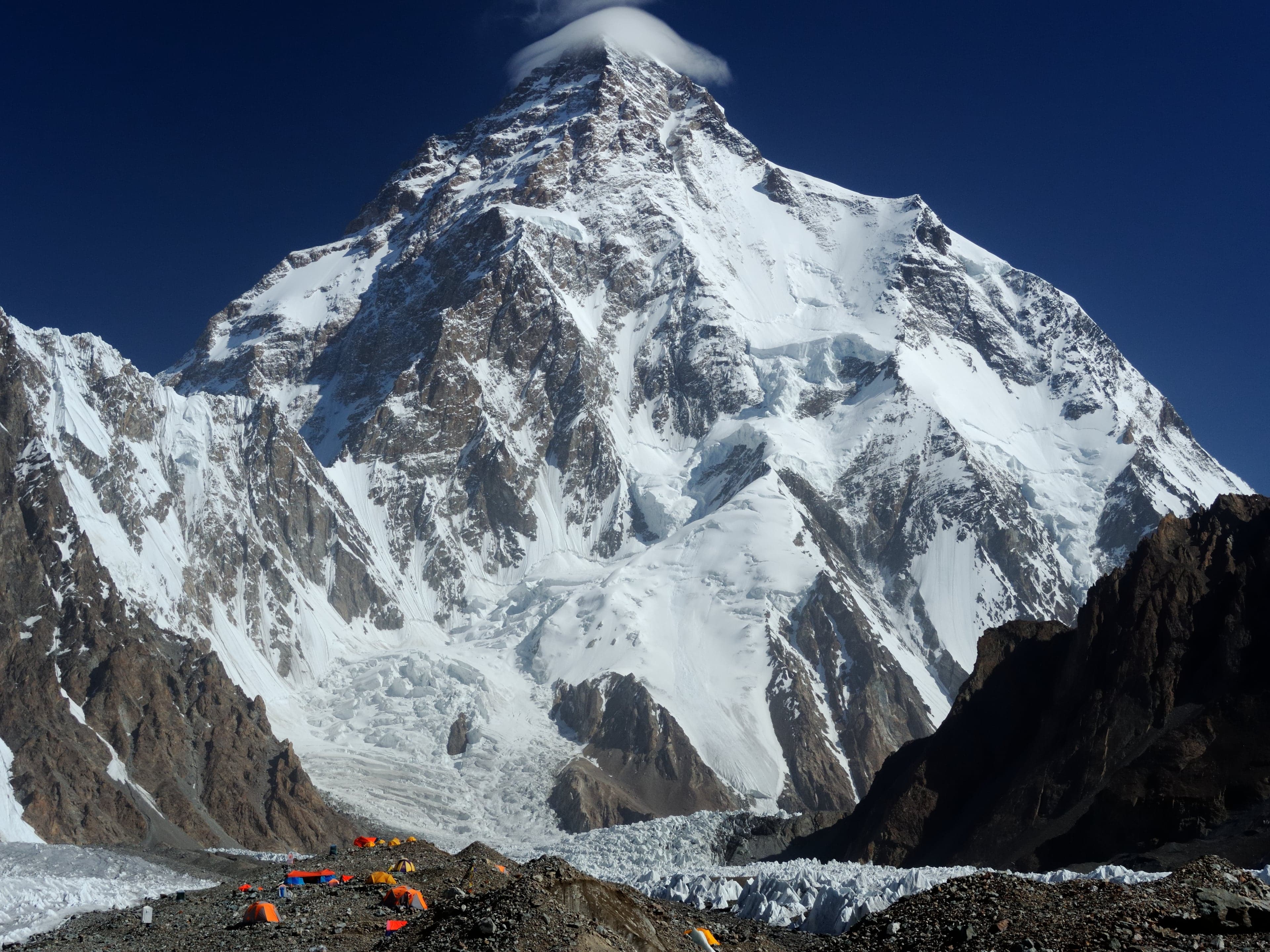
K2 is the second-highest mountain on Earth, 8,611 metres of rock and ice on the border between Baltistan in Pakistan and Xinjiang in China. Everest is higher by about 240 metres, but K2 is the one climbers fear. It stands at the head of the Godwin-Austen Glacier in the Karakoram, so far from any road that you cannot see it even from Askole, the village where the walk in begins.
Its name is a surveyor's note that nobody replaced. In 1856 Thomas Montgomerie of the Great Trigonometrical Survey of India sketched the two most prominent peaks of the range from Mount Haramukh in Kashmir, more than 200 km away, and labelled them K1 and K2, with K for Karakoram. K1 turned out to have a local name, Masherbrum. K2 was too remote to have one in common use, and the label stayed. Its other name, the Savage Mountain, comes from George Bell, a climber on the 1953 American expedition, who said: "It's a savage mountain that tries to kill you."
The first people to reach the top were Lino Lacedelli and Achille Compagnoni on 31 July 1954, members of an Italian expedition led by Ardito Desio. They climbed the Abruzzi Spur, the south-east ridge first tried in 1909 by the Duke of the Abruzzi, and it is still the usual route. Winter held out far longer. K2 was the last of the fourteen 8,000-metre peaks to be climbed in winter, by a team of ten Nepali climbers in January 2021. Our Karakoram climbing history tells the full story.
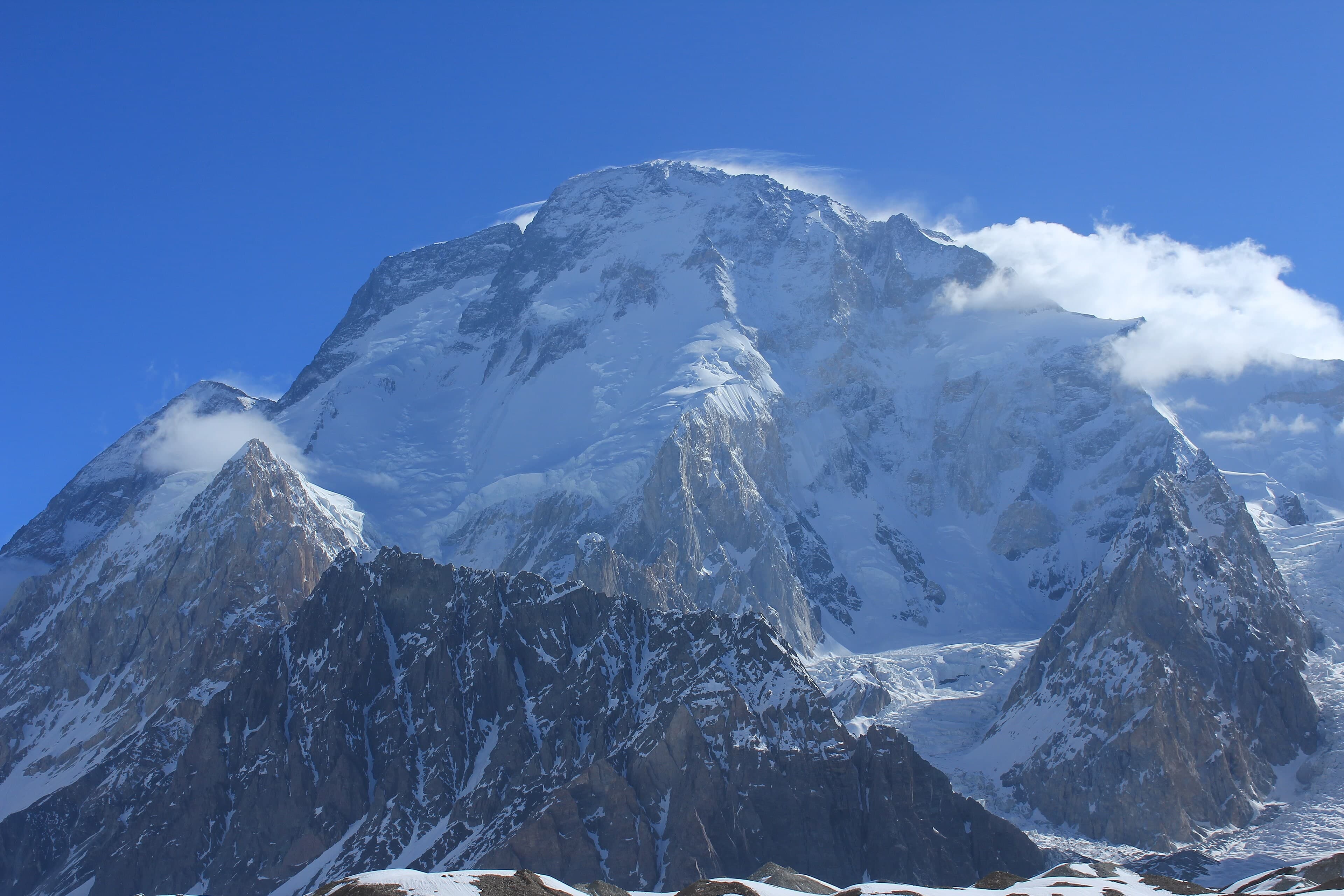
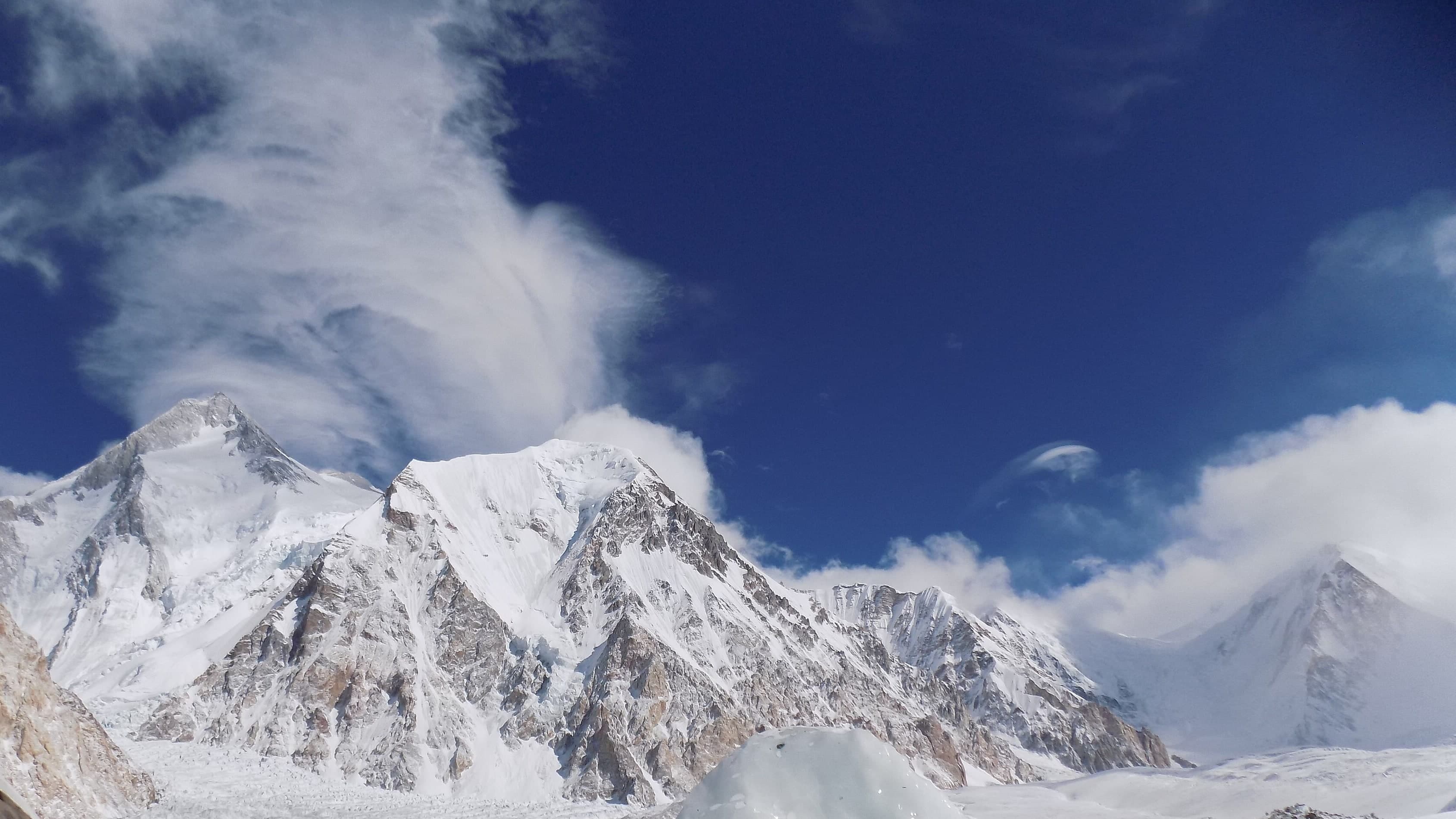
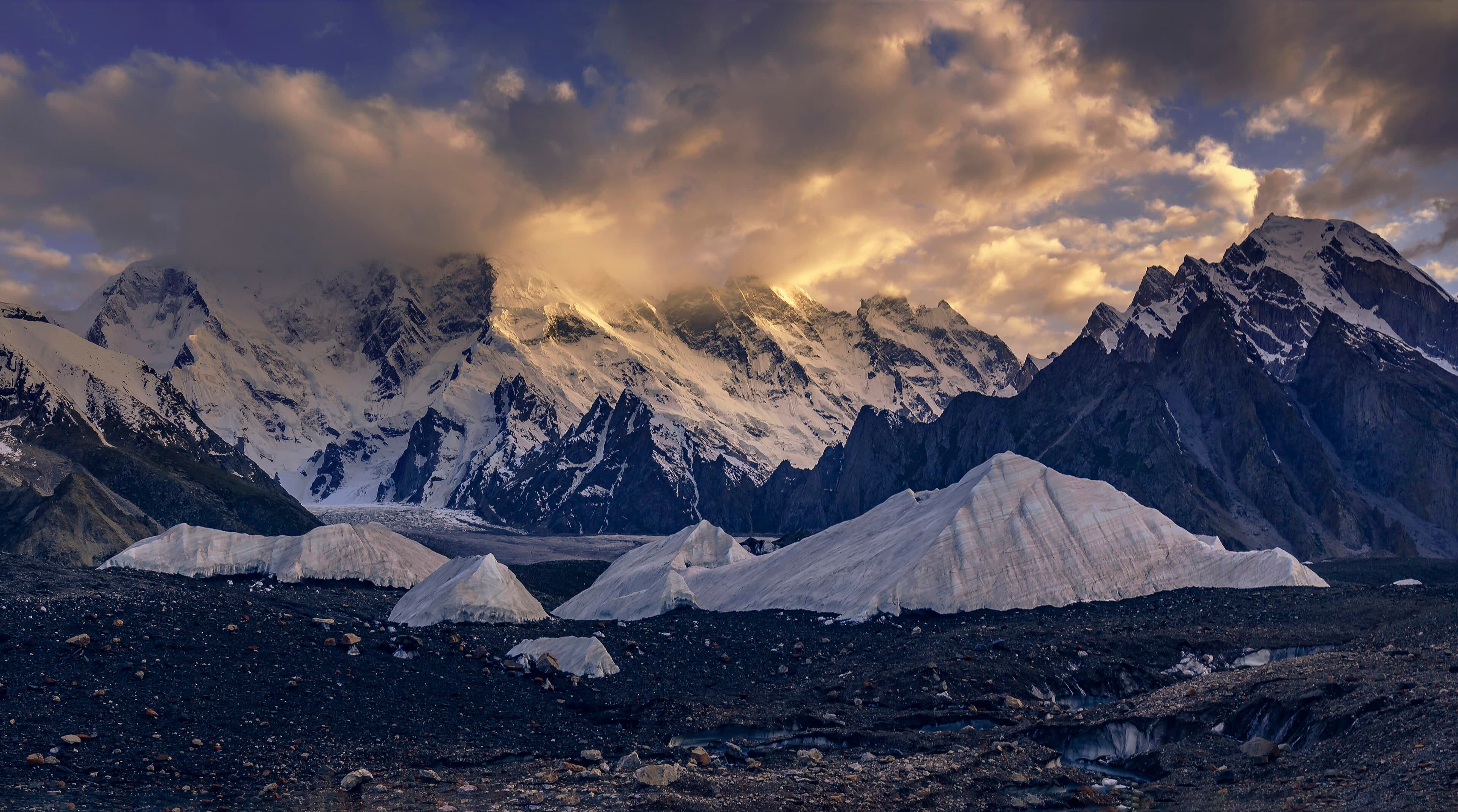
You do not need to climb to stand in front of it. The K2 Base Camp and Concordia trek follows the Baltoro Glacier from Askole to Concordia, where K2 rises more than 3,000 metres from the ice with Broad Peak beside it. On the way the trail passes under the granite Trango Towers, and Gasherbrum I and Gasherbrum II stand at the head of the same glacier. The walk takes 12 to 14 days round trip from Skardu and needs strong fitness but no climbing skills. From Concordia, one more day up the Godwin-Austen Glacier reaches base camp itself.
There are easier glimpses too. On a clear morning the Islamabad to Skardu flight passes the Karakoram, and from a left-hand window seat flying north you may pick out K2's pyramid behind the Masherbrum range. From the Hushe Valley, day hikes toward Marsur Rock give a distant view on clear days. Our answer on how to see K2 without climbing it compares every option.
See also: Places to visit in Skardu, Mountains in Skardu, Mountains in Gilgit-Baltistan.