What a Himalayan ibex looks like
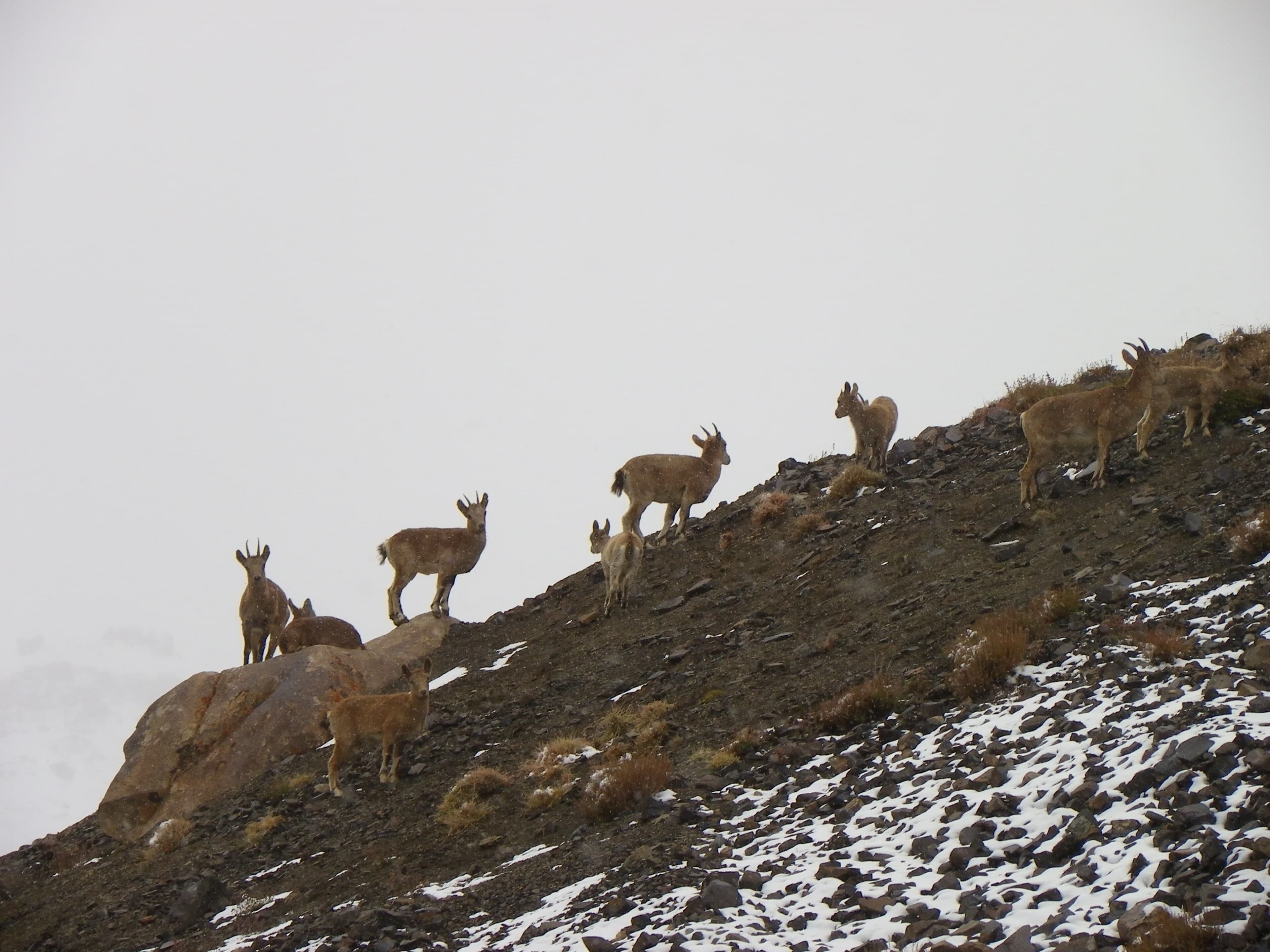
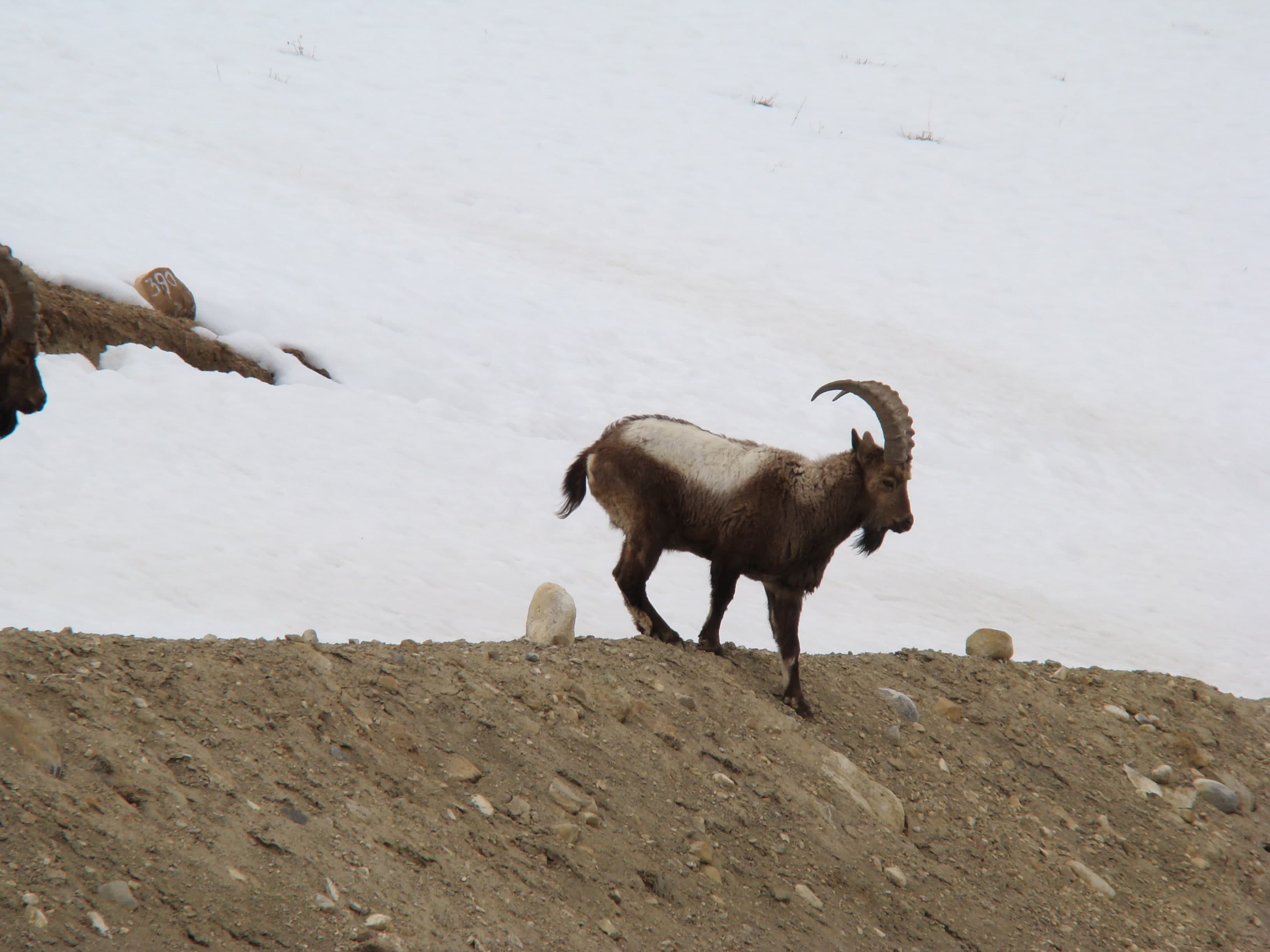
The ibex of these mountains is the Siberian ibex (Capra sibirica), a heavy wild goat that lives across the high ranges of Central Asia. The animals of northern Pakistan belong to the form known as the Himalayan ibex. A grown male stands 88 to 110 centimetres at the shoulder and weighs between 60 and 130 kilograms. Females are much smaller, at 34 to 56 kilograms.
The horns are what you notice first. On a mature male they are black, ridged across the front and usually about 115 centimetres long, and the longest on record reached 148 centimetres. Females carry short horns of about 27 centimetres. Both sexes have a beard, and the coat varies from dark brown to light tan.
The species is listed as Near Threatened, but in Gilgit-Baltistan it is doing well. A survey counted more than 7,000 ibex across the region, which makes it far more numerous than the markhor.
Where to see ibex: Khunjerab Pass and upper Hunza
The surest place is the road to the Khunjerab Pass. Above Sost the Karakoram Highway runs through Khunjerab National Park, and ibex often stand on the crags beside the tarmac. Drive up early, go slowly in the upper part of the valley and keep scanning the slopes. Your driver will know the usual places.
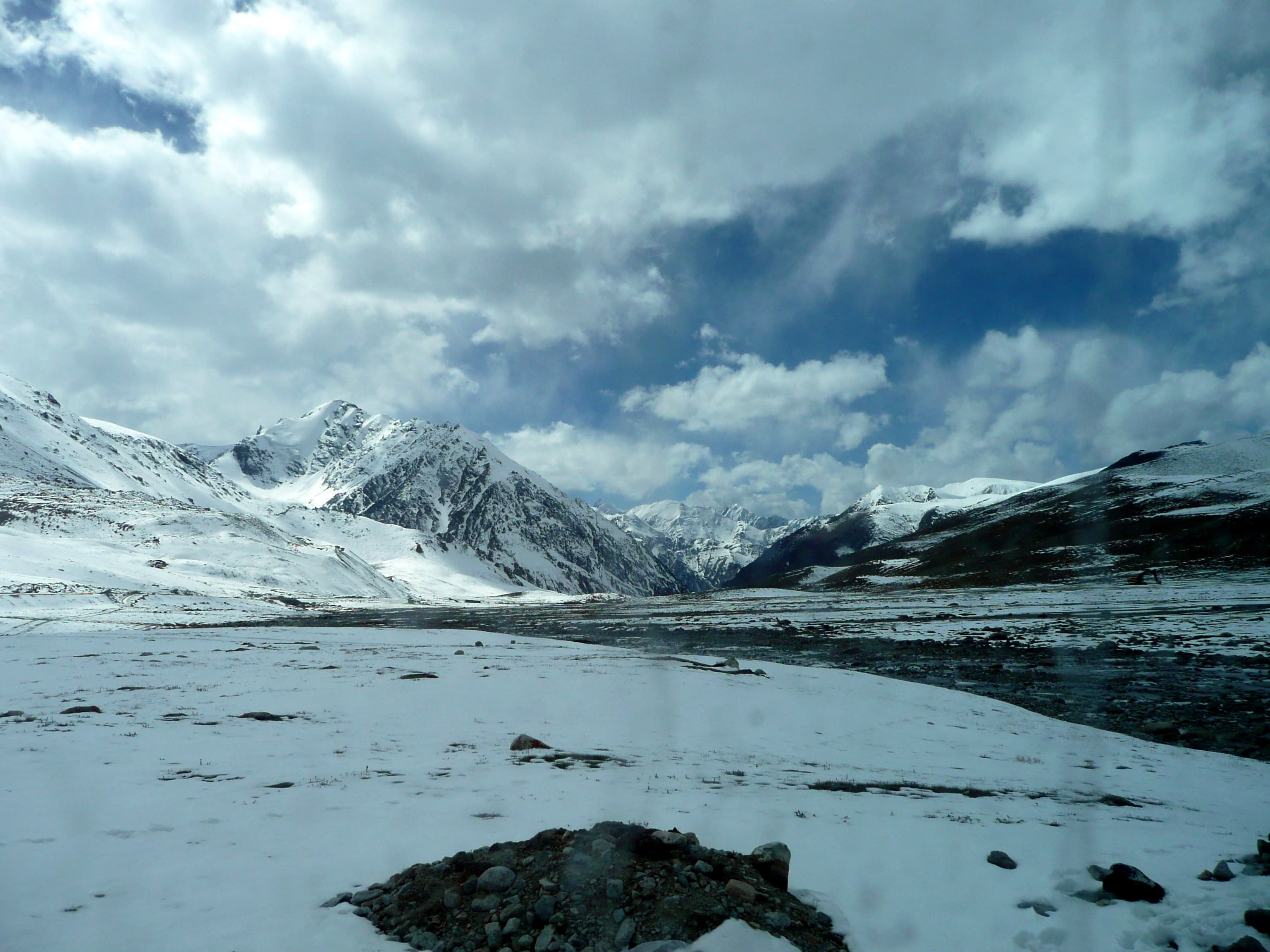
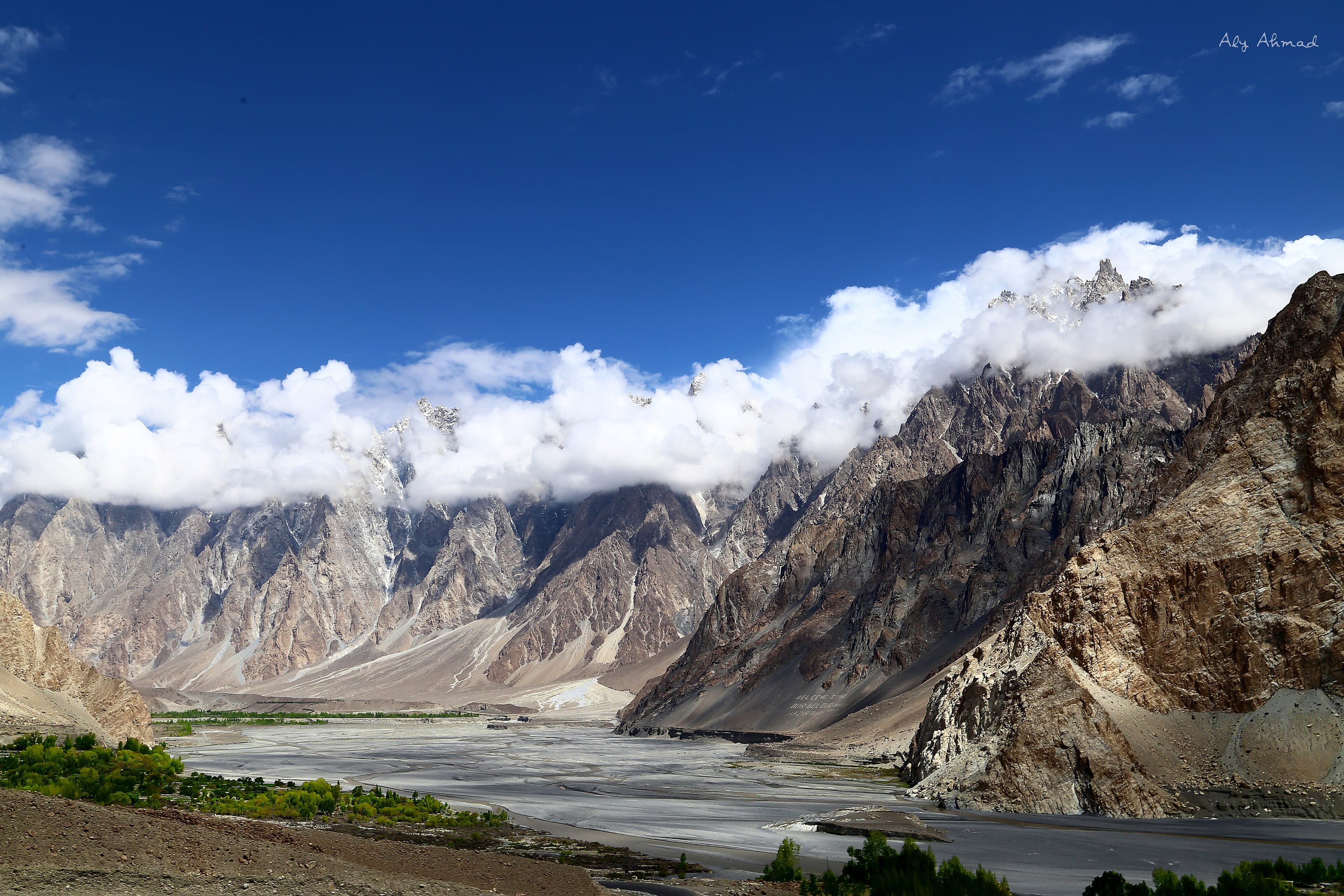
Khunjerab PassDrive to 4,693 m and stand at the China border gate
Photo: Martin Jung · CC BY-SA 3.0The second place is the stretch of upper Hunza between Passu and Khyber. The village of Khyber runs one of the best-known ibex conservancies in Gilgit-Baltistan, and in the cold months herds feed on the low slopes here. It is an easy stop on the way to the Passu Cones, and a pair of binoculars is all you need.
Our Hunza Explorer tour gives a full day to the Khunjerab drive, so there is time to pull over whenever somebody spots a herd.
The best time to see ibex in Hunza
In summer ibex live high, most often between about 2,000 and 5,000 metres, and you see them mainly near the top of the Khunjerab road in the early morning. In winter they move to lower slopes to find food. That is why winter and early spring bring the herds closest to the road and the villages.
The rut runs from late October to early January. For most of the year males and females mostly keep to separate herds, usually of 5 to 30 animals. In the rut the herds can grow much larger, and this is the season to see the big males with the females.
Ibex, snow leopards and hunting permits
Ibex are a main prey of the snow leopard in these mountains. Where the herds go in winter, the cats follow, and that is how snow leopard tracking in Khunjerab works: the spotters watch the ibex, and the ibex show them when a cat is near.
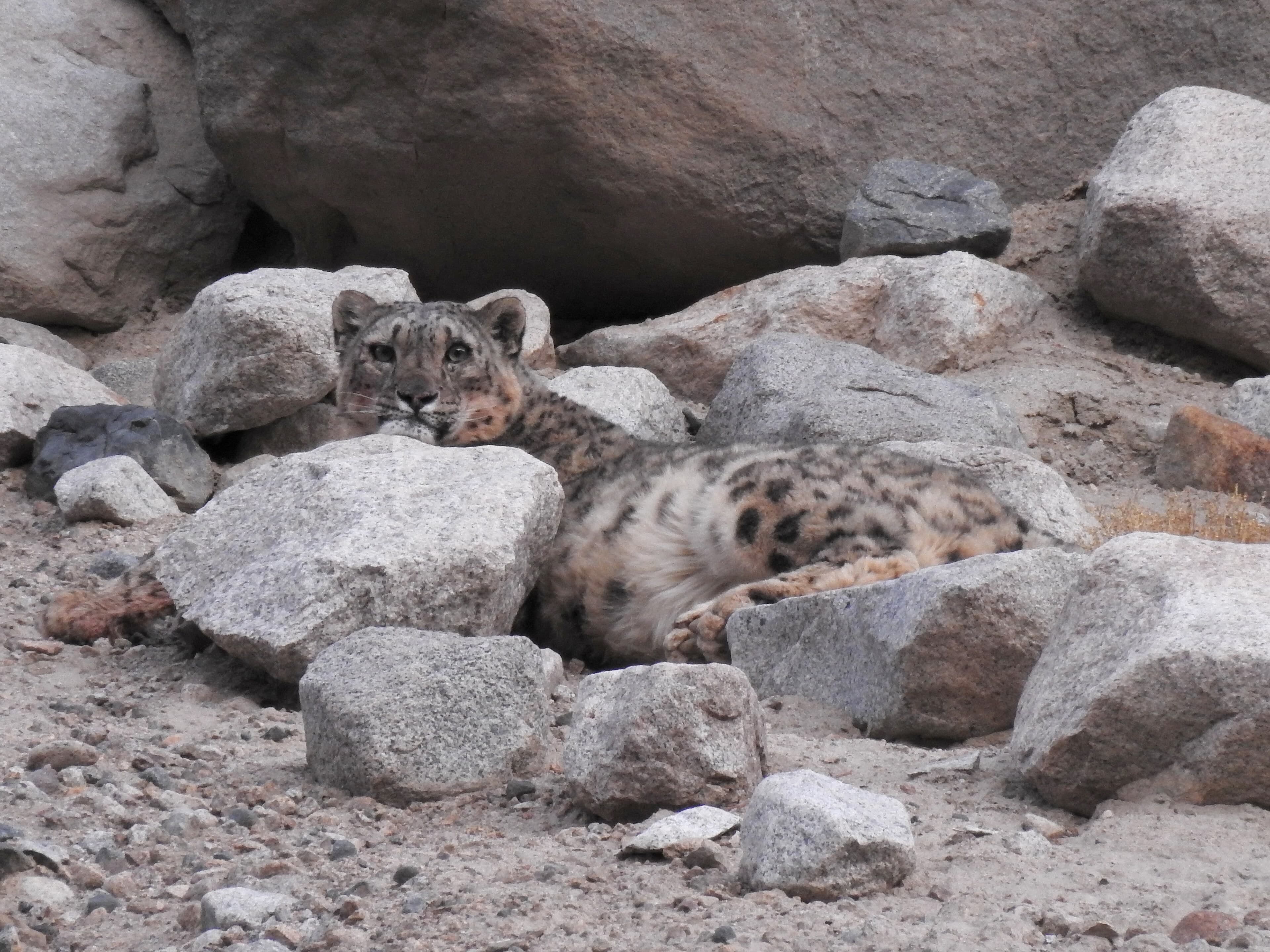
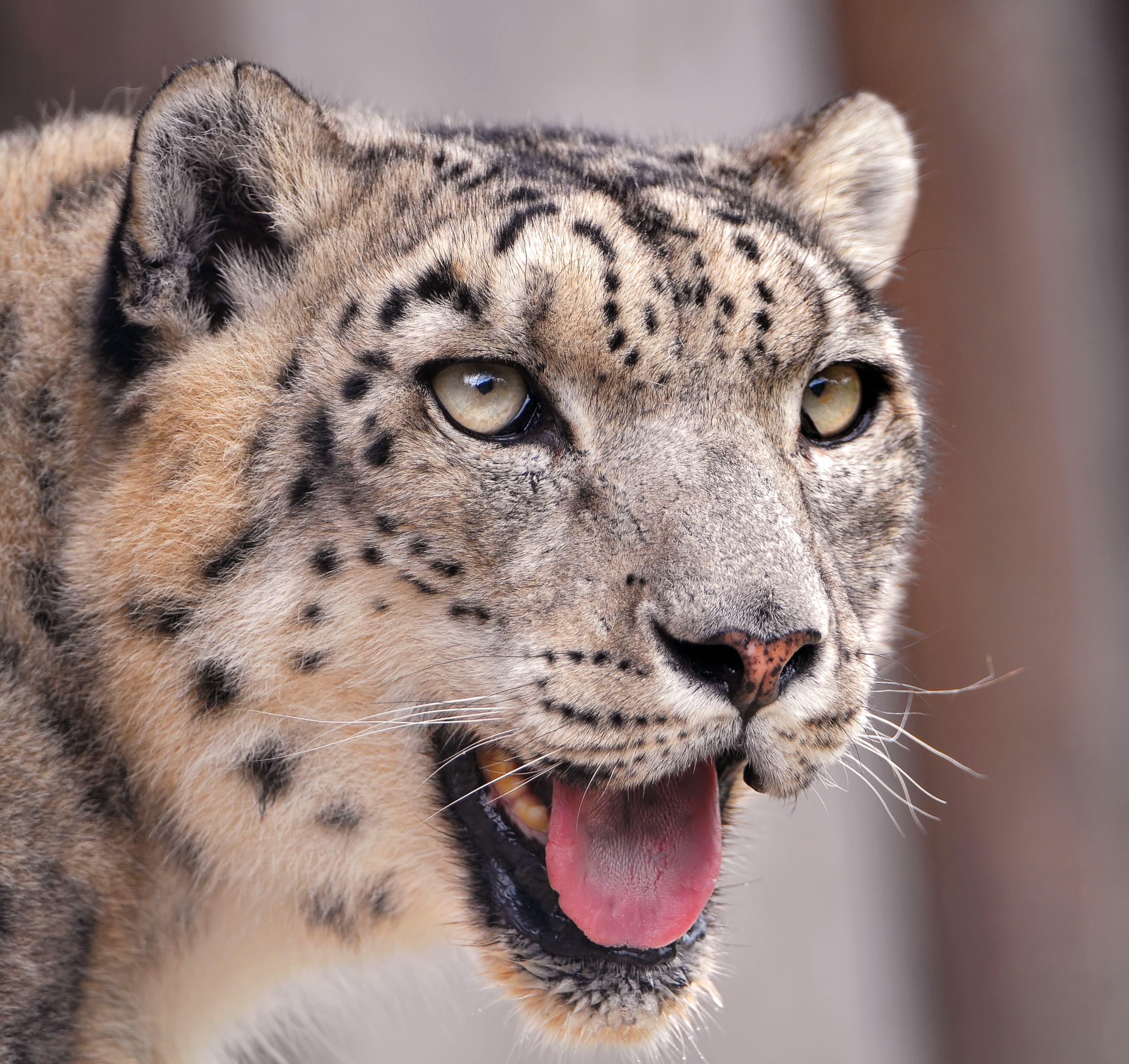
Snow leopardWhere it lives in Pakistan and how a winter search works
Photo: T. R. Shankar Raman · CC BY-SA 4.0The ibex is also one of the three species in Gilgit-Baltistan's community trophy hunting programme, with the markhor and the blue sheep. One hundred permits for males of trophy size are offered each season, and 80 percent of each fee goes to the village that protects the herd. Our page on ibex hunting in Pakistan has the prices and the rules, and our guide to trophy hunting and conservation explains how the programme works.
If you are not sure whether you are looking at an ibex or a markhor, look at the horns. An ibex has long horns that curve back in one sweep. A markhor has horns that twist like a corkscrew. For the other animals of the region and their seasons, see our wildlife of Gilgit-Baltistan guide.