
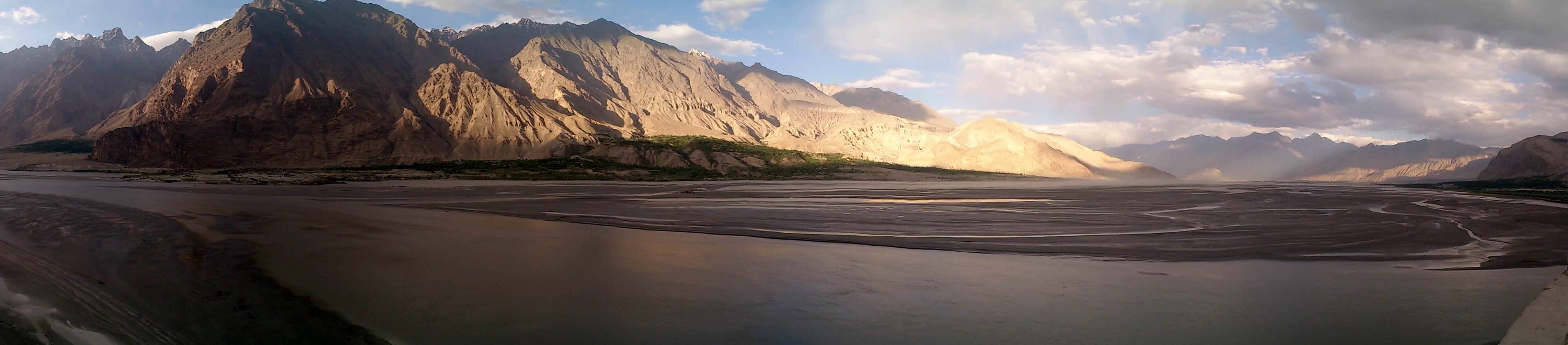
Places to visit in Skardu23 places, from 2,226 m to 8,611 m
Skardu is the capital of Baltistan, about 50 minutes by air from Islamabad, and almost everything people come for is within a day of it: lakes half an hour from town, two cold deserts, the fort-palaces of Shigar and Khaplu, and Deosai National Park above 4,000 m.
This page lists every place we cover around Skardu, with its altitude, the best months and how to reach it. To see them with a guide and a driver, look at our Skardu tours.
At a glance
| Place | Altitude | Type | Good for |
|---|---|---|---|
| Katpana Desert | 2,226 m | desert | photographers, families, honeymooners |
| Skardu | 2,230 m | town | first-time visitors, trekkers, families |
| Sarfaranga Cold Desert | 2,300 m | desert | families, adventure seekers, photographers |
| Shigar Valley | 2,300 m | valley | culture lovers, honeymooners, photographers |
| Chunda Valley | 2,400 m | valley | photographers, culture lovers, couples |
| Shangrila Resort | 2,500 m | lake | families, honeymooners, photographers |
| Upper Kachura Lake | 2,500 m | lake | photographers, families, couples |
| Khaplu Valley | 2,600 m | valley | culture lovers, honeymooners, photographers |
| Manthokha Waterfall | 2,600 m | waterfall | families, picnickers, photographers |
| Satpara Lake | 2,650 m | lake | families, photographers, history lovers |
| Basho Valley | 3,000 m | valley | campers, families, anglers |
| Hushe Valley | 3,050 m | valley | trekkers, climbers, culture lovers |
| Masherbrum Base Camp | 4,000 m | trek | trekkers, photographers, families with teens |
| Deosai National Park | 4,114 m | wildlife | wildlife watchers, photographers, campers |
| K2 Base Camp & Concordia Trek | 4,600 m | trek | serious trekkers, mountaineering fans, photographers |
| Snow Lake Trek | 5,151 m | trek | experienced trekkers, mountaineering fans, photographers |
| Gondogoro La Trek | 5,585 m | trek | experienced trekkers, mountaineering fans, adventure seekers |
| Trango Towers | 6,286 m | peak | trekkers, climbers, photographers |
| Masherbrum | 7,821 m | peak | trekkers, photographers, mountaineering fans |
| Gasherbrum II | 8,035 m | peak | serious trekkers, mountaineering fans, photographers |
| Broad Peak | 8,051 m | peak | trekkers, mountaineering fans, photographers |
| Gasherbrum I | 8,080 m | peak | serious trekkers, mountaineering fans, photographers |
| K2 | 8,611 m | peak | trekkers, mountaineering fans, photographers |
Places to visit, lowest to highest
2,226m
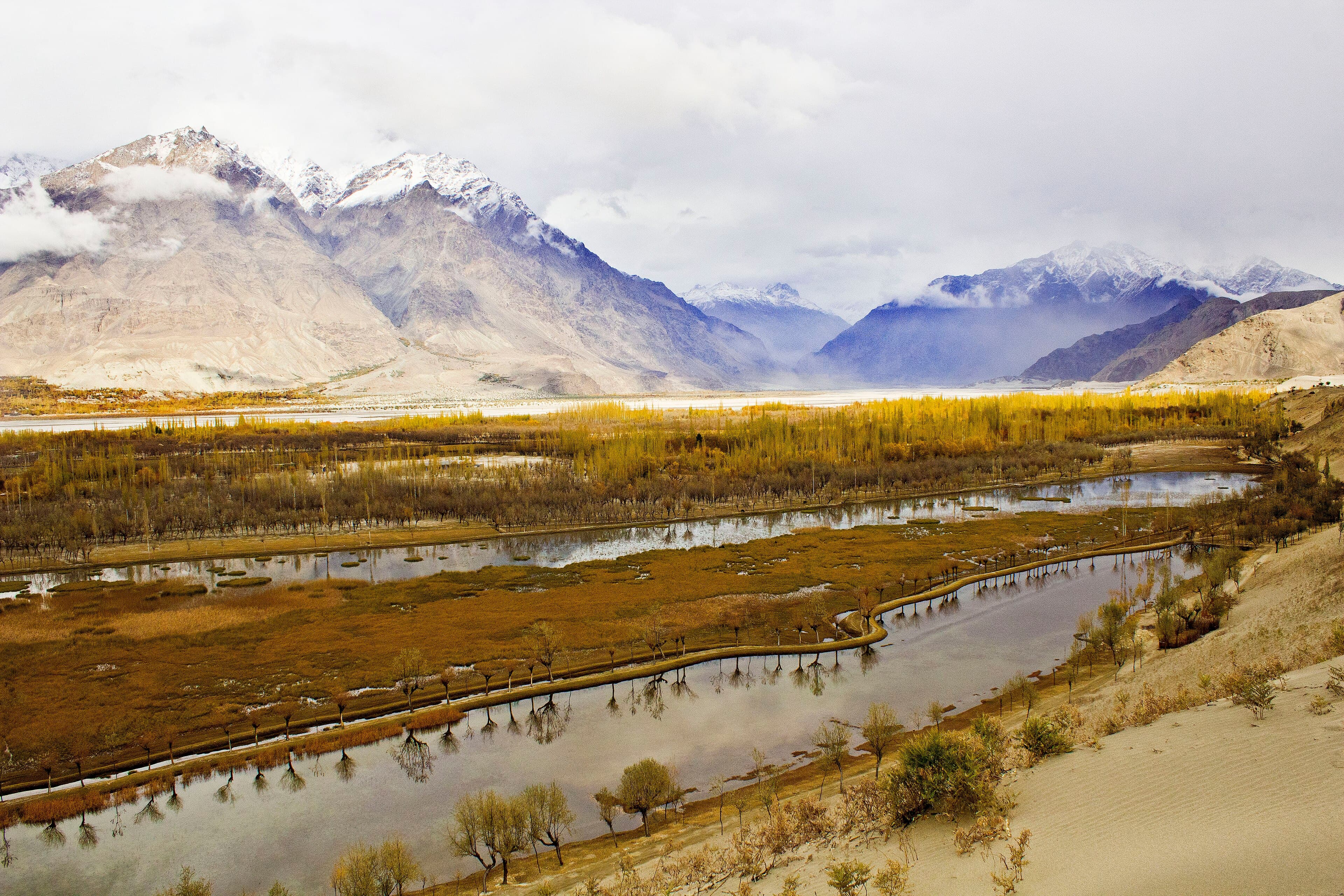
Photo: Muhammad Rizwan Shaikh · CC BY-SA 4.0 2,226m
Katpana Desert
Where winter snow settles on sand dunes
Katpana Desert near Skardu airport is one of the world's highest cold deserts — sand dunes that catch winter snow beside the Indus. Best time, photos and access.
- Type
- High-altitude cold desert
- From Skardu airport
- Minutes by road
- Signature sight
- Snow on sand dunes in winter
Best months: October–March for the famous snow-on-sand scenes (December–February most reliable); May–September for warm, easy visits with green valley contrast.
2,230m
Photo: Sabawun · CC BY-SA 4.0 2,230m
Skardu
The basecamp town for the greatest mountains on earth
Skardu is the capital of Baltistan and gateway to K2: lakes, cold deserts, forts and Deosai all within day-trip range. How to get there, where to stay, what to do.
- River
- Indus
- Flight from Islamabad
- ≈ 50 min
- Role
- Gateway to K2 & Baltoro
Best months: May–September for valleys, lakes and Deosai; April and October are quieter with crisp light.
2,300m
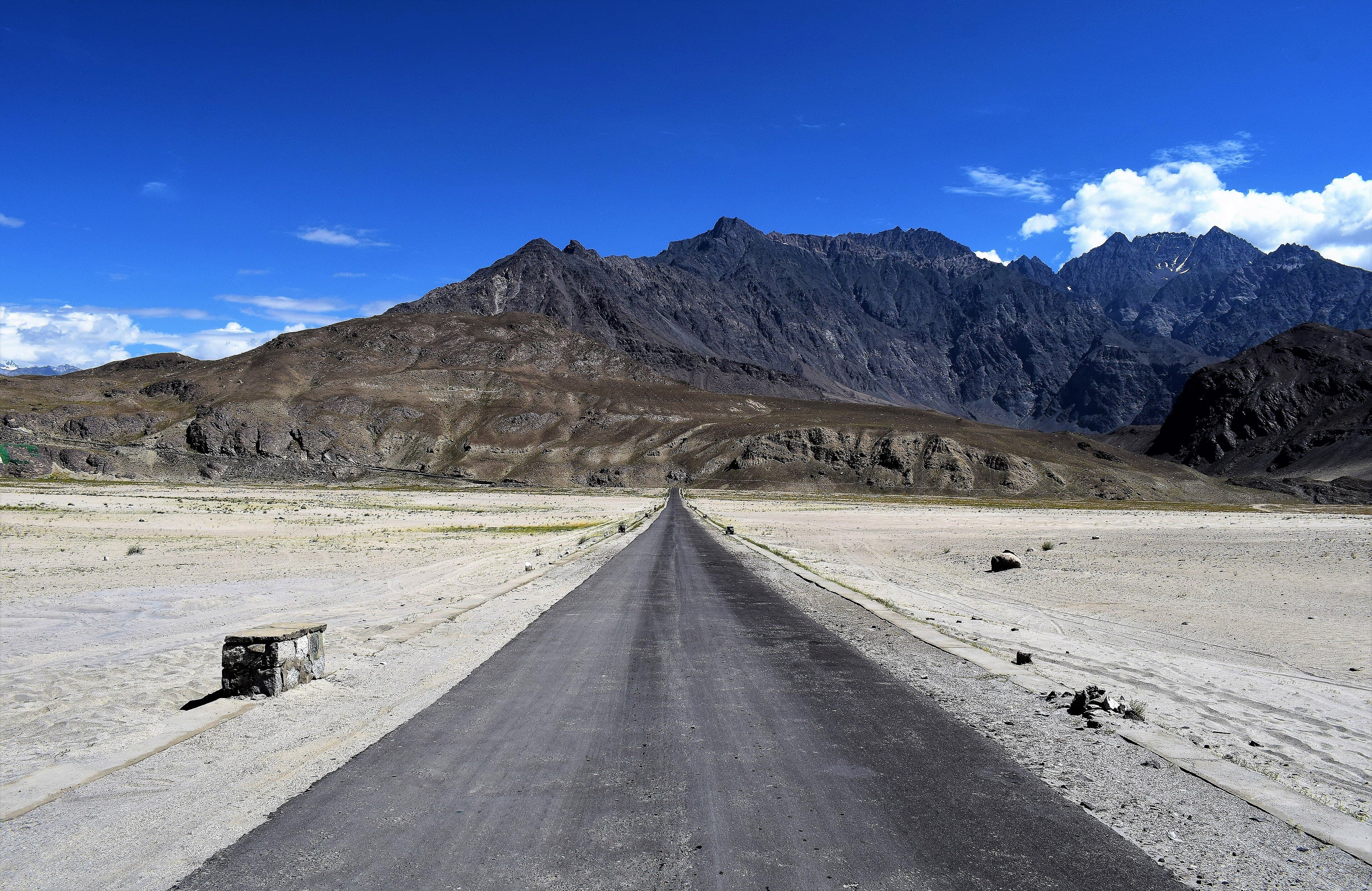
Photo: Shahid Rao · CC BY-SA 4.0 2,300m
Sarfaranga Cold Desert
Silver dunes at 2,300 metres, ringed by snow peaks
Sarfaranga is Skardu's high-altitude cold desert: silver dunes between the Indus and Shigar rivers, jeep rallies, ATV rides and Karakoram views. How to visit.
- Type
- High-altitude cold desert
- From Skardu
- ≈ 30 min drive
- Famous for
- Cold Desert Jeep Rally & ATV rides
Best months: May–October for ATV rides and warm afternoons; the annual jeep rally usually runs in the cooler months.
2,300m
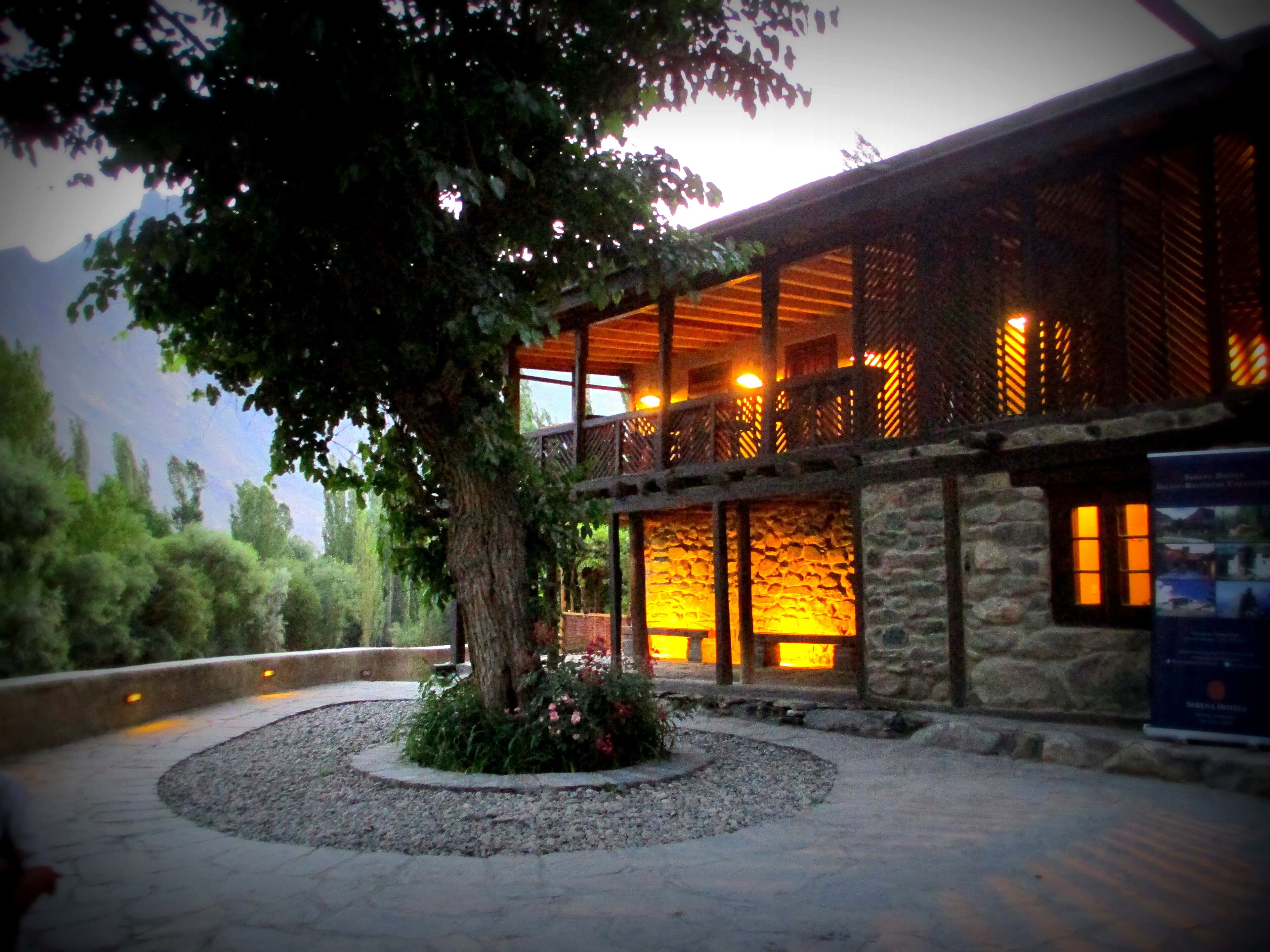
Photo: Saqibmahay1 · CC BY-SA 3.0 2,300m
Shigar Valley
Sleep in a raja's fort on the road to K2
Shigar Valley pairs apricot orchards with the 400-year-old Shigar Fort, now a Serena heritage hotel, on the road to K2. History, hotels and how to visit from Skardu.
- Shigar Fort age
- ≈ 400 years
- Balti name
- Fong Khar — 'palace on the rock'
- From Skardu
- ≈ 45 min drive
Best months: April for apricot and cherry blossom, May–September for green orchards and open roads, October for golden autumn poplars.
2,400m
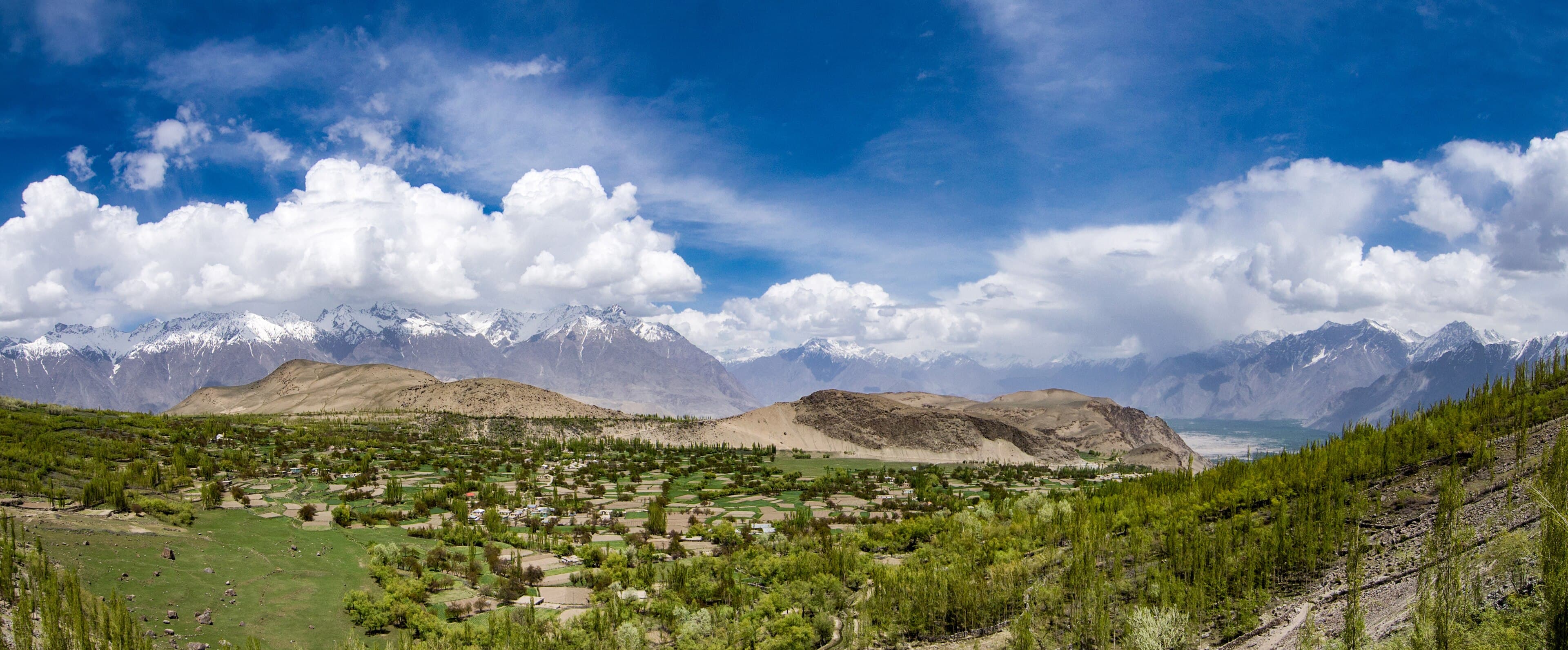
Photo: Wazir Qammer Abbas · CC BY-SA 4.0 2,400m
Chunda Valley
Skardu's spring blossom amphitheatre
Chunda Valley is Skardu's blossom valley: terraced villages that turn pink and white with apricot flowers each spring, with Karakoram views. When and how to visit.
- Famous for
- April apricot & cherry blossom
- From Skardu
- ≈ 45 min–1 hr by jeep
- Harvest season
- July–August apricots
Best months: Early–mid April for peak blossom (timing shifts year to year with the weather); July–August for the apricot harvest; October for autumn colour.
2,500m
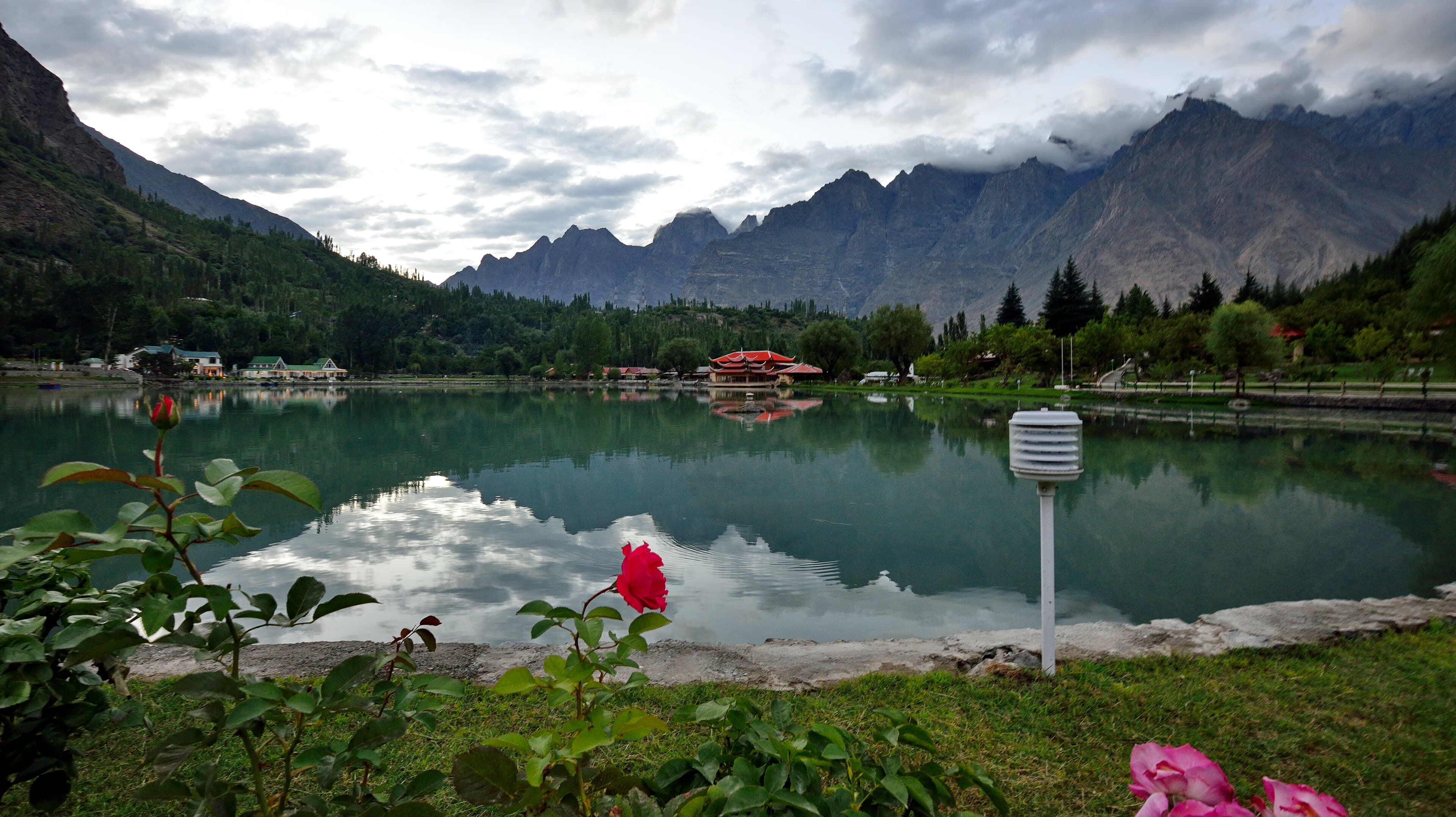
Photo: Sanaullah Khan · CC BY-SA 4.0 2,500m
Shangrila Resort (Lower Kachura Lake)
Pakistan's original 'Heaven on Earth' postcard
Shangrila Resort on Lower Kachura Lake is Skardu's most famous postcard: red-roofed cottages, a heart-shaped lake and the aircraft-fuselage café. Tickets and tips.
- Opened
- 1983
- Lake
- Lower Kachura
- Famous for
- Aircraft-fuselage café & red roofs
Best months: April–October; spring blossom and October's russet willows frame the red roofs best.
2,500m
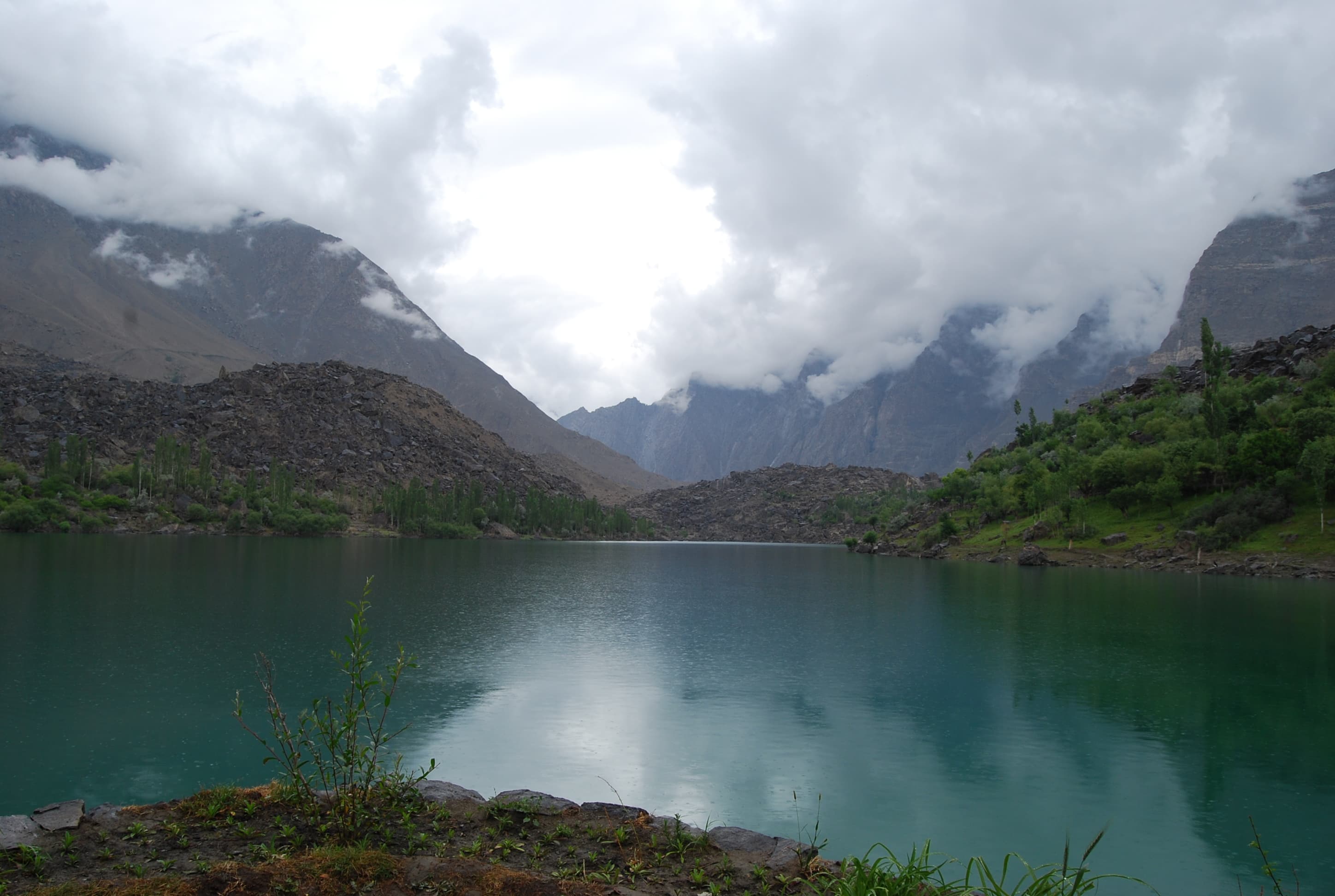
Photo: Drnajeebansari at English Wikipedia · CC BY-SA 3.0 2,500m
Upper Kachura Lake
The wilder, deeper, bluer of Skardu's twin lakes
Upper Kachura is Skardu's wild lake: deep blue water below orchard villages, wooden boats, cliffside cafés and trout. How to visit and how it differs from Shangrila.
- Depth
- ≈ 70 m
- From Skardu
- ≈ 30 min drive
- Activities
- Boating, trout fishing, lakeside cafés
Best months: May–October for boating and lakeside cafés; June–August for the deepest colour and warmest air.
2,600m
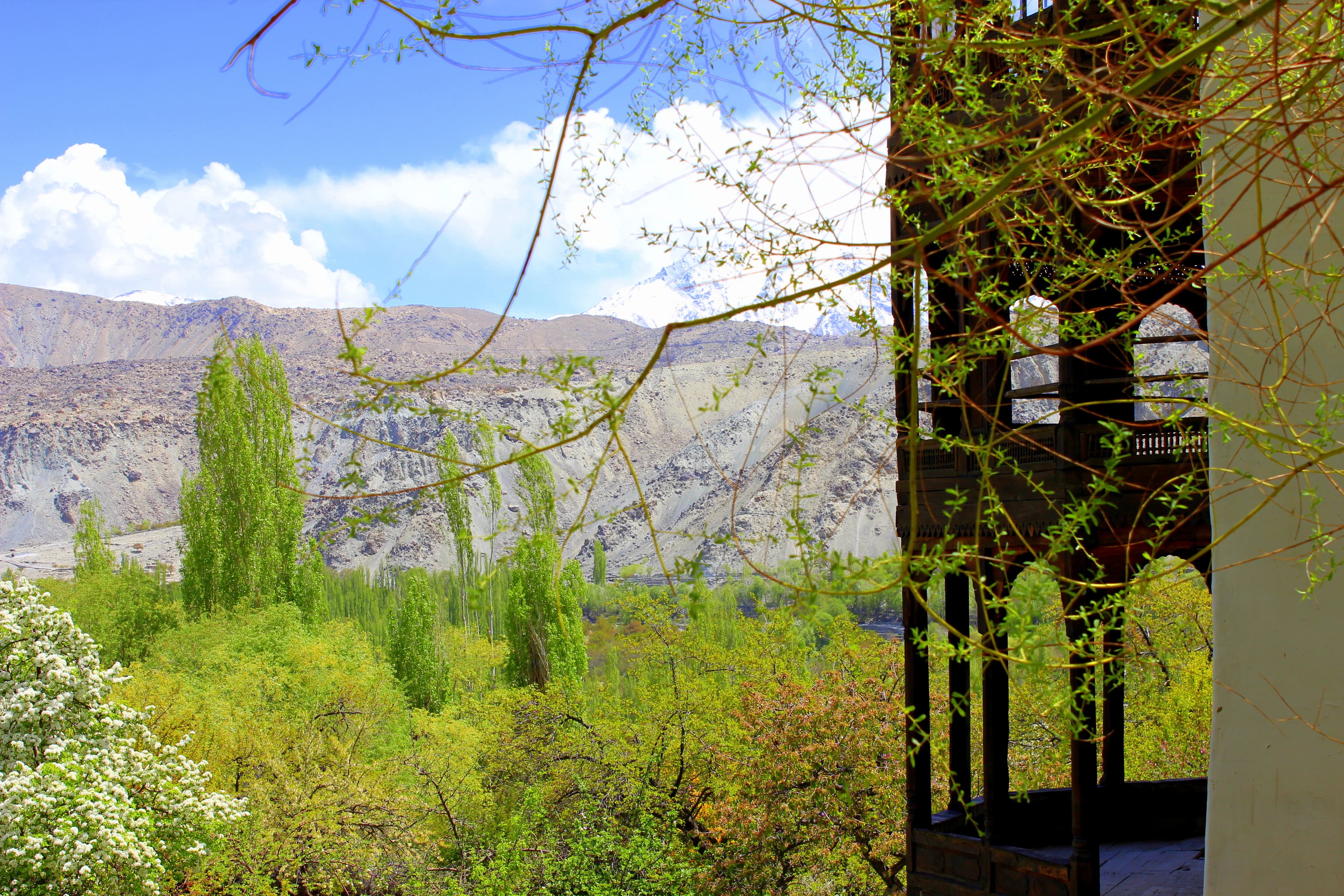
Photo: Sana Nemat · CC BY-SA 3.0 2,600m
Khaplu Valley
A royal palace and a 700-year-old mosque at the end of the road east
Khaplu Valley shelters the 1840 Khaplu Palace, now a Serena hotel, and the 700-year-old Chaqchan Mosque on the Shyok River. How to visit from Skardu.
- Khaplu Palace built
- 1840
- Chaqchan Mosque
- ≈ 700 years old
- From Skardu
- ≈ 103 km, 2.5–3 hrs
Best months: April–October.
2,600m
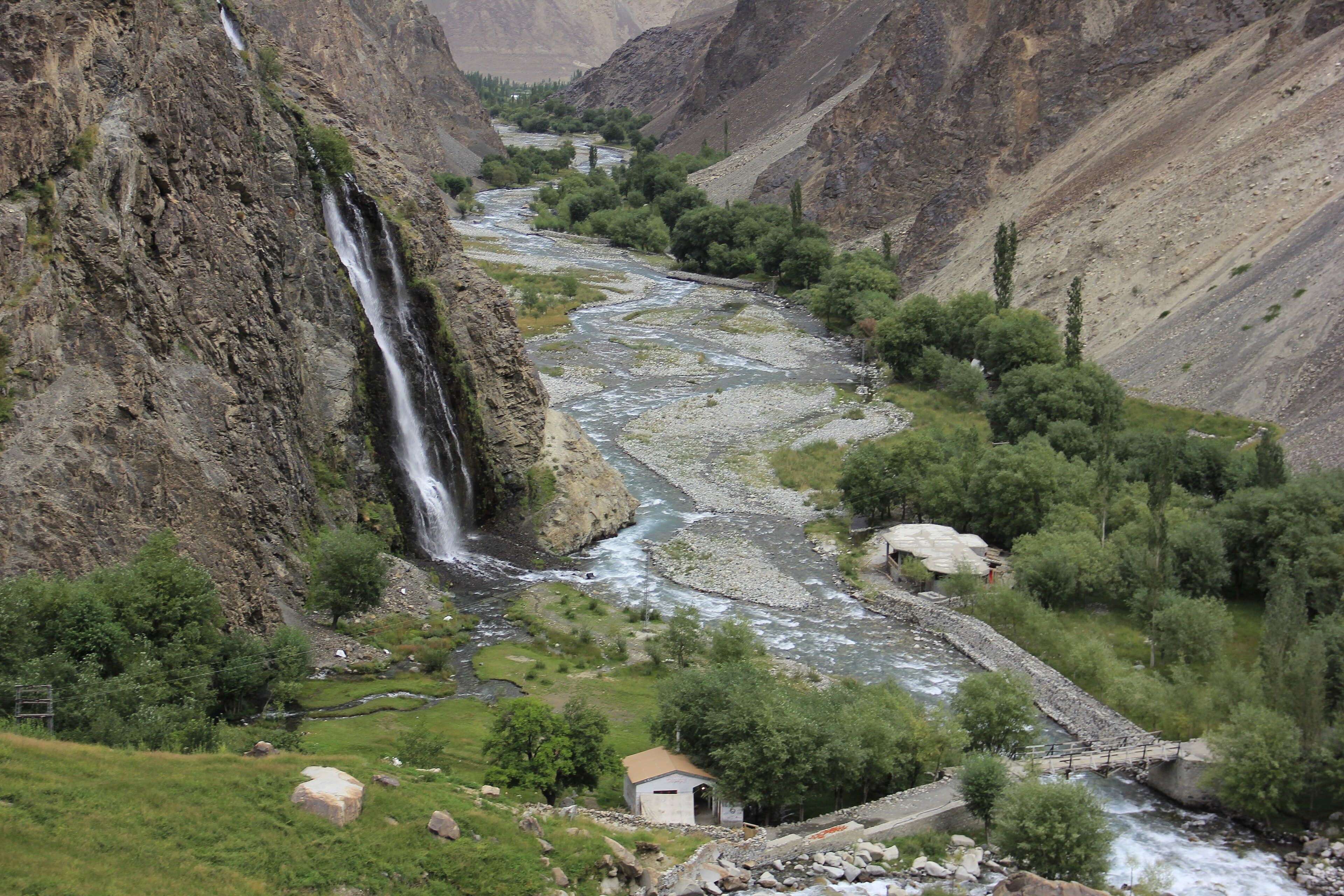
Photo: Rajab Saha · CC BY-SA 3.0 2,600m
Manthokha Waterfall
A 45-metre curtain of glacier water in green Kharmang
Manthokha Waterfall plunges about 45 metres in the green Kharmang valley south of Skardu — trout lunches, riverside huts and an easy scenic day trip. How to visit.
- Valley
- Kharmang
- From Skardu
- ≈ 80 km, about 2 hrs
- Known for
- Trout lunches & riverside huts
Best months: May–September.
2,650m
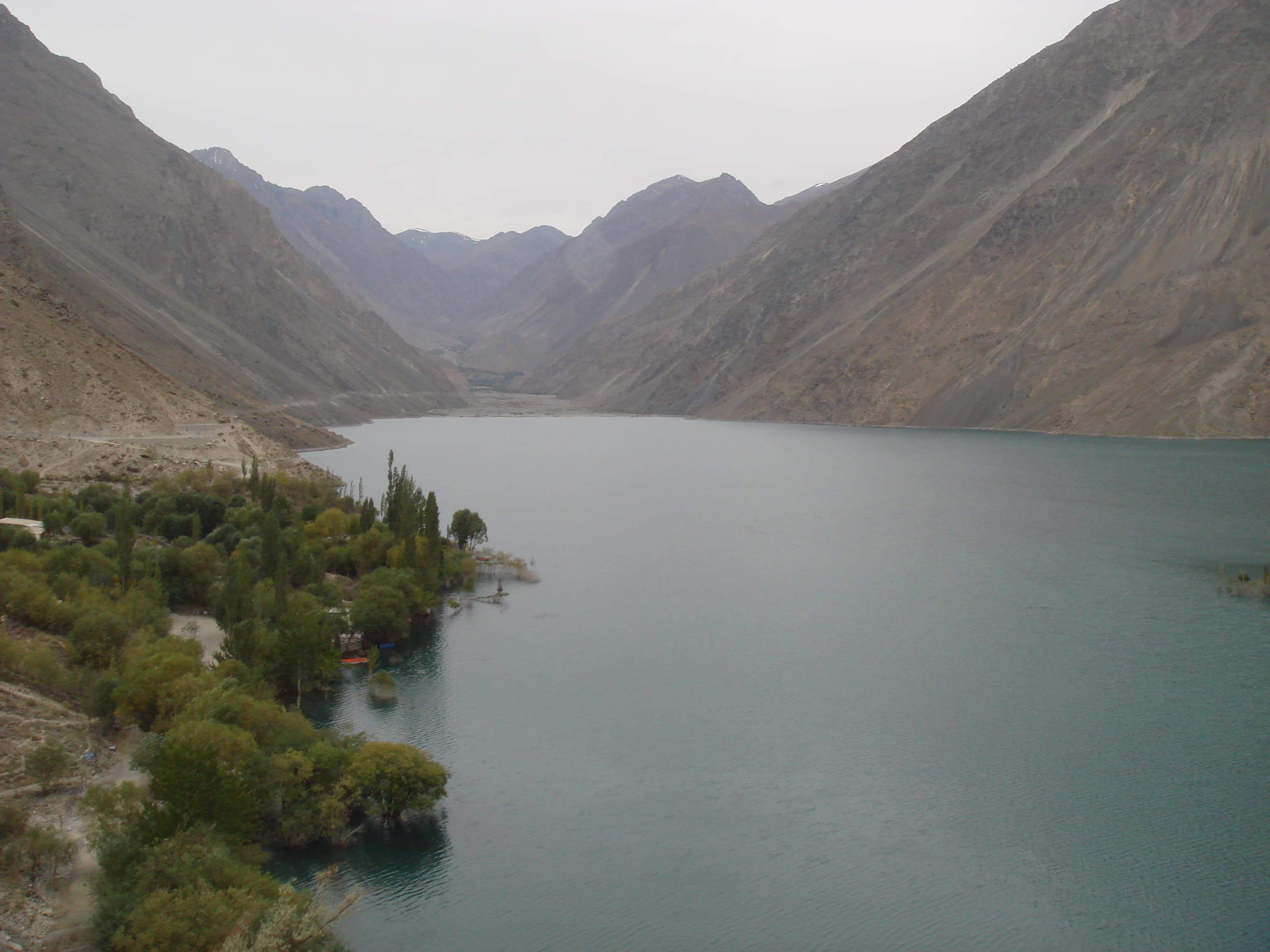
Photo: navard e shoq · CC BY 2.0 2,650m
Satpara Lake
Skardu's deep-blue lake on the road to Deosai
Satpara Lake is a deep-blue mountain lake 20 minutes above Skardu, enlarged by the Satpara Dam. Boating, the Manthal Buddha Rock and the road to Deosai.
- From Skardu
- ≈ 20 min drive
- Enlarged by
- Satpara Dam
- Nearby heritage
- 8th-century Manthal Buddha Rock
Best months: May–October, when the road is clear and boats operate; the blue is most intense under summer sun.
3,000m
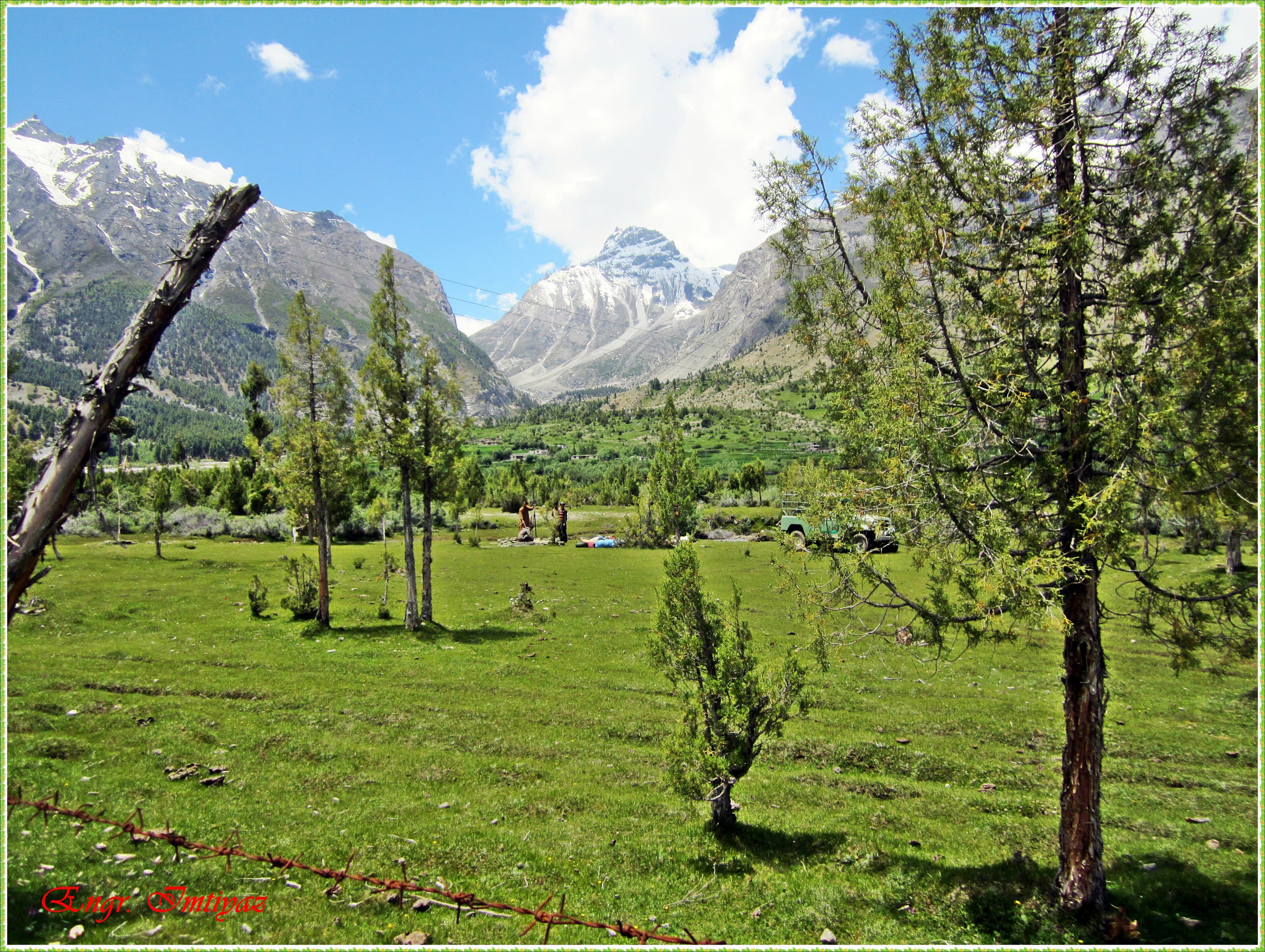
Photo: Imtiyaz Ali · CC BY-SA 3.0 3,000m
Basho Valley
Pine meadows and an ice-cold river at the end of a jeep track
Basho Valley hides pine forests, wildflower meadows and an icy trout stream a jeep ride from Skardu. Camping, day trips and how to reach Basho's meadows.
- From Skardu
- ≈ 1.5–2 hrs by jeep
- Landscape
- Pine forest, meadows, trout stream
- Access
- 4x4 jeep track
Best months: June–September, when the meadows are green and the jeep track is open and dry.
3,050m
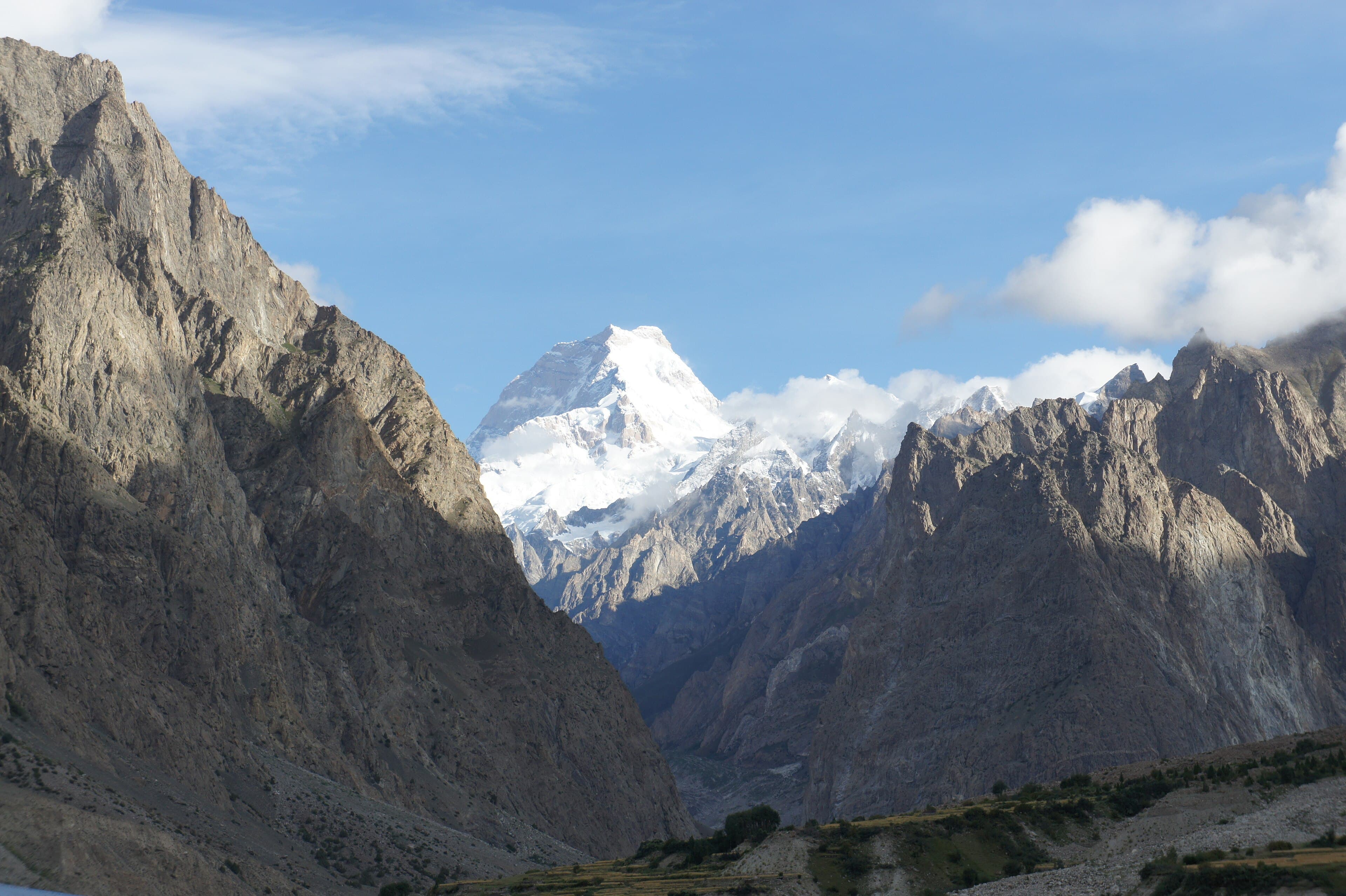
Photo: Cooolvirus · CC BY-SA 3.0 3,050m
Hushe Valley
The last village before the great walls of the Karakoram
Hushe is the last village before the big walls: Masherbrum fills the skyline, K6 and K7 rise next door, and famous porters call it home. How to visit.
- Valley head
- Masherbrum (K1), 7,821 m
- From Khaplu
- ≈ 2 hrs by jeep
- Famous for
- High-altitude porters & climbers
Best months: June–September for trekking and the fullest village life; July–August is peak season for expeditions heading into the Charakusa and Gondogoro valleys.
4,000m
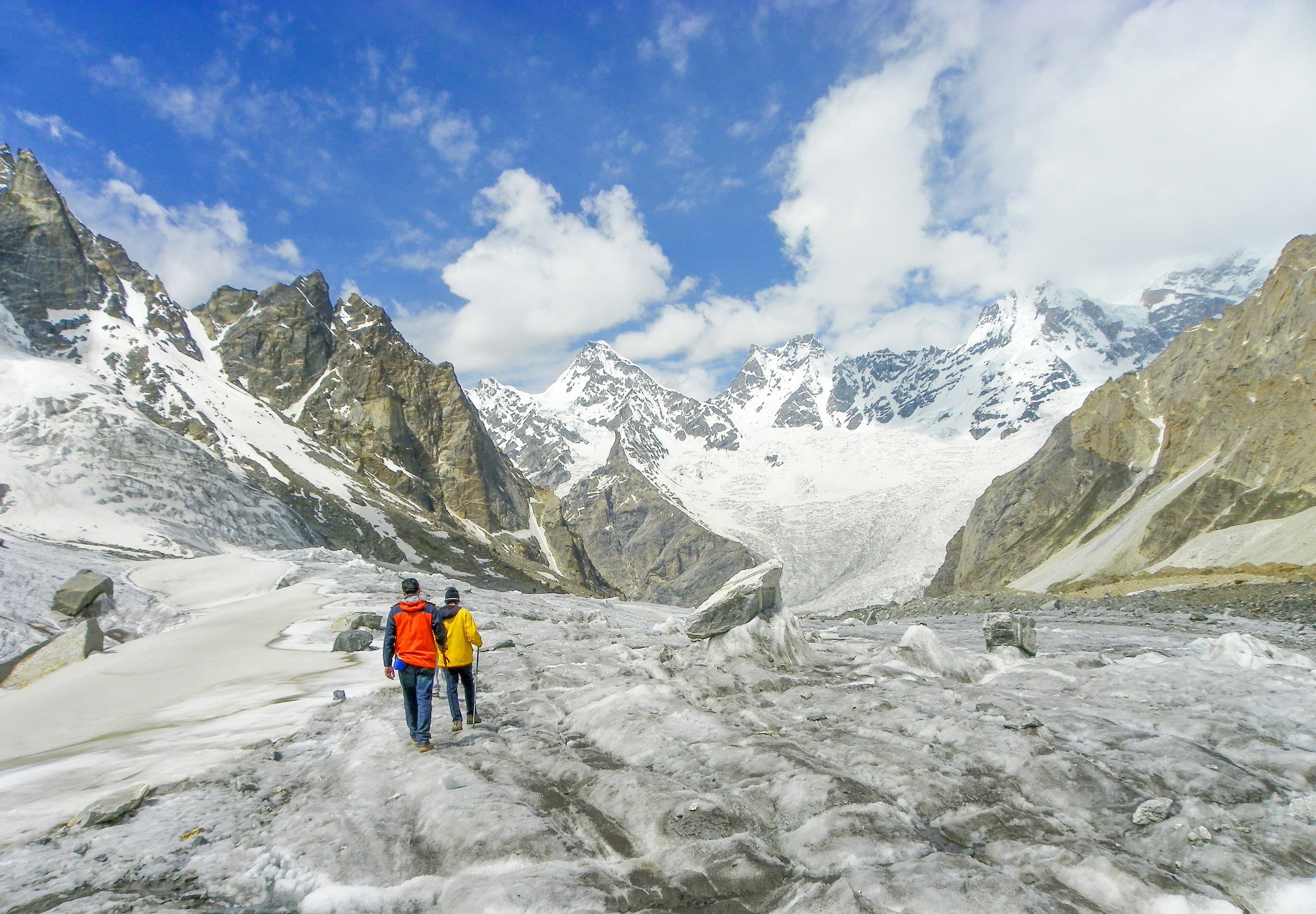
Photo: Tariqsulemani · CC BY-SA 4.0 4,000m
Masherbrum Base Camp
A short, uncrowded trek to the foot of the first Karakoram giant
Masherbrum was the first Karakoram peak surveyed — K1, 7,821 m. The short, uncrowded base camp trek from Hushe delivers giant views in a few easy days.
- Peak
- Masherbrum (K1), 7,821 m
- First surveyed
- 1856 — first Karakoram peak measured
- Trek duration
- 3–4 days round trip from Hushe
Best months: Mid-June to mid-September, when the pastures are green, shepherds are in the high huts and the trail is snow-free.
4,114m
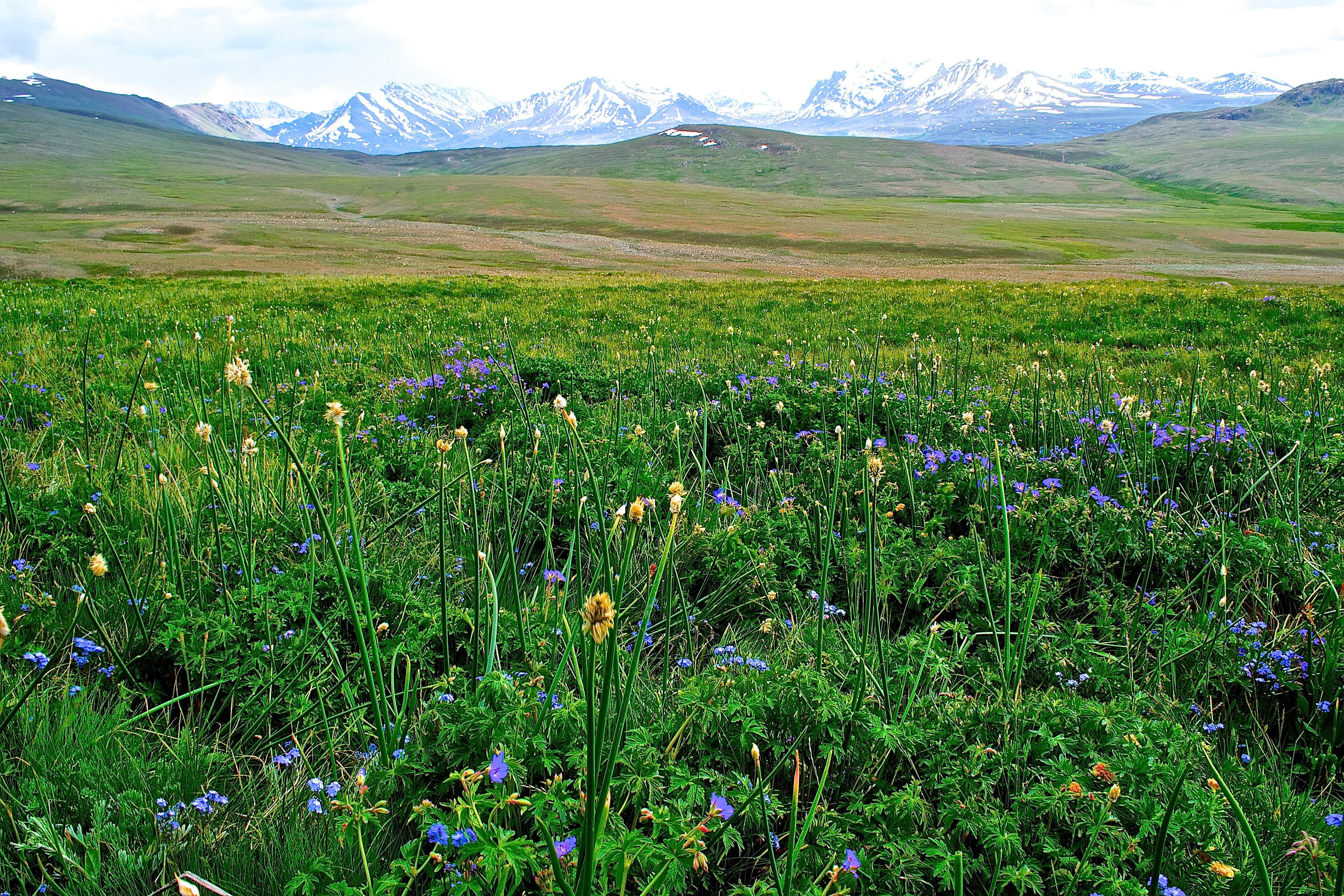
Photo: Akhtar Hussain Samoo · CC BY-SA 3.0 4,114m
Deosai National Park
The Land of Giants: a rolling world above 4,000 metres
Deosai National Park is the world's second-highest plateau at 4,114 m average — wildflower plains, Himalayan brown bears and Sheosar Lake. Season, access and tips.
- Area
- ≈ 3,000 km²
- Flagship species
- Himalayan brown bear
- National park since
- 1993
Best months: July–August for wildflowers, open tracks and the best wildlife activity; September brings golden grass and empty camps.
4,600m
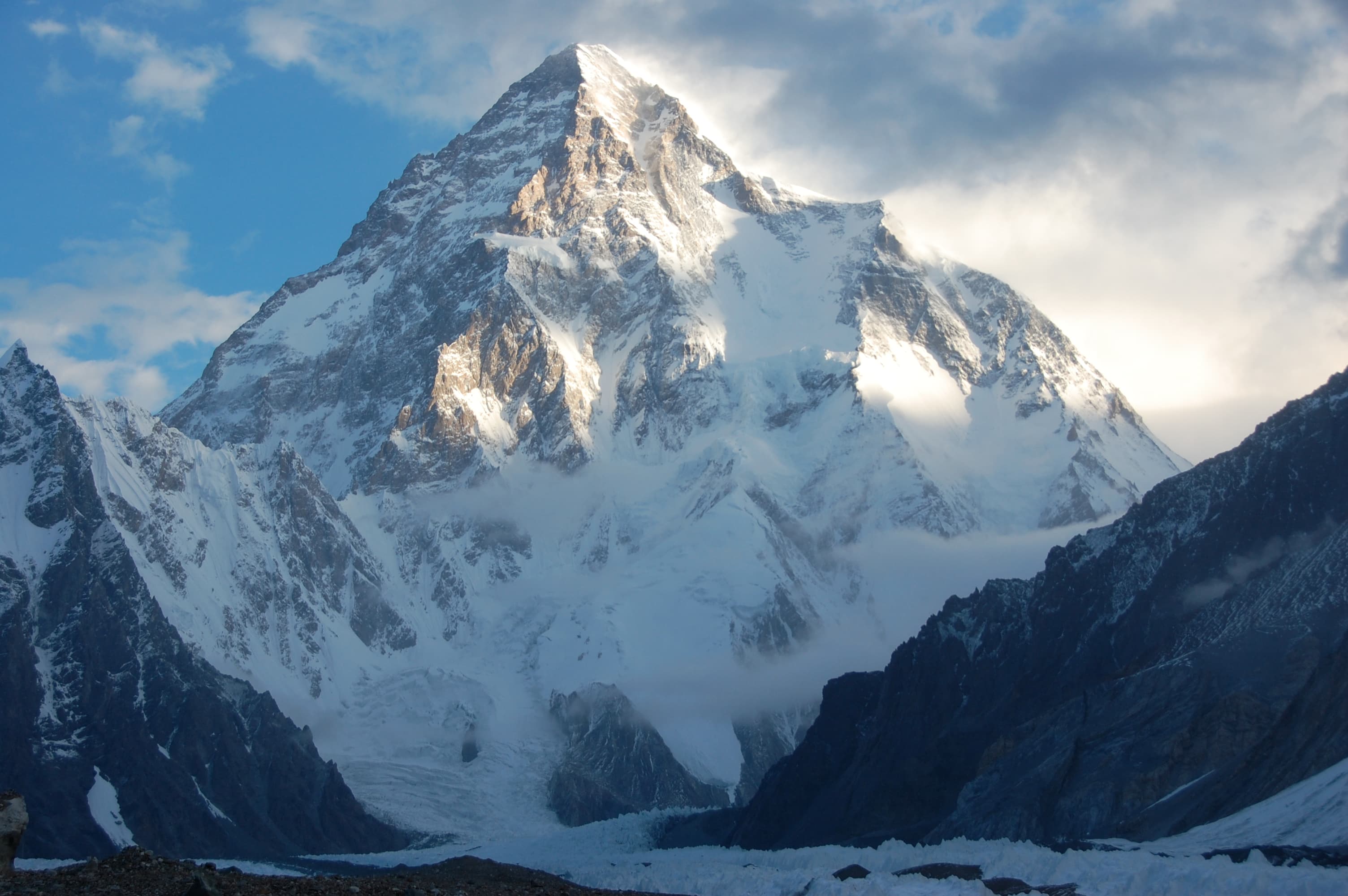
Photo: Unknown · CC BY 2.0 4,600m
K2 Base Camp & Concordia Trek
Walking into the throne room of the mountain gods
Trek the Baltoro Glacier from Askole to Concordia and K2 Base Camp — 12–14 days into the throne room of the mountain gods. Route, difficulty, permits and season.
- Duration
- ≈ 12–14 days from Skardu
- Concordia
- Baltoro meets Godwin-Austen Glacier, ≈ 4,600 m
- Trailhead
- Askole village
Best months: Mid-June to early September.
5,151m
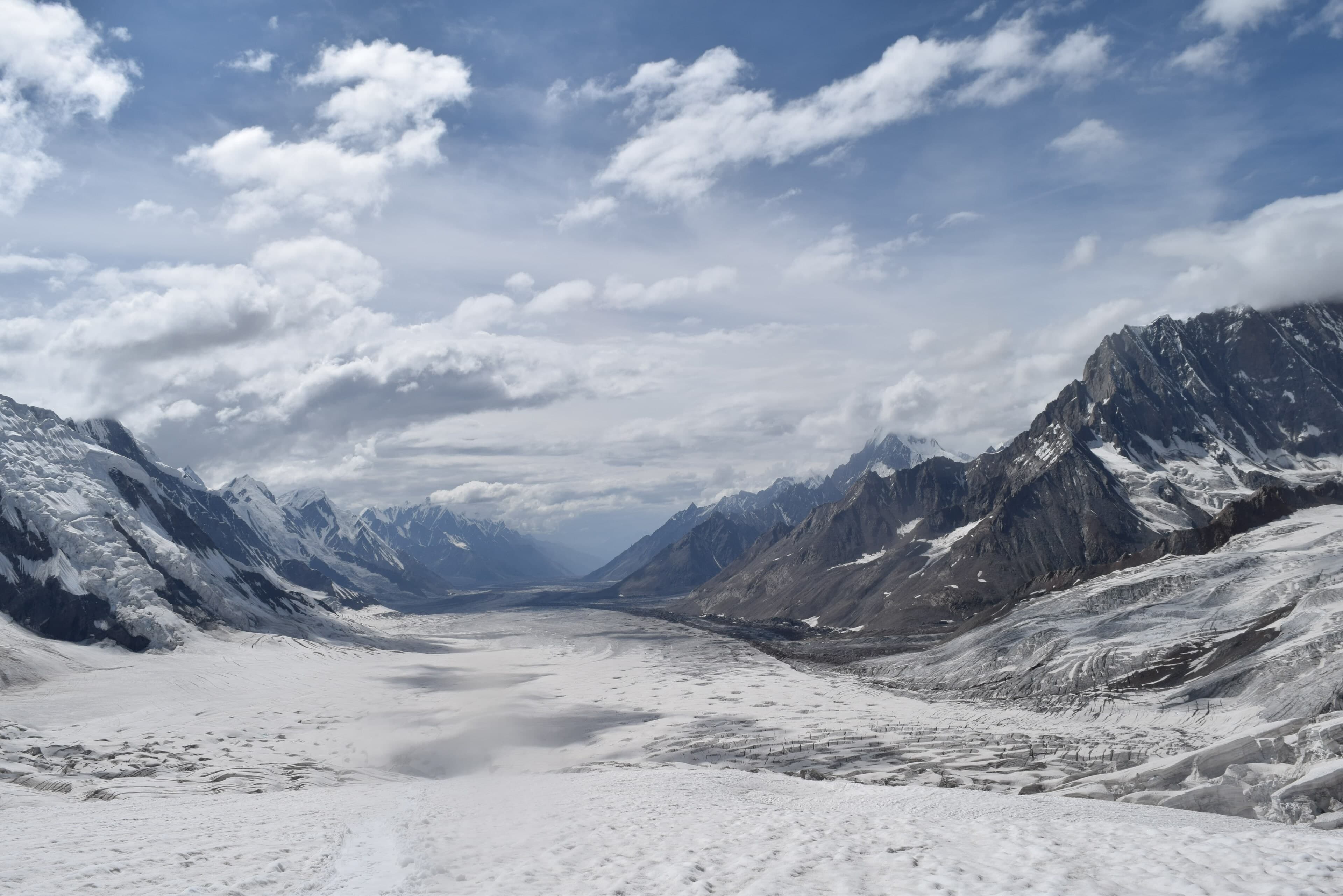
Photo: Yousaf Feroz Gill · CC BY-SA 4.0 5,151m
Snow Lake Trek (Biafo and Hispar Glaciers)
Across the Karakoram on more than 100 kilometres of ice
The Snow Lake trek crosses the Hispar La (5,151 m) between Askole and Hispar on more than 100 km of ice. Stages, days, difficulty, fees and the season.
- Route
- Askole in Shigar to Hispar village in Nagar
- Pass
- Hispar La, 5,151 m
- Duration
- 9 to 12 days on foot, about 125 km
Best months: Mid June to early September, by the park guidebook.
5,585m
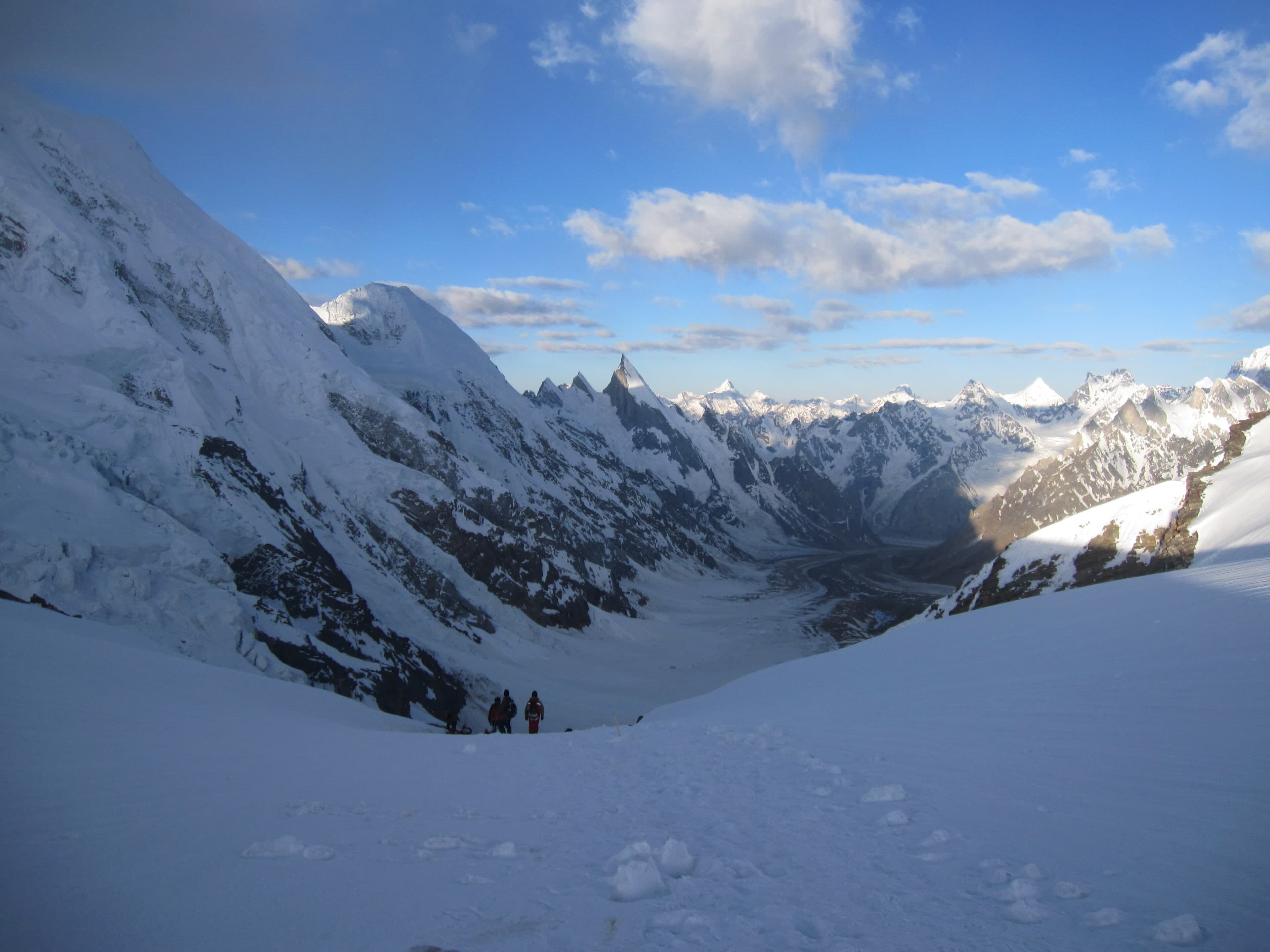
Photo: Shikari7 · CC BY-SA 3.0 5,585m
Gondogoro La Trek
The 5,585-metre way out from Concordia to the Hushe valley
The Gondogoro La (5,585 m) links Concordia and K2 Base Camp with the Hushe valley. The pass day, fixed ropes, permits and fees, the risks and the season.
- Pass
- 5,585 m; the park guidebook gives 5,625 m
- Links
- Concordia, 4,575 m, and Hushe, about 3,050 m
- Pass day
- 7 to 10 hours, Ali Camp to Khuispang
Best months: Late June to August is when most crossings are made.
6,286m
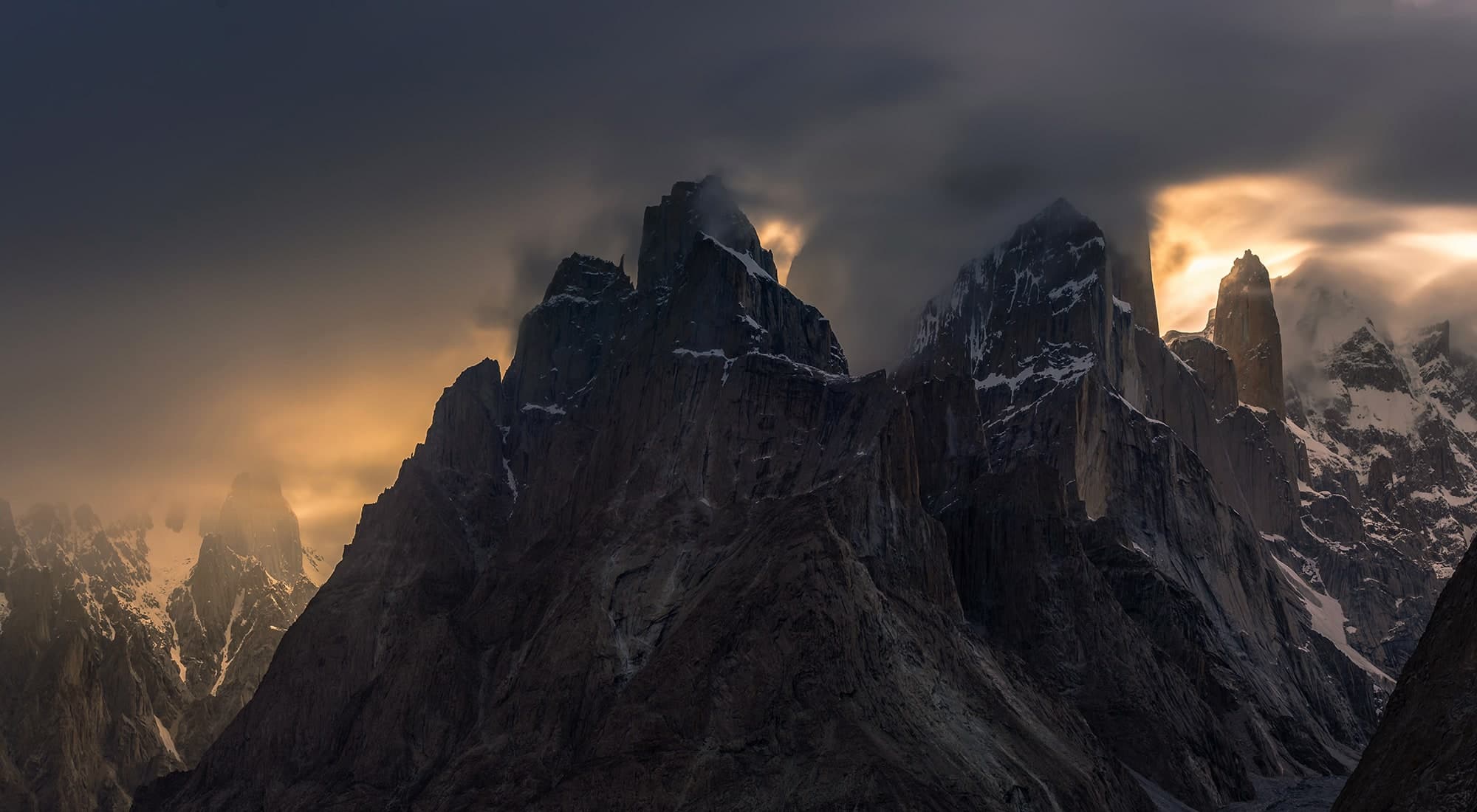
Photo: Maqsood aktar · CC BY-SA 4.0 6,286m
Trango Towers
A skyline of granite beside the trail to K2
The Trango Towers are granite spires up to 6,286 m high beside the Baltoro Glacier in Baltistan, with some of the largest cliffs on Earth. Where and how to see them.
- Highest point
- Great Trango Tower, 6,286 m
- Nameless Tower
- 6,239 m, first climbed in 1976
- Where
- North side of the Baltoro Glacier
Best months: Mid-June to early September, the trekking season on the Baltoro Glacier.
7,821m
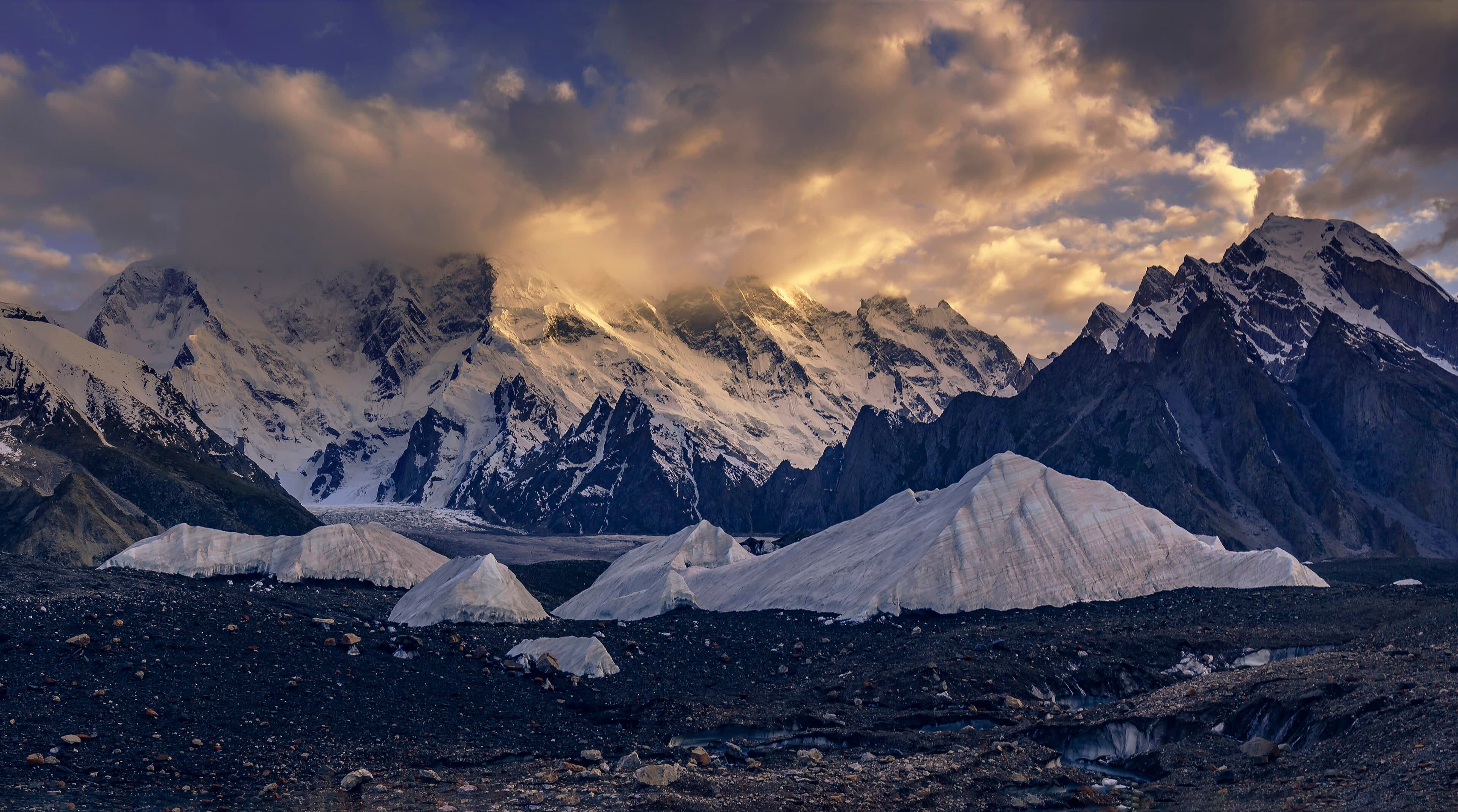
Photo: Maqsood aktar · CC BY-SA 4.0 7,821m
Masherbrum (K1)
K1, the first mountain the Karakoram surveyors wrote down
Masherbrum, or K1, is a 7,821 m peak in Ghanche, Baltistan, and the first Karakoram mountain ever surveyed. Its story and how to see it from Hushe or the Baltoro.
- Rank
- 22nd-highest mountain on Earth
- Survey name
- K1, noted in 1856
- First ascent
- 1960, Bell and Unsoeld
Best months: Mid-June to mid-September for the Hushe side, when the pastures are green and the trail is free of snow.
8,035m
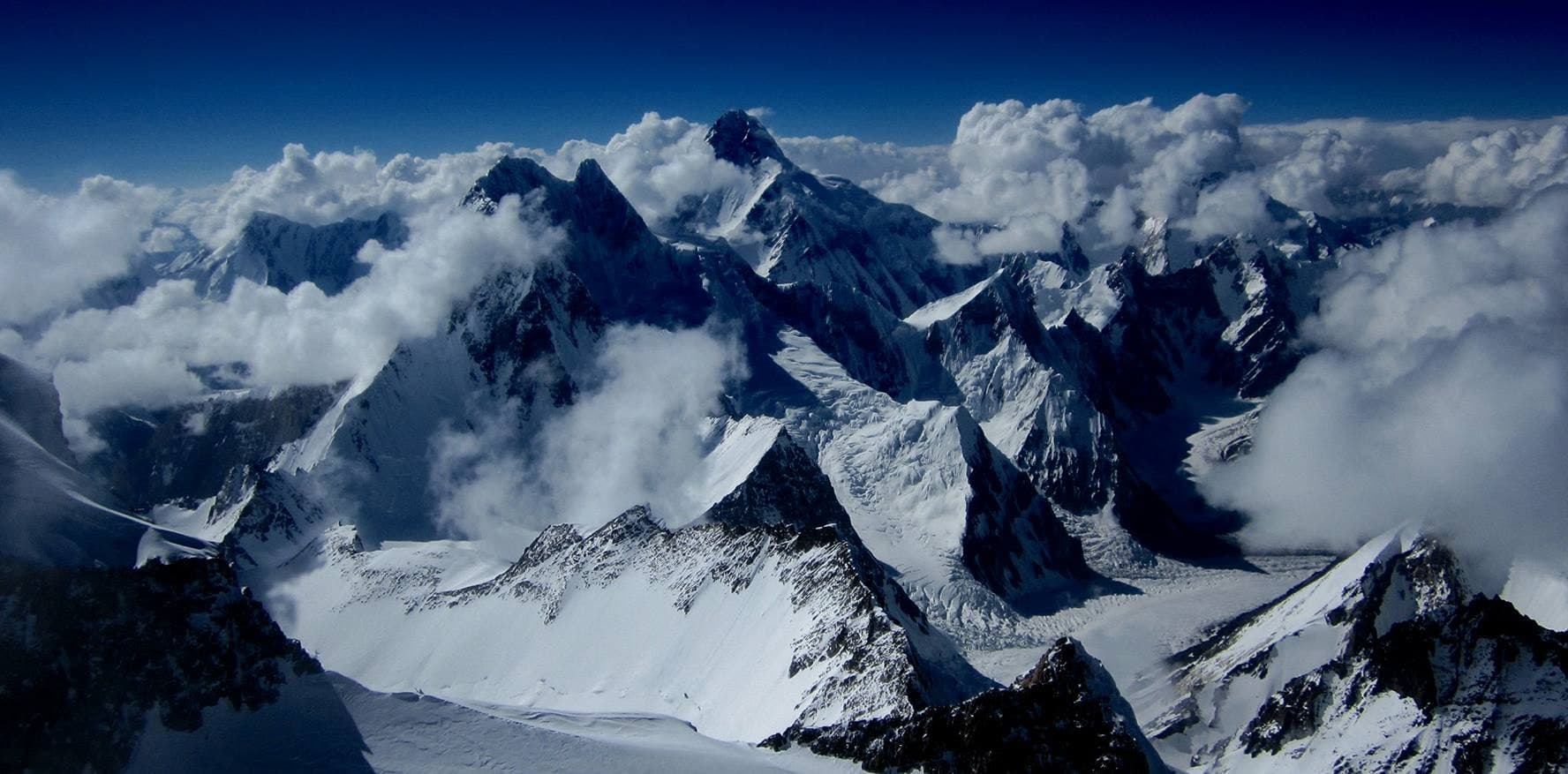
Photo: Syed Hasan Shabbar · CC BY-SA 4.0 8,035m
Gasherbrum II
The last of Pakistan's five 8,000-metre peaks, at the top of the Baltoro
Gasherbrum II is the 13th-highest mountain on Earth at 8,035 m, at the top of the Baltoro Glacier in Pakistan. Its history and how trekkers reach its base camp.
- Rank
- 13th-highest mountain on Earth
- Survey name
- K4
- First ascent
- 7 July 1956, Moravec, Larch and Willenpart
Best months: Mid-June to early September, the same season as the other Baltoro treks.
8,051m
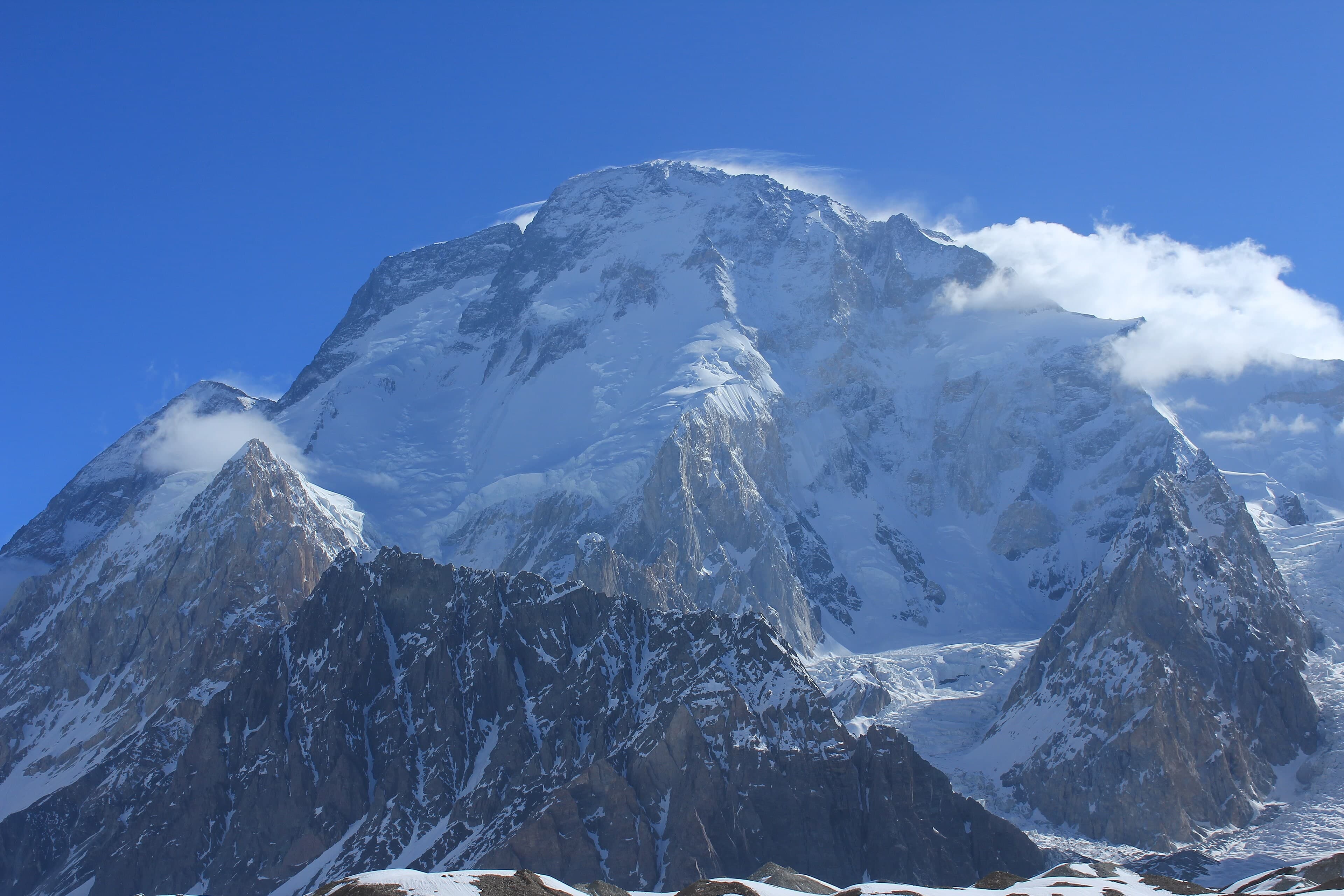
Photo: Sallahuddin shah · CC BY-SA 4.0 8,051m
Broad Peak
The mile-long summit ridge that faces K2 across the glacier
Broad Peak is the 12th-highest mountain on Earth at 8,051 m, about 8 km from K2 in the Karakoram. Its name, its first ascent and how trekkers see it at Concordia.
- Rank
- 12th-highest mountain on Earth
- Distance from K2
- About 8 km
- First ascent
- 9 June 1957, four Austrian climbers
Best months: Mid-June to early September, when trekking groups and expeditions use the Baltoro Glacier.
8,080m
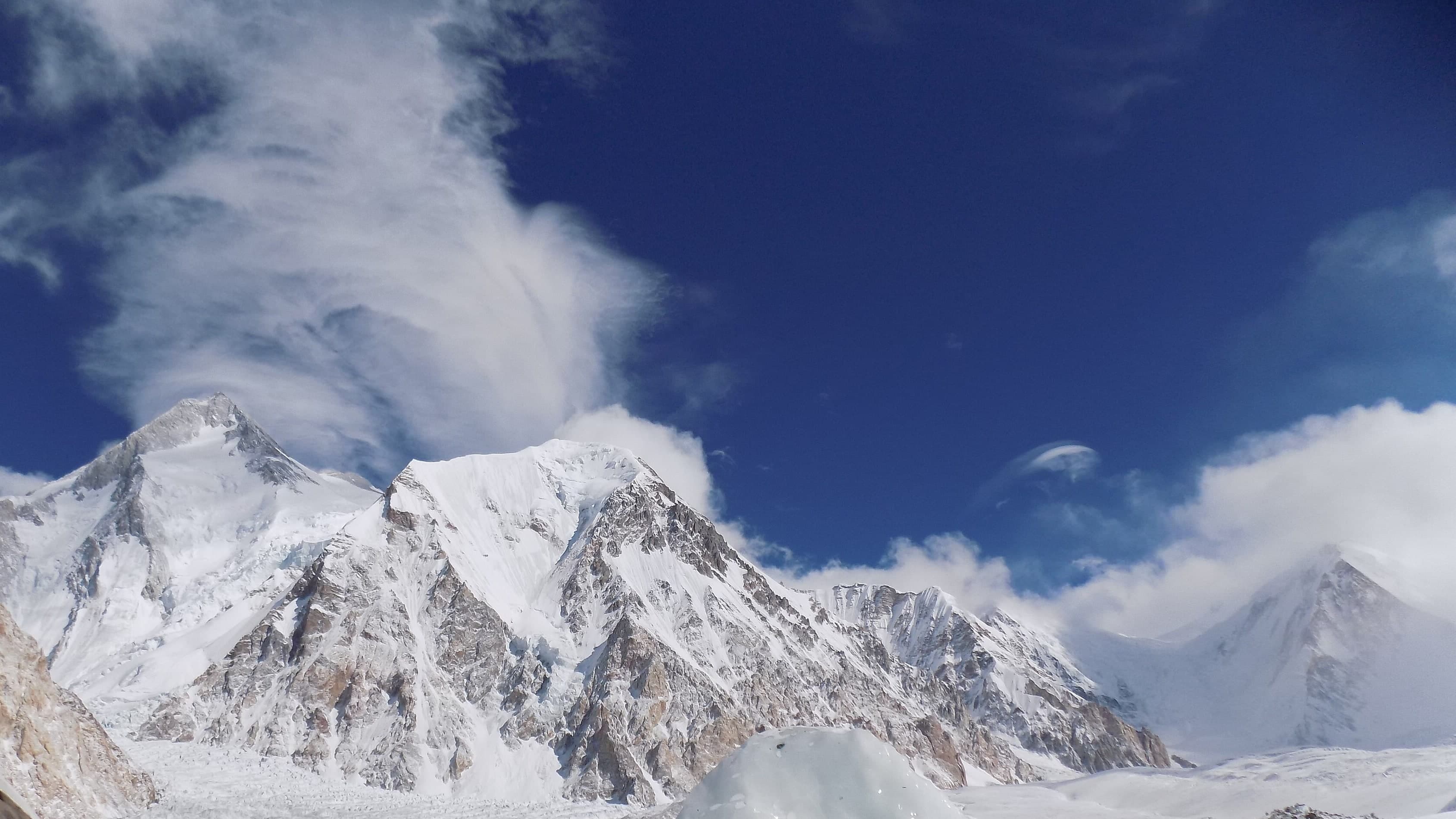
Photo: Ammar Hassan · CC BY-SA 4.0 (cropped) 8,080m
Gasherbrum I (Hidden Peak)
The 8,000-metre peak you cannot see until you are almost under it
Gasherbrum I, or Hidden Peak, is the 11th-highest mountain on Earth at 8,080 m, at the head of the Baltoro Glacier. Why it is hidden and the trek that reaches it.
- Rank
- 11th-highest mountain on Earth
- Other names
- Hidden Peak, K5
- First ascent
- 5 July 1958, Schoening and Kauffman
Best months: Mid-June to early September, the same season as the K2 Base Camp trek.
8,611m
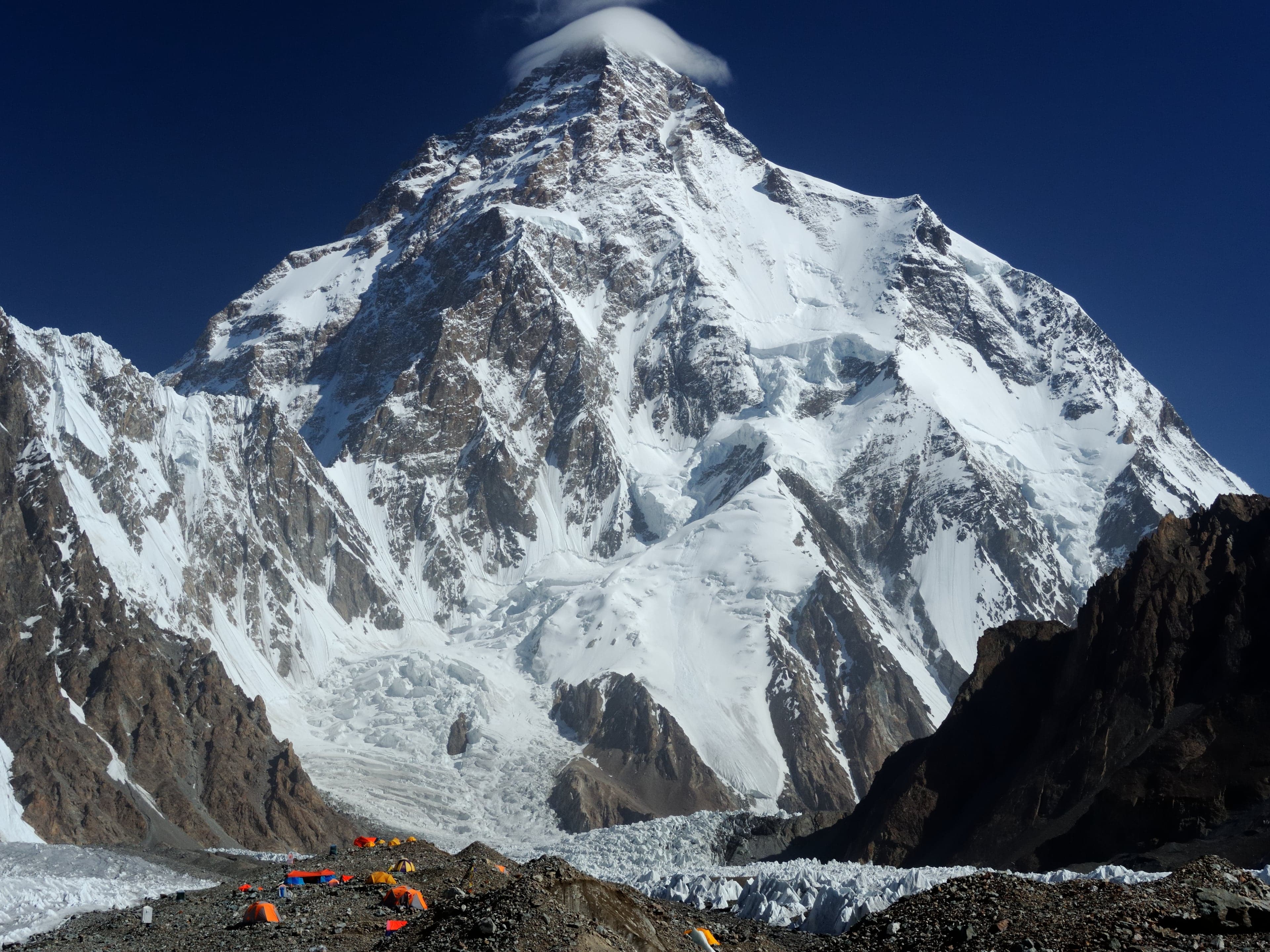
Photo: Zacharie Grossen · CC BY-SA 4.0 8,611m
K2
The second-highest mountain on Earth, and one you have to walk to
K2 is the world's second-highest mountain at 8,611 m, on the Pakistan-China border in Baltistan. Where it is, who climbed it first and how to see it from Concordia.
- Rank
- Second-highest mountain on Earth
- First ascent
- 31 July 1954, Lacedelli and Compagnoni
- Where to see it
- Concordia, 12 to 14 days round trip from Skardu
Best months: Mid-June to early September, the trekking season on the Baltoro Glacier.
Tours that visit these places
Each one can run privately on your own dates. See Skardu tours for the full list.
Skardu & Baltistan Discovery
8-day Skardu Tour
from, per person$1,150
An 8-day Skardu and Baltistan tour: Shigar Fort, Khaplu Palace, the Kachura lakes, Sarfaranga cold desert, Deosai National Park and Basho Valley with Balti guides.
- Season
- May – September
- Grade
- Moderate
- Group
- Private, or 2-12 guests
On the route: Skardu, Katpana Desert, Shigar Valley, Sarfaranga Cold Desert, Khaplu Valley, Upper Kachura Lake and 3 more.
K2 Base Camp & Concordia Trek
20 days from Islamabad
from, per person$3,800
A fully supported 20-day K2 Base Camp trek: Askole, the Baltoro Glacier, Concordia's ring of 8,000ers and K2 itself, with licensed guides, porters and permits.
- Season
- June – August
- Grade
- Strenuous
- Group
- Private, or 4-10 trekkers
On the route: Skardu, Shigar Valley, K2 Base Camp & Concordia Trek, K2, Broad Peak, Trango Towers and 1 more.
Read next
- How to See K2 Without Climbing It
You don't need to climb to see K2. The Concordia trek, easier viewpoints near Skardu and scenic flights: every realistic way to see the world's second-highest peak.
- Can you visit Skardu in winter?
Yes, with flexible dates. Skardu's flights cancel often in winter and the gorge road closes after snow. What is open, what is shut and how cold it really gets.
- Who Was Ali Sadpara?
Muhammad Ali Sadpara, from Sadpara village near Skardu, made the first winter ascent of Nanga Parbat in 2016 and died on winter K2 in 2021. His story and legacy.
- Hunza or Skardu in autumn: which is better?
Hunza or Skardu in autumn? Hunza has denser colour and easier access; Skardu has space, quiet, Shigar and Khaplu. Peak dates, weather and how to do both.
- Skardu Trekking Guide: Every Major Trek from Baltistan's Hub
Every great Karakoram trek begins in Skardu. This is the full map of what's possible from Baltistan's hub — from the Baltoro march to K2 to grassy passes and easy day hikes — with the permits, porters and practicalities explained.
- Skardu in Autumn: Shigar, Khaplu, Cold Deserts and Deosai's Last Days
Baltistan's autumn is wider, quieter and a few days later than Hunza's. Here is when Shigar, Khaplu and the Skardu basin peak, what October weather is really like, when Deosai shuts and how far to trust the flights.
- Summer in Gilgit-Baltistan: Treks, Lakes, Polo & High Passes
From June to August, every pass, plateau and trailhead in Gilgit-Baltistan is open at once — Baltoro expeditions, Deosai's flower-carpeted plains, lake days at Attabad, and polo at 3,700 metres on the Shandur Pass.
- Skardu in Winter: Flights, Roads, Cold and What You Can Still See
Skardu can be visited from December to February, but it asks more of you than Hunza does: more snow, a flight that cancels for days and one gorge road in. Here is what stays open in Baltistan, what shuts, and who should wait for another season.
Keep exploring
Places to visit elsewhere: Best places to visit in Gilgit-Baltistan, Best places to visit in Hunza, Best places to visit in Astore, Best places to visit in Ghizer.
More in Skardu: Lakes in Skardu, Valleys in Skardu, Mountains in Skardu, Skardu trekking guide.
Planning a trip? Start with the Skardu travel guide, or see Skardu tours.
Places to visit in Skardu: questions people ask
Which tours include these places?
The 8-day Skardu & Baltistan Discovery (from $1,150 per person) includes Katpana Desert, Skardu, Sarfaranga Cold Desert, Shigar Valley and 5 more. The 20-day K2 Base Camp & Concordia Trek (from $3,800 per person) includes Skardu, Shigar Valley, K2 Base Camp & Concordia Trek, Trango Towers and 3 more. The 10-day Autumn Colours Photography Tour (from $1,650 per person) includes Skardu, Sarfaranga Cold Desert, Shigar Valley, Upper Kachura Lake and 1 more. Every tour can also run privately on your own dates, and we rebuild the route around what you most want to see.
Start the conversation
Want these places on your itinerary?
Tell us your dates and what you most want to see. We reply within 24 hours with a private itinerary and an itemised price.