Skardu: Pakistan's expedition capital
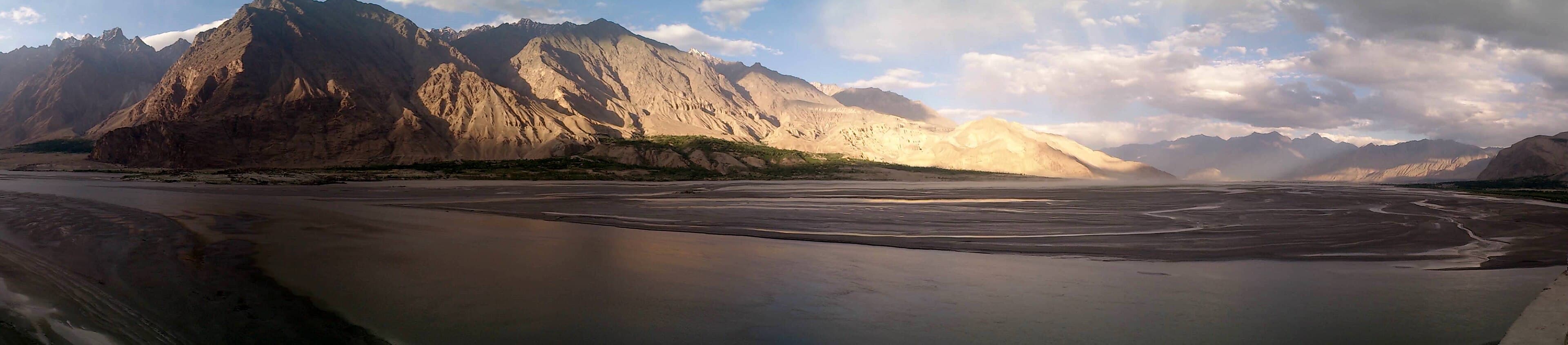
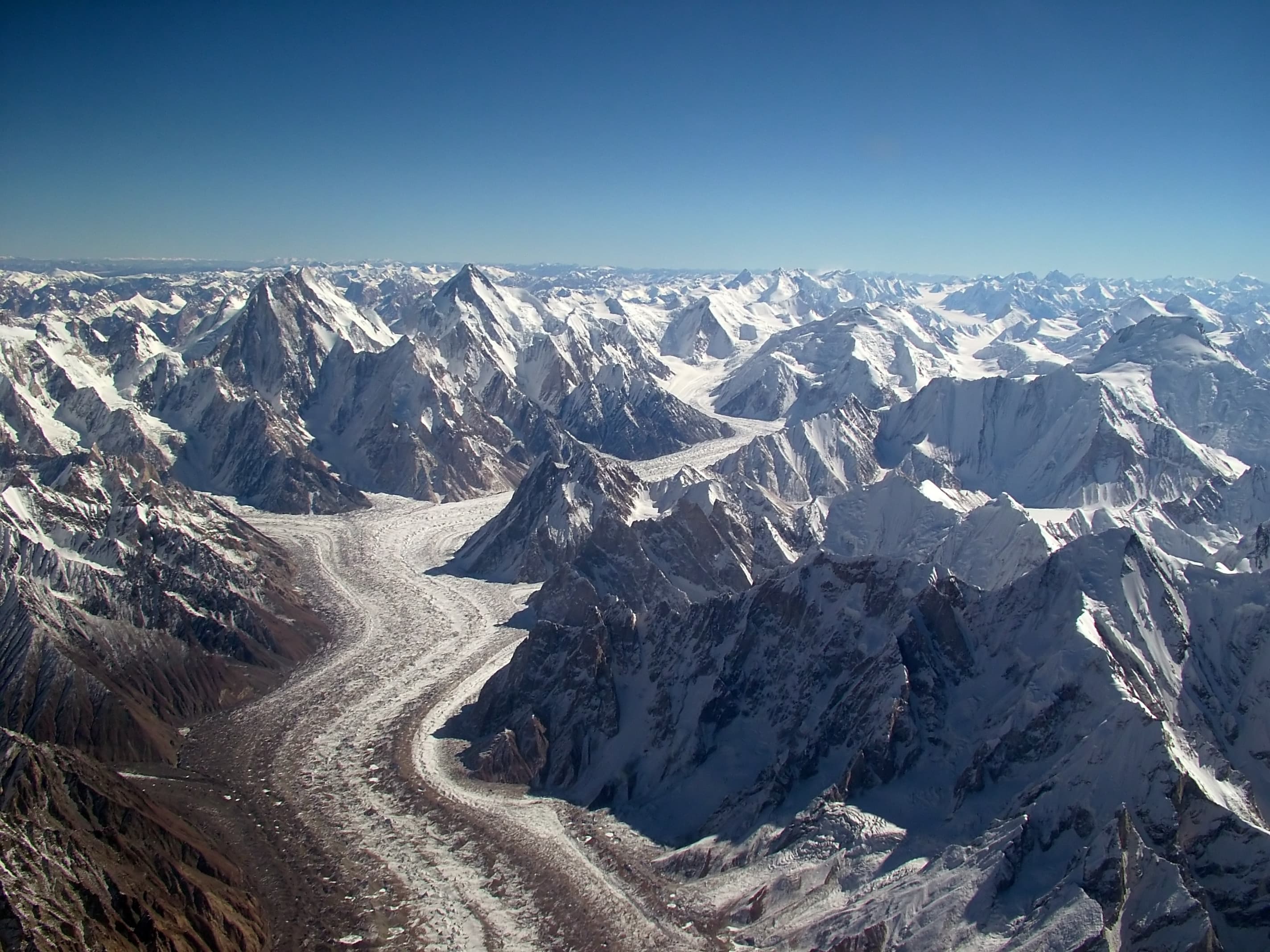
Every summer, the dusty bazaar town of Skardu becomes the staging post for the greatest concentration of high mountains on Earth. Four of the world's fourteen 8,000-metre peaks — K2, Broad Peak and the two Gasherbrums — rise within a single horizon to the northeast, and the expeditions that attempt them all pass through Skardu's hotels, outfitters and jeep yards on their way in.
For trekkers this is wonderful news, because the infrastructure built for expeditions serves you too. Skardu has experienced trekking agencies, gear shops where you can rent or buy forgotten kit, licensed guides and a deep pool of professional porters from villages such as Sadpara, Hushe and the Braldu valley.
It also means choice. From this one town you can walk to the foot of K2, cross a glaciated 5,500-metre pass, wander a grassy shepherds' route between Shigar and Khaplu, traverse the Deosai plateau, or simply day-hike to a lake and be back for dinner. This guide maps all of it.
The Baltoro: K2 Base Camp and Concordia
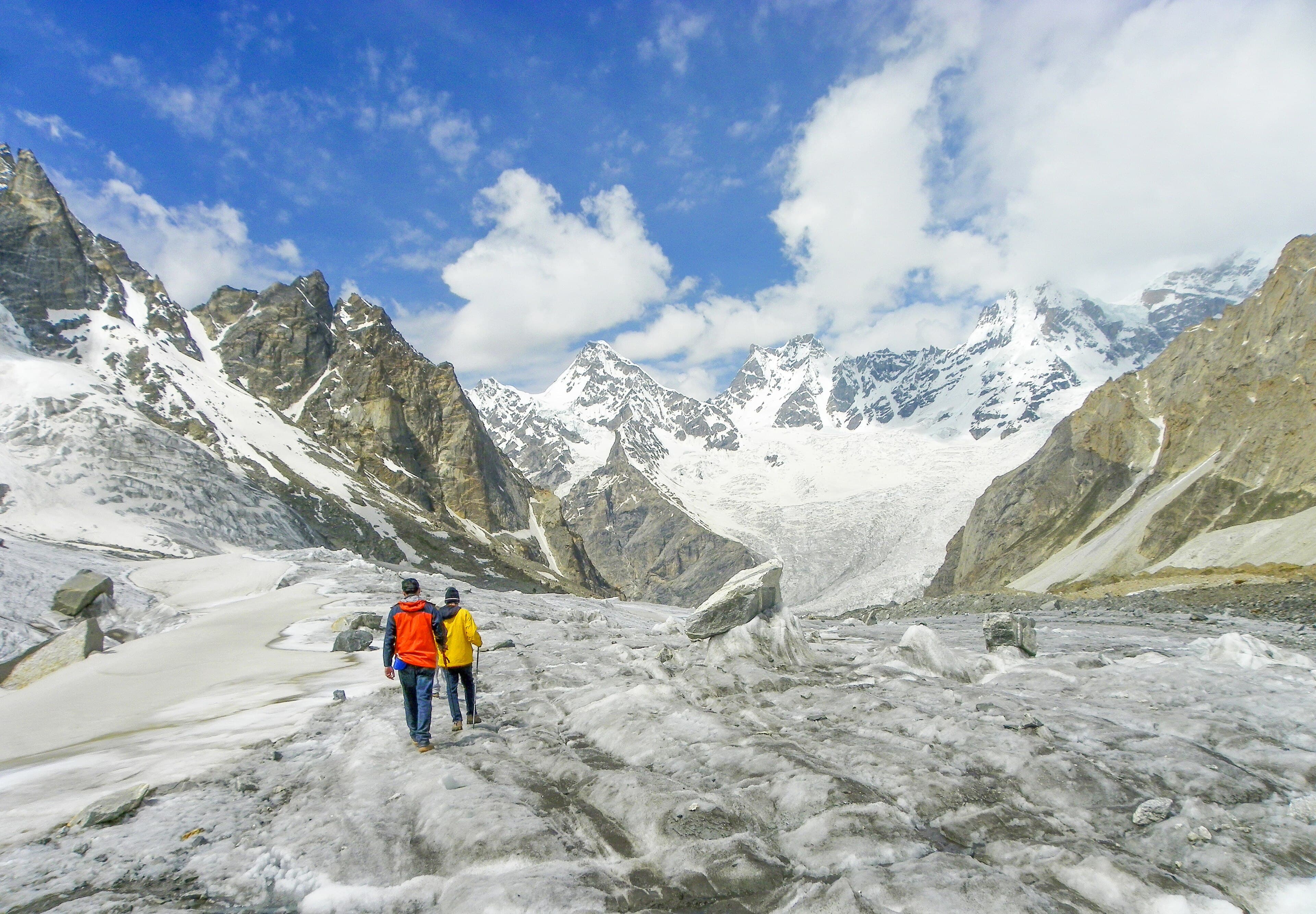
The flagship is the Baltoro Glacier trek to Concordia and K2 Base Camp — for many mountaineers and trekkers alike, the finest mountain walk in the world. From the roadhead at Askole, reached by a long jeep ride up the Braldu gorge, the trail climbs steadily past Paiju and onto the 60-odd kilometres of the Baltoro Glacier itself, beneath the granite spears of the Trango Towers and Masherbrum's icy pyramid.
The reward is Concordia, the glacial junction the early explorers called the throne room of the mountain gods, where K2's full 3,000-metre pyramid finally reveals itself. Most itineraries continue half a day further to K2 Base Camp and the Gilkey Memorial before turning around.
Expect roughly 12 to 14 trekking days for the round trip, camping throughout, with loads carried by porters. It is strenuous but technically straightforward — a walk, not a climb — and we cover it stage by stage in our dedicated K2 Base Camp trek guide.
Gondogoro La: the high crossing
Strong parties can turn the K2 Base Camp trek into a traverse by exiting over the Gondogoro La, a glaciated pass of roughly 5,600 metres that links the upper Baltoro with the Hushe Valley. The pre-dawn climb from Ali Camp is steep snow and fixed rope, and the sunrise view from the crest — K2, Broad Peak and the Gasherbrums lined up across the glacier — is among the most celebrated in all of trekking.
The pass demands more than the standard trek: crampons, an ice axe, harness work on the fixed lines, and settled weather. A local rescue and rope-fixing team operates on the pass in season, and reputable operators will only take acclimatized, properly equipped groups across.
The prize beyond the difficulty is the descent into Hushe past the spear-point of Laila Peak — and the satisfaction of finishing your trek in a village rather than retracing two weeks of glacier. When conditions close the pass, groups simply return down the Baltoro the way they came.
Hushe Valley treks: Masherbrum and the Charakusa
Southeast of Skardu, beyond Khaplu, the Hushe Valley offers the Baltoro's grandeur with a fraction of its traffic. Hushe village sits directly beneath Masherbrum — the peak the first surveyors labelled K1 — and a two-to-three-day trek leads through summer pastures to Masherbrum Base Camp at the foot of its hanging glaciers.
Branching east from Hushe, the Charakusa Valley is a sanctuary of granite towers — K7, K6 and their satellites — that draws elite alpinists from around the world, yet its valley floor is a gentle, flower-filled walk for trekkers. Other side valleys lead toward the Gondogoro and Masherbrum glaciers, with itineraries from three days to a week.
Because these treks start and end in a living village, they pair walking with culture: homestays, apricot orchards and evenings among families whose men have worked as high-altitude porters on the great peaks. Our separate Hushe and Masherbrum guide covers the valley in depth.
Thalle La: the shepherds' pass from Shigar to Khaplu
Not every Baltistan trek involves glaciers. The Thalle La is a grassy pass of roughly 4,500 metres linking the Shigar Valley with the Thalle and Khaplu side of Baltistan — an old shepherds' and traders' route walked in three to four days, village to village.
The walking is moderate: terraced barley fields and willow lanes low down, summer pastures and stone shepherd huts higher up, and a broad saddle with views across to the snows of the Karakoram and Masherbrum. It is the trek to choose if you want genuine Balti rural life rather than expedition logistics.
Because it links two of Baltistan's great cultural valleys, the Thalle La slots beautifully into a wider itinerary — Shigar's fort and orchards on one side, Khaplu's palace and Chaqchan Mosque on the other.
Deosai crossings and easy day hikes
South of Skardu, the Deosai plateau spreads over 4,100 metres of rolling grassland — the second-highest plateau of its size on Earth and a national park protecting Himalayan brown bears. Jeep tracks cross it, but walkers can traverse Deosai in two to three days between Satpara Lake on the Skardu side and the Astore Valley, camping amid wildflowers and utterly enormous skies.
Closer to town, Skardu is ringed with day hikes that need no permits and no camping. The Basho Valley's pine forests and meadows make a gentle full-day outing, while Upper Kachura Lake hides walking trails above its deep blue water, and the dunes of the Katpana and Sarfaranga cold deserts reward an hour's wander at sunset.
These short walks are not consolation prizes — they are how you acclimatize. Spending two or three nights around Skardu at 2,230 metres, walking a little higher each day, is exactly the preparation the bigger treks require.
Seasons: when to trek from Skardu
The high-route season is short and precise: mid-June to September. Before mid-June the Baltoro camps are snowbound and river crossings are dangerous; by late September the weather window narrows and nights on the glacier turn brutally cold. July and August are the classic months for K2 Base Camp and the Gondogoro La, which is also when the summit weather windows draw the expeditions. Our summer guide covers what else is open in those months, from Deosai to Shandur.
Lower treks stretch the calendar. The Thalle La and Hushe Valley walks are generally good from June into early October, Deosai is open from roughly late June to September between snows, and the day hikes around Skardu work from April to November.
Whatever the month, build slack into your plan. Flights to Skardu cancel in cloud, jeep roads close after rain, and glacier weather does what it likes — the trekkers who suffer are the ones with rigid schedules.
Permits, guides and the porter system
Treks toward the high Karakoram — the Baltoro corridor above Askole and the Gondogoro La among them — fall in regulated zones where foreign trekkers need a trekking permit and a licensed guide, arranged through a registered Pakistani operator. The Baltoro also lies within the Central Karakoram National Park, which levies its own entry fee, and restricted-zone treks involve a briefing process and paperwork your operator handles. Open-zone walks like the Thalle La, Deosai and the day hikes need no special permission beyond the routine checkpoints.
Porters are the heart of the system, and how they are treated is the clearest measure of an operator's ethics. Government-set rules govern stage wages, load limits and rations; good companies go further with proper footwear, shelter, insurance and fair treatment on rest days. Ask any operator directly how their porters are equipped and paid — the good ones answer proudly.
Porters from Baltistan's villages are also the trek's soul: many have carried for K2 expeditions, and evenings around their cooking fires, full of songs and stories, are what trekkers remember decades later. Tip generously at trek's end; it goes directly into mountain villages.
Practicalities: getting there, gear, costs and culture
Skardu is reached by a roughly one-hour flight from Islamabad — spectacular, but weather-dependent — or by road via the Karakoram Highway and the Jaglot–Skardu road, a long but dramatically improved drive. Most trekkers fly in and keep a buffer day each way; our Islamabad-to-Skardu guide covers the options in detail.
Gear-wise, the glacier treks demand genuine four-season kit: a serious sleeping bag, broken-in boots, full waterproofs and sun protection for days of glacier glare. Costs vary widely — organized K2 Base Camp treks generally run a few thousand US dollars covering permits, guide, cook, porters and food, while a Thalle La or Hushe trek costs a fraction of that.
Finally, don't let the mountains crowd out the culture. Bracket your trek with the Shigar and Khaplu valleys, their restored forts and wood-carved mosques, and a quiet evening at Satpara Lake — Baltistan rewards the trekker who looks sideways as well as up.
Questions, answered
What is the best trek from Skardu?
For committed trekkers, the Baltoro Glacier trek to Concordia and K2 Base Camp is the unrivalled classic — about two weeks of camping beneath four 8,000-metre peaks. If you have less time or want villages rather than glaciers, the Hushe Valley treks and the Thalle La between Shigar and Khaplu are superb alternatives.
Do you need a guide to trek in Skardu?
For the regulated high-Karakoram routes — the Baltoro corridor to K2 Base Camp and the Gondogoro La — foreign trekkers must trek with a licensed guide through a registered operator, with permits arranged in advance. Open-zone walks such as Deosai, the Thalle La and day hikes around Skardu are far less formal, though a local guide still adds a great deal.
When is the trekking season in Skardu and Baltistan?
Mid-June to September for the high glacier routes, with July and August the prime months for K2 Base Camp and the Gondogoro La. Lower treks like the Thalle La and Hushe Valley run from June into early October, and easy day hikes around Skardu are possible from spring to late autumn.
How much does a K2 Base Camp trek cost?
Organized treks typically cost in the low-to-mid thousands of US dollars per person, depending on group size and service level. That generally covers permits, a licensed guide, cook and porters, camping equipment, food on trek and Skardu–Askole jeep transport; international flights and tips are extra.
How do I get to Skardu to start a trek?
Fly from Islamabad in about an hour — the views of Nanga Parbat en route are extraordinary — or drive via the Karakoram Highway and the Jaglot–Skardu road over roughly two days. Flights are weather-dependent, so build a buffer day into each end of your itinerary.