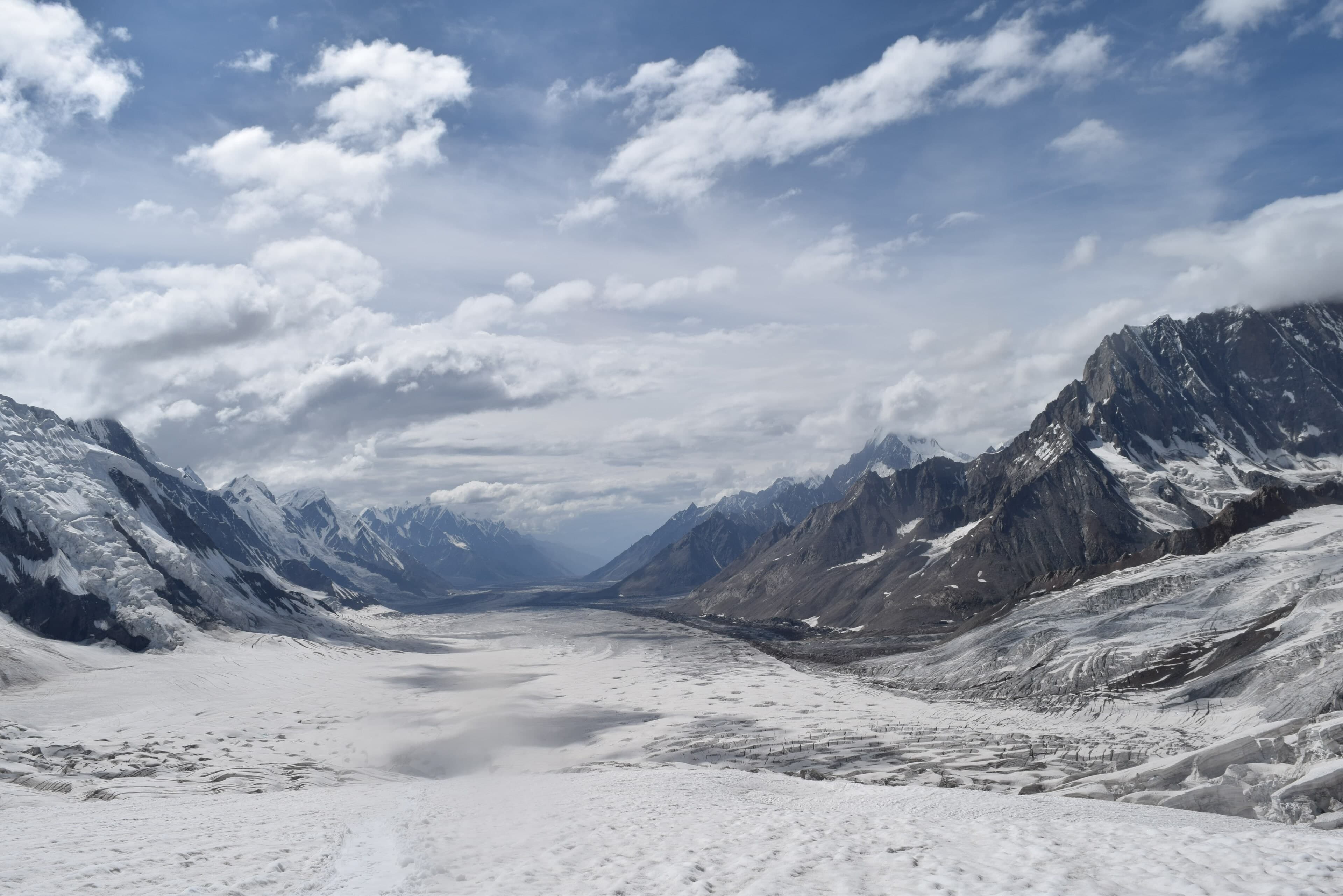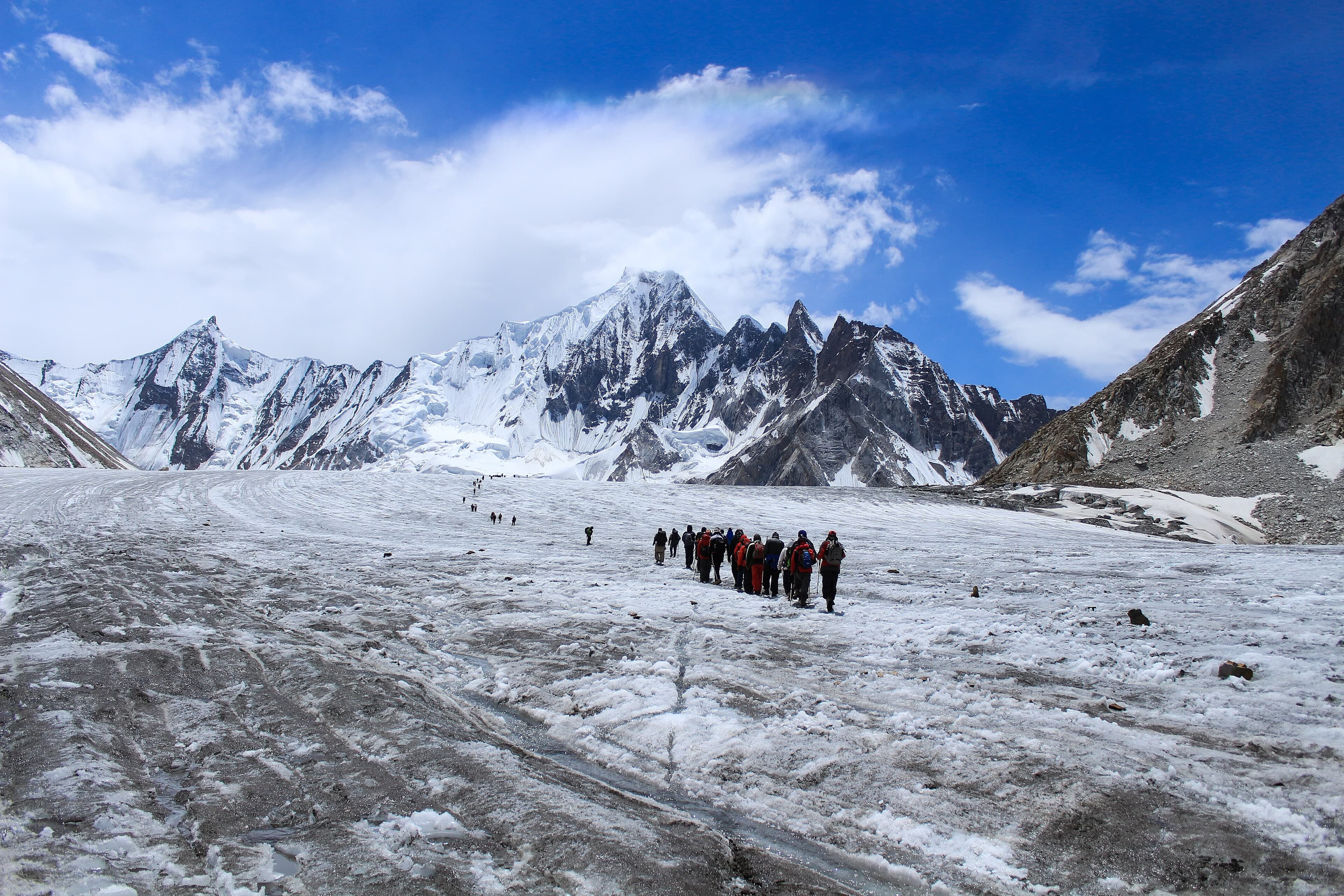
The Gondogoro La is a pass of 5,585 metres between the upper Baltoro Glacier and the Hushe Valley. It gives trekkers who have walked in to Concordia on the K2 Base Camp trek a way out by a different valley, in place of the walk back down the Baltoro. The route was established in 1986. Ali Camp, the last camp before the pass, is named after Ali Muhammad Jungugpa, who opened it on 20 June that year.
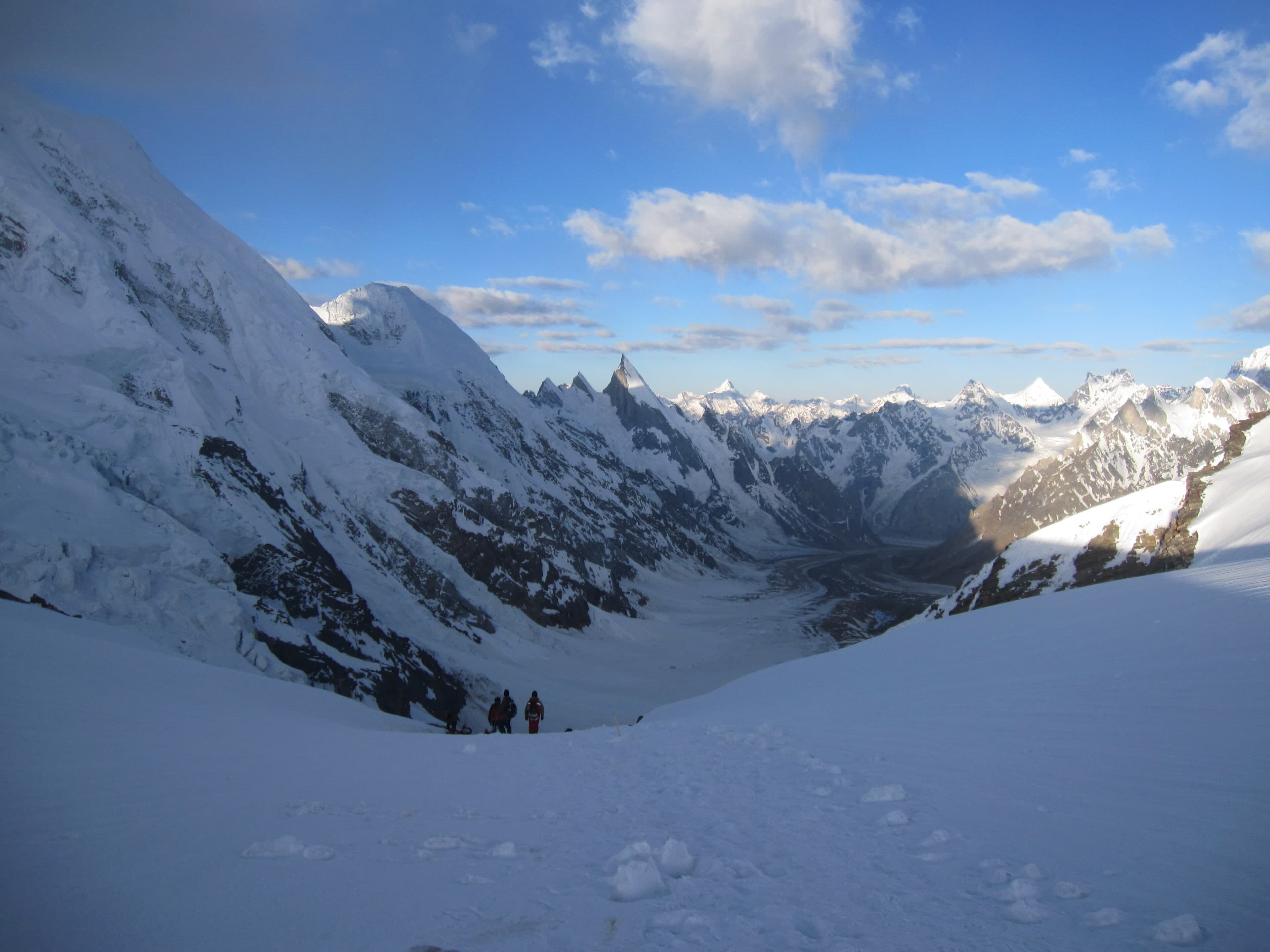
From Concordia (4,575 m) it is four to five hours to Ali Camp, at 4,965 metres. Parties leave Ali Camp at one or two in the morning and take four to six hours to reach the top. The climb includes three sections of 50-degree snow, about 120 metres in all, on fixed ropes. The descent on the south side is on fixed ropes too, down a snow slope of the same angle, and the park guidebook calls that side the more dangerous. The day ends at the camp of Khuispang (4,695 m), seven to ten hours after leaving Ali Camp.
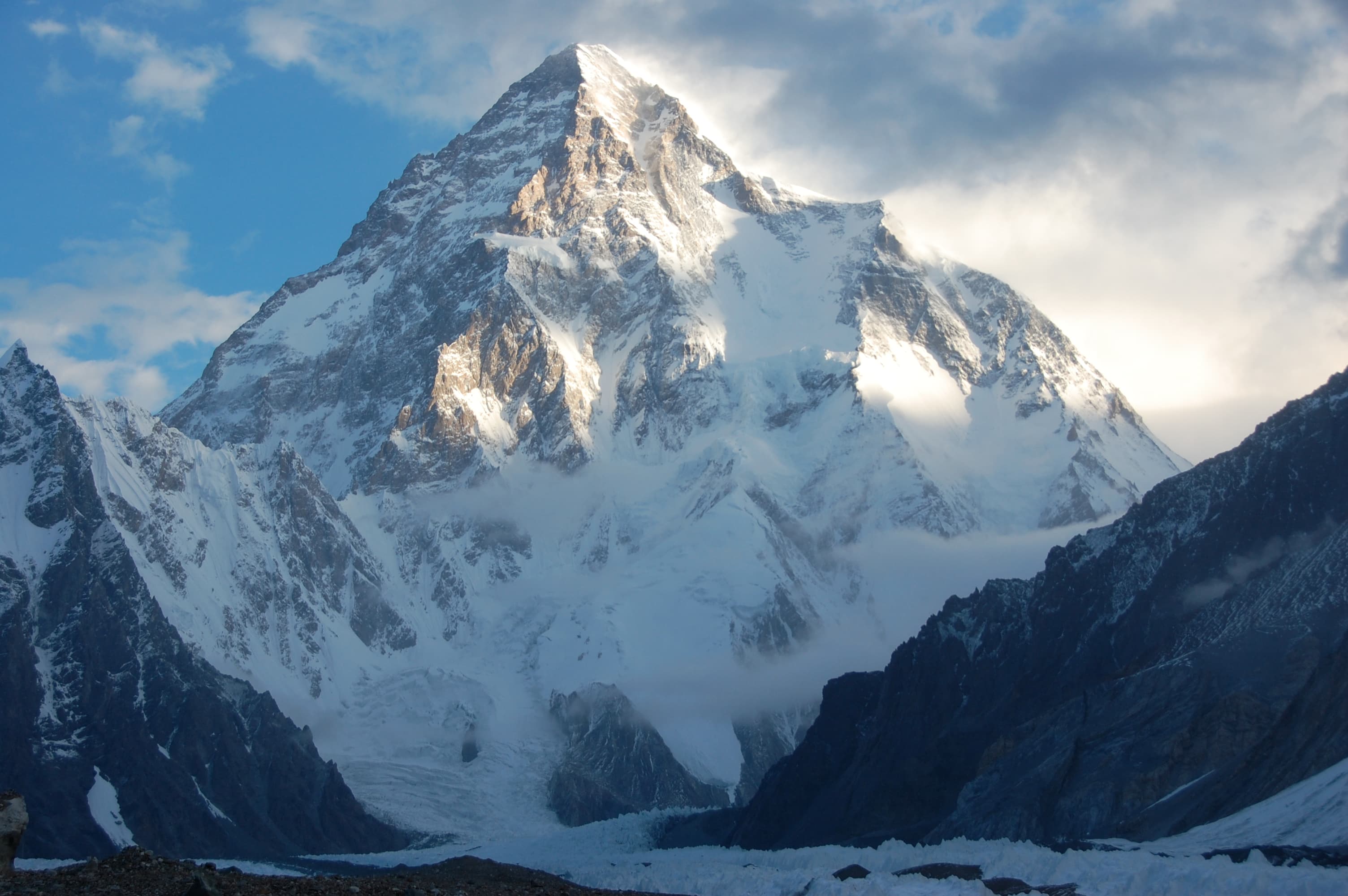
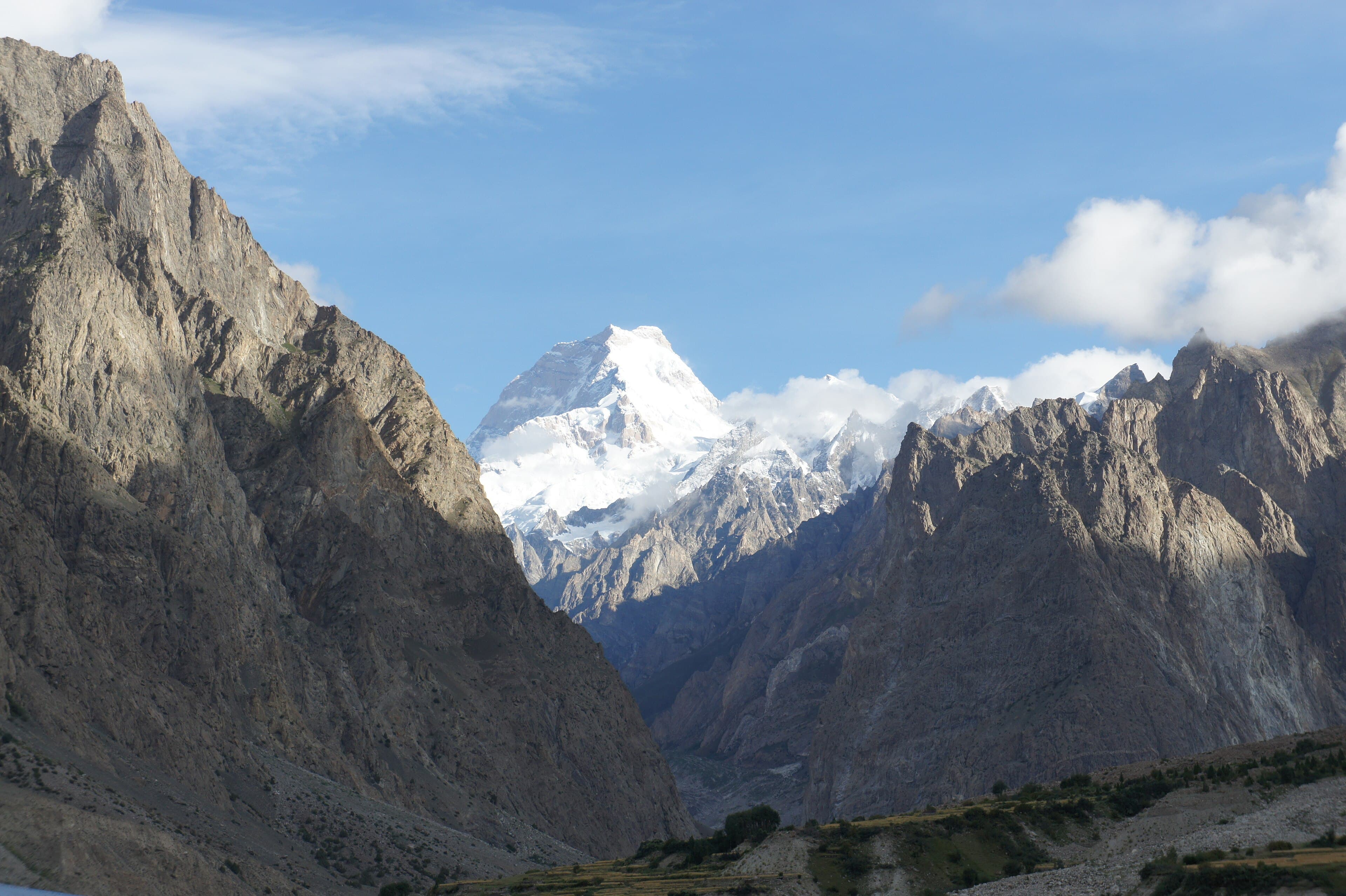
From the pass all four of the Karakoram's 8,000-metre peaks are in view: K2, Broad Peak, Gasherbrum I and Gasherbrum II. Laila Peak (6,096 m) stands above Khuispang. Two more days, by Dalsampa and Saicho, bring you to Hushe village at about 3,050 metres, where the jeep road to Khaplu and Skardu begins.
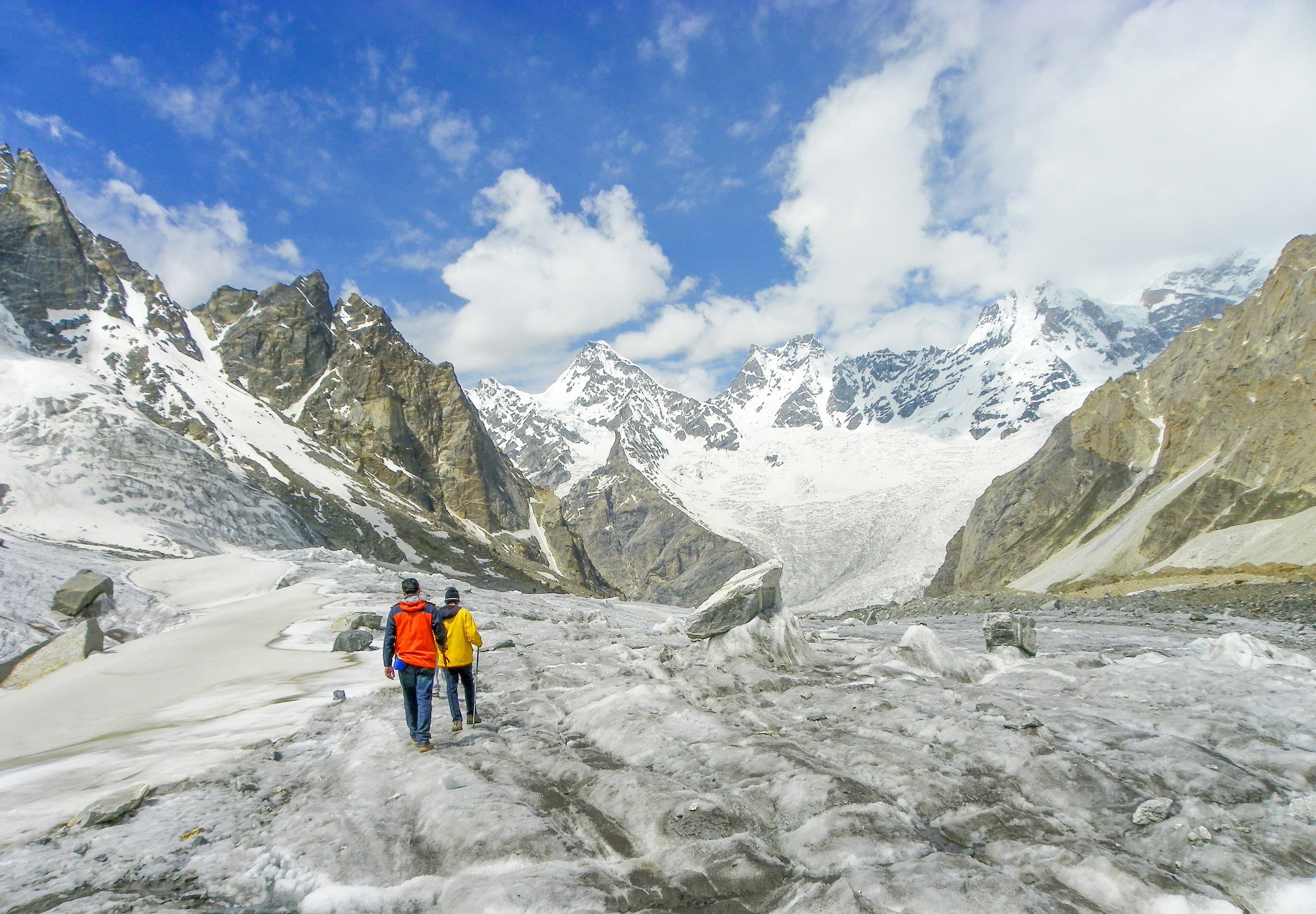
Each season a team of climbers and high-altitude porters from Hushe fixes the ropes and stays on the pass to help trekkers across, for a small fee. Even so, this is not a walking pass. The park grades the crossing demanding to extreme and says basic mountaineering skills are mandatory, which means crampons and practice on a fixed rope. In October 2022 the British company Jagged Globe withdrew the crossing from its K2 trek, saying the danger from rockfall on the descent had increased significantly and that there was no obvious way to reduce it.
Weather decides the rest. If it stays bad, the park guidebook itself recommends going back down the Baltoro, and a good guide will make that call without argument. The pass is in the restricted zone that begins at Askole. That means a licensed guide, a trekking permit that takes at least 30 days to issue, and two fees for a foreign trekker in summer, 150 US dollars for the permit and 190 for the Central Karakoram National Park. The park gives the season as mid June to September, and most crossings are made between late June and August.
See also: Places to visit in Skardu, Skardu trekking guide, Treks in Gilgit-Baltistan.