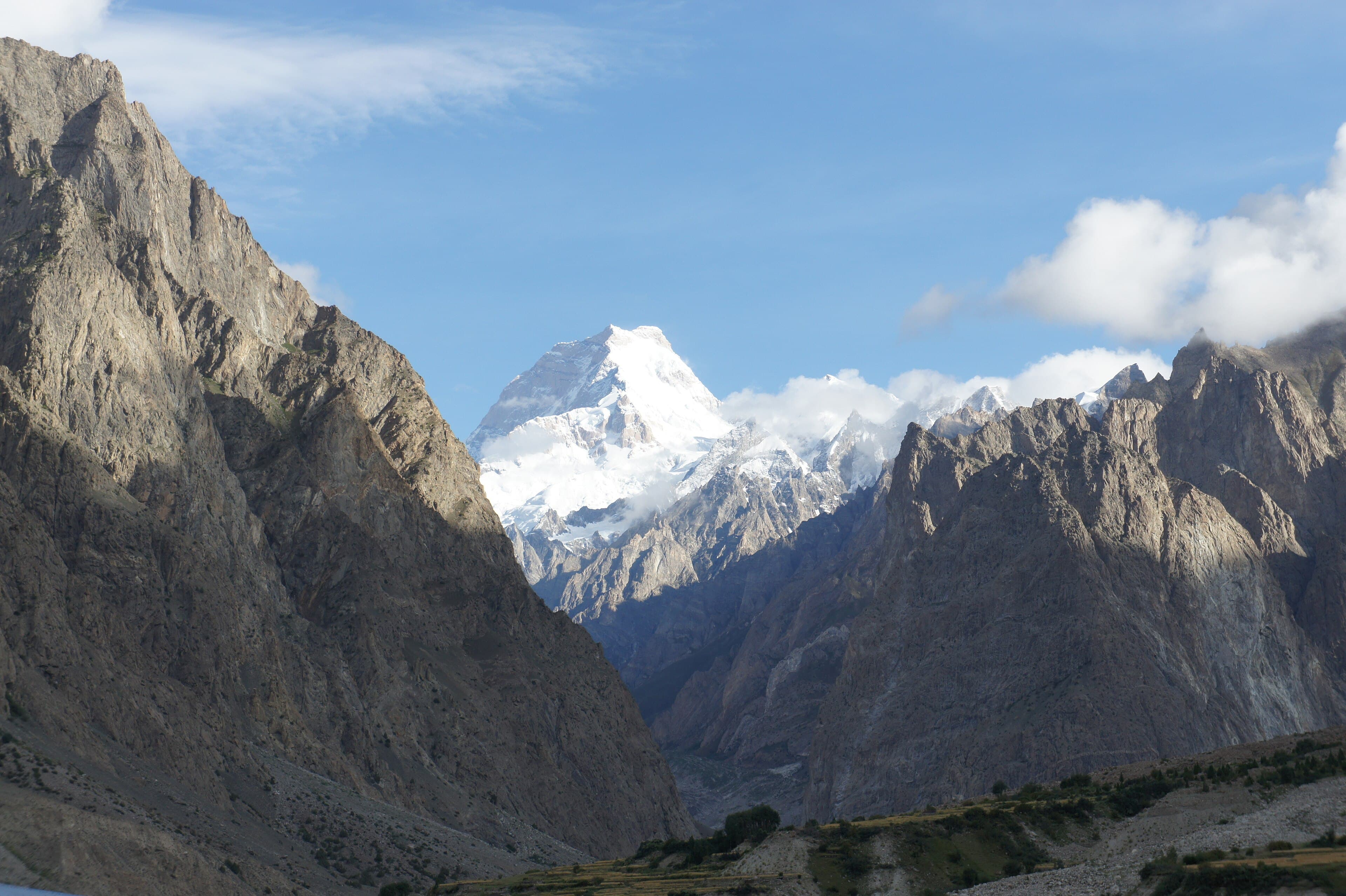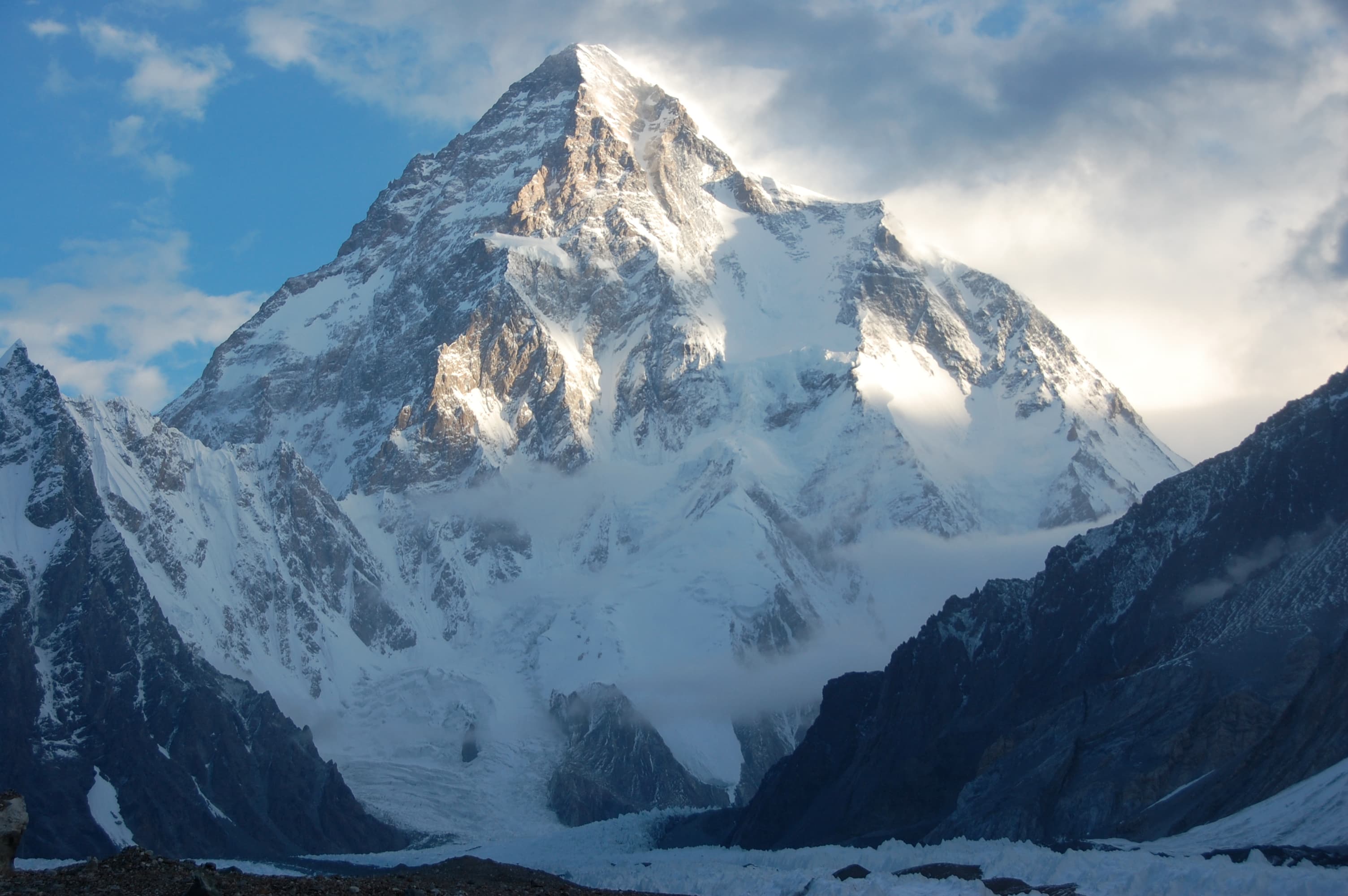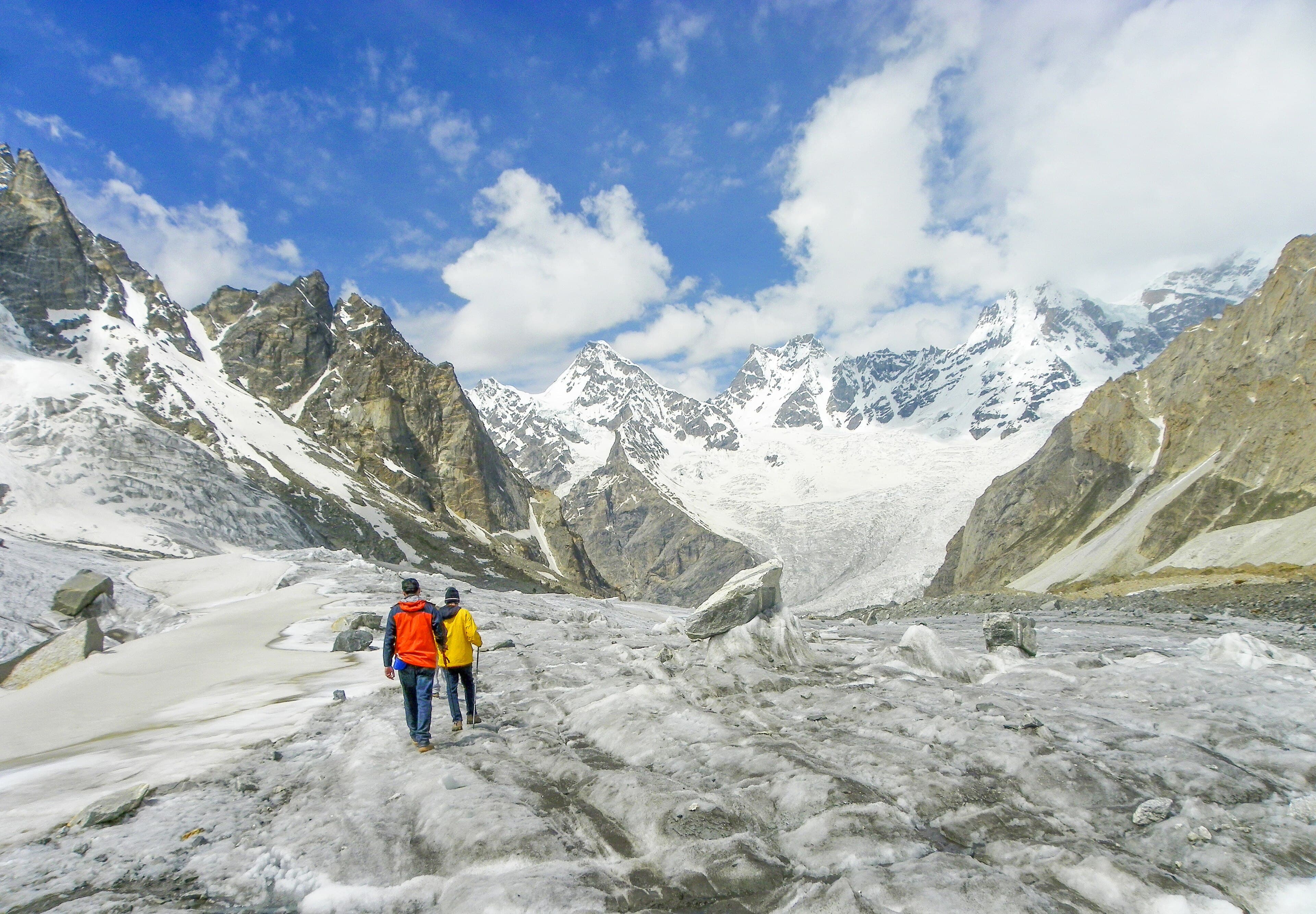
Masherbrum carries the most historic name in the Karakoram. When surveyors of the Great Trigonometrical Survey began measuring these mountains in 1856, it was the first peak they catalogued — K1, Karakoram number one — before K2 ever entered the books. At 7,821 metres it is no longer the most famous summit in the range, but it may be its most elegant: a vast, fluted pyramid of ice that dominates every view from the Hushe Valley.
The base camp trek is the Karakoram's best-kept short walk. From Hushe village at about 3,050 metres, the trail climbs north through willow thickets and summer pastures — Parbisan is the loveliest of them, dotted with shepherds' huts and grazing yaks in July — to a base camp area at roughly 4,000 metres beneath Masherbrum's southern flanks. Most trekkers take two days up and one or two back, sleeping in tents within constant sight of the mountain.
What you get for that modest effort is remarkable: glacier snouts, wildflower meadows, and the full sweep of Masherbrum's south face — the side that defeated expeditions for decades until an American-Pakistani team finally reached the summit in 1960. What you almost certainly won't get is crowds. While the Baltoro trails carry hundreds of trekkers to K2 each summer, Masherbrum's base camp sees only a trickle.
The trek is graded moderate. Stages are short and the altitude gain is gentle enough to acclimatize comfortably, but the trail is rough underfoot in places and the camp is high enough that you'll feel the thinner air. A local guide from Hushe — easily arranged in the village or through Skardu operators — handles route-finding, permits where required, and the donkey or porter support that makes the walk genuinely relaxed.
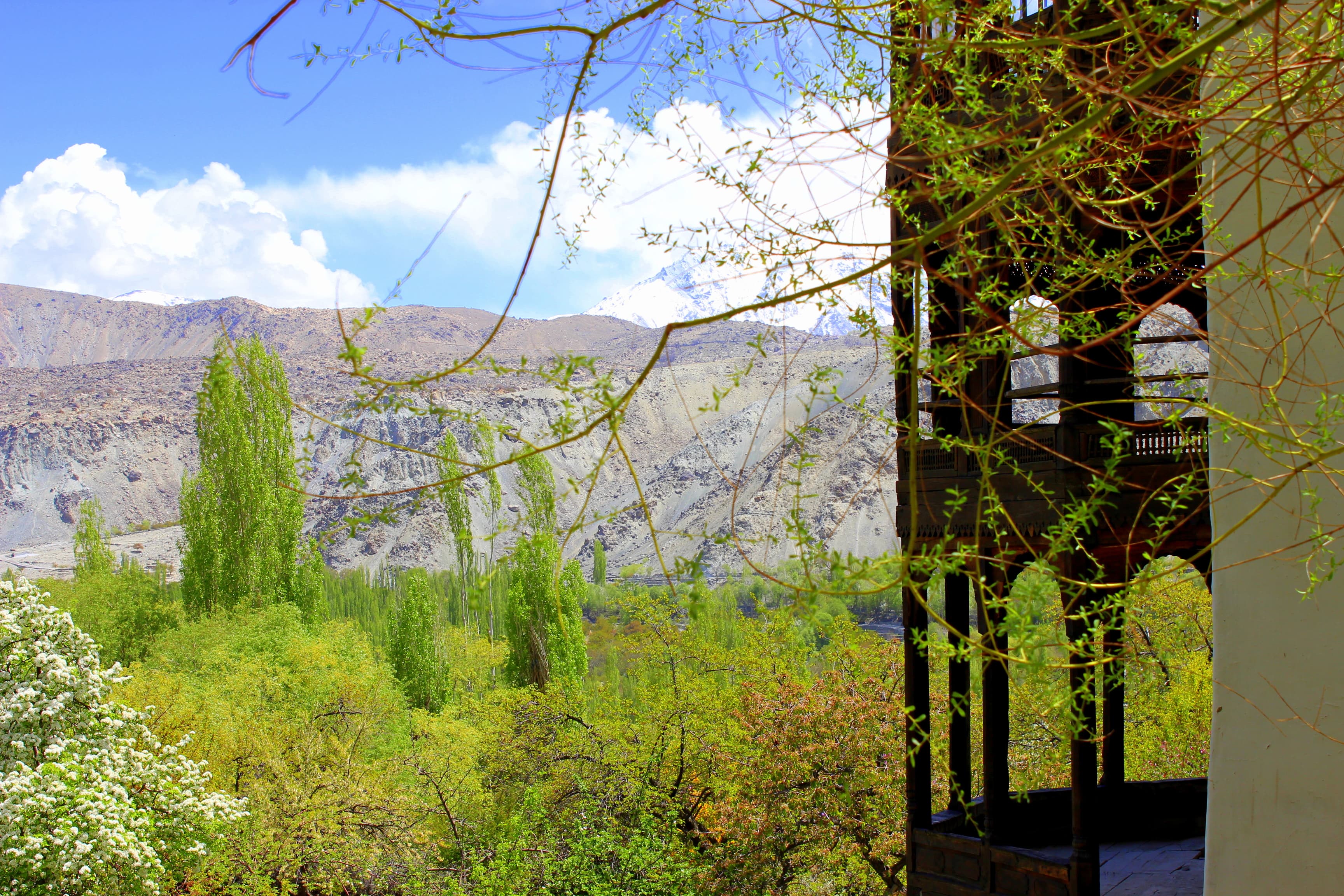
Because it starts and ends in Hushe, the trek pairs perfectly with a night or two in the village and a stop at Khaplu Palace on the drive back to Skardu. For fit travelers short on time, it is the most efficient way in all of Baltistan to stand beneath a 7,800-metre wall of ice and have it almost entirely to yourself.