The one rule: build slack into your itinerary
Gilgit-Baltistan's logistics are not dangerous or chaotic — they are simply weather-dependent, and the weather lives among 7,000-metre mountains. Every problem in this guide dissolves under a single habit: keep at least one buffer day for every mountain flight you book, and never schedule your international departure for the day after you leave the mountains.
Travelers who arrive with slack in the plan describe the frictions as part of the adventure. Travelers who arrive on a tight schedule describe them as a crisis. The difference is rarely the event; it is the itinerary.
Flights: spectacular, affordable, cancellable
The Islamabad–Skardu and Islamabad–Gilgit flights are among the most scenic in the world, passing Nanga Parbat at window level. They are also visual-flight-rules services through high valleys, which means clouds cancel them — sometimes for days in a row. One American traveler's December 2025 account describes a full week of cancelled Skardu flights, solved with a 14-hour shared taxi that cost about 24 dollars.
The practical rules: fly early in the day and early in your trip, favour Islamabad-origin departures (forum reports consistently rate them more reliable than the reverse leg for connections), and always hold a road-based plan B. Cancellation rates drop sharply in the stable summer months and rise in winter and spring.
Our full breakdown of routes, aircraft and booking quirks lives in the Islamabad to Skardu flights and roads guide — including how we sequence itineraries so a cancelled flight costs a view, not a trek.
The roads: KKH roadworks and the Gilgit–Skardu question
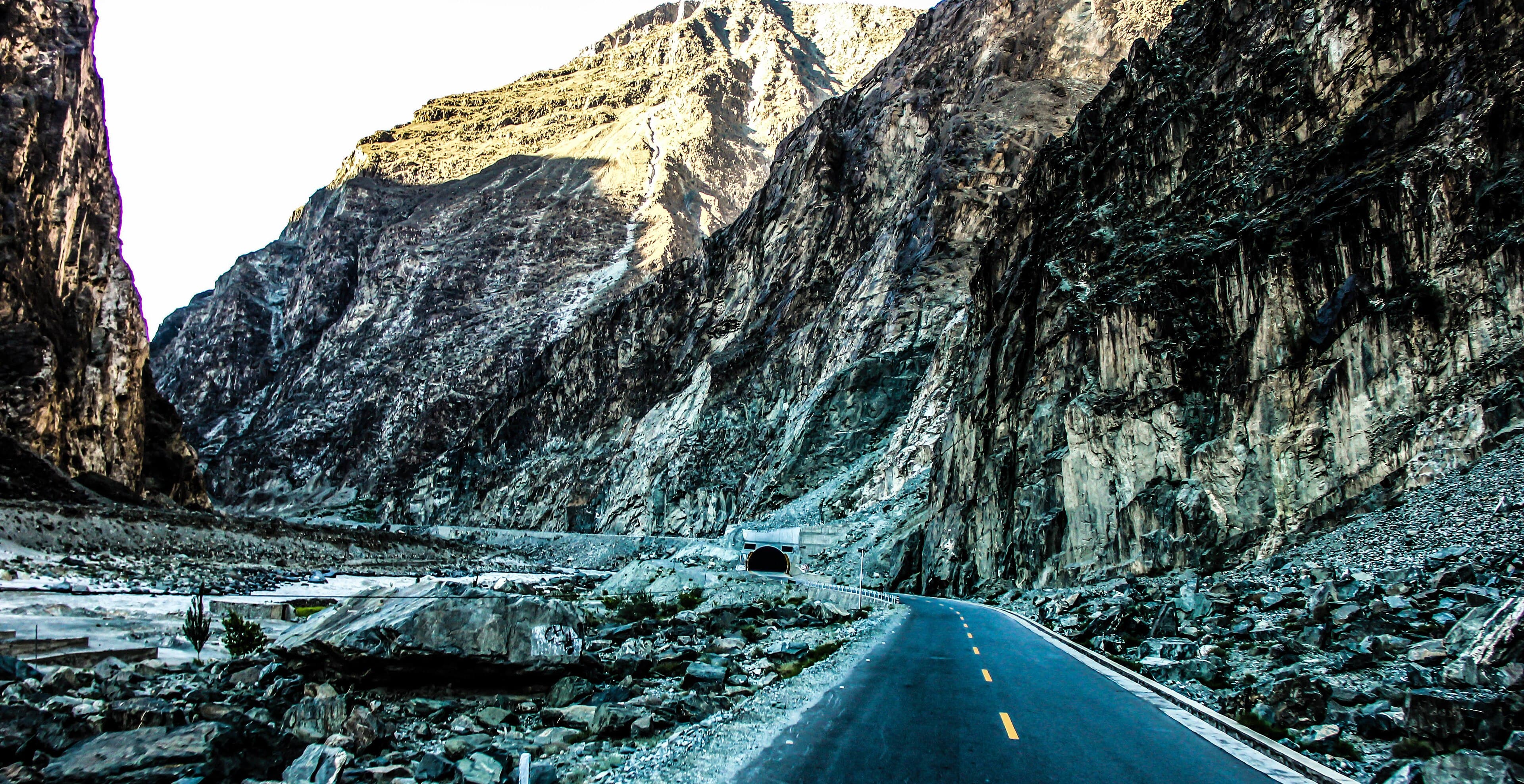
The Karakoram Highway remains an engineering marvel and a genuinely comfortable drive for most of its length, but be current on one thing: dam construction near Dasu can add hours of waiting at controlled sections. British YouTuber Jay Palfrey's April 2025 drive recorded roughly three hours of roadwork delays on the Islamabad–Gilgit run — consistent with what our drivers report week to week.
The Gilgit–Skardu road deserves respect of its own. An experienced solo traveler on Reddit's backpacking forum called it “a solid 7-8 hours on a good day” and, memorably, “a jaw dropping incredibly beautiful scenery death trap” — hyperbole with a kernel of truth: rockfall can close sections during spring snowmelt, and it is a route for daylight, good vehicles and local drivers.
None of this argues against the road trip — it argues for doing it properly. Landslide clearances are routine and fast, the scenery is the point, and a professional driver who reads the mountain radio chatter turns hazards into anecdotes.
Money: cash is king north of Gilgit
Treat Gilgit-Baltistan as a cash economy. Cards are accepted at a handful of upmarket hotels and almost nowhere else; ATMs exist in Gilgit, Karimabad, Aliabad and Skardu but can be empty, offline or reluctant with foreign cards. Tripadvisor's Hunza forum threads consistently recommend Bank Alfalah and Allied Bank machines as the most reliable for international withdrawals.
The robust plan: withdraw or exchange the bulk of your budget in Islamabad, carry it in rupees split between bags, and treat northern ATMs as top-ups rather than lifelines. Crisp US dollars and euros exchange easily in Gilgit and Skardu if you prefer to carry hard currency.
Budget pointers for daily costs are in our packing and budgeting guide; note that national park entries such as Khunjerab and Deosai charge per-person foreigner fees, payable in rupees only.
Staying connected — or happily not
Internet in the mountains is improving but honest expectations help: 4G is decent around Gilgit, Karimabad and Skardu town, slows in upper Hunza, and disappears in side valleys like Shimshal and deep trekking country. Power cuts affect Wi-Fi even at good hotels, especially in winter.
Buy a local SIM on arrival in Islamabad before flying north — registration is easiest there, and coverage maps favour the main carriers along the KKH corridor. If your work truly cannot wait, plan calls for town days; if it can, you will discover what several recent trip reports frame as a feature, not a bug: the Karakoram is one of the last great excuses to be unreachable.
Guests on our tours get a briefing on where the connectivity windows fall along their specific route, so nobody is surprised mid-trek.
Checkpoints, paperwork and the price of being a guest
Foreign travelers pass routine police checkpoints along the KKH and the Gilgit–Skardu road, where an officer records passport and visa details. It is friendly, takes minutes, and goes fastest if you carry ten photocopies of your passport photo page and visa to hand over. No special permits are needed for Hunza, Skardu, Deosai or Fairy Meadows on a standard tourist visa.
Two candour points from recent travelers' accounts. First, some sites and services charge foreigners more than locals — dual pricing is posted policy at attractions, occasional habit in bazaars; polite, smiling negotiation is normal and effective. Second, in quiet periods police occasionally offer (or insist on) escorts for foreign guests in certain districts; travelers describe this as well-meant if sometimes unnecessary, and a local operator can usually smooth it into invisibility.
The same accounts, without exception, land on the hospitality: the December 2025 winter traveler wrote that locals “go above and beyond… especially to Americans.” Plan for the frictions and the kindness will be what you remember — start with our plan your trip page, or hand us the logistics and keep the adventure.
Questions, answered
How often are Islamabad to Skardu flights cancelled?
There is no published rate, but cancellations are common enough that every experienced traveler plans for them — weather can ground the route for consecutive days, especially outside summer. Book early-morning, Islamabad-origin flights, keep a buffer day, and know the road alternative: a long but reliable drive.
How long is the drive from Islamabad to Hunza?
Plan 16 to 20 hours of total driving, almost always split with an overnight stop in Chilas or Besham. Dam construction near Dasu can add roughly three hours of waiting at controlled sections, so recent travelers' reports of 18-hour journeys are realistic rather than unlucky.
Are there ATMs in Hunza and Skardu?
Yes — in Gilgit, Aliabad, Karimabad and Skardu town — but they are not dependable with foreign cards, and machines can sit empty. Forum consensus favours Bank Alfalah and Allied Bank. Withdraw your main budget in Islamabad and treat northern ATMs as backup only.
Is there mobile internet in Hunza?
Yes, and it is workable for messaging and maps in the main towns, but slow in upper Hunza and absent in remote valleys and on treks. Buy your SIM in Islamabad, expect power-cut interruptions, and schedule anything important for town days rather than village evenings.
Do foreigners need permits for Hunza or Skardu?
No. Hunza, the Khunjerab Pass, Skardu, Deosai National Park and Fairy Meadows are all open on a standard tourist visa, with only routine passport checkpoints en route. Restricted-zone treks such as the Baltoro toward K2 require permits, which licensed operators arrange.