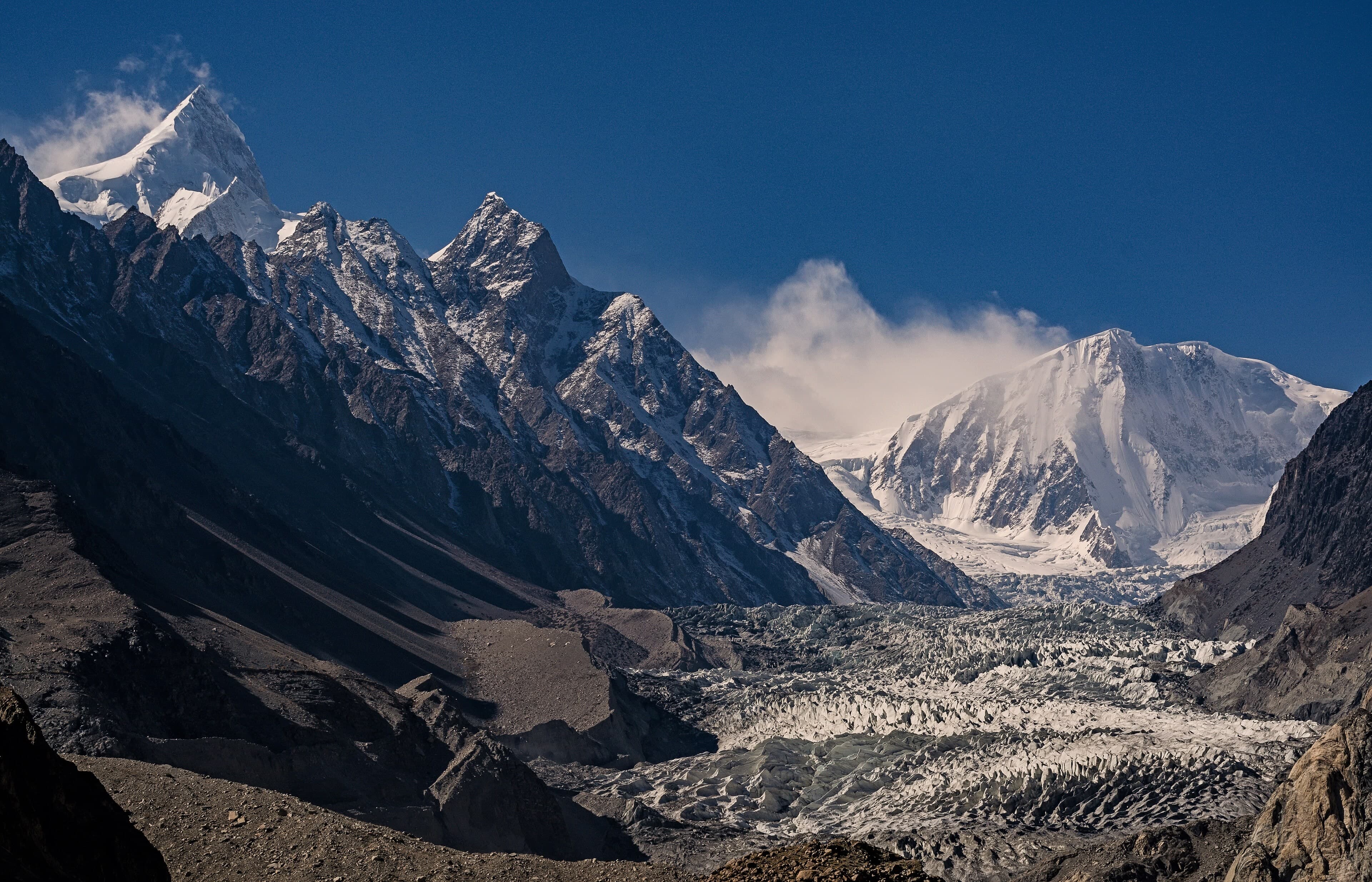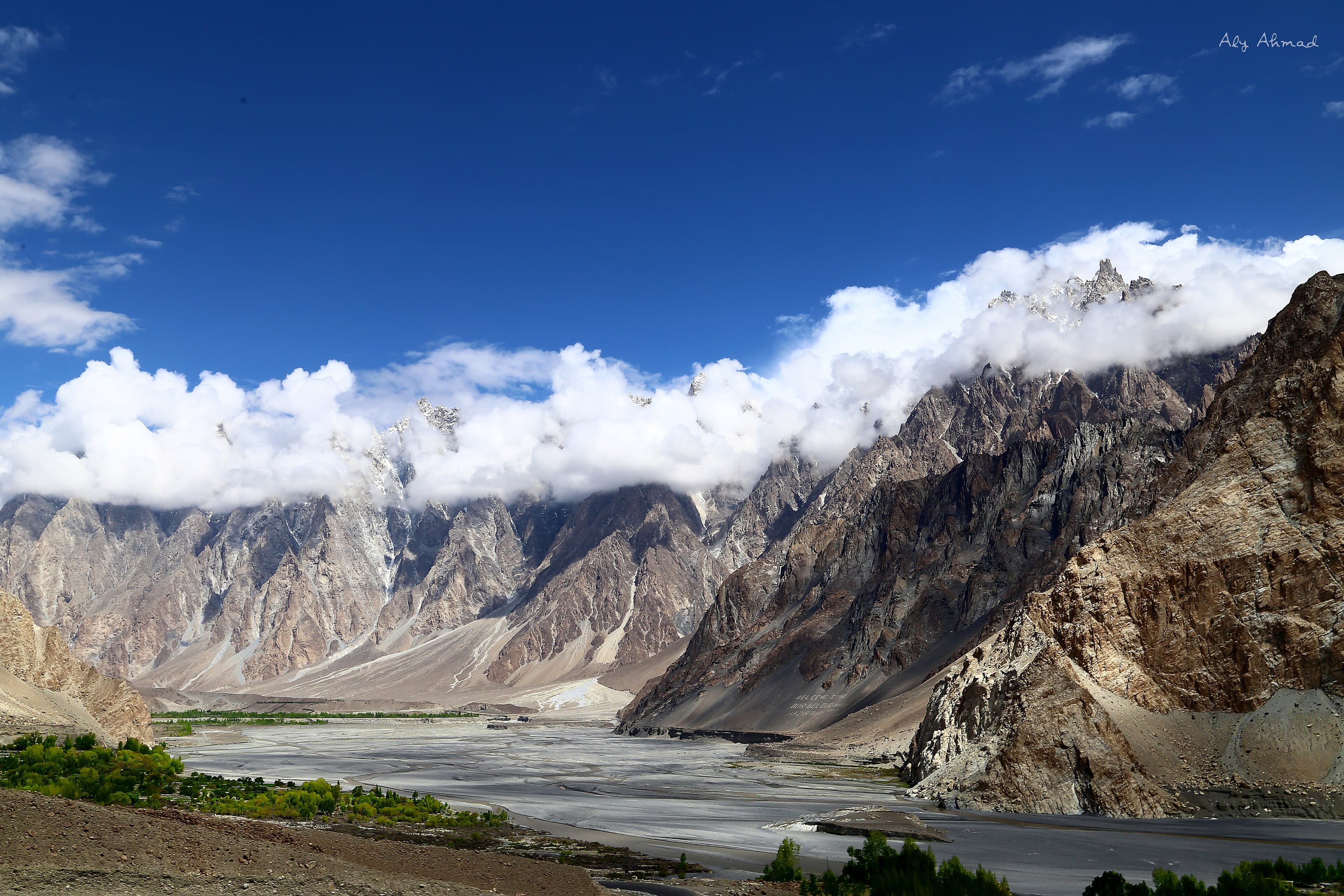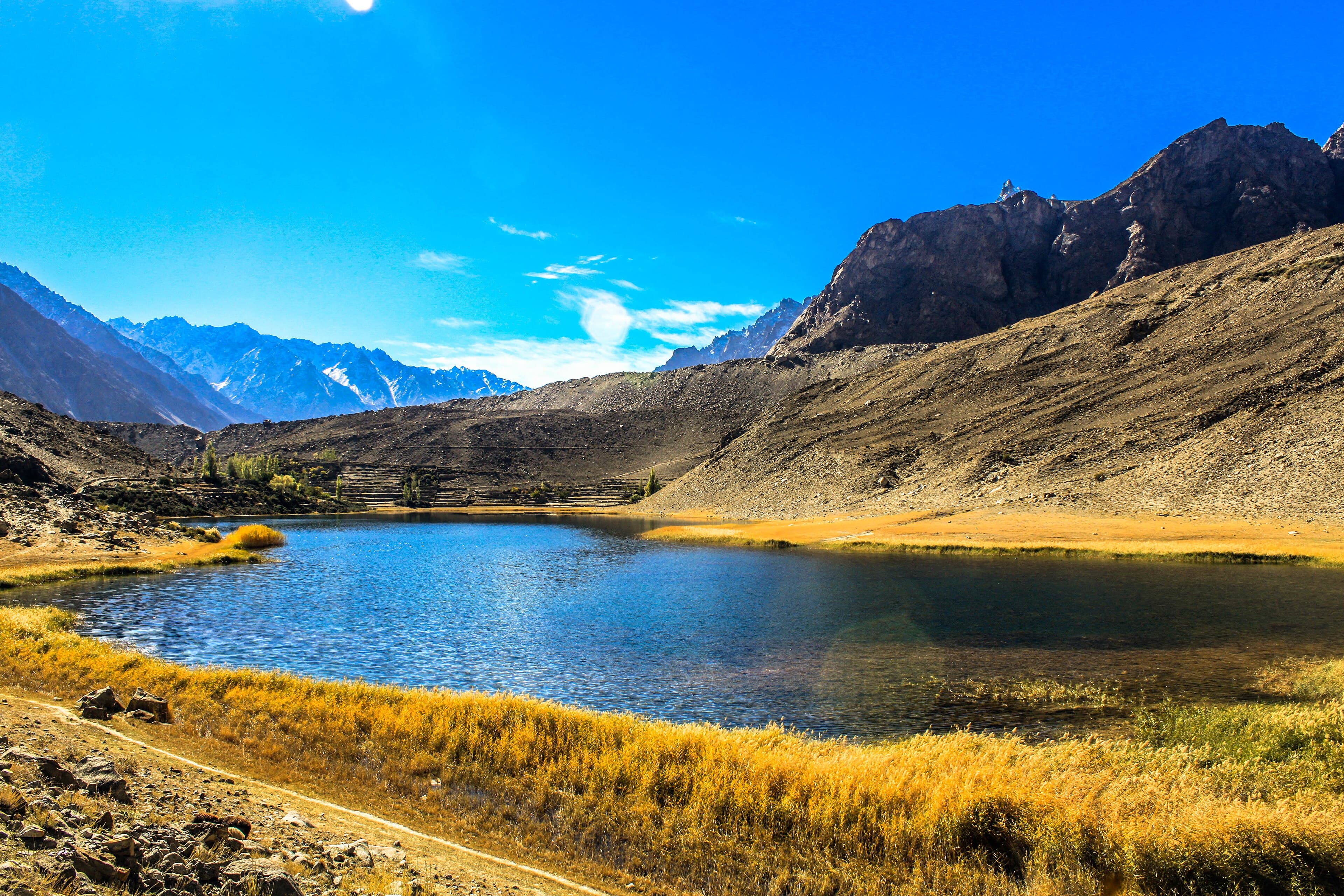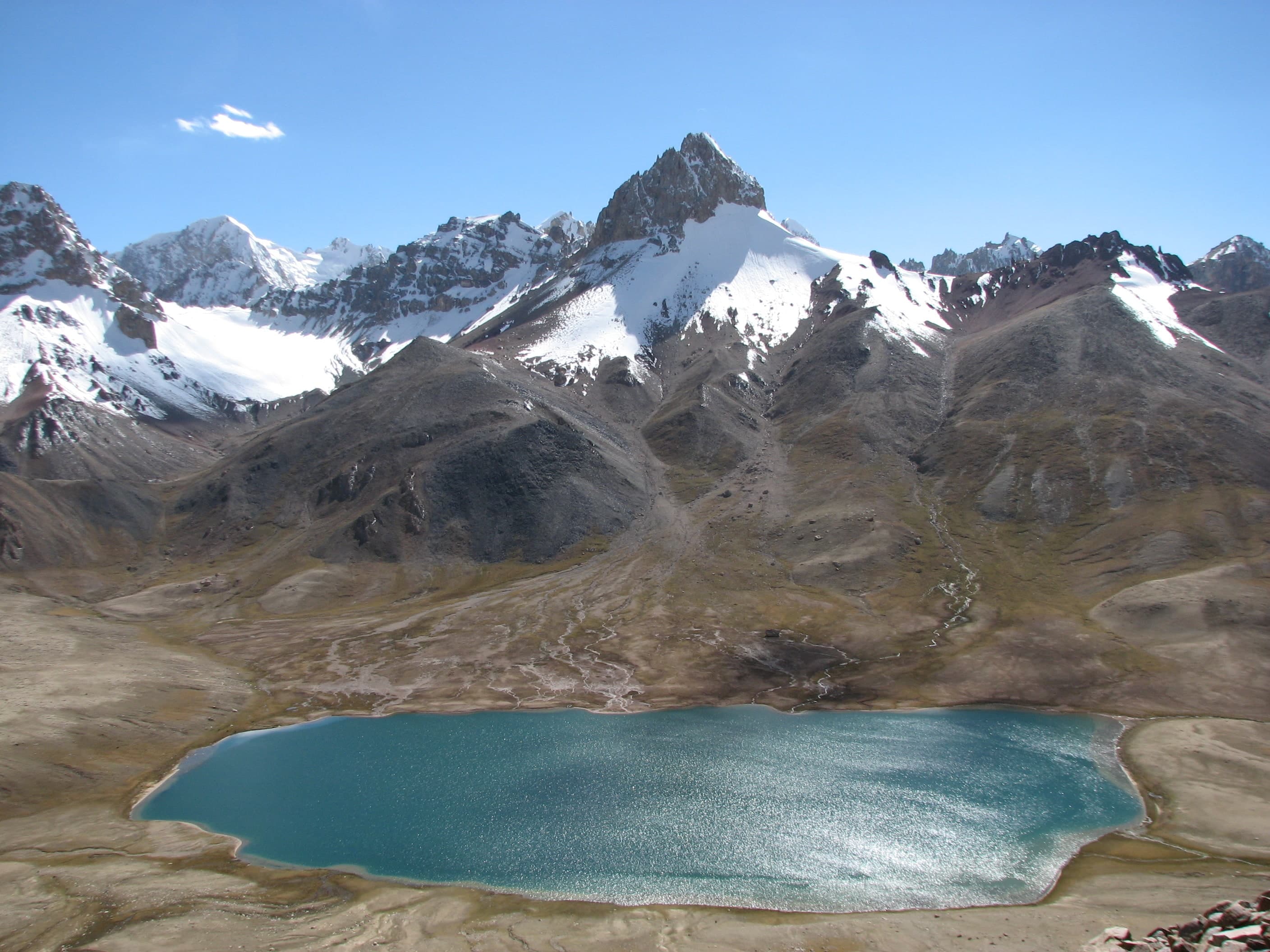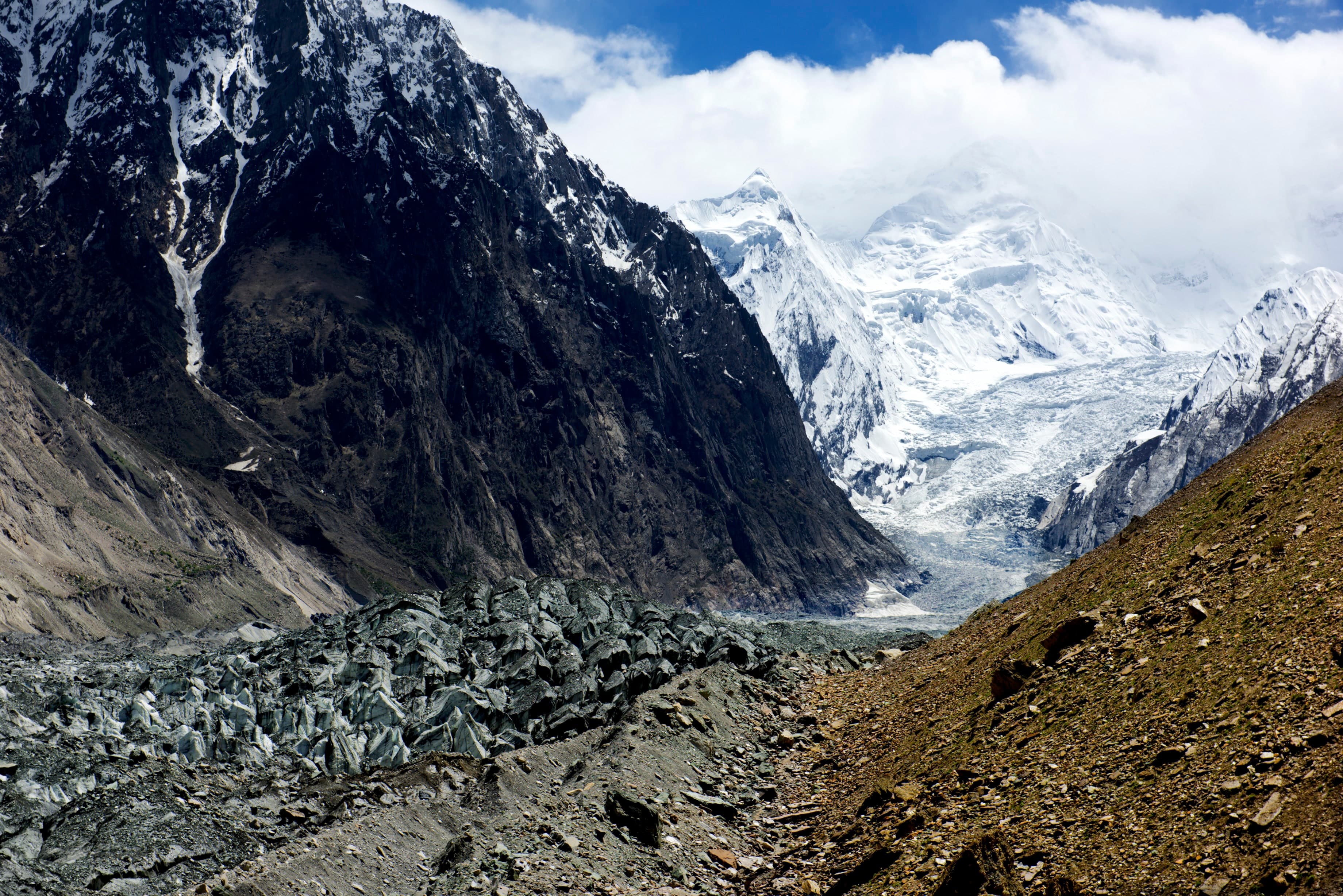
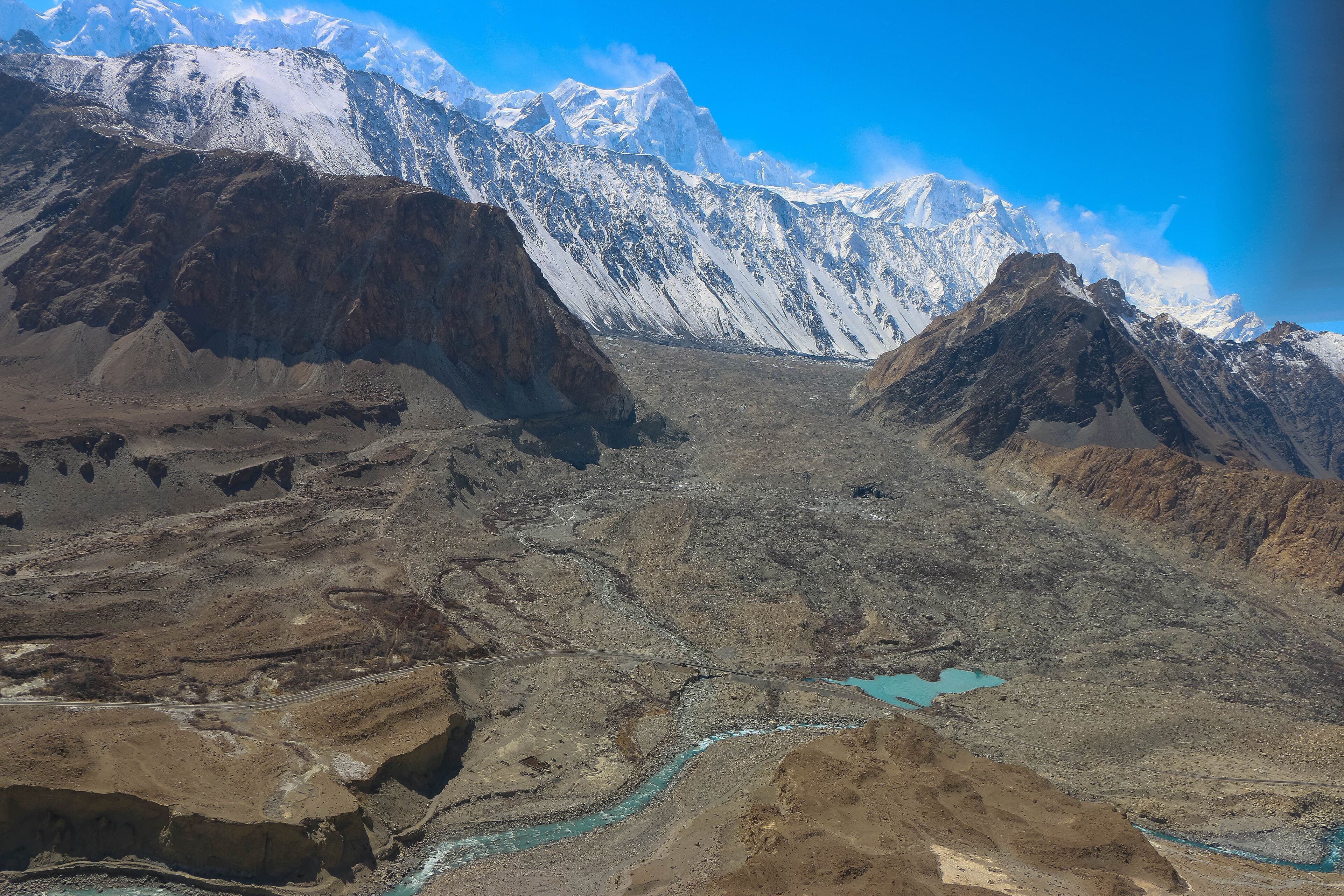
The Batura Glacier is 57 kilometres long by the figure most often given, which makes it one of the longest glaciers outside the polar regions. It flows from west to east, and its snout lies just north of Passu village in upper Hunza. The trek follows it from the village to the summer pastures of Yashpirt and Guchesham and back, about 75 kilometres in all.
Fast walkers cover it in three or four days. A fuller plan is a day from Passu to Yunz (three to four hours), a day to Yashpirt (four to five hours) and a day to Guchesham (five to six), with the side trip to Lupdor from there and the same way back. Trekking companies take seven to ten days, with a free day at Guchesham.
Much of the route follows the ablation valleys and water courses beside the glacier, with two crossings of the ice itself, which one trekking writer calls relatively simple. Yunz, at about 2,800 metres, lies between the Passu and Batura glaciers. Yashpirt, at about 3,300 metres, is the camp people remember, a seasonal hamlet with good camping and reliable water. Guchesham is the last settlement along the glacier. Published heights for the camps above Yashpirt disagree, so we do not give a high point for the trek.
The pastures are in use. The lower glacier is bordered by summer villages where herds of sheep, goats, cows and yaks are kept through the warm months. This is the country of the Wakhi people of Passu, whose way of life our guide to Gojal describes.
Above the glacier stands the Batura Wall, about 11 kilometres of ridge that stays above 7,000 metres, with Batura Sar (7,795 m), the 25th highest mountain in the world, as its highest point. One account counts some 14 peaks above 7,000 metres in view along the way. The shorter Patundas trek looks down on the same glacier from the pasture on its south side.
There are no steep passes, which makes this a good first multi-day trek in the Karakoram for a fit walker. It is still a glacier trek, and one operator rates it moderate to difficult and tells beginners to go with a guide. The route is in an open zone, so no trekking permit is needed. The season is June to September.
See also: Best places to visit in Hunza, Treks in Hunza, Treks in Gilgit-Baltistan.