The Hunza surprise
Ask women who have travelled widely in South Asia about Hunza and a pattern emerges fast: they describe it as one of the most relaxed, welcoming places they have ever visited — solo or otherwise. The staring and street harassment that wear travellers down in many places are conspicuously absent here. Women sit alone in cafés, walk villages at dusk and hike valley trails without the background hum of vigilance.
This reputation is not a marketing line; it's the consistent testimony of solo female travellers, tour leaders and travel writers over many years, and it has made Hunza the anchor of most women's first trips to Pakistan. Local society polices it too — tourism is the valley's lifeblood, visitors are guests in a culture that takes hospitality seriously, and the community's protectiveness toward travellers is genuine.
Understanding why Hunza feels this way takes more than a paragraph, because the answer is rooted in a century of choices about education, faith and women's work. That story is worth knowing — it will change how you see every schoolgirl and café owner you meet.
A century of educating daughters
Hunza's defining social fact is education. From the mid-twentieth century onward, community schools — most prominently the Diamond Jubilee schools established across the Ismaili north from 1946, and later the Aga Khan Education Services network — made schooling for girls normal generations before it was normal elsewhere in the region. The result today is striking: female literacy in Hunza ranks among the highest anywhere in Pakistan, and in the younger generation it is essentially universal.
Education here was never an accident. The Ismaili Muslim tradition that most of Hunza follows places explicit weight on learning for both sons and daughters — the Aga Khans repeatedly urged families to educate girls, famously even at the expense of boys if a choice had to be made — and communities built and staffed the schools themselves, village by village.
You see the outcome everywhere: daughters of farming families now work as doctors, teachers, engineers and entrepreneurs from Karachi to Canada, and the valley's expectation is simply that girls will study as far as their talent carries them. For a visitor, the most ordinary sight in Hunza — uniformed schoolgirls laughing along the Karakoram Highway at 8 a.m. — is also its most revealing.
Women running the economy, visibly
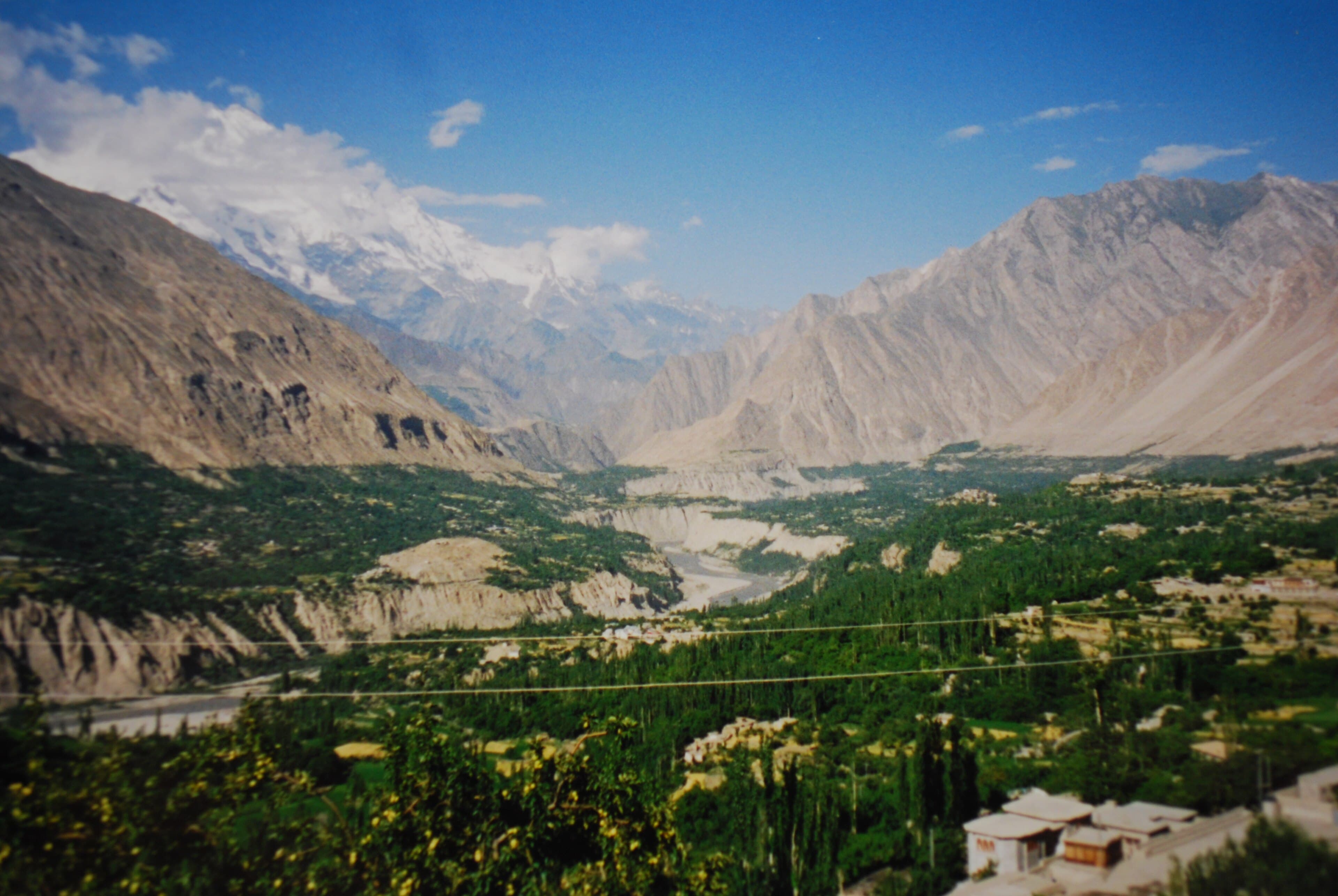
What makes Hunza unusual is not just that women are educated, but that their work is public. In Karimabad and Altit, women own and run cafés, guesthouses, craft shops and trekking-gear enterprises; in Gulmit, women manage hotels and social enterprises. A woman traveller buying coffee from a woman barista beneath an eight-thousand-metre skyline is an everyday Hunza scene.
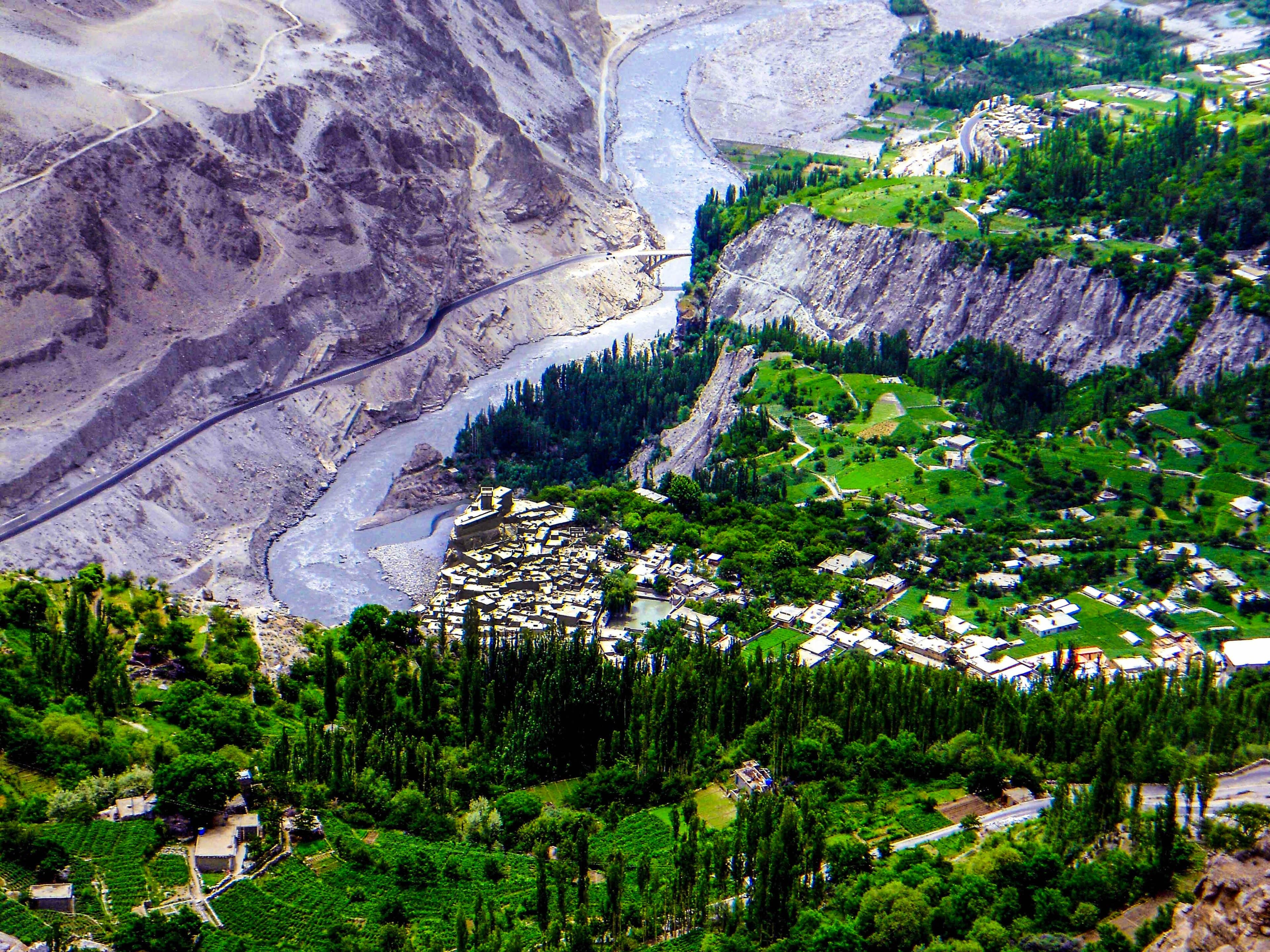
The flagship is CIQAM, a women's social enterprise based at Altit, which grew out of the Aga Khan Trust for Culture's heritage restoration work. Its women trained as carpenters, surveyors and craft producers — fields with no female precedent in the region — and went on to work on heritage conservation while running woodwork and craft production that you can visit and buy from near Altit Fort's gardens.
In Gulmit, an all-women carpet-weaving workshop in the old village turns traditional skills into income, and visitors are welcome to watch the looms at work and buy directly. These aren't curated showcases for tourists; they're businesses, and spending your money in them is the most direct vote you can cast for what they represent.
Role models: from Everest to the football pitch
Gilgit-Baltistan's women have national-hero examples close to home. Samina Baig, from the small Gojal village of Shimshal, became the first Pakistani woman to summit Mount Everest in 2013 — climbing alongside her brother and mentor Mirza Ali — and in 2022 added K2, the mountain that watches over her home region. Her story is told with pride in classrooms across the valleys.
Sport is following. Girls' football has taken root in Gilgit-Baltistan, with girls' teams and tournaments now organised in the region — images of young women playing football against Karakoram backdrops have become a quiet symbol of the new normal. Ski and climbing programs for local girls have appeared too, drawing on the region's mountain inheritance.
None of this means every barrier has fallen; opportunities still depend on family, valley and means. But the trajectory is unmistakable and locally owned — driven by parents, teachers and the young women themselves rather than imported campaigns, which is exactly why it has held.
Practical advice for women travelers
Dress is simple: modest and comfortable. Loose trousers or long skirts and tops covering shoulders are right everywhere; a scarf in your daypack handles mosque visits and doubles against sun and dust. In Hunza you'll see local women in colourful embroidered caps and loose dress, faces uncovered — match the spirit of the place rather than over-covering. No headscarf is needed for daily life in Hunza or Skardu.
Getting around: reputable tour operators, hired cars with known drivers and Hunza's hotels and guesthouses are all well accustomed to solo women. Family-run guesthouses are a highlight — you'll often be absorbed into the household, drinking tea with grandmothers and helping pick apricots. On public transport, women are customarily seated with other women; locals will arrange this for you unprompted.
Sensible universals still apply: keep your own room lock, share your itinerary, dress more conservatively in transit towns than you would in Karimabad, and trust your instincts as you would anywhere. The most common 'problem' women report in Hunza is being over-hosted — adopted by families, over-fed, and made late for everything by conversation.
Honest nuance: Hunza is not all of Gilgit-Baltistan
An honest guide draws the map accurately: Gilgit-Baltistan is diverse, and norms shift from valley to valley. Hunza and Gojal, with their Ismaili tradition, are the most relaxed; Skardu and Baltistan — largely Shia and Noorbakhshi — are conservative in dress but warmly hospitable, and women travellers report easy experiences there with modest clothing. Ghizer, like Hunza, has a strong record of girls' education.
Diamer district, which you cross on the Karakoram Highway between Islamabad and Gilgit and visit for Fairy Meadows, is the most conservative part of the region: local women are rarely visible in public, and travellers should dress carefully and behave with extra reserve in towns like Chilas. Tourists pass through constantly without trouble — but reading the room matters more here.
This variation is normal for a mountain region of many histories, and it's no reason for anxiety — just calibration. Your operator and guides navigate these differences daily; on a guided trip you'll feel the shifts mostly as changes in scenery and architecture rather than friction. Our solo female travel guide to Gilgit-Baltistan walks through each region in turn, with reels from women who have travelled it.
Traveling with purpose: supporting women-led Hunza
If women's empowerment in Hunza moves you, your itinerary can back it. Stay in women-run guesthouses, eat at women-owned cafés in Karimabad and Gulmit, visit CIQAM's workshop at Altit and the Gulmit carpet weavers, and buy crafts directly from the makers. Ask your operator to include these stops — good ones do by default.
Hiring female guides is increasingly possible: a small but growing number of local women now work as trekking and cultural guides, and requesting one supports the career path. Cooking sessions in family homes, often led by women, are another genuine exchange — you'll learn to fold chapshuro and shape gyal pancakes while conversation roams much further than recipes.
Travel here does carry weight: every visible, successful interaction between visiting women and working local women reinforces the valley's story about itself. In Hunza, simply showing up, spending thoughtfully and engaging with respect makes you a small part of something that has been building for a hundred years.
Questions, answered
Is Hunza safe for solo female travelers?
Yes — Hunza is consistently described by experienced travellers as one of the most relaxed, safest places for solo women in Asia. Street harassment is notably absent, women run many local businesses, and the community is genuinely protective of guests. Normal travel precautions still apply.
What should women wear in Hunza?
Modest, comfortable clothing: loose trousers or long skirts and tops covering the shoulders. A headscarf is only needed when entering mosques. Dress somewhat more conservatively in transit towns like Chilas and in rural Baltistan than in Karimabad.
Why are literacy rates in Hunza so high?
Generations of community schooling — especially the Diamond Jubilee schools from 1946 and the Aga Khan Education Services network — made girls' education normal decades ago, supported by the Ismaili tradition's strong emphasis on educating daughters. Youth literacy in Hunza is now essentially universal.
Who is Samina Baig?
Samina Baig, from Shimshal village in upper Hunza, became the first Pakistani woman to summit Mount Everest in 2013, and in 2022 she summited K2. She is one of Gilgit-Baltistan's best-known role models for girls.
Can I visit women-run businesses in Hunza?
Yes — visit the CIQAM women's carpentry and craft enterprise at Altit, the all-women carpet-weaving workshop in old Gulmit, and the many women-owned cafés and guesthouses in Karimabad and Gulmit. Buying directly supports the women who run them.