The game of kings, the king of games
Forget everything you know about polo. The manicured lawns, the white trousers, the champagne tents — none of it survives the journey up the Karakoram Highway. In Gilgit-Baltistan, polo is a folk sport played at full gallop on dusty village grounds, and the local saying captures its status perfectly: 'the game of kings, the king of games'.
The mountain version is called freestyle polo, and the name is earned. There are no umpires, no whistles, and only a handful of conventions agreed before play begins. Riders shoulder-barge, hook sticks, and snatch the ball out of the air at speeds that would horrify an Argentine club official, while crowds press right up to the low stone walls of the ground.
What makes it irresistible to watch is that this is not a show staged for visitors. Polo here is older than the tourist trade, older than Pakistan itself, and every valley from Ghizer to Khaplu fields teams that carry real local pride. When Gilgit plays Chitral, the result is discussed for a year.
A word that probably came from Baltistan
There's a fair claim that the word 'polo' itself was born in these mountains. The most widely accepted etymology traces it to the Balti word 'pulu', meaning ball — Balti being the Tibetan-related language of Skardu and Khaplu. British officers stationed in the Himalayan foothills in the nineteenth century encountered the game, borrowed the name, codified the rules, and exported it to the world.
The codified game went on to conquer England, India and Argentina, but the original free-flowing version never stopped being played in the valleys where it began. Watching a match in Skardu or Gilgit is, in a real sense, watching polo's ancestor — the game as it existed before anyone wrote anything down.
Local tradition holds that the sport has been played across the Gilgit, Chitral and Baltistan region for centuries, patronised by the rajas and mirs whose forts still stand above the polo grounds. The royal courts are gone, but the grounds — usually the flattest, most valuable land in any village — remain exactly where they always were, often right in the bazaar's heart.
How freestyle polo actually works
Teams field six riders each, and a match typically runs in two halves of roughly twenty-five minutes with a short break — though local variations abound, which is rather the point. Play opens with a thundering set piece: a player gallops from midfield carrying the ball in hand, tosses it up and strikes it in mid-air at full speed, a move that draws a roar from the crowd whether it connects or not.
After a goal, the scoring team restarts play the same way, so momentum compounds — a side on a hot streak keeps the gallop-and-strike privilege and can run up goals quickly. There is no offside, no right of way, and crucially no umpire; disputes are settled by the players, the elders watching, and the weight of village opinion.
It is physical in a way modern regulated polo is not. Horses lean into each other at the gallop, sticks clash overhead, and players will catch the ball one-handed and ride for goal carrying it. Injuries happen and are accepted as part of the game; what isn't accepted is cruelty to a horse, which the crowd will punish with merciless disapproval.
Shandur: the roof-of-the-world festival
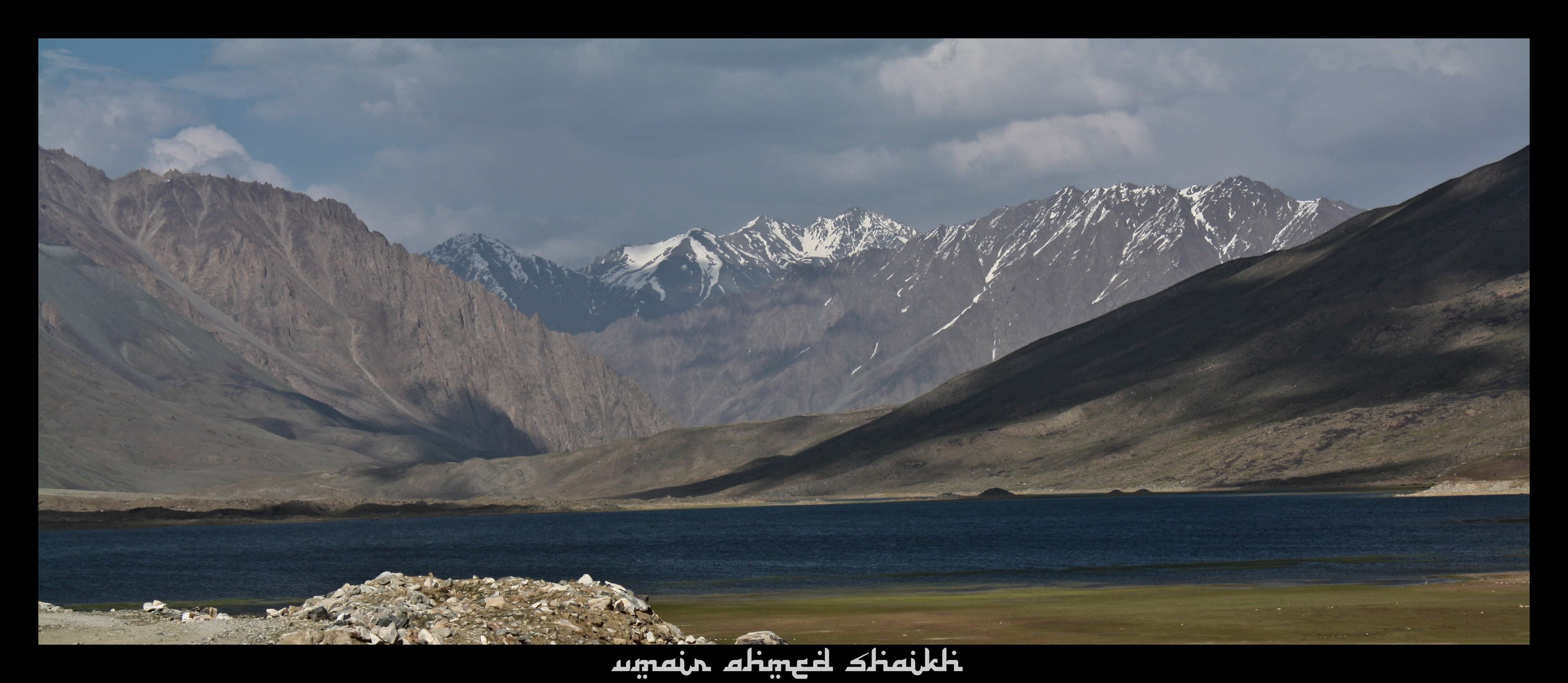
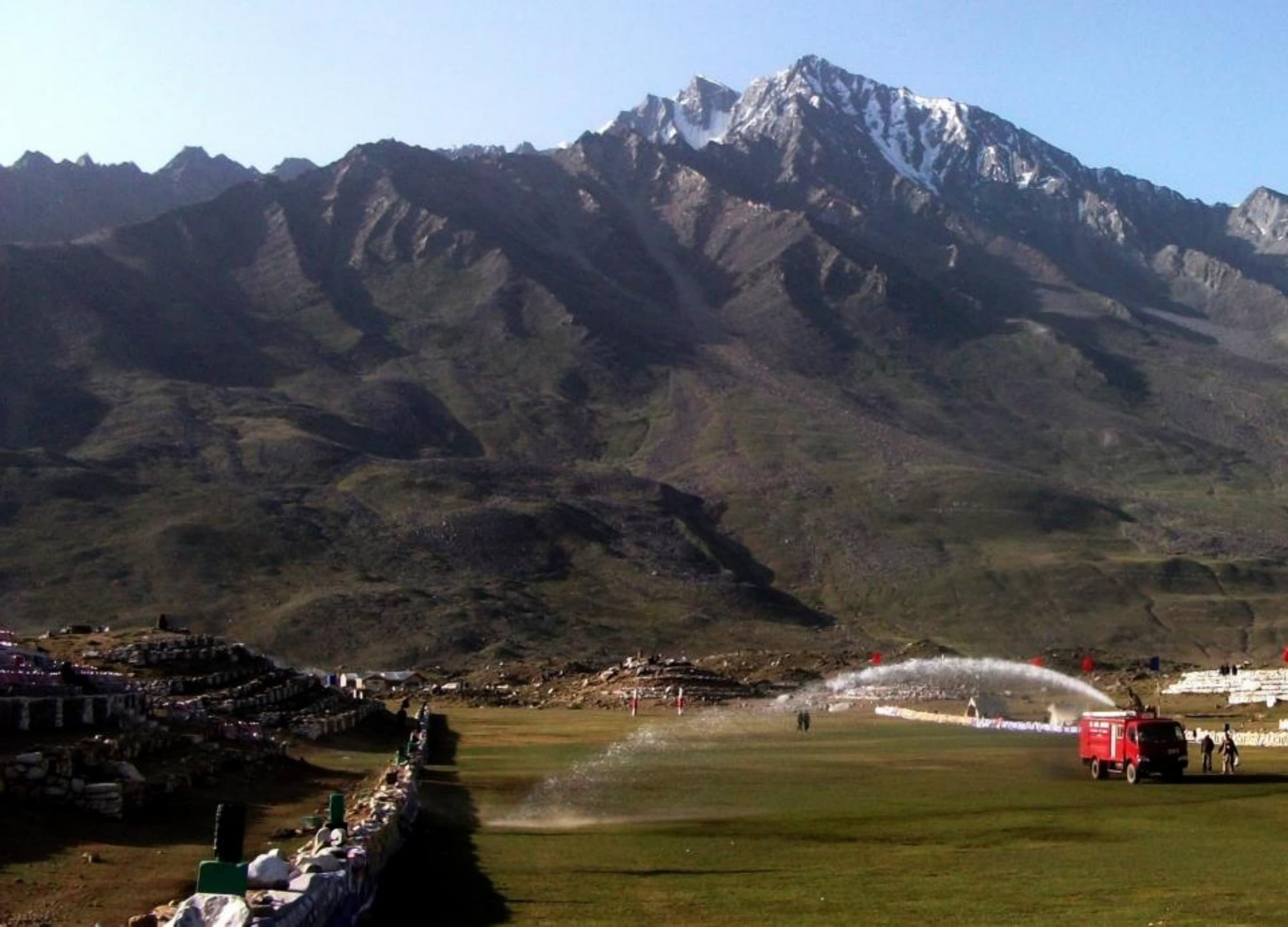
Every July, the rivalry between Gilgit and Chitral comes to a head at the Shandur Polo Festival, played on a natural plateau at roughly 3,700 metres — the highest polo ground in the world. The Shandur Pass sits on the boundary between Gilgit-Baltistan and Khyber Pakhtunkhwa, a treeless expanse of summer grass, snow-streaked ridgelines and a shallow lake, and for a few days each summer it becomes the most improbable sports venue on the planet.
The festival is built around the grudge match between the Gilgit and Chitral A-teams, a fixture with the emotional voltage of a national derby. Teams and their supporters travel for days to reach the pass, the players acclimatising their horses to the altitude, and the final is played in front of thousands of spectators ringing the stone-walled ground.
Around the polo grows a temporary tent city — team camps, food stalls, traders, musicians and a sea of visitor tents pitched on the plateau. Evenings bring folk music and dancing under an enormous high-altitude sky, and nights are genuinely cold even in July, with the Milky Way overhead at a brightness most visitors have never seen.
Gilgit's Shahi Polo Ground and the November Jashn
If your trip doesn't line up with Shandur, Gilgit city offers polo for much more of the year. The Shahi Polo Ground — the 'royal' ground — sits in the middle of town and is the sport's home stadium in Gilgit-Baltistan, with a season of tournaments and a famous gate inscription celebrating the game of kings.
The biggest fixture outside summer comes in the first week of November, when Gilgit-Baltistan marks its 1947 independence days with the Jashn celebrations. Polo tournaments at the Shahi ground are the centrepiece, alongside music and cultural programmes, and the autumn light on the surrounding peaks makes it a photographer's fixture as much as a sporting one.
Matches in Gilgit are free-flowing and easy to attend: ask at your hotel or have your guide check the schedule, walk in, and find a spot on the terraces among local families. It is one of the easiest authentic cultural experiences in the entire region — no ticket, no staging, just the town turning out for its game.
Village polo: Ghizer, Hunza, Nagar and Baltistan
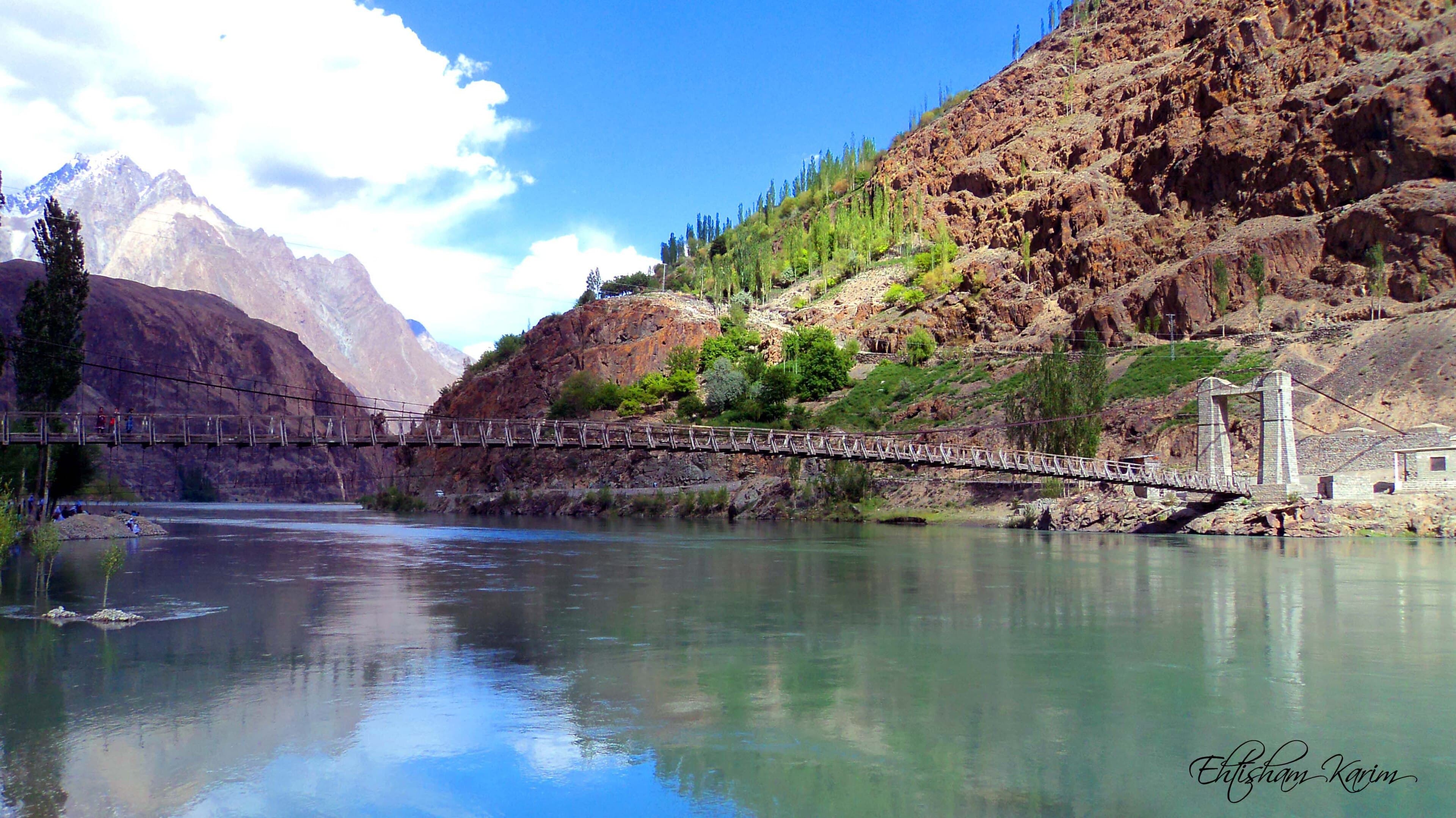
Beyond the marquee events, polo lives in the villages. Ghizer district — the green river valleys west of Gilgit — is the sport's heartland, and Gupis, Yasin and Phander all maintain grounds where spring and autumn tournaments draw whole valleys together. Stumbling on a village match beside Phander Lake, with poplars turning gold and drums echoing off the hillsides, is the kind of travel moment no itinerary can guarantee but Ghizer regularly delivers.
Hunza and Nagar both keep the tradition alive, with grounds in the main villages and tournaments tied to local celebrations. Across the mountains in Baltistan, Skardu and Khaplu play their own proud version — fitting, given that Balti is likely the language that named the sport — and Khaplu's ground beneath the old palace is among the most atmospheric anywhere.
Village tournaments cluster in spring (after the snow leaves the grounds) and autumn (after harvest), exactly the seasons when Gilgit-Baltistan is at its most beautiful. If you're travelling between April and June or in October and November, it is always worth asking locally whether polo is on — schedules are informal, but word travels fast.
The band, the tunes and the horses
Freestyle polo is played to live music, and the band is not decoration — it drives the game. A traditional ensemble of surnai (a piercing reed instrument related to the shehnai) and damal (kettle drums), usually joined by a big bass drum, plays continuously through the match, lifting the tempo with the play and erupting at goals.
Most remarkably, established players have personal tunes. When a known horseman takes the ball and breaks for goal, the band strikes up his signature melody, and the crowd knows from the music alone who is on the charge. It turns each match into something between a sporting event and an oral epic, with the musicians as narrators.
The horses deserve their own mention. These are compact, hard mountain ponies, prized possessions whose bloodlines and temperaments are discussed the way other places discuss cars. Horsemanship is a marker of standing across Gilgit-Baltistan, and the bond between a polo player and his horse — trained to lean, spin and charge amid flailing sticks — is the sport's quiet foundation.
How to watch: timing, camping and etiquette
For Shandur, plan deliberately. The festival runs over several days in July — confirm exact dates for your year, as they're set by the authorities season by season — and access from the Gilgit side is via the long, spectacular Ghizer valley road through Gupis and Phander. Accommodation is camping on the pass; operators set up serviced tent camps, or you can bring your own gear, but pack for sub-zero nights at 3,700 metres regardless of the month.
Altitude matters: sleeping near 3,700 m straight from Islamabad is a bad idea, so build in nights at Gilgit or Phander first and treat headaches seriously. The combination works beautifully as part of a longer Ghizer itinerary — our ghizer-shandur-adventure tour threads Phander Lake, Khalti Lake and the Yasin Valley together with the pass crossing.
Etiquette is simple: this is a community event, so dress modestly, ask before photographing people (especially women), and keep clear of the field boundary — the ball and occasionally the horses leave the ground at speed. Photographers should bring a long lens for the play and a wide one for the crowds; the low-angle evening light at Shandur, with dust hanging over the ground and mountains behind, is the shot everyone comes home with.
However you time it, watch with the crowd rather than apart from it. Cheer when they cheer, accept the tea you'll inevitably be offered, and you'll find polo is the fastest possible introduction to the people of Gilgit-Baltistan — their humour, their pride and their total disregard for doing things the regulated way.
Questions, answered
When is the Shandur Polo Festival?
The festival is held every July on the Shandur Pass, usually over several days around the second week of the month. Exact dates are confirmed each season by the authorities, so check the current year's schedule before locking in travel plans.
Where is the highest polo ground in the world?
On the Shandur Pass, at roughly 3,700 metres above sea level, on the boundary between Gilgit-Baltistan and Khyber Pakhtunkhwa in northern Pakistan. The annual Gilgit versus Chitral match played there is the sport's highest-altitude major fixture.
Can tourists attend polo matches in Gilgit-Baltistan?
Yes, easily. Village and city matches are free community events — you simply turn up and join the crowd. For the Shandur Festival you'll need camping arrangements on the pass, which tour operators handle with serviced tent camps each July.
How is freestyle polo different from regular polo?
Freestyle polo has no umpires and very few rules: six players a side, two long halves, full contact, and dramatic restarts where a rider strikes the ball in mid-air at the gallop. It's the older, unregulated ancestor of the codified game played elsewhere.
How do you get to Shandur Pass from Gilgit?
By road through the Ghizer valley, passing Gupis and Phander Lake — a long but spectacular drive best done over two days with a night in Phander. A 4x4 with an experienced local driver is strongly recommended, and the pass is only open in summer.