A year that turns on its festivals
Gilgit-Baltistan's calendar is agricultural at heart, and its festivals mark the hinges of the mountain year: the snow's retreat, the first wheat, the harvest, the long dark of winter. Layered over that ancient farming rhythm are the celebrations of the region's faith communities — Ismaili, Shia and Noorbakhshi — each with its own dates, dishes and music.
For travellers this is excellent news, because there is hardly a month between March and November without something happening in some valley. Time your trip well and you'll see Gilgit-Baltistan not as a landscape with people in it, but as a living culture in mid-celebration — which is a far better trip.
What follows is the calendar as a visitor will meet it, from spring's new year to winter's festival of lights, with practical notes on where to be and how to behave. Dates for religious observances can shift with the lunar calendar, so always confirm the current year's timing locally.
Navroz: new year under the blossom (21 March)
Navroz, the Persian-origin new year, falls on 21 March — the spring equinox — and is celebrated warmly across Gilgit-Baltistan's Ismaili and Shia communities alike. It marks the true start of the mountain year: fields are being ploughed, irrigation channels reopened, and the first apricot blossom is breaking across the lower valleys.
Families deep-clean their homes, prepare special dishes, and visit relatives and neighbours in rounds of greetings that can last days. In Hunza and Ghizer you'll find village gatherings with music and sometimes sport; in Baltistan, Navroz traditions include painted eggs and communal meals that hint at the festival's ancient, pre-Islamic roots.
For travellers, late March is a gamble worth taking: high passes are still closed, but the blossom season in Hunza is beginning, and arriving over Navroz means experiencing the valleys at their most sociable. Pair it with our hunza-cherry-blossom-guide for the full early-spring picture.
Ginani: Hunza's first-wheat thanksgiving (June)
In June, Hunza and Nagar celebrate Ginani (called Ganoni in Nagar) — a pre-harvest thanksgiving for the first ripening wheat that is among the oldest living traditions in the region. Before the festival, by custom, no one cuts the new wheat; Ginani is the day the valley collectively opens its harvest.
The ceremonial heart of the day is the cutting of the first sheaves and the tasting of diram — Hunza's traditional sweet bread made from germinated wheat flour, whose natural sugars need no added sweetener. Elders bless the harvest, and the day unfolds into music and dancing, with the main public celebrations held in the courtyards and grounds around Altit and Baltit forts in Karimabad.
Ginani has been revived and celebrated openly in recent decades, and visitors are genuinely welcome — it's one of the best single days of the year to be in central Hunza. Expect traditional dress, the swirling slow-fast rhythms of Hunza's dance music, and food shared with anyone who happens to be standing nearby, including you. The drumming and dance draw on a far older ritual world; our guide to Hunza's bitan shamans tells that side of the story.
Summer polo: Shandur and beyond (July–August)
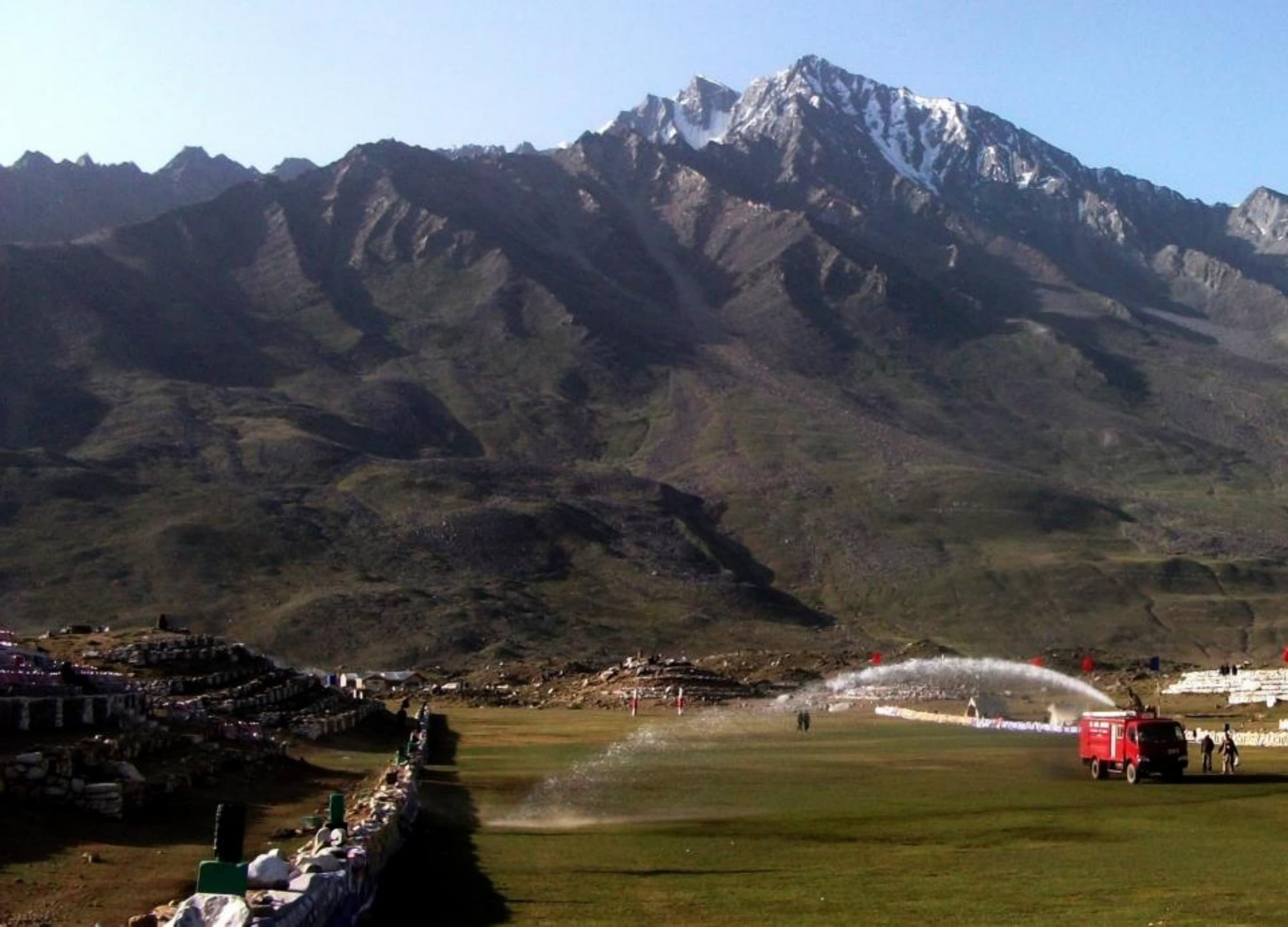
July belongs to polo. The Shandur Polo Festival, played on the world's highest polo ground at roughly 3,700 metres on the Shandur Pass, is Gilgit-Baltistan's most famous event — a multi-day spectacle of freestyle polo, tent camps, folk music and the storied Gilgit versus Chitral final. It deserves (and has) its own full guide.
Shandur is not the only summer fixture. Tournaments and festivals are held at other high summer pastures — the Babusar Pass area has hosted its own polo and cultural festival — and village grounds across Ghizer, Hunza and Baltistan see matches through the warm months whenever teams and an occasion align.
Summer festivals double as trade fairs and family reunions: shepherds come down from the pastures, emigrant workers come home, and the high meadows fill with tents. If your Gilgit-Baltistan trip falls in July, building Shandur into it is the single most memorable choice you can make — just book camping arrangements early.
Autumn: harvest, apricots and golden valleys (September–November)
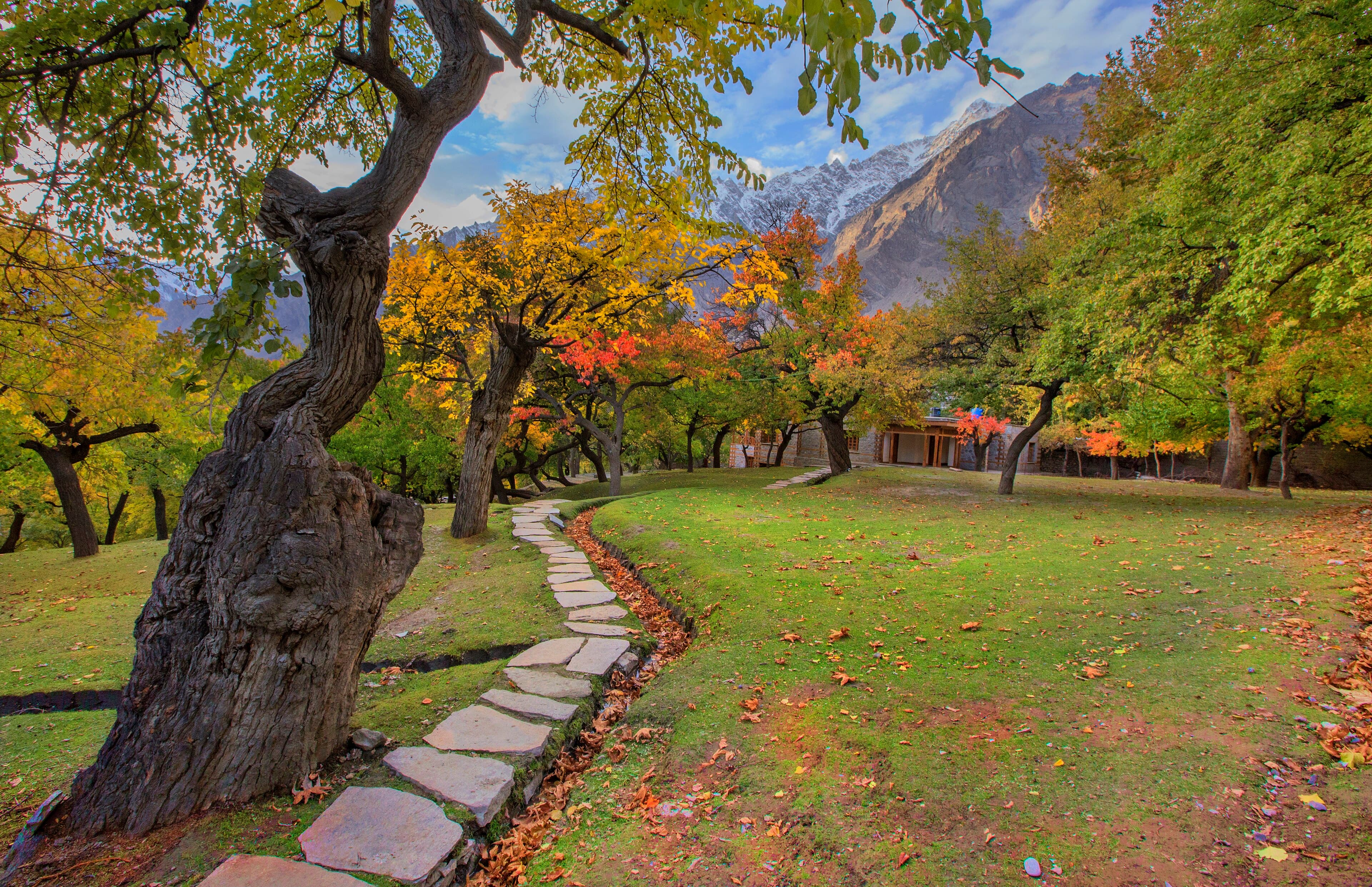
Autumn is Gilgit-Baltistan's quiet festival — less a single event than a season-long celebration. The wheat and fruit harvests come in, rooftops across Hunza and Baltistan turn orange with drying apricots, and villages hold their own small gatherings, threshing days and end-of-harvest feasts as the poplars go gold.
In the first week of November, Gilgit marks the Jashn celebrations of the region's 1947 independence, with polo tournaments at the city's Shahi Polo Ground, music and cultural programmes. It's the biggest organised event of the autumn and a fine excuse to extend a late-season trip.
For photographers, the overlap of harvest culture and peak autumn colour — late October into early November — is the region at its most beautiful. Our autumn-colours-photography tour is built around exactly this window, threading Hunza's golden orchards with Baltistan's amber river valleys.
Salgirah: Hunza's festival of light (13 December)
Deep in winter, on 13 December, Hunza's Ismaili villages celebrate Salgirah — the birthday of the Aga Khan, the community's spiritual leader, an occasion the valley has marked for decades with genuine devotion and joy. As dusk falls, villages from Aliabad to Gulmit light up: strings of lights on houses, bonfires on the slopes, and torchlit patterns traced high on the dark mountainsides.
Seen from a viewpoint like Eagle's Nest at Duikar, the spectacle is unforgettable — whole constellations of light scattered up valley walls under a hard winter sky. Community halls host gatherings with devotional recitation, music and shared food, and the atmosphere across the valley is one of warm, unforced festivity.
Visiting in mid-December means real cold and short days, but also empty roads, snow-dusted peaks and a Hunza few foreigners ever see. Travellers who come for Salgirah consistently describe it as a highlight — a festival that belongs entirely to the community, which welcomes guests without performing for them.
Muharram in Baltistan: travelling respectfully
Baltistan's population is largely Shia and Noorbakhshi, and the first ten days of Muharram — the Islamic month of mourning for Imam Hussain — are observed with deep solemnity in Skardu, Khaplu and the surrounding valleys. Processions and majlis gatherings mark the period, culminating on Ashura, the tenth day.
This is not a festival and shouldn't be treated as a spectacle: it is a period of genuine mourning, and the respectful traveller adjusts accordingly. Expect some shops and services to close on the main days, dress conservatively, don't photograph processions or mourners without clear permission, and keep music and obvious holiday-making low-key in town.
Because Muharram follows the lunar calendar, its dates shift roughly eleven days earlier each year — check where it falls before finalising a Baltistan itinerary. Travel continues normally around it, and witnessing the devotion of these days, quietly and from a respectful distance, can deepen your understanding of Baltistan's distinct religious culture.
Month by month: a festival planner
March — Navroz (21st): new-year visits, special dishes and the first blossom in lower Hunza; the region wakes from winter. April — blossom season peaks in Hunza and spring village polo begins in Ghizer as grounds thaw.
May–June — spring tournaments continue; June brings Ginani/Ganoni in Hunza and Nagar, with first-wheat ceremonies and dancing at Altit and Baltit. July — the Shandur Polo Festival on the pass, plus other high-pasture summer festivals; the whole region is in full season.
August–September — harvest gathers pace, apricots dry on rooftops, and trekking festivals of a quieter kind play out in the high valleys. October–November — peak autumn colour, end-of-harvest gatherings, and Gilgit's Jashn celebrations with polo in the first week of November.
December — Salgirah lights up Hunza's villages on the 13th; deep winter follows, with quiet valleys until the cycle turns again at Navroz. Muharram observances in Baltistan move with the lunar calendar, so check their dates for your travel year separately.
Being a good guest at a mountain festival
Festivals here are community events first and attractions a distant second, and the visitors who enjoy them most are the ones who arrive as guests rather than audience. Dress modestly — covered shoulders and knees for everyone, with a scarf handy for women entering religious spaces — and follow your hosts' lead on where to sit and stand.
Ask before photographing people, and be especially careful around women, religious gatherings and mourning observances. A smile and a gesture with the camera almost always gets a clear yes or no; honouring the no costs you one photo and earns you the room.
You will be fed. Hospitality is close to a competitive sport in Gilgit-Baltistan, and refusing everything offends; accept at least tea and a taste, compliment the cook, and you've met your obligations. Learn two words — 'shukria' (thank you) and the local greeting — and watch doors open.
Finally, festivals are the best possible argument for building slack into your itinerary. Dates shift, matches overrun, and an invitation to a village wedding or harvest feast can materialise from nowhere — the travellers with a spare day say yes, and those are the stories they tell for years.
Questions, answered
What is Navroz and when is it celebrated?
Navroz is the spring-equinox new year, celebrated on 21 March across Gilgit-Baltistan's Ismaili and Shia communities with house visits, special dishes and village gatherings. It marks the start of the agricultural year, just as apricot blossom begins in the lower valleys.
What is the Ginani festival in Hunza?
Ginani (Ganoni in Nagar) is the pre-harvest thanksgiving held in June, when the first ripe wheat is ceremonially cut and tasted with traditional diram bread made from germinated wheat flour. The main public celebrations, with music and dancing, take place around Altit and Baltit forts in Karimabad.
What is the best month to experience festivals in Gilgit-Baltistan?
July is the headline month thanks to the Shandur Polo Festival, but June (Ginani in Hunza), late March (Navroz amid the blossom) and early November (Gilgit's Jashn with polo) are all excellent. December's Salgirah lights in Hunza reward winter travellers.
Can tourists join festivals in Gilgit-Baltistan?
Yes — visitors are genuinely welcome at Navroz, Ginani, polo tournaments and Salgirah, and locals will often pull you into the food and festivities. The exception in spirit is Muharram in Baltistan, a mourning period to be observed respectfully from a distance, not treated as a spectacle.
What should I wear to a festival in Gilgit-Baltistan?
Modest, comfortable clothing: covered shoulders and knees for all travellers, with a headscarf for women only when entering mosques or religious gatherings. For Shandur and other high-altitude events, add serious warm layers — nights at 3,700 metres are cold even in July.