A village above a lake: where climbers come from
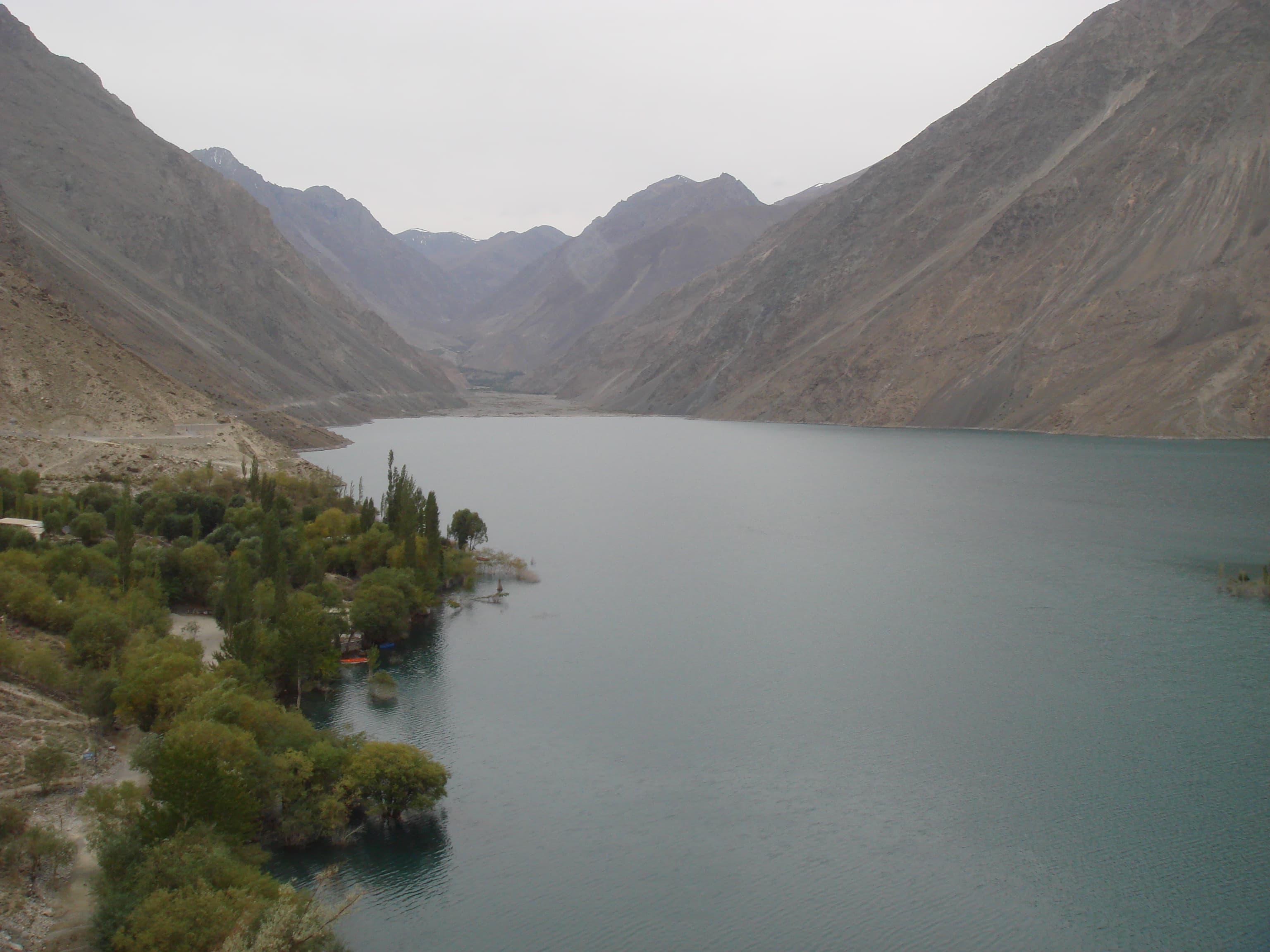
Drive twenty minutes south of Skardu and you reach Satpara Lake, a sheet of blue beneath bare mountains on the road to Deosai. Above its shore sits Sadpara village — a small farming community that has produced, per capita, perhaps more elite high-altitude mountaineers than anywhere else on Earth.
The reason is work. For generations, the men of Sadpara, Hushe and the Braldu valley villages have hired on as porters for Karakoram expeditions, carrying loads through the icefalls and high camps of K2, the Gasherbrums and Broad Peak. The strongest were promoted to the high camps; the exceptional became summiters in their own right.
Their story is the underside of every famous first ascent — usually unphotographed, often unnamed in the books. This guide names them.
Muhammad Ali Sadpara: from porter to national hero
Muhammad Ali Sadpara began exactly where his village's men always had: carrying loads for expeditions out of Skardu to feed his family. Strength, mountain sense and an irrepressible grin carried him upward through the ranks — first to high-altitude porter, then to full expedition climber on the world's highest mountains.
Over his career he reached the summits of eight of the world's 8,000-metre peaks, several without supplemental oxygen, and climbed Nanga Parbat four times. His defining moment came on 26 February 2016, when he, Italy's Simone Moro and Spain's Alex Txikon made the first winter ascent of Nanga Parbat — one of the last great prizes in Himalayan climbing, on the 8,126-metre peak that looms over his home region.
By then Ali had become something rare: a genuine national hero in a country hungry for them, mobbed in bazaars, beloved for his humility and his habit of crediting the porters behind every climb. He spoke openly of his dream — to stand on K2 in winter.
Winter K2, February 2021: the mountain keeps three
In the winter of 2020–21, Ali Sadpara joined Iceland's John Snorri and Chile's Juan Pablo Mohr to attempt K2 — the only 8,000-metre peak then unclimbed in winter, until a Nepali team's historic summit that January. On 5 February 2021 the three climbed toward the summit from Camp 3; Ali's son Sajid, climbing alongside, turned back near the Bottleneck when his oxygen regulator failed. The three men were never seen alive again.
Pakistan held its breath for days as helicopters and satellite imagery searched the upper mountain. When hope finally ended, the grief was national: vigils in every city, tributes from presidents and schoolchildren alike, and a state that came to treat the loss as it would a fallen hero of war. Their bodies were found on the mountain that July.
Ali Sadpara's name is now hammered into the plates of the Gilkey Memorial above K2 Base Camp, where trekkers on the Baltoro stop to pay their respects. Few graves on Earth have a mountain like this for a headstone.
Sajid Sadpara: carrying the legacy higher
Sajid Ali Sadpara's descent from the Bottleneck in February 2021 — alone, in winter, having left his father climbing toward the summit — was itself a feat of survival. What he did next defined him: that summer he returned to K2, located the bodies of his father, Snorri and Mohr near the Bottleneck, and buried them at altitude with his own hands.
On the same expedition he summited K2 without supplemental oxygen — completing, in effect, his father's climb. He has since built a formidable career of his own, including further 8,000-metre ascents in clean style and repeated high-altitude clean-up expeditions on K2, hauling down abandoned ropes, tents and oxygen cylinders in his father's memory.
His stated mission is pointedly his father's: to show that Pakistani climbers belong at the top of world mountaineering as athletes, not only as support staff.
Hassan Sadpara and the first generation of summiters
Before Ali, there was Hassan Sadpara — another son of the same small village — who climbed multiple 8,000-metre peaks including K2, the Gasherbrums, Broad Peak and Nanga Parbat, largely while working as a porter-climber on shoestring resources. In 2011 he became the first Pakistani from Baltistan to summit Everest, an achievement celebrated across the country.
Hassan trained by running the hills above Satpara Lake and famously made do with secondhand gear that better-funded foreign climbers had discarded. He died of illness in 2016, mourned as a pioneer who proved a Sadpara villager could stand on any summit on Earth.
That two men from one village of a few hundred households both became national climbing icons is the clearest possible argument for what Baltistan's mountain communities carry in them.
Amir Mehdi: the sacrifice inside K2's first ascent
The price porters paid for others' glory has a name, and it is Amir Mehdi. A Hunza porter of legendary strength — he had already served on the 1953 Nanga Parbat expedition — Mehdi was asked, on the 1954 Italian K2 expedition, to help Walter Bonatti carry oxygen cylinders up to the summit pair, Achille Compagnoni and Lino Lacedelli, camped near 8,000 metres.
The camp was not where it was supposed to be. Unable to find the tent in the dark, Bonatti and Mehdi survived an open bivouac at roughly 8,100 metres — without tent, sleeping bags or oxygen — through a full Karakoram winter-cold night. The oxygen they carried enabled the summit the next day; Mehdi paid with severe frostbite and the amputation of his toes, ending his porter livelihood.
For decades the expedition's official account buried the episode, and with it Mehdi's role. Only in the 2000s, after a long campaign by Bonatti and later researchers, did the record formally change — acknowledging that K2's first ascent rested on the endurance of a Hunza porter who was never asked whether the price was acceptable. His story is told with honour in Pakistan today.
Little Karim and the legends of Hushe
In the Hushe Valley beneath Masherbrum, the porter tradition produced its own folk hero: Little Karim, a famously small man with a famously outsized engine. His exploits on the Baltoro — carrying loads to extreme altitude that defeated far larger men, including hauling a French climber's hang-glider gear high onto K2 in the 1980s — made him the subject of European films and documentaries, and a beloved ambassador for his valley.
Hushe's broader contribution is collective: the village has supplied generations of high-altitude porters and several internationally certified guides, and its men have stood on most of the Karakoram's great summits while fixing the ropes others clipped. Trekkers who visit the Hushe Valley or Masherbrum Base Camp today are walking through the home ground of this tradition.
Spend an evening in a Hushe or Sadpara guesthouse and the histories come out — quietly, over tea, from men whose photographs show them windburned at Camp 4 on mountains you've only read about.
The porter economy today — and how to be part of the good side
High-altitude portering remains a cornerstone of Baltistan's economy, and it is slowly becoming a profession rather than a gamble. Government-set stage wages, load limits and insurance requirements now apply on the trekking routes, and training initiatives — climbing schools, rescue teams like the one operating on the Gondogoro La, and clean-up expeditions — are building real careers, with a small but growing number of women entering guiding and tourism work.
Trekkers hold real power here. Book with operators who pay published porter wages, provide proper boots, shelter, food and insurance, and respect load limits; ask the questions directly and expect straight answers. Learn your porters' names, walk with them sometimes, and tip generously and personally at trek's end.
The men who carried the Karakoram's climbing history deserved better than anonymity. The least the modern trekking economy owes their grandsons is fair pay, safe loads — and the dignity of being known.
Questions, answered
Who was Muhammad Ali Sadpara?
A Pakistani mountaineer from Sadpara village near Skardu who rose from expedition porter to national hero. He summited eight 8,000-metre peaks and made the first winter ascent of Nanga Parbat in February 2016 with Simone Moro and Alex Txikon, before losing his life on winter K2 in February 2021.
What happened to Ali Sadpara on K2?
On 5 February 2021, Ali Sadpara, John Snorri of Iceland and Juan Pablo Mohr of Chile disappeared while climbing above the Bottleneck during a winter attempt on K2. Ali's son Sajid had turned back when his oxygen equipment failed. Their bodies were found that July, and Sajid buried them on the mountain.
Who is Sajid Sadpara?
Ali Sadpara's son and a leading Pakistani mountaineer in his own right. After surviving the 2021 winter K2 attempt, he returned that summer to find and bury his father, summited K2 without supplemental oxygen, and has since led clean-up expeditions on the mountain in his father's memory.
Who was Amir Mehdi and what did he do on K2?
Amir Mehdi was a Hunza porter on the 1954 Italian K2 expedition who, with Walter Bonatti, carried the oxygen that made the first ascent possible — surviving an open bivouac near 8,100 metres at terrible cost, losing his toes to frostbite. His role was officially acknowledged only decades later.
How should trekkers hire porters in Baltistan?
Through registered operators who follow government wage scales, load limits and insurance rules, and who equip porters with proper footwear, shelter and food. Ask operators directly about porter welfare before booking, and tip personally at the end of your trek — it goes straight into mountain villages like Sadpara and Hushe.