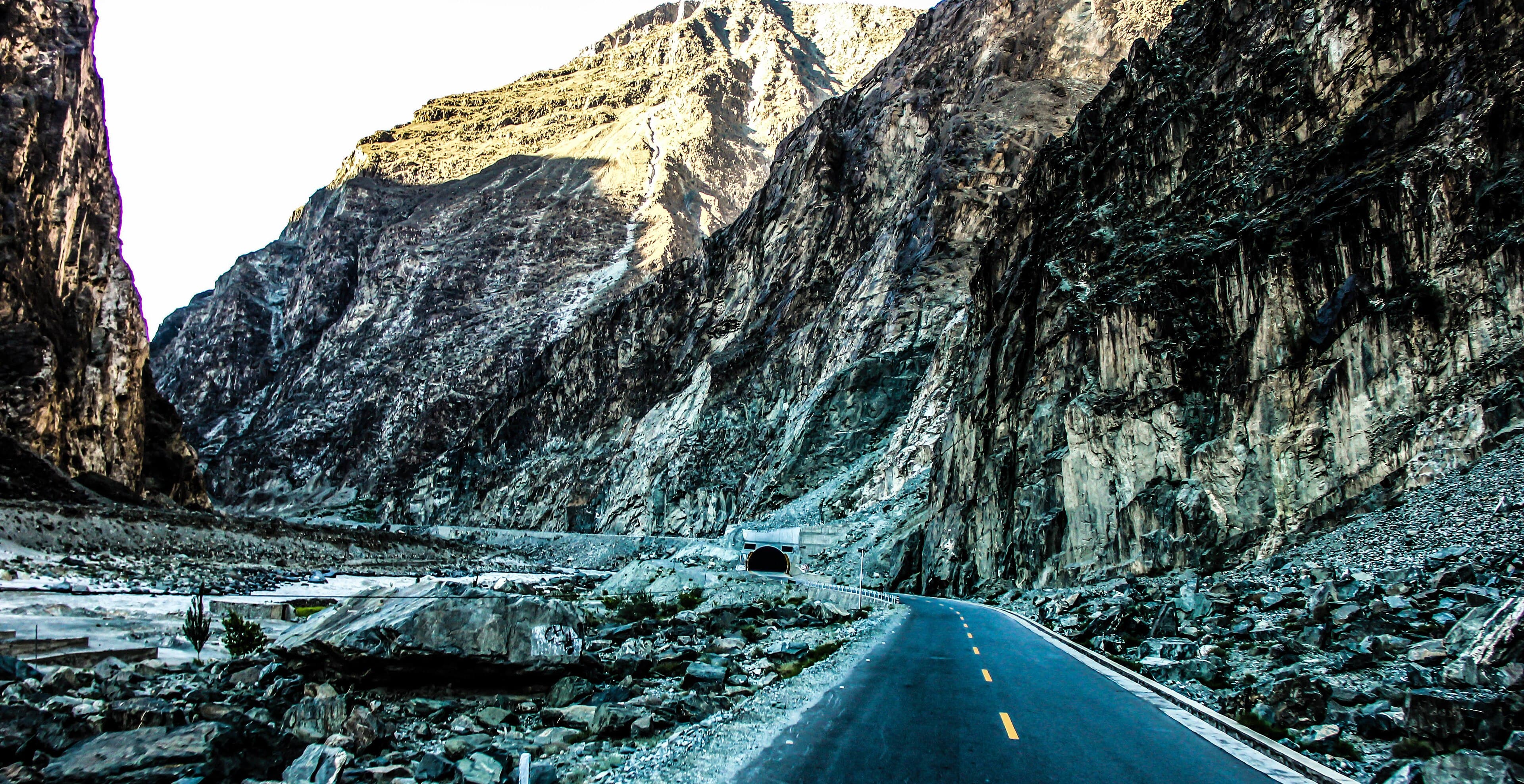
A linguistic wonder of the world
Linguists treat Gilgit-Baltistan and its neighbouring valleys as one of the most remarkable language regions anywhere on the planet. Within an area you can cross in a couple of days' driving, people speak languages from at least four entirely separate families — Indo-Aryan, Iranian, Tibetic and one famous language that belongs to no family at all.
For a traveller, this isn't an academic curiosity; it's something you experience hour by hour. Order tea in Gilgit and you're in Shina country, climb to Karimabad and the shopkeepers switch to Burushaski, continue past Attabad Lake to Gulmit and suddenly the language around you is Wakhi — a cousin of Persian spoken on the roof of the world. Turn east to Skardu instead and you'll hear Balti, a living echo of old Tibet.
Almost everyone you meet also speaks Urdu, and in the tourist heartlands of Hunza and Skardu, English is common too. So you'll never be lost — but knowing what you're hearing turns every bazaar, jeep ride and cup of tea into a richer experience.
Burushaski: the language related to nothing
Burushaski is the celebrity of Karakoram linguistics: a language isolate, meaning that despite more than a century of scholarly effort, no one has convincingly linked it to any other language family on Earth. It is not Indo-European, not Tibetan, not Turkic — it simply stands alone, a survivor from some much older linguistic landscape that the great migrations of Asia washed around but never erased.
You'll hear Burushaski in the central Hunza Valley — Karimabad, Altit, Ganish and the villages around them — across the river in Nagar, and in a distinct dialect in the Yasin Valley of Ghizer. Its grammar delights linguists: nouns sort into four genders, verbs stack up prefixes and suffixes in intricate ways, and counting changes form depending on what is being counted.
The people who speak it, the Burusho, are equally intriguing to historians, and theories about their origins range from sober to romantic. What matters for your visit is simpler: when a Karimabad fruit-seller chats with a neighbour in quick, melodic Burushaski, you are listening to one of the rarest sounds in the world — a language with no known relatives, still spoken in its mountain home.
Wakhi: the Pamiri tongue of upper Hunza
North of Attabad Lake the valley opens into Gojal, and the language changes completely. This is Wakhi territory — an Eastern Iranian language, distantly related to Persian, that arrived with herders and farmers from the Wakhan Corridor of Afghanistan. Wakhi speakers call themselves Xik, and their language carries the flavour of the high Pamirs.
Wakhi is a genuinely international mountain language. Beyond Gojal — Gulmit, Passu, Shimshal and the long Chapursan Valley — it is spoken across the border in Afghanistan's Wakhan, in Tajikistan's Gorno-Badakhshan, and around Tashkurgan in China's Xinjiang. A Wakhi speaker from Passu shares a mother tongue with families in four countries, scattered around the knot where the Karakoram, Pamir and Hindu Kush meet.
Because Wakhi has relatively few speakers and was historically unwritten, the community has worked hard at preservation — most visibly through music and poetry, which you can hear at the Bulbulik music school in Gulmit. Spend a night in a Gojal guesthouse and your hosts will happily teach you a few words; Wakhi hospitality is famous even by Gilgit-Baltistan's standards.
Balti: old Tibet, alive in Baltistan
Cross the mountains to Skardu, Shigar and Khaplu and you enter the world of Balti, a Tibetic language so conservative that it preserves consonant clusters dropped from Lhasa Tibetan centuries ago. Linguists prize Balti for this reason: in some ways it sounds closer to the classical Tibetan of a thousand years ago than modern Tibetan does. It is the everyday language of Baltistan — the region long nicknamed 'Little Tibet'.
Balti was historically written in the Tibetan-derived script known locally as Yige before the region's conversion to Islam shifted writing to the Persian-Arabic script. In recent decades a quiet revival movement has worked to teach Yige again, and you'll spot the angular old script on signboards, cultural centres and craft products around Skardu and Khaplu — a community reclaiming a visual link to its past.
Listen for Balti in Skardu's bazaars, in the villages of the Shigar Valley on the road to Askole, and around Khaplu's old town. Place names tell the story too: many Baltistan names ending in '-pa' or built from Tibetan roots map directly onto words still used across the Himalayas.
Shina and Khowar: the Dardic mainstream
The most widely spoken language of Gilgit-Baltistan is Shina, an Indo-Aryan language of the Dardic group. It is the lingua franca of Gilgit city and dominates Astore, Diamer and the Indus valley towns such as Chilas; related Shina dialects are spoken across the Line of Control as well. If you hire a driver in Gilgit or stop for fuel along the southern Karakoram Highway, Shina is most likely what you're hearing.
Khowar, another Dardic language, is the major tongue of Chitral and spills into western Ghizer — the Yasin, Ishkoman and Gupis areas — where it mingles with Burushaski and Shina in one of the region's most layered linguistic zones. Travel the road toward Shandur Pass and you can pass through three language areas before lunch.
Dardic languages are Indo-Aryan cousins of Urdu and Hindi, but only distantly — a Shina speaker and an Urdu speaker do not automatically understand each other. They form their own ancient branch, shaped by millennia of isolation in these gorges.
Domaaki: the rarest voice in the valleys
Gilgit-Baltistan also holds one of the world's most endangered languages. Domaaki is the traditional tongue of the Dom community — for centuries the hereditary musicians and craftsmen of Hunza and Nagar, concentrated in the village of Mominabad near Karimabad. It is Indo-Aryan, distinct from Shina and from Burushaski, and today its fluent speakers number only in the hundreds at most.
Most Dom families have shifted to Burushaski or Shina in daily life, and linguists have raced to document Domaaki before it falls silent. The community's musical tradition, however, remains gloriously audible: the drum-and-shawm ensembles that soundtrack Hunza's festivals and polo matches descend directly from Dom musicianship.
If you read our guide to the music of Gilgit-Baltistan, you'll meet this heritage in detail — a reminder that languages can fade even while the culture they carried plays on.
Urdu, English and getting by as a traveler
Urdu, Pakistan's national language, is the bridge between all these communities — taught in every school, used in offices and understood essentially everywhere. English is also far more useful here than first-time visitors expect. Gilgit-Baltistan, and Hunza in particular, has some of the highest literacy in Pakistan, and generations of community schooling mean that guesthouse owners, guides, students and shopkeepers routinely speak good English.
In practical terms: you can travel the entire region — Karimabad to Skardu to Fairy Meadows — comfortably in English, switching to a few words of Urdu for warmth. Menus in tourist towns are in English, road signs are bilingual, and your guide will translate anything beyond that.
The local languages, then, are not a barrier but an invitation. Nobody expects you to speak Burushaski — which is exactly why attempting two words of it earns you delighted laughter and instant friendship.
A tiny traveler's phrasebook
The universal greeting everywhere in Gilgit-Baltistan is the Islamic salutation 'As-salaam alaikum' (peace be upon you), answered with 'Wa alaikum as-salaam'. Urdu's 'shukria' (thank you) is understood in every valley, and 'zabardast' (fantastic) is the all-purpose word of appreciation your hosts will love hearing about their food and their mountains.
For local colour, try these: in Burushaski Hunza, 'bésan hál bilá?' asks 'how are you?'. In Balti Skardu you may be greeted with a cheerful 'khamulo', a revived traditional salutation you'll also see on café signs. Wakhi speakers in Gojal will light up if you answer 'baf' — 'good, fine' — when asked how you are.
Spellings vary because most of these languages were rarely written until recently, so don't worry about precision — say it with a smile and let your hosts correct you. Asking 'how do you say this in your language?' is one of the best conversation-starters in the entire region; expect the lesson to come with tea and apricots.
Why so many languages? Mountains and the Silk Road
The density of languages here is no accident. The Karakoram's gorges are natural fortresses: until the Karakoram Highway opened in the late 1970s, neighbouring valleys could be days apart on foot, separated by passes closed half the year. Communities that settled a valley kept their language for centuries with little outside pressure — which is how an isolate like Burushaski survived while empires rose and fell around it.
At the same time, the region sat on branches of the Silk Road, so wave after wave of newcomers — Dardic speakers from the south, Tibetans from the east, Iranian-speaking Wakhi herders from the north — each added a layer without erasing the others. You can still read this history at the Sacred Rocks of Hunza near Ganish, where centuries of travellers carved inscriptions in multiple ancient scripts.
The result is a living museum of human speech, best appreciated slowly: a week that takes in Gilgit, Karimabad, Gulmit and Skardu lets you hear four languages from four different families in their home valleys. Few journeys anywhere on Earth can offer that.
Questions, answered
What language is spoken in Hunza?
Central Hunza — Karimabad, Altit, Ganish — speaks Burushaski, a famous language isolate unrelated to any other known language. Upper Hunza (Gojal) speaks Wakhi, an Eastern Iranian language, and nearly everyone also speaks Urdu, with English widely spoken in tourist areas.
Is Burushaski really related to no other language?
Correct — Burushaski is classified as a language isolate. Scholars have proposed links to various families over the past century, but none has won acceptance, so it stands alone, spoken in Hunza, Nagar and the Yasin Valley.
Can I travel Gilgit-Baltistan speaking only English?
Yes, comfortably. Literacy in the region is high, English is taught in schools, and guides, guesthouse owners and many shopkeepers in Hunza and Skardu speak it well. A few words of Urdu — 'shukria' for thank you — add warmth but aren't necessary.
Is Balti the same as Tibetan?
Balti is a Tibetic language, descended from old Tibetan, and it famously preserves archaic sounds that modern Lhasa Tibetan has lost. It isn't mutually intelligible with modern Tibetan, but the kinship is why Baltistan is called 'Little Tibet'.
How many languages are spoken in Gilgit-Baltistan?
The major ones are Shina, Burushaski, Wakhi, Balti and Khowar, plus the critically endangered Domaaki — representing four separate language families plus an isolate. Urdu serves as the common second language across all communities.