The hidden massif: G1, G2 and the Shining Wall
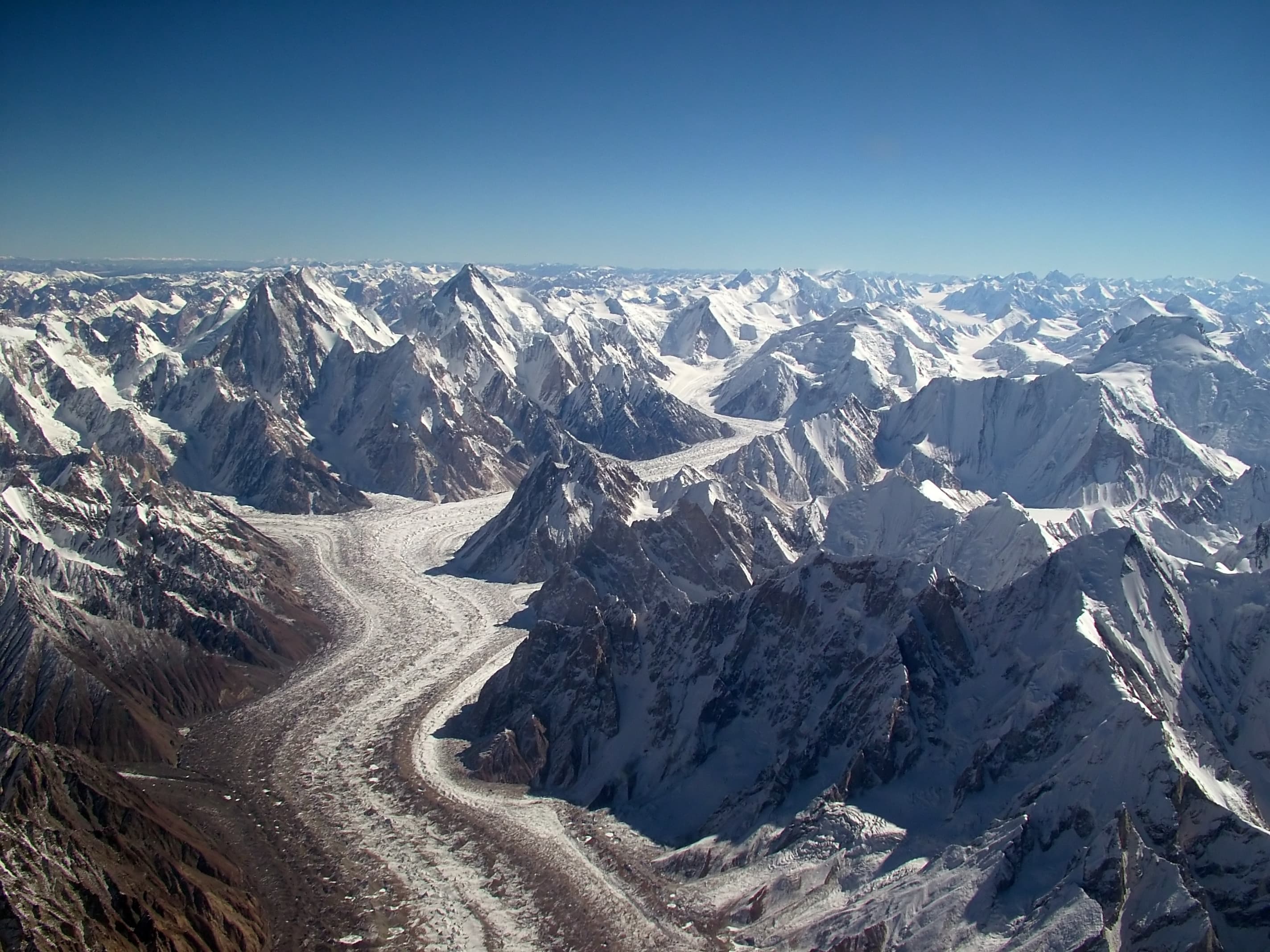
The Gasherbrum massif crowds six major summits into one knot of ice at the head of the Baltoro, including two of the world's fourteen 8,000-metre peaks: Gasherbrum I at 8,080 metres and Gasherbrum II at 8,035 metres. G1's other name, Hidden Peak, was earned honestly — it stays concealed behind its sisters until you are deep up the Abruzzi Glacier.
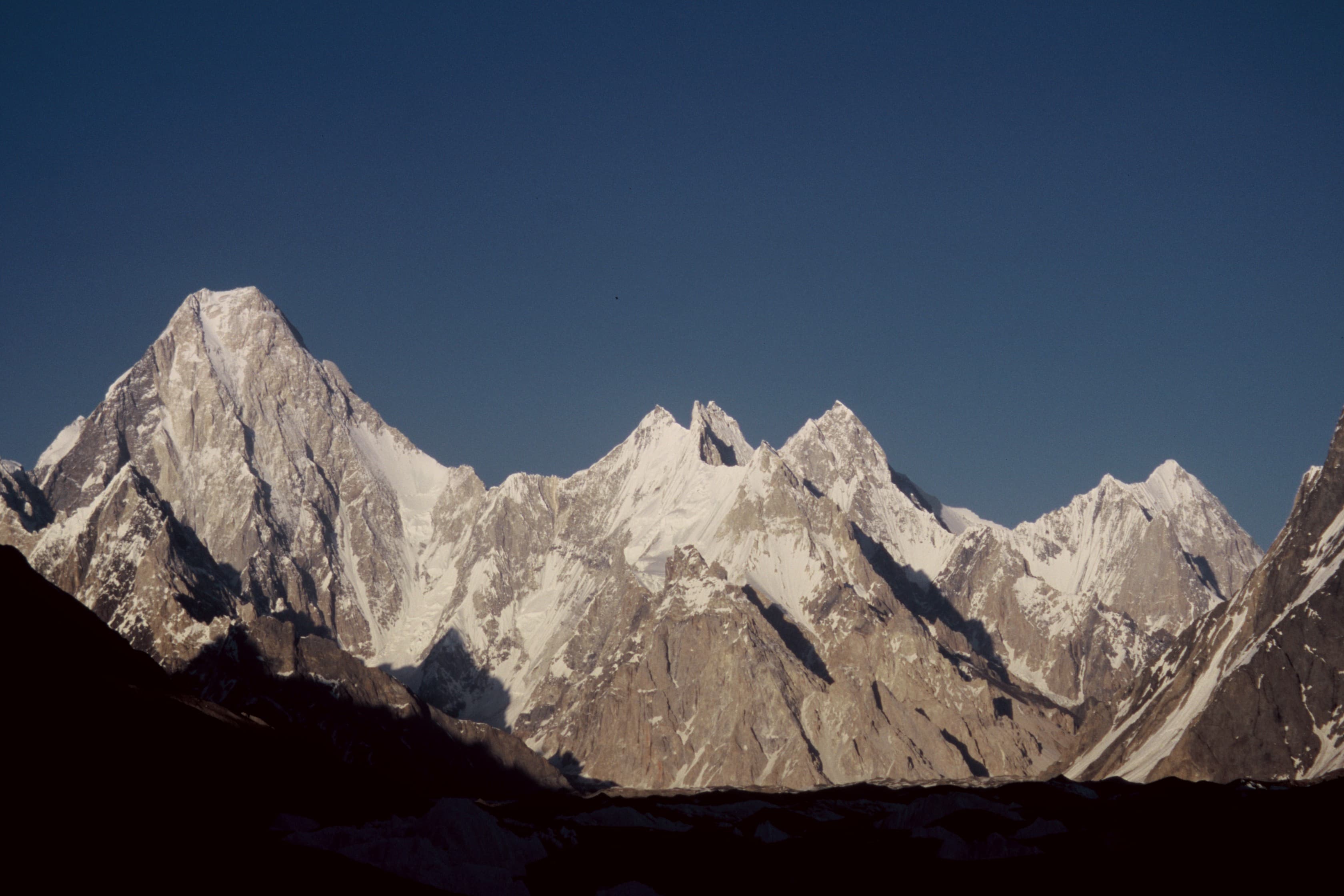
The family's showpiece, though, falls just short of the magic number. Gasherbrum IV, at roughly 7,925 metres, presents its vast West Face directly down the Baltoro — the Shining Wall that glows copper at sunset above Concordia and gave the massif its Balti name, often rendered as 'beautiful mountain'.
Most trekkers photograph that wall from Concordia and turn north to K2. The Gasherbrum Base Camp trek is for those who keep walking east instead, into the least-visited corner of the upper Baltoro.
The route: up the Baltoro, then the quiet branch
The approach is the classic Baltoro itinerary — jeep from Skardu to Askole, then the stages through Paiju, Urdukas and Goro II to Concordia, exactly as on the K2 Base Camp trek. Everything in that guide about porters, camps and glacier walking applies here unchanged.
At Concordia the routes divide. While the crowds bear north up the Godwin-Austen toward K2, you turn southeast up the Upper Baltoro and the Abruzzi Glacier — named for the Duke of the Abruzzi, whose 1909 expedition explored this basin — toward the tents of Gasherbrum Base Camp at roughly 5,100 metres.
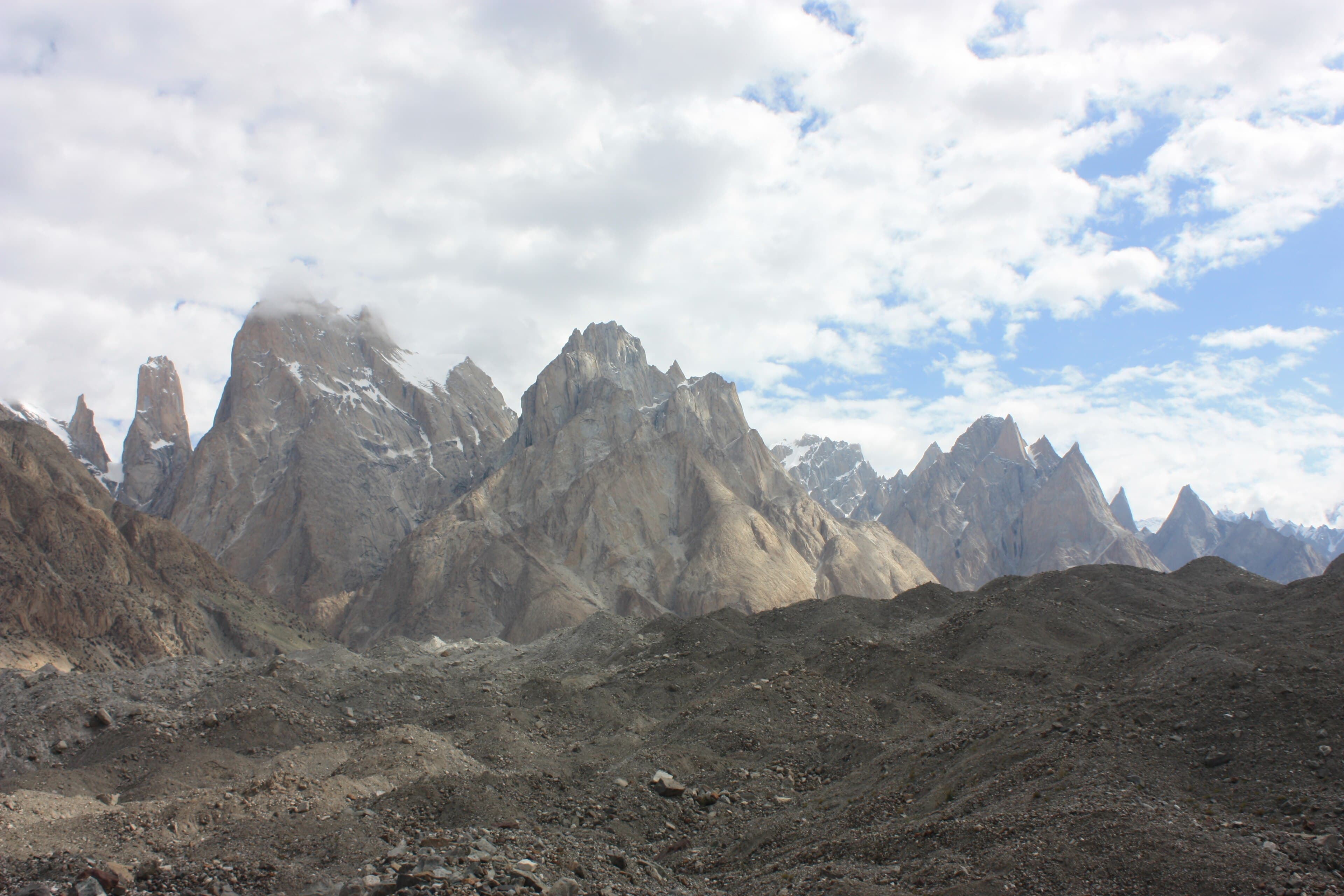
It is a day or two of additional glacier travel through increasingly wild country, with Baltoro Kangri and Chogolisa's tent-shaped summit closing the horizon. Many itineraries visit both base camps from Concordia, which adds two to four days to the standard trek.
1956 and 1958: the first ascents
The basecamp you reach is soaked in golden-age history. In July 1956 an Austrian expedition led by Fritz Moravec put three men on the summit of Gasherbrum II — Moravec himself with Josef Larch and Hans Willenpart — climbing in a bold, lightly supplied style that foreshadowed the alpine tactics of later decades.
Two years later, in 1958, an American expedition led by Nicholas Clinch claimed Hidden Peak, with Pete Schoening and Andy Kauffman reaching the 8,080-metre summit. It remains the only 8,000-metre peak whose first ascent was made by Americans — a quieter triumph than K2 or Everest, on a mountain most people have never heard of.
Schoening was already a legend: five years earlier on K2, his single belay had held five falling companions — 'The Belay', still recounted around Baltoro campfires.
1975: Messner, Habeler and a new idea of climbing
In 1975 Reinhold Messner and Peter Habeler arrived beneath Hidden Peak with a plan that most contemporaries considered reckless: to climb a new route on an 8,000-metre face as a two-man team, with no fixed ropes, no high-altitude porters and no supplemental oxygen. They summited via the northwest face in a three-day push.
It was the first time one of the fourteen highest mountains had been climbed in pure alpine style, and it rewired the sport's sense of the possible — leading directly to Messner and Habeler's oxygenless Everest in 1978 and the modern era of light, fast climbing.
Standing at Gasherbrum Base Camp, you can trace their line with your eyes. Few places let a trekker look directly at a wall that changed mountaineering history.
What you actually see and feel at base camp
Gasherbrum Base Camp sits on a moraine shelf where the South Gasherbrum Glacier pours off the massif, with G1 and G2 finally unhidden overhead and the icefall between them groaning through the night. In high season a small expedition village operates here — a fraction of K2 Base Camp's size, and friendlier for it.
The solitude is the point. On the Abruzzi branch you may walk a full day seeing no one but your own team, in scenery every bit the equal of the Godwin-Austen — Chogolisa, where Hermann Buhl walked through a cornice in 1957, stands enormous to the south.
Nights are cold and brilliantly starred, and dawn light works along the Gasherbrum ridgelines one summit at a time. Photographers consistently call this branch the trek's best-kept secret.
Combining Gasherbrum with K2 Base Camp
Because the routes share every stage to Concordia, the natural plan is to do both: a night or two up the Godwin-Austen for K2 Base Camp and the Gilkey Memorial, then the Abruzzi branch for the Gasherbrums. The combination needs roughly 16 to 18 trekking days in total.
Acclimatization actually improves with the combination — the extra days above 4,500 metres are exactly what the Gondogoro La exit wants, for parties planning to finish over the pass into the Hushe Valley.
If you must choose one branch, K2 wins on iconography; Gasherbrum wins on solitude and, arguably, on glacier scenery. The fact that almost everyone chooses K2 is precisely what keeps the Abruzzi empty.
Difficulty, season, permits and cost
Grade it as you would the K2 trek — strenuous — with the Abruzzi branch adding glacier mileage at 4,600 to 5,100 metres. There is no technical climbing on the trekking route, but the days are long, cold and remote, and self-sufficiency is total once you leave Concordia.
The season is the standard Baltoro window: mid-June to early September, with July and August most reliable. Permits are the same restricted-zone package as for K2 Base Camp — trekking permit, Central Karakoram National Park fee and licensed guide, all arranged by your operator — and costs run similar to the K2 trek, typically a few hundred dollars more for the extra days.
Logistics, training and porter ethics are identical to the main Baltoro trek, so read our K2 Base Camp guide alongside this one and our Skardu trekking overview for the full picture.
Questions, answered
How high is Gasherbrum Base Camp and how long is the trek?
Base camp sits at roughly 5,100 metres on the upper Abruzzi Glacier. The trek follows the standard Baltoro route to Concordia and adds a branch of one to two days each way — around 14 to 16 trekking days total, or 16 to 18 if you combine it with K2 Base Camp.
What is the difference between Gasherbrum I and Hidden Peak?
They're the same mountain: Gasherbrum I, 8,080 metres, the world's 11th-highest peak. The name Hidden Peak was coined because the mountain stays concealed behind the rest of the massif until you are well up the Abruzzi Glacier.
Who first climbed the Gasherbrums?
Gasherbrum II was first climbed in 1956 by Fritz Moravec, Josef Larch and Hans Willenpart of an Austrian expedition. Gasherbrum I (Hidden Peak) followed in 1958, when Americans Pete Schoening and Andy Kauffman summited — still the only 8,000er first ascended by Americans.
Is the Gasherbrum Base Camp trek harder than K2 Base Camp?
Marginally — it shares the entire Baltoro approach, then adds an extra day or two of glacier travel above 4,600 metres on the quieter Abruzzi branch. There's no technical climbing, but the remoteness is greater and you'll likely see far fewer people.
When is the best time to trek to Gasherbrum Base Camp?
Mid-June to early September, with July and August the prime window — the same season as all high Baltoro routes. This coincides with expedition season, so a small climbers' camp is usually in residence beneath G1 and G2.