Why they called it Little Tibet
Early travellers and mapmakers knew Baltistan by a telling name: Little Tibet (with Ladakh as Great Tibet). The label fit. The Balti people speak an archaic form of Tibetan — closer in some ways to the classical language than modern Lhasa speech — and the old culture of the valleys, from polo and archery to butter tea and the silhouettes of fort architecture, looks west-Tibetan to its bones.
Geography wrote that destiny. Baltistan sits where the Indus carves between the Karakoram and the Himalaya, its valleys opening east toward Ladakh and the Tibetan plateau rather than south toward the plains. For centuries its trade, marriages, wars and ideas flowed along the Indus corridor to Leh and beyond.
What makes Baltistan singular is the layering that followed: a Tibetan-speaking people who embraced Islam through Sufi missionaries, ruled themselves through homegrown dynasties, exchanged queens and architects with the Mughal court, and finally became Pakistan's gateway to the highest mountains on earth. Every layer is still visible from a Skardu hotel — if you know where to look.
The Buddhist centuries: a rock that remembers
Before Islam, Baltistan lay inside the Buddhist world that stretched from Kashmir across Ladakh to Tibet. The proof stands a short drive from Skardu's bazaar: the Manthal Buddha Rock, a great granite boulder on the edge of Manthal village carved with a serene seated Buddha surrounded by bodhisattvas, generally dated to the eighth or ninth century.
The carving belongs to the same artistic current that produced the rock Buddhas of Ladakh and the monastic art of Kashmir, and it marks Baltistan's centuries as a way-station for monks and pilgrims moving along the Indus. Other petroglyphs and inscriptions scattered along the river record the same traffic in fainter strokes.
Visit in late afternoon, when low light raises the relief from the stone — it's an easy add-on to Satpara Lake, just up the valley. There's a quiet thrill in standing before a Buddhist masterwork in a Muslim valley that has protected it for over a thousand years.
Islam arrives with the Sufis
Islam came to Baltistan not by conquest but by persuasion, carried over the passes by Sufi missionaries from Kashmir and Central Asia. Tradition ties the conversion to the great Kubrawi saint Syed Ali Hamadani and his successors, and above all to the Noorbakhshi order, whose preachers spread through the valleys around the fifteenth century and whose distinctive tradition survives today almost nowhere else on earth but Baltistan.
The architectural witnesses are extraordinary. The Chaqchan Mosque in Khaplu, founded around 1370 by tradition, is one of the oldest mosques in the region — a tiered, pagoda-like building of timber and stone whose carved beams blend Kashmiri, Tibetan and Persian craft into something purely Balti. The Amburiq Mosque in Shigar, linked to the same missionary era, is its small, exquisite cousin.
Today Baltistan's communities — Shia, Noorbakhshi and Sunni — maintain these wooden treasures as living places of worship. Visitors are generally welcome outside prayer times when accompanied respectfully; the carving alone rewards the detour, and Khaplu's mosque sits an easy stroll from the restored palace.
The Maqpon kings and Ali Sher Khan Anchan
From the medieval period, Baltistan was ruled by the Maqpon dynasty of Skardu, with allied rajas in the side valleys. The dynasty's zenith came under Ali Sher Khan Anchan in the late sixteenth and early seventeenth centuries — Baltistan's one true empire-builder, whose campaigns carried Maqpon influence east over Ladakh and west along the valleys toward Gilgit and, tradition says, as far as Chitral.
Anchan's reign also opened the door to the Mughals. He maintained relations with the imperial court, and his queen Mindoq Gyalmo — remembered in Balti tradition and associated with the Mughal connection — is credited with bringing plainsland refinement to Skardu, including gardens and music. Balti oral tradition still sings of this golden age.
The exchange flowed both ways into stone and song. Mughal-influenced detailing appears in Balti palace architecture, while Balti musicians and the famous mountain polo of the region acquired their classic forms in this era. Skardu's Kharpocho Fort — 'the king's fort' — glowering from its crag above the Indus, is the Maqpons' most visible monument, and the short hike up to it is the best history-with-a-view hour in town.
Shigar, Khaplu and the valley kingdoms
Skardu never ruled alone. The Shigar Valley had its own rajas of the Amacha dynasty, and Khaplu — the second-largest old kingdom — its Yabgo rulers, whose line claimed Central Asian origins. These valley courts feuded, intermarried and built in friendly rivalry with the Maqpons, which is why Baltistan is so unusually rich in palaces for a region of its size.
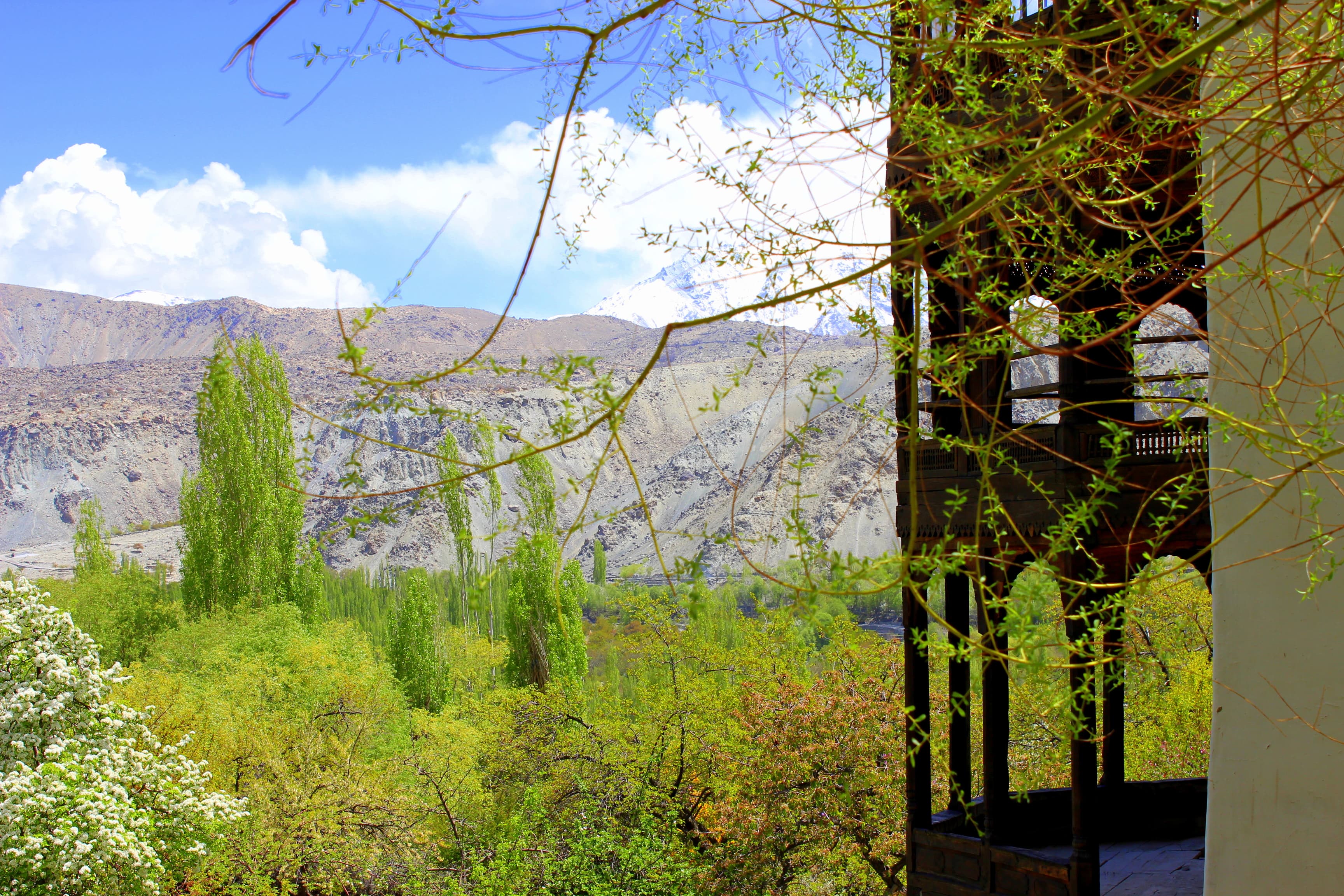
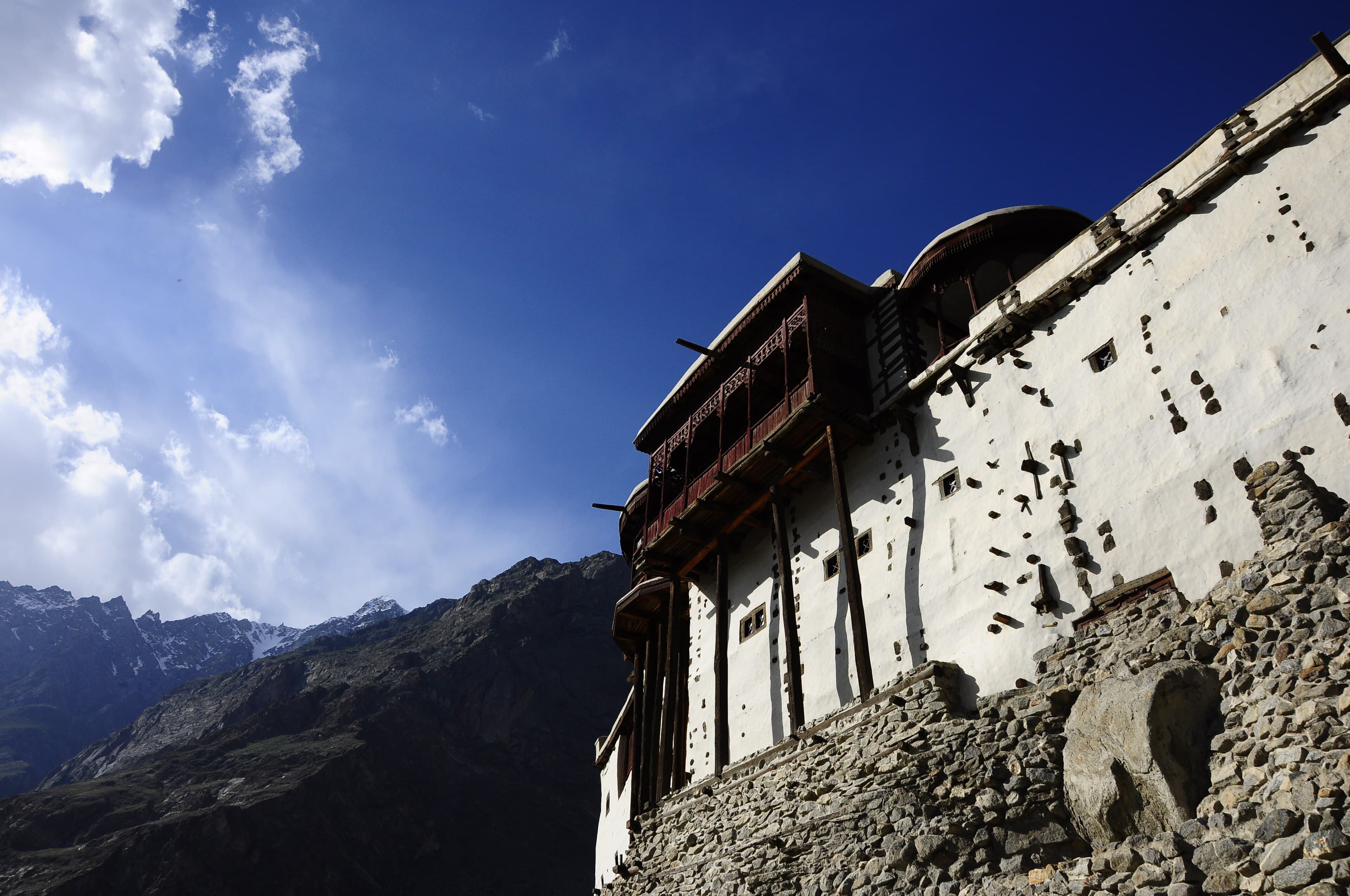
Two of those seats have become the region's heritage showpieces. Shigar Fort, the Amacha palace built on a giant boulder — its Balti name, Fong Khar, means 'palace on the rock' — was restored by the Aga Khan Trust for Culture and reopened in 2005 as a museum and heritage hotel. Khaplu Palace, the Yabgo seat rebuilt in the 1840s, followed in 2011 and won a UNESCO Asia-Pacific heritage award for its conservation.
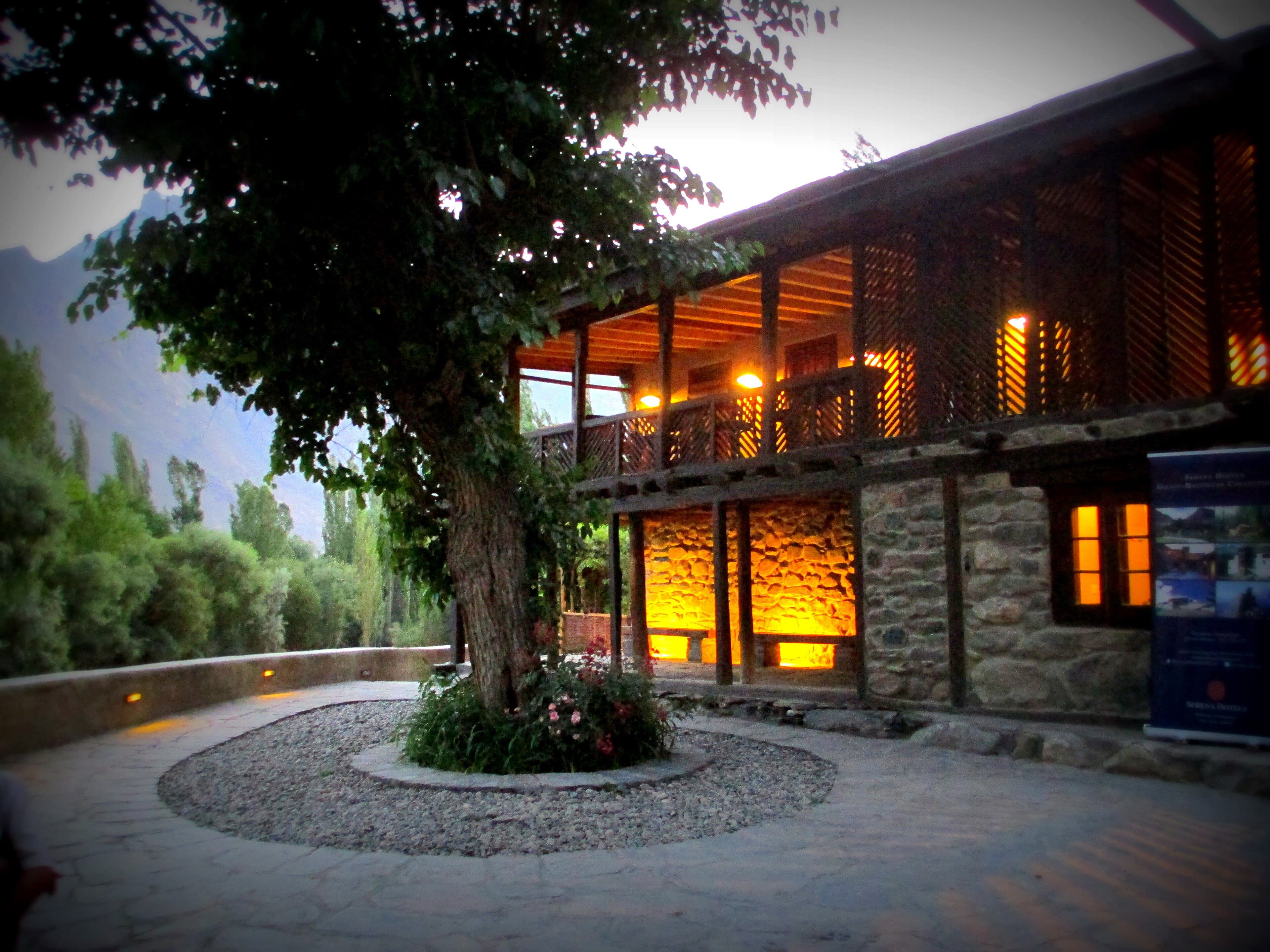
Sleeping in either is the most atmospheric night Baltistan offers: carved balconies, apricot orchards, and staff drawn from villages that once served the rajas. Even if you don't stay, both palaces welcome day visitors with small museums that tell the valley kingdoms' stories far better than any plaque in Skardu.
Dogras, Kashmir and the war of 1948
Baltistan's independence ended in 1840, when armies of the Dogra rulers of Jammu — soon to be Maharajas of Kashmir — conquered the region, as they had Ladakh, folding Little Tibet into the princely state of Jammu and Kashmir. A century of rule from distant Srinagar followed, remembered locally as a time of heavy taxation and neglect, with the old royal families reduced to ceremonial jagirdars.
Partition in 1947 set the stage for Baltistan's most dramatic modern chapter. As the first Kashmir war unfolded, local soldiers and volunteers — including Gilgit Scouts and Balti levies — fought a hard winter campaign through 1948 that took Skardu and brought Baltistan into Pakistan; the region remembers it as its war of liberation, fought at altitudes where the front lines crossed glaciers.
The ceasefire line of 1949 hardened into today's Line of Control east of Khaplu and Kharmang, separating Baltistan from Ladakh and dividing Balti families whose relatives ended up on either side. It is why the old road to Leh — for centuries Baltistan's main street to the world — now ends at a closed frontier, and why the region reoriented entirely toward Gilgit and the south.
From caravan town to expedition capital
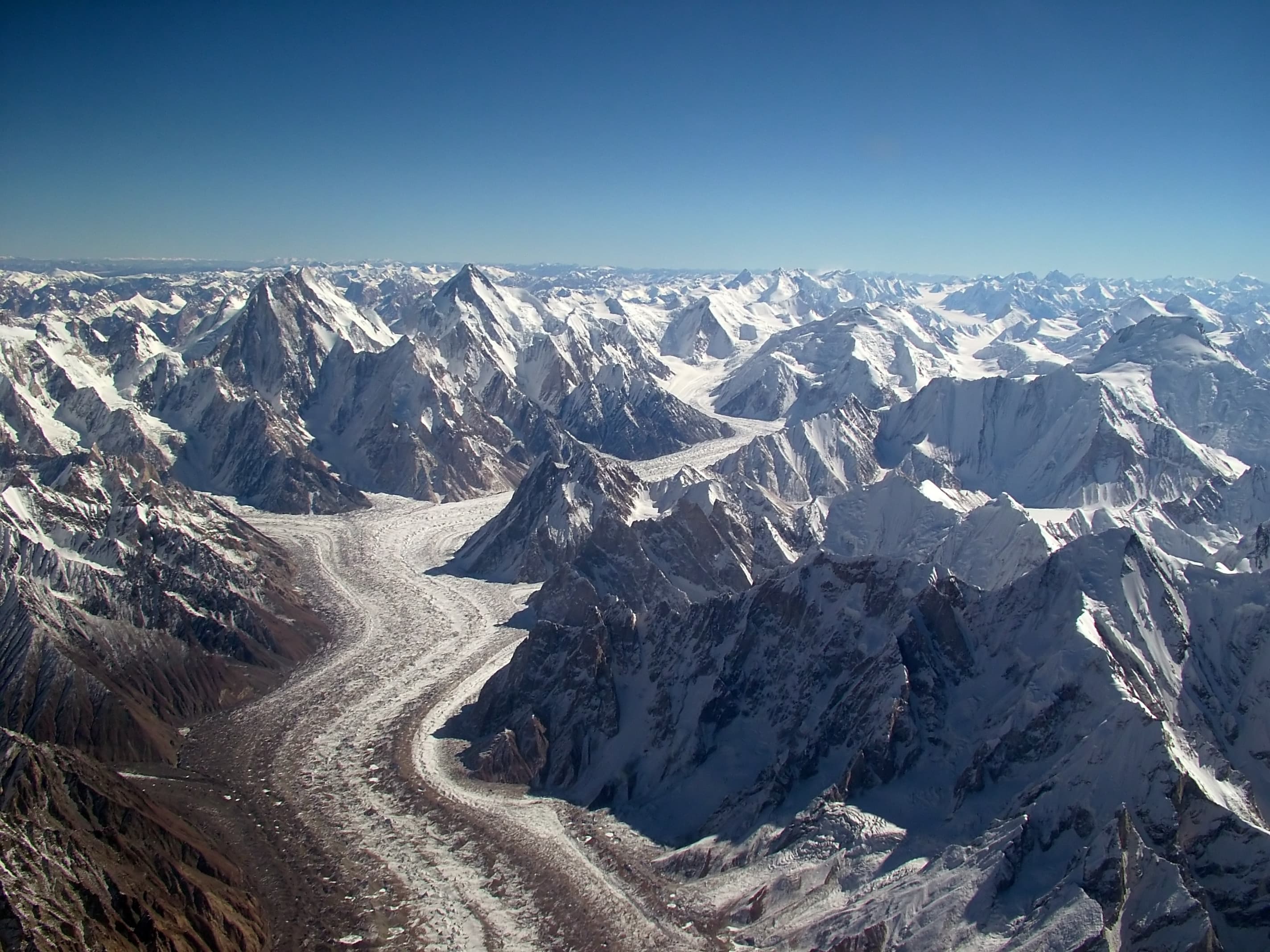
Twentieth-century Skardu reinvented itself around mountains rather than trade routes. With the world's greatest concentration of high peaks — K2, the Gasherbrums and Broad Peak — at the head of the Baltoro Glacier, the town became the staging post for virtually every Karakoram expedition, beginning with the great Italian, British and American attempts of the early 1900s and exploding after K2's first ascent in 1954.
The expedition economy ran on Balti shoulders. Generations of porters from villages like those of the Shigar, Hushe and Braldu valleys carried the loads that made mountaineering history, and their descendants — Little Karim, the Sadpara climbers and today's young Balti alpinists — have moved from carrying loads to standing on the summits themselves.
Modern Skardu shows every era at once: an international airport with direct Islamabad jets, trekking agencies beside bazaar stalls selling dried apricots, and the Indus sliding past as it has under Buddhist carvers, Maqpon kings and Dogra garrisons alike. Few small towns anywhere carry this much history this lightly.
Touring Baltistan's history in three days
Day one belongs to Skardu: climb to Kharpocho Fort in the morning, visit the Manthal Buddha Rock and Satpara Lake in the afternoon, and finish with sunset over the Indus from the fort ridge or the Katpana dunes. Day two, drive to Shigar — the Amacha fort-palace, Amburiq Mosque and the old village lanes fill a leisurely day, with the Sarfaranga Cold Desert on the way back.
Day three is Khaplu, two and a half hours east up the Shyok: the palace, the Chaqchan Mosque, and the villages beneath the Masherbrum wall. History-minded travellers with more time can add Kharmang's villages toward the Line of Control or push up the Hushe Valley, where the porter villages of mountaineering legend sit beneath 7,000-metre peaks.
Go between April and October for open roads and palace gardens in leaf; autumn turns Khaplu and Shigar gold and is the photographers' pick. Hire a local guide for the forts and mosques — Balti oral history is rich, generous and far better heard in the places where it happened.
Questions, answered
Why is Baltistan called Little Tibet?
Because its people speak Balti, an archaic Tibetan language, and the region's traditional culture — architecture, polo, food and folklore — has deep west-Tibetan roots. Early geographers called Baltistan 'Little Tibet' and Ladakh 'Great Tibet', and the name survives in tourism today.
What is the Manthal Buddha Rock in Skardu?
It's a large granite boulder at Manthal village near Skardu carved with a seated Buddha and bodhisattvas, generally dated to the eighth or ninth century. It is the most striking surviving monument of Baltistan's Buddhist era and is best visited in late-afternoon light, often combined with Satpara Lake.
Who was Ali Sher Khan Anchan?
Ali Sher Khan Anchan was the greatest king of Skardu's Maqpon dynasty, ruling in the late sixteenth and early seventeenth centuries. He extended Balti power over Ladakh and westward toward Chitral, maintained ties with the Mughal court, and his era is remembered as Baltistan's golden age of music, polo and architecture.
Can you stay in Baltistan's old forts and palaces?
Yes. Shigar Fort (reopened 2005) and Khaplu Palace (reopened 2011) were restored by the Aga Khan Trust for Culture and now operate as heritage hotels with small museums. Both welcome day visitors too, and Khaplu Palace's restoration won a UNESCO Asia-Pacific heritage award.
When did Baltistan become part of Pakistan?
In 1948, during the first Kashmir war, when local forces and Gilgit Scouts took Skardu and the surrounding valleys in a campaign Baltis remember as their liberation war. The 1949 ceasefire line, today's Line of Control, fixed the border with Ladakh east of Khaplu and Kharmang.